Daikin vs Trane – Quick Comparison
| Criteria | Daikin Air Conditioners | Trane Air Conditioners |
|---|---|---|
| Energy Efficiency | Up to 24.5 SEER (very high efficiency). Inverter technology adjusts compressor speed to save energy. | Up to 22 SEER (high efficiency). Multi-stage and variable-speed options for optimized energy use. |
| Durability & Build | Built to last with strict quality control. Many models include up to 12-year parts warranty for peace of mind. | Industry-leading durability; tested in extreme conditions (-20°F to 120°F). Known for “It’s Hard to Stop a Trane” reliability. |
| Price Range (Installed) | Approximately $4,500 – $9,000 (varies by model and installation). Generally more affordable upfront. | Approximately $4,800 – $10,000 (varies by model and installation). Tends to have higher upfront cost. |
| Warranty | 12-year limited parts warranty on many models (with registration); optional extended service plans up to 12 years including labor. | 10-year limited parts warranty (with registration); extended warranty options available (often via dealer plans). |
| Technology & Features | Advanced inverter (variable-speed) compressors; smart thermostat integration (Daikin One+); some models use eco-friendly R-32 refrigerant. Quiet operation (~56 dB on best models). | ComfortLink™ II smart controls; proprietary Climatuff compressors and all-aluminum coils; offers Wi-Fi thermostats and voice assistant compatibility. Quiet operation (~55 dB on best models). |
| Customer Satisfaction | Growing reputation in North America; valued for efficiency and value. High global customer satisfaction; considered very reliable by experts. | Longstanding brand trust and high owner satisfaction (rated 5/5 for reliability and satisfaction by Consumer Reports). Many customers report 15–20 years of service life. |
Which Air Conditioner Is More Energy Efficient, Daikin or Trane?
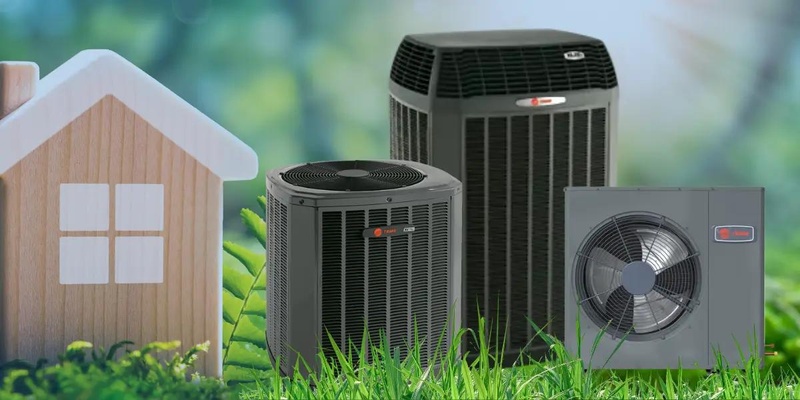
Daikin and Trane have very energy-efficient air conditioners, although Daikin is slightly higher in the peak efficiency rating. The best models of Daikin go as high as 24.5 SEER, which is made possible by the advanced inverter compressor technology of Daikin, which constantly changes the speed to meet the cooling demand.
The most efficient Trane unit is the XV20i that is rated up to 22 SEER, which is very efficient and far above the average in the industry. Practically, it implies that both brands are able to reduce cooling expenses of the homeowner considerably, particularly in comparison to the older models.
A lot of Trane and Daikin models are Energy Star certified, which means that they are very efficient. Daikin has also been on the forefront to use environmentally friendly refrigerants such as R-32 in certain systems, which further boosts the efficiency and environmental performance.
Trane is concerned with the maximization of performance through such features as multi-stage cooling and the ability to control temperature to prevent energy waste. To conclude, both brands are energy efficient, with Daikin having a slight edge in the maximum SEER rating, and Trane having the reliable day-to-day efficiency and sophisticated controls to adjust energy consumption.
Which Air Conditioner Lasts Longer: Daikin or Trane?
In terms of durability, Trane air conditioners are well known to be ruggedly built and long lasting. Trane exposes its units to extreme conditions in temperatures ranging between -20°F and 120°F to make sure that they can endure tough conditions. This high level of testing is passed on to the air conditioners that can usually provide 15-20 years of dependable service with proper maintenance.
The slogan used by Trane, which is, It is Hard to Stop a Trane, is often quoted by the homeowners as an indication of its good durability.
Daikin units are also designed to be long lived and reliable. Daikin is a global leader in HVAC and it has high quality control during the manufacturing process. Most Daikin products are sold with up to a 12 year parts warranty, which reflects the confidence that the company has in their durability.
Daikin air conditioners are durable in practice; HVAC technicians report that Daikin premium line (not the Goodman one) needs minimal repairs and has a long service life, similar to the best brands. Although Trane may have an advantage of a long-standing reputation of durability in the U.S., the build quality and warranties of Daikin suggest that both companies can serve more than 10 years with proper maintenance.
Is a Daikin or Trane Air Conditioner More Expensive?

The cost is one of the factors that can make a homeowner decide between Daikin and Trane. Overall, Trane air conditioners are relatively expensive, which is an indication of their reputation and construction. Trane is regarded as one of the costly brands in the market.
Don’t Overpay for HVAC Services – Call 888-894-0154 Now to Compare Local Quotes!
The average price of a Trane central air conditioning system to install is approximately between 4,800 to 10,000+ dollars depending on the model and the project details. The upper end of this range is taken by higher-end models of Trane that have variable-speed technology and smart features.
Daikin air conditioners are sometimes a little cheaper to purchase. An equivalent Daikin AC system may be installed at a price of about 4,500 to 9,000 dollars. Daikin has a wide range of products starting with low-end units to high-efficiency models, which enables the homeowner to get a unit that suits their budget.
In most instances, you may find similar features at a cheaper price with Daikin, partly due to the fact that Daikin is trying to increase its market share in the U.S. market and in most instances, it sets its prices competitively.
It should be mentioned that the real prices depend on such factors as the size of the unit (tonnage), SEER rating, the complexity of the installation, and the price of labor in the area. In addition, the two brands often offer seasonal deals or financing plans that can make the effective price lower.
All in all, in case the budget is one of the main priorities, Daikin can be a better deal in terms of the initial price, and Trane requires a greater investment in its brand name and its reputation of durability.
What Customer Service and Warranty Support Do Daikin and Trane Provide?
Daikin and Trane have good customer service and warranty programs, although there are certain differences to mention. Trane usually offers 10-year limited parts warranty on its residential air conditioners (provided the product is registered). This includes important parts such as compressors and coils, but not labor. Trane also offers the option of customers to buy extended warranties or service agreements with their dealers, which may include labor and cover more than 10 years.
Trane has many authorized dealers and technicians, and so service and parts are usually very good. The customers have been known to complain that Trane customer service is responsive in solving problems.
Daikin also provides a strong warranty cover. A large number of Daikin AC models have a 12-year limited parts warranty (with registration) – significantly longer coverage of parts than most competitors. Daikin also supports their systems with optional extended service plans (e.g. the Daikin “Asure” plan) up to 12 years that may cover labor as well, giving them a “worry-free” protection.
Nevertheless, Daikin needs professional installation and proper registration to keep the warranty; e.g., the units bought online and not installed by an authorized dealer can have no warranty at all.
Regarding customer support, Daikin has been increasing its presence in the U.S. and operates via a network of authorized dealers (many of which used to be Goodman/Amana dealers) so locating service is typically not a problem. They also provide online manuals, troubleshooting guides to owners.
Although Trane brand is older in the U.S., i.e., some consumers feel safe with its long history, the length of the warranty and the reputation of the company as a support provider are impressive in the case of Daikin. To conclude, both brands will be able to support customers well in after-sales support: Trane is reliable and has a good 10-year warranty, and Daikin tends to go an extra mile and provide longer standard warranties, but make sure to follow installation and registration procedures to get the maximum out of it.
What Technology and Features Do Daikin and Trane Air Conditioners Offer?
In the comparison of technology and features, both Daikin and Trane offer innovative solutions, although there are slight differences in the focus:
Daikin is famous with its innovative technologies, particularly, in the design of compressors. Daikin was the first company to introduce inverter-driven compressors, enabling their air conditioners to vary speed and output continually. This makes the indoor temperatures very stable, more energy efficient and quieter.
Indeed, one of the reasons why the units of Daikin have such high SEER ratings is their inverter technology. Daikin also has smart home features; e.g. the Daikin One+ smart thermostat can be used with Daikin systems to offer smartphone control and sophisticated scheduling. Also, Daikin focuses on eco-friendly innovations, it was one of the first to apply R-32 refrigerant, which has a lower global warming potential than the widespread R-410A.
Most Daikin products, such as the Daikin FIT series, are slim and compact in design and are quiet (with sound levels of about 56 dB at low speed), and are less obtrusive in a home, both visually and audibly.
Trane is oriented on strong performance and built in controls. One of the features of the high-end models of Trane is the ComfortLink II communicating control system. This technology enables the AC and thermostat to communicate and adjust in harmony to perform optimally and even other HVAC components.
The systems manufactured by Trane can be connected to the Trane Home (previously Nexia) app and smart thermostats to allow remote control and voice control (compatible with Alexa and Google Assistant). Trane also has distinctive engineering characteristics such as all-aluminum Spine FinTM coils that are corrosion resistant and help keep efficiency over time and ClimatuffR compressor, a proprietary compressor design that is built to last.
Trane has also incorporated noise-reduction in its unit design, with the top models running at 55 dB or less, with the help of sound insulators and two-stage or variable-speed fans.
Regarding the choice of products, both brands have a variety of products starting with simple single-stage air conditioners to complex variable-speed systems. Both (Daikin smart thermostat vs. Trane connected controls) offer smart features, and both brands can be supplemented with additional options such as advanced air filtration or zoning systems.
On the whole, Daikin is more high-tech efficient and eco-friendly innovative, whereas Trane is more integrated and user-friendly. The outcome to the homeowner is that both brands can offer modern comfort features, the decision can be based on which particular features are of the most importance to your needs.
Don’t Overpay for HVAC Services – Call 888-894-0154 Now to Compare Local Quotes!
What Do User Reviews Say About Daikin vs Trane Air Conditioners?
Considering the user reviews and satisfaction, both Daikin and Trane are mostly positively reviewed, yet Trane has a longer-established reputation among the U.S. homeowners. Trane is always or nearly at the top of consumer surveys of HVAC reliability and satisfaction. As an example, Trane has received a score of 5 out of 5 in the predicted reliability and owner satisfaction in the past years by Consumer Reports.
Trane ACs have a reputation of good cooling performance and durability with many customers commending their systems on their good cooling performance and durability, with some Trane systems lasting 15+ years with little problems. The satisfaction is usually very high and this is usually related to the build quality of Trane and the support of its dealer network in case of problems.
Daikin is a relatively new brand in the U.S. residential market, so there are not many legacy reviews, but the brand is steadily gaining a good reputation. The users who have installed Daikin systems often mention their silent work and reduced energy bills, which means that they are satisfied with the performance and efficiency. The buyers are also assured by the warranty (12 years parts) offered by Daikin, which is a positive aspect in reviews.
The HVAC professionals frequently state that the high-end models produced by Daikin can be compared to the leading American brands in terms of reliability. A factor observed in certain discussions is that since Daikin is not as widespread in some areas, some homeowners use installers who are still learning about the brand, hence, it is important to make sure you have a well-educated installer to have a good experience.
When it comes to direct comparisons by customers who have used both, Trane may receive a minor edge in terms of proven track record, but Daikin usually takes the value (cost vs. performance) category. Notably, customer satisfaction is highly affected by quality of installation and maintenance in both brands.
A properly installed Daikin will beat a poorly installed Trane and vice versa. All in all, both brands are very satisfying, Trane because of its proven reliability over time and Daikin because of its innovative efficiency and sound construction now tested in markets all over the world.
What Should You Know About Installing and Maintaining Daikin or Trane AC Units?
Daikin or Trane, it does not matter, but it is important to install it properly to obtain the maximum out of your air conditioner. Both brands highly advise the installation of their units by licensed and experienced HVAC technicians.
As a matter of fact, Trane needs to be installed by its authorized dealers to have the warranty fully valid and the system set up properly. In the same way, Daikin does not guarantee warranties on the units that were not installed by a professional as per their guidelines. As a homeowner you must anticipate to utilize a good contractor who is conversant with the brand you buy.
A good installation will see that the system is sized correctly to your home, that all connections are done correctly and that the unit is filled with refrigerant to specification which will all impact performance and life.
Daikin and Trane systems are similar in the maintenance requirements. Regular maintenance involves changing or cleaning the air filters on a regular basis, ensuring that the outdoor condenser unit is clear of obstructions and scheduling an annual check-up with an HVAC technician.
Annual maintenance will usually include cleaning the coils, inspecting the refrigerant levels, electrical parts, and ensuring that the compressor and fans are in a good condition. These maintenance activities will ensure that both Daikin and Trane units will be more efficient and durable when they are carried out at the right time. Luckily, both brands do not require any strange maintenance, parts such as filters are easily found and both dealership networks of the two companies can provide any particular replacement parts should they ever be required.
Among the differences, it is necessary to mention that the network of authorized dealers of Trane is quite large, as the brand has been operating in the U.S. market over the long period, and it may be not difficult to find service technicians. The network of Daikin is also expanding rapidly (with the help of Goodman infrastructure) and thus most regions also have qualified Daikin service providers.
When you are having your system installed, it is prudent to inquire with the installer on the maintenance plans or service packages of both brands as they usually have maintenance programs through dealers to ensure your AC is running at its best. Concisely, both Daikin and Trane should invest in quality installation and frequent maintenance. A Daikin or Trane air conditioner can provide years of efficient cooling and dependable comfort with proper care.

How to Get the Best HVAC Prices
- Firstly, keep in mind that installation quality is always the most important thing for residential HVAC project. So never sacrifice contractor quality for a lower price.
- Secondly, remember to look up the latest rebates as we talked above.
- Thirdly, ask for at least 3 bids before you make the decision. You can click here to get 3 free estimates from your local contractors, and this estimate already takes rebates and tax credit into consideration and filter unqualified contractors automatically.
Lastly, once you chose the right contractor, remember to use the tactics from this guide: Homeowners Tactics When Negotiating with HVAC Dealer to get the final best price.