If you want the most efficient window air conditioner, choose models with inverter technology, high CEER ratings, or ENERGY STAR recognition. The Midea U and Frigidaire Gallery models are best for long-term energy savings; smaller CEER-rated units like the Midea 5,000 BTU suit tiny rooms; Wi‑Fi and multi-mode units balance control and efficiency for apartments. The list below highlights five efficient options across room sizes and feature sets.
| Product | Best For | Key Efficiency Feature |
|---|---|---|
| Midea 10,000 BTU U Smart Inverter | Large rooms, lowest energy use | DC inverter + 35% energy savings, ENERGY STAR |
| Frigidaire Gallery 10,000 BTU Smart Inverter | Consistent eco cooling, quiet operation | Inverter tech, ENERGY STAR Most Efficient |
| MilleLoom 12,000 BTU WiFi AC | Big rooms needing smart control | WiFi remote control, labeled energy-efficient |
| Electactic 8,000 BTU Window AC | Medium rooms, multi-mode savings | Eco mode + energy-saving modes |
| Midea 5,000 BTU EasyCool | Small rooms and budget-conscious buyers | CEER 11.0 for lower running costs |
Midea 10,000 BTU U Smart Inverter

Features referenced: ultra quiet U-shape design, DC inverter technology, more than 35% energy savings, Wi‑Fi control, R32 refrigerant, operation as low as 32 dBA, cooling watts and rated amps listed in product details. This unit was selected for its inverter design and explicit energy-saving claim, which directly target the buyer intent for efficiency.
- Best for buyers who want maximum energy savings and quiet operation in medium to large rooms.
- Choose this if you prioritize inverter efficiency and smart controls for remote scheduling.
- Avoid this if you need a very compact, low-BTU unit for a tiny room.
- Caution: Requires a window and installation that accommodates the U-shaped design; confirm window fit before purchase.
Frigidaire Gallery 10,000 BTU Smart Inverter

Features referenced: inverter technology for consistent energy-efficient cooling, extra quiet performance at 42 dBA, ENERGY STAR Most Efficient award, electronic control type, designed for rooms up to 450 sq. ft. This product was selected for its ENERGY STAR Most Efficient recognition and inverter system that explicitly target energy-conscious buyers.
- Best for buyers who want certified top-tier energy efficiency and quiet running in medium rooms.
- Choose this if you need consistent temperature control with lower annual energy use compared to standard units.
- Avoid this if you only need a small 150 sq. ft. capacity unit.
- Caution: Inverter units can cost more up front than basic units; factor upfront cost into value comparisons.
Window AC 12,000 BTU with WiFi
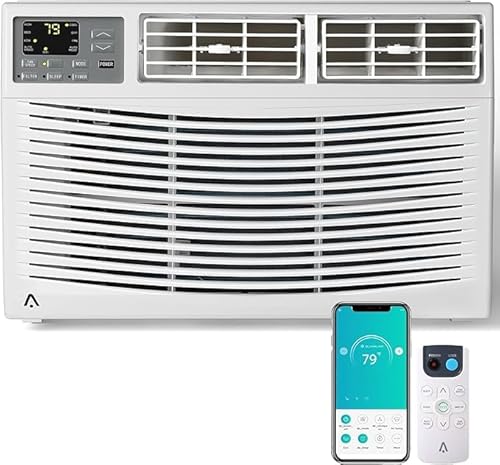
Features referenced: WiFi remote app control, digital controls, 3 fan speeds, 3.6 pints humidity removal per hour, labeled energy-efficient, cools up to 550 sq. ft. This model was selected for combining higher capacity cooling with smart control features that support efficient pre-cooling and remote management.
- Best for buyers who need a higher-capacity unit with smart scheduling for larger rooms or open-plan spaces.
- Choose this if you want to reduce runtime by controlling the unit remotely and scheduling cooling cycles.
- Avoid this if you only need cooling for a small bedroom or want the lowest possible BTU unit.
- Caution: High-BTU units must match room size; oversizing reduces dehumidification efficiency and can raise energy use.
Electactic 8,000 BTU Window AC

Features referenced: 8000 BTU cooling up to 350 sq. ft., 6 modes (Cool, Dry, Fan, Auto, Sleep, Eco), 24-hour timer, adjustable airflow, 3 fan speeds, installation kit fits common window sizes, remote control. Selected because multi-mode Eco and sleep settings can reduce energy use while offering flexibility for medium spaces.
- Best for buyers who want versatile modes and an energy-saving Eco mode for medium rooms.
- Choose this if you value multiple operating modes and timer scheduling to limit run hours.
- Avoid this if you need a certified ENERGY STAR inverter product for maximum efficiency.
- Caution: Manufacturer energy savings claims depend on usage patterns; actual savings vary with settings and room conditions.
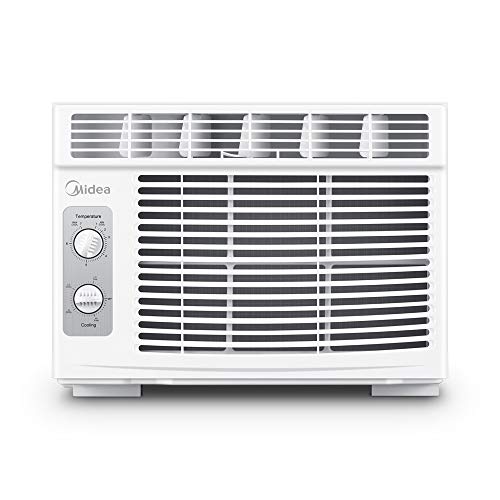
Midea 5,000 BTU EasyCool Small AC
Don’t Overpay for HVAC Services – Call 888-894-0154 Now to Compare Local Quotes!
Features referenced: cools up to 150 sq. ft., 7 temperature settings, 2 cooling/2 fan speeds, 2-way air direction, removable reusable filter, CEER of 11.0, quieter than a household refrigerator, mechanical/button controls. Selected for its explicit CEER value, which helps buyers compare running costs for small rooms.
- Best for buyers with small rooms or single-room use who want an explicitly rated CEER for energy comparison.
- Choose this if you need lower running costs in a compact, simple-to-use unit.
- Avoid this if you need inverter-level energy savings or smart controls for larger spaces.
- Caution: CEER 11.0 indicates efficiency for its size, but absolute energy use scales with runtime and room conditions.
Buying Guide
What makes a window AC “most efficient”?
Efficiency combines the unit’s technology (inverter vs. fixed-speed), its CEER or ENERGY STAR designation, and how well the BTU matches your room size. Inverter compressors adjust power to maintain temperature with less cycling losses. ENERGY STAR and CEER values are standardized ways to compare running efficiency across units.
Inverter or Non-Inverter—Which Should You Choose?
Choose inverter models if you run the AC for long periods or want reduced energy use and quieter operation. Non-inverter (fixed-speed) units are usually cheaper up front and can be efficient for short, occasional use in small rooms.
How to match BTU to room size?
Smaller rooms (up to 150 sq ft): 5,000–6,000 BTU. Medium rooms (150–350 sq ft): 6,000–8,000 BTU. Large rooms (350–550+ sq ft): 10,000–12,000+ BTU. Correct sizing avoids short cycling (oversized) or overworking (undersized), both of which increase energy use.
Are smart controls helpful for efficiency?
Yes. Wi‑Fi, timers, and remote scheduling let you pre-cool and avoid running the unit while no one is home. Smart scheduling plus inverter tech yields the best operating efficiency when used correctly.
Noise and efficiency—how are they related?
Inverter units typically run at lower steady speeds and are quieter, which also correlates with efficient operation. Noise specs (dBA) are useful when choosing units for bedrooms or quiet spaces.
Maintenance that preserves efficiency
- Clean or replace filters regularly to maintain airflow and heat-exchange efficiency.
- Ensure window seals and insulation are intact to prevent loss of cooled air.
- Keep condenser coils clean and unobstructed for optimal heat rejection.
FAQ
Which rating shows the most accurate efficiency comparison? CEER and ENERGY STAR designations are standardized and useful for comparing efficiency across window ACs.
Does inverter technology always save energy? Inverter compressors generally save energy when the unit runs for extended periods or maintains stable setpoints; savings vary with usage patterns.
Is a higher BTU more efficient? Higher BTU units cool larger spaces faster but are not inherently more efficient; efficiency depends on proper sizing and the unit’s CEER or inverter technology.
Do smart features reduce electricity bills? Smart features can reduce runtime through scheduling and remote control, which can lower bills if used to optimize operating hours.
How often should I clean the filter? Clean or wash reusable filters every 1–3 months depending on use and dust levels to maintain airflow and efficiency.
Can I compare claimed annual savings across manufacturers? Use standardized metrics like CEER or ENERGY STAR reports for consistent comparisons; manufacturer annual cost estimates can vary by assumed usage patterns.

How to Get the Best HVAC Prices
- Firstly, keep in mind that installation quality is always the most important thing for residential HVAC project. So never sacrifice contractor quality for a lower price.
- Secondly, remember to look up the latest rebates as we talked above.
- Thirdly, ask for at least 3 bids before you make the decision. You can click here to get 3 free estimates from your local contractors, and this estimate already takes rebates and tax credit into consideration and filter unqualified contractors automatically.
Lastly, once you chose the right contractor, remember to use the tactics from this guide: Homeowners Tactics When Negotiating with HVAC Dealer to get the final best price.