For RV buyers seeking efficient year-round climate control, 115V inverter mini splits with pre-charged condensers are the most practical choice. These units offer low startup current, quieter operation, and simplified installation kits that are better suited for motorhomes, travel trailers, and converted vans. Below is a comparison table of five 115V-compatible mini splits that match common RV needs, followed by product details, a buying guide, and a short FAQ.
| Model | BTU | Voltage | Best For |
|---|---|---|---|
| ROVSUN 9000 BTU WiFi | 9000 | 115V | Small to mid-size RVs needing quiet operation |
| Senville LETO 9000 BTU | 9000 | 110/120V | RV owners wanting top efficiency and smart control |
| Feelfunn 9000 BTU | 9100/9500 | 115V | RVers in cold climates or wide temperature ranges |
| Albott 12000 BTU | 12000 | 115V | Larger motorhomes needing higher capacity on 115V |
| Senville LETO 12000 BTU | 12000 (1 Ton) | 110/120V | Large RVs that want certified efficiency and smart features |
ROVSUN 9000 BTU WiFi Mini Split (115V)

Features listed: 9000 BTU cooling and heating range, heat pump, effective dehumidification, 19 SEER2 inverter, 115V operation, pre-charged condenser, whisper-quiet 28dB mute mode, and included installation kit.
Best for: Small to mid-size RVs and camper conversions where low noise and 115V compatibility matter. Selected because it combines a 115V power requirement, pre-charged condenser, inverter efficiency, and a low-noise indoor unit that suits sleeping areas.
Caution: The outdoor/condenser unit still requires secure mounting and space outside the RV; plan for roof or rear wall mounting and check vehicle carrying capacity before install.
Senville LETO 9000 BTU Mini Split (110/120V)
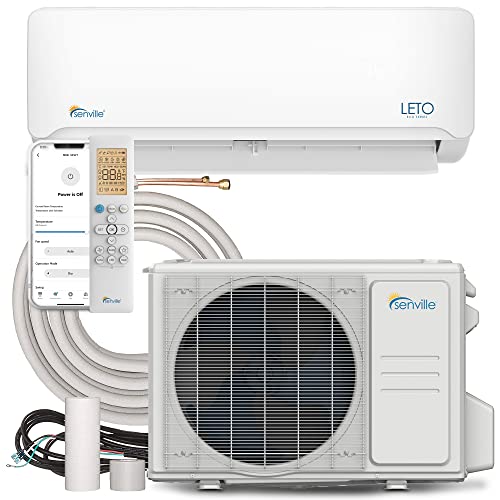
Features listed: Alexa compatibility, 4-in-1 operation (cool/heat/dehumidify/fan), high SEER2 (21.5), DC inverter technology, UL Listed and AHRI certified components referenced for the series.
Best for: RV owners who want top-seasonal efficiency and smart voice/app control on 110/120V service. Selected because the higher SEER2 rating reduces runtime and electricity draw—important when relying on shore power or a generator.
Caution: Smart and certified features are advantageous, but the outdoor unit still requires proper mounting and weather-proofing for mobile use.
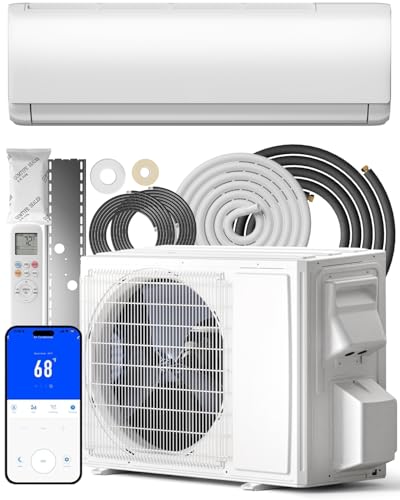
Feelfunn 9000BTU Mini Split (115V)
Don’t Overpay for HVAC Services – Call 888-894-0154 Now to Compare Local Quotes!
Features listed: ~9100 BTU cooling and ~9500 BTU heating, 22 SEER2, remote and WiFi control, works with Alexa/Google Assistant, self-cleaning filter, installation kit included, outdoor unit rated to operate at very low temperatures (-13°F) to high temperatures.
Best for: RVers who travel in cold climates or need reliable heat pump performance across wide temperatures. Selected for its high SEER2, extended outdoor operating range, and self-cleaning feature that helps reduce maintenance.
Caution: The wide operating range is beneficial, but verify that mounting and weather sealing are compatible with your RV’s roof or sidewall configuration.
Albott 12000 BTU Mini Split (115V)

Features listed: 12,000 BTU cooling/heating, SEER2 18 efficiency, all-season operation from 5°F to 122°F, dehumidify and fan modes, self-cleaning, remote and app control, claimed coverage up to 750 sq.ft., easy installation kit.
Best for: Larger motorhomes, fifth-wheels, or converted buses that need higher capacity but want to remain on standard 115V service. Selected because it provides higher BTU with a 115V rating and an installation kit intended to simplify installs where space and airflow demand more capacity.
Caution: Higher BTU increases electrical draw and may require checking shore-power, generator, or inverter limits before installation.
Senville LETO 12000 BTU Mini Split (110/120V)
Features listed: Alexa-enabled control, 4-in-1 operation, SEER2 20.8, inverter heat pump functioning in low temperatures, UL Listed DC inverter and AHRI-referenced certification for the series, designed for both residential and light commercial use.
Best for: Large RVs and motorhomes that require 1-ton capacity with smart controls while staying on 110/120V circuits. Selected for certified inverter technology and higher seasonal efficiency which can cut runtime on limited power sources.
Caution: The 12000 BTU outdoor unit is heavier and larger; confirm mounting options and weight limits on your RV roof or wall before purchase.
Buying Guide: What RV Buyers Should Check
How many BTUs does my RV really need?
BTU needs depend on RV interior volume, insulation, windows, and usual occupancy. Smaller trailers and camper vans commonly use 9000 BTU-class mini splits; larger motorhomes and converted buses often require 12,000 BTU or higher. Choose a unit that balances capacity and available electrical supply.
Can a mini split run on RV shore power or an inverter?
Many 115V inverter mini splits are compatible with RV shore power and built-in generator systems. Check the unit’s startup current and the RV’s breaker and inverter continuous/peak ratings. Inverter-based air conditioners with soft-start inverter compressors draw less surge current than traditional compressors.
Is a pre-charged line set necessary for RV installs?
Pre-charged condensers simplify installation because they avoid field charging refrigerant. For mobile installs where installers want minimal onsite refrigerant handling, pre-charged line sets reduce complexity. If a unit is not pre-charged, professional vacuum and charge during installation are required.
Roof mount vs through-wall for condensers—what’s practical?
Roof mounting is common for RVs but requires secure brackets, vibration isolation, and corrosion protection. Through-wall mounting can place the condenser at the rear or side but needs careful airflow and clearance planning. Choose a mounting method that fits your RV structure and legal road limits.
What electrical checks should I perform before buying?
- Confirm available circuit amperage and whether the RV shore power provides 30A or 50A service.
- Check generator and inverter continuous output and peak/surge capacity.
- Verify breaker and wiring size meet the mini split’s recommended supply.
How important is SEER or SEER2 rating for RV use?
Higher SEER/SEER2 reduces run time and energy consumption, which matters when using shore power, generator runtime, or battery/inverter systems. For mobile use, prioritize units with higher seasonal efficiency to lessen fuel or battery draw.
FAQ
Can I install a residential mini split on my RV myself? Many kits include line sets and installation instructions, but roof or through-wall installation and refrigerant handling often require professional skills. Use a qualified installer if you are not experienced.
Do mini splits need a separate drain for condensate in an RV? Yes. Condensate drainage must be routed away from the RV structure and components; many installations use gravity drain lines or condensate pumps depending on unit placement.
Will a mini split work while the RV is moving? Running a mini split while driving is generally not recommended. Secure mounting and vibration isolation are required, and operation is best when stationary with stable electrical supply.
Are smart/WiFi features useful in an RV? Yes. Remote controls and WiFi/voice features allow pre-cooling or heating before arrival, which can be convenient when on shore power or connected to campsite WiFi/cell hotspot.
Don’t Overpay for HVAC Services – Call 888-894-0154 Now to Compare Local Quotes!
Can a heat pump on a mini split replace a furnace in cold conditions? Heat pump efficiency drops as outdoor temperature falls; some units operate at low temperatures, but confirm the listed operating range. For extreme cold, supplemental heating may be necessary.
How often should filters or outdoor coils be cleaned in an RV application? Filters benefit from regular cleaning based on use and dust exposure. Outdoor coils should be inspected and cleared of debris periodically, especially after travel through dusty or salty environments.

How to Get the Best HVAC Prices
- Firstly, keep in mind that installation quality is always the most important thing for residential HVAC project. So never sacrifice contractor quality for a lower price.
- Secondly, remember to look up the latest rebates as we talked above.
- Thirdly, ask for at least 3 bids before you make the decision. You can click here to get 3 free estimates from your local contractors, and this estimate already takes rebates and tax credit into consideration and filter unqualified contractors automatically.
Lastly, once you chose the right contractor, remember to use the tactics from this guide: Homeowners Tactics When Negotiating with HVAC Dealer to get the final best price.