Yes—mini split air conditioners are an effective choice for garage climate control. They provide targeted cooling, heating, and dehumidification without ductwork, which makes them suitable for garages used as workshops, studios, or vehicle storage. Below is a quick summary table and five recommended units selected for different garage sizes, voltage needs, and energy priorities.
| Model | Best For | Coverage | Voltage / SEER2 |
|---|---|---|---|
| Albott 12,000 BTU | Larger single-car garages or workshops | Up to 750 sq. ft. | 115V / SEER2 18 |
| Feelfunn 9,000 BTU | Small garages or insulated workshops | Up to 550 sq. ft. | 115V / SEER2 22 |
| GarveeHome 12,000 BTU | Garages with 230V supply or owners who want DIY kit | Up to 750 sq. ft. | 230V / SEER 18.5 |
| YITAHOME 12,000 BTU | Garages where quiet operation and air cleaning are priorities | Up to 750 sq. ft. | 115V / SEER2 20 |
| Senville LETO 9,000 BTU | Energy-efficient small garage solution with high SEER2 | Typical garage sizes under 550 sq. ft. | 110/120V / SEER2 21.5 |
Albott 12,000 BTU Mini Split

Features: All-in-one cooling, heating, dehumidifying, and fan modes; 61°F–90°F settings; 24-hour timer; sleep mode; inverter heat pump with SEER2 18; rated for extreme operation from 5°F to 122°F; covers up to 750 sq. ft.
Best for: Larger single-car garages, workshops, or garages used as multi-purpose spaces where both heating and cooling are needed year-round. Selected for its 12,000 BTU capacity and SEER2 18 efficiency that balance power and energy use.
Caution: The listed operating range down to 5°F supports cold-weather use, but garages with poor insulation may still require supplemental heating at extreme temperatures.
Feelfunn 9,000 BTU Mini Split
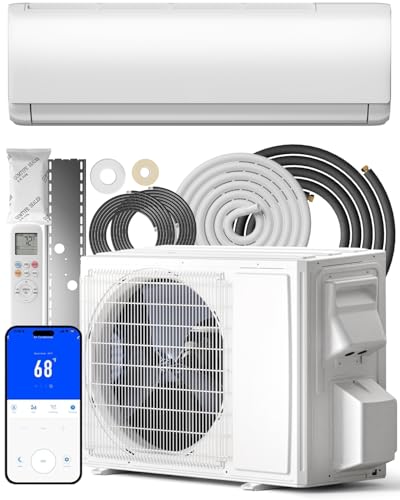
Features: 9,100 BTU cooling and 9,500 BTU heating; covers up to 550 sq. ft.; temperature range 60°F–90°F; voice control compatible with Alexa and Google Assistant; Wi‑Fi control and remote; self-cleaning function; outdoor operation from -13°F to 125.6°F.
Best for: Small to medium garages or detached insulated workshops where lower capacity and smart controls are preferred. Chosen for compact coverage and high SEER2 (22) which reduces run time and energy use in moderate climates.
Caution: Its 9,000 BTU capacity may be underpowered for large or poorly insulated garages, so choose this only if your garage size and insulation match the coverage recommendation.
GarveeHome 12,000 BTU 230V Mini Split

Don’t Overpay for HVAC Services – Call 888-894-0154 Now to Compare Local Quotes!
Features: SEER 18.5 inverter technology; 12,000 BTU coverage up to 750 sq. ft.; includes DIY installation kit with line sets and drain hose; Wi‑Fi and remote controls; pre-charged refrigerant noted but vacuumization needed during installation.
Best for: Garages that have access to 230V supply and owners comfortable with a DIY or semi-professional install. Selected for the 230V option and the included installation kit that simplifies setup for experienced installers.
Caution: The unit is pre-charged but requires vacuumizing refrigerant lines during installation. Avoid DIY installation if you lack refrigeration installation tools or experience.
YITAHOME 12,000 BTU Mini Split
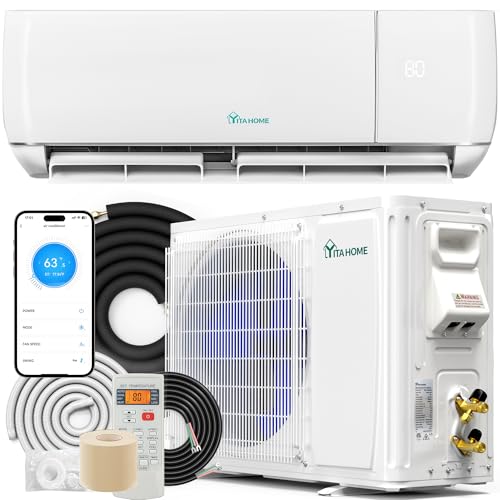
Features: 20 SEER2 inverter; covers up to 750 sq. ft.; ETL and AHRI certified; five modes (auto/cool/dry/heat/fan); Wi‑Fi and Alexa compatibility; automatic defrosting; self-diagnosis and self-cleaning; quiet operation below 41 dB.
Best for: Garages where low noise and improved air quality are priorities, such as workshops or home studios. Selected for its quiet performance, certifications, and built‑in air-cleaning modes that reduce dust and particles.
Caution: Certification and air-cleaning features help reliability and indoor air, but proper garage ventilation and periodic filter maintenance remain necessary to control fumes, dust, and chemical odors.
Senville LETO 9,000 BTU Mini Split
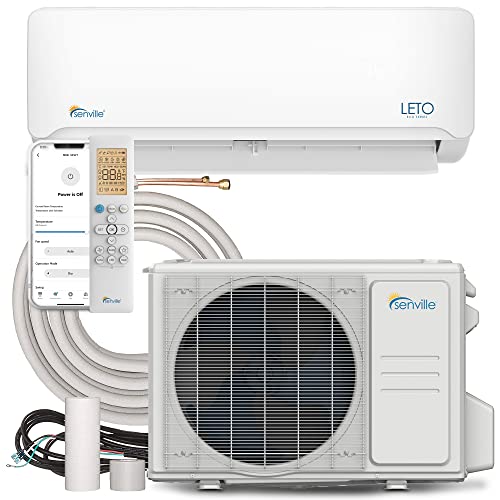
Features: 9,000 BTU cooling; SEER2 21.5 efficiency; Alexa integration; 4-in-1 operation with heat pump down to 5°F; dehumidifier and turbo function; UL listed and AHRI certified.
Best for: Small garages or well-insulated workshops where high efficiency and voice control matter. Chosen for its high SEER2 rating and compact capacity that can minimize energy use in smaller spaces.
Caution: The 9,000 BTU size is best for small garages. For large two-car garages or poorly insulated spaces, choose a higher-capacity unit to avoid long run times and inadequate comfort.
Buying Guide: How To Choose a Mini Split for Your Garage
What size mini split do I need for my garage?
Estimate garage square footage and match to unit coverage. Typical guidance:
- Under 550 sq. ft.: 9,000–12,000 BTU units may be adequate for well-insulated spaces.
- Up to 750 sq. ft.: 12,000 BTU units cover most single-car garages and larger workshops.
- Over 750 sq. ft. or poorly insulated garages: consider higher-capacity units (18,000 BTU or multi-zone systems).
Does garage insulation change the choice?
Yes. Poor insulation increases heat gain and loss, requiring a larger capacity unit or auxiliary heating. Prioritize insulation, weatherstripping, and ceiling sealing to reduce load and runtime.
What about voltage and installation?
Check the garage electrical supply before buying. Many 9,000–12,000 BTU units run on 110/120V for simple installs. Larger or higher-efficiency models may require 230V. Some units come with DIY installation kits; refrigerant handling, vacuumization, and proper mounting often require a licensed HVAC technician.
How important is SEER2 / efficiency?
Higher SEER2 means less energy use for the same cooling output. For garages used frequently or as heated workshops, a higher SEER2 reduces electricity costs and runtime. Balance initial cost, electricity rates, and expected daily use.
Do I need heating capability?
If you use the garage in winter, choose a heat-pump mini split rated for low ambient heating performance. Confirm the listed low-temperature heating operation and consider supplemental heat if temperatures regularly drop below the unit’s rated heating threshold.
What about noise and air quality?
Choose models with low indoor sound ratings if you will be working in the garage. Look for filtration features, self-cleaning or washable filters, and modes that address humidity or particulates. Regular filter maintenance is necessary to maintain performance.
Smart controls and reliability
Wi‑Fi and voice compatibility provide convenience, especially for remotely pre-conditioning the garage. Check certifications and manufacturer notes about installation requirements to ensure proper refrigerant handling and warranty compliance.
FAQ
Can a mini split cool and heat an uninsulated garage?
Yes, but an uninsulated garage increases load. You may need a higher-capacity unit and should expect longer runtimes. Improving insulation reduces required capacity and operating cost.
Do mini splits require a lot of installation work?
Installation requires mounting an indoor unit, placing an outdoor condenser, and running refrigerant lines and electrical wiring. Some kits simplify the process, but licensed HVAC installation is recommended for refrigerant handling and system vacuumizing.
Don’t Overpay for HVAC Services – Call 888-894-0154 Now to Compare Local Quotes!
Will a mini split remove garage odors or vehicle fumes?
Mini splits provide filtration and dehumidification but are not designed to remove strong chemical fumes. Ensure proper ventilation and avoid running engines inside the garage while relying on the AC for air quality.
Is 9,000 BTU enough for a typical one-car garage?
It can be sufficient for a well-insulated one-car garage used intermittently. For workshops with equipment or frequent occupancy, a 12,000 BTU unit often provides better temperature control.
How do I maintain a garage mini split?
Regularly clean or replace filters, keep the outdoor unit clear of debris, check condensate drainage, and schedule periodic professional checkups to verify refrigerant levels and electrical connections.
Are smart features worth it for a garage unit?
Smart controls add convenience for pre-cooling or pre-heating before use. They can save energy by allowing remote scheduling, but they do not replace proper sizing, insulation, and ventilation decisions.

How to Get the Best HVAC Prices
- Firstly, keep in mind that installation quality is always the most important thing for residential HVAC project. So never sacrifice contractor quality for a lower price.
- Secondly, remember to look up the latest rebates as we talked above.
- Thirdly, ask for at least 3 bids before you make the decision. You can click here to get 3 free estimates from your local contractors, and this estimate already takes rebates and tax credit into consideration and filter unqualified contractors automatically.
Lastly, once you chose the right contractor, remember to use the tactics from this guide: Homeowners Tactics When Negotiating with HVAC Dealer to get the final best price.