For RV buyers seeking a compact, efficient mini split AC, choose a 12V model for battery-powered rigs or a 115V inverter mini split for shore-power or generator-equipped RVs. The recommendations below cover small van and truck-cab installs through larger motorhomes. Each pick lists who it’s best for and one limitation to consider.
| Model | Best For | Power Type |
|---|---|---|
| Albott 12,000 BTU Mini Split | Larger motorhomes needing all-season comfort | 115V |
| Feelfunn 9,000 BTU Mini Split | Mid-size RVs seeking high SEER2 efficiency | 115V |
| ROVSUN 9,000 BTU Mini Split | Small to mid RVs that value quiet operation | 115V |
| ROVSUN 11,500 BTU Mini Split | Larger RVs needing more capacity with Wi‑Fi control | 115V |
| zhoruider DC 12V Split AC | Truck cabs, camper vans, and battery-based rigs | 12V DC |
Albott 12,000 BTU Mini Split

Features referenced: 12,000 BTU, SEER2 18 inverter heat pump, cooling/heating/dehumidifying/fan modes, 61°F–90°F settings, 24-hour timer, sleep mode, operates 5°F–122°F, covers up to 750 sq. ft., remote and app control, easy installation.
- Best for: Larger motorhomes or RVs with generous interior volume that need all-season climate control.
- Why selected: High SEER2 rating and broad operating temperature range support efficient year-round heating and cooling in varied climates.
- Choose this if you want: A single unit that handles cooling, heating, and dehumidifying with smart control options.
- Caution: May be oversized for small camper vans; confirm physical space and cooling load before selecting.
Feelfunn 9,000 BTU Mini Split
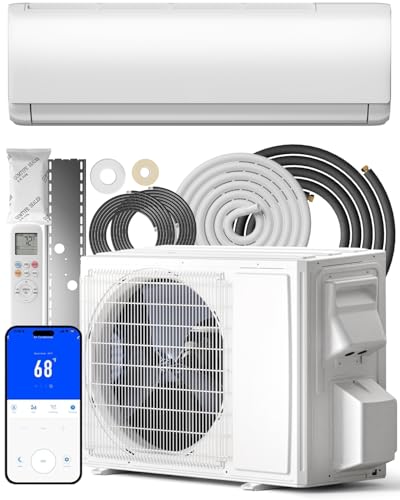
Features referenced: 9,100 BTU cooling / 9,500 BTU heating, 22 SEER2, covers up to 550 sq. ft., 60°F–90°F range, Wi‑Fi and Alexa/Google Assistant control, remote, self-cleaning, washable filter, outdoor operation -13°F to 125.6°F, installation kit included.
- Best for: Mid-size RVs or larger towable campers that have shore power or generator access.
- Why selected: Very high SEER2 rating for energy savings and smart home compatibility for remote control.
- Choose this if you want: Fast cooling/heating and voice control with a washable filter and self-cleaning function.
- Caution: Rated for up to 550 sq. ft.; this capacity may be excessive for very small campers and could increase energy draw if oversized.
ROVSUN 9,000 BTU Mini Split

Features referenced: 9,000 BTU, ideal up to 400 sq. ft., 19 SEER2 inverter, heat pump and dehumidification, 61°F–88°F range, whisper-quiet as low as 28 dB, pre-charged condenser, installation kit included, Wi‑Fi enabled.
- Best for: Small to mid-size RV interiors or converted vans that need quiet operation and efficient dehumidification.
- Why selected: Low-noise operation and intelligent inverter control suit sleeping areas or compact living spaces where noise and humidity matter.
- Choose this if you want: A quiet unit with energy-saving inverter tech and Wi‑Fi control.
- Caution: Installation kit is included, but routing line sets and mounting may require technical installation skills.
ROVSUN 11,500 BTU Mini Split

Features referenced: 11,500 BTU, all-season AC and heat pump, dehumidifier and fan, automatic defrost, self-diagnosis, ECO and sleep modes, 17 SEER2, Wi‑Fi and voice control, pre-charged condenser, operates 5°F–122°F, ETL and AHRI noted in features.
- Best for: Larger RVs or motorhomes that need higher BTU capacity with smart controls and all-season reliability.
- Why selected: Higher capacity with inverter technology and integrated smart features supports larger interior spaces and remote control operation.
- Choose this if you want: More cooling power than a 9,000 BTU unit while keeping inverter efficiency and Wi‑Fi integration.
- Caution: Confirm your RV shore power and electrical panel capacity for a higher-BTU 115V appliance before purchase.
zhoruider DC 12V Split AC Unit

Don’t Overpay for HVAC Services – Call 888-894-0154 Now to Compare Local Quotes!
Features referenced: 12V split design for truck cab/van/motorhome/camper, lightweight, compact internal and external units, scroll compressor, thick aluminum condenser, intelligent frequency conversion for low noise and energy-saving, battery power operation possible, anti-corrosion ABS materials.
- Best for: Camper vans, truck cabs, and RVs that rely primarily on battery power or DC systems.
- Why selected: Purpose-built 12V design targets mobile installs with limited AC shore power or when silent, engine-off operation is needed.
- Choose this if you want: A DC-powered split system specifically intended for vehicle cabins and battery operation.
- Caution: DC units can draw significant battery current; verify battery capacity or consider a robust inverter/charging setup before relying on engine‑off operation.
Buying Guide: How To Choose A Mini Split For Your RV
What size (BTU) do I need for my RV?
Match BTU to interior volume and insulation. Smaller camper vans often need 5,000–9,000 BTU equivalents; larger motorhomes may require 9,000–12,000+ BTU. Use the manufacturer’s stated coverage (square footage) as a starting point and account for high ceilings and sun exposure.
Should I choose 12V DC or 115V AC?
Choose 12V DC if your rig runs primarily on batteries or you need engine-off cooling. Choose 115V AC if you frequently use shore power or a generator. Verify your RV electrical system and inverter capacity before selecting a 115V unit.
Is inverter (SEER2-rated) technology important?
Inverter mini splits vary compressor speed to match demand and generally use less energy than fixed-speed units. Higher SEER2 numbers indicate better efficiency. For off-grid or long-term travel, higher SEER2 can reduce power consumption.
Do I need a pre-charged condenser or installation kit?
Pre-charged condensers and installation kits simplify installation by reducing refrigerant handling. For DIY, pre-charged systems and included line sets help; for complex roof or wall penetrations, professional HVAC installation is often safer and ensures correct vacuum/charge.
How important are noise and dehumidification?
Noise matters for sleeping comfort; look for units with low dB ratings or “whisper-quiet” modes. Dehumidification modes improve comfort in humid climates and prevent condensation issues inside the RV.
What about smart controls and weather range?
Wi‑Fi, app and voice control make pre-cooling or heating easier. Check the outdoor unit’s operating temperature range to ensure reliable operation in your expected climates (some models operate well below freezing or in extreme heat).
FAQ
Can I install a mini split in any RV? Most RVs can host a ductless mini split if there is space for an indoor head and exterior condenser and if electrical capacity matches the unit’s requirements. Structural openings and routing for line sets must be planned.
Will a 115V mini split run from shore power and a generator? Yes, 115V units are intended for standard shore power and many generators. Verify generator wattage and startup current requirements before use.
Is a 12V mini split better for off-grid RVing? 12V units suit off-grid setups because they operate directly from DC battery systems, reducing inverter losses. Ensure battery bank and charging systems can handle continuous draw.
Do mini splits require professional installation? Some units include installation kits and pre-charged condensers that simplify DIY work, but routing, mounting, and refrigerant connections may still require professional skills to ensure optimal performance.
How do I manage condensate in an RV? Choose units with built-in drain options; plan a reliable condensate drain path or pump out solution to avoid water intrusion inside the RV.
Will a mini split replace a rooftop RV AC? Mini splits offer higher efficiency and quieter indoor operation. Rooftop units remain common for simplicity and factory mounts. Selection depends on power availability, space, and installation preferences.

How to Get the Best HVAC Prices
- Firstly, keep in mind that installation quality is always the most important thing for residential HVAC project. So never sacrifice contractor quality for a lower price.
- Secondly, remember to look up the latest rebates as we talked above.
- Thirdly, ask for at least 3 bids before you make the decision. You can click here to get 3 free estimates from your local contractors, and this estimate already takes rebates and tax credit into consideration and filter unqualified contractors automatically.
Lastly, once you chose the right contractor, remember to use the tactics from this guide: Homeowners Tactics When Negotiating with HVAC Dealer to get the final best price.