For buyers seeking a reliable mini split head unit, select a model sized for the room, with the right voltage, efficiency, and control options. The picks below include single-zone heads for bedrooms and home offices, mid-size units for living areas, and multi-zone systems for whole-home or multi-room installs. Each entry notes who should choose it and a short limitation to guide selection.
| Model | Best For |
|---|---|
| YITAHOME 22 SEER2 18K 2 Zone Mini Split | Homeowners needing two indoor heads for multiple rooms |
| Feelfunn 9000BTU Mini Split | Single-room users who want Wi‑Fi and self-cleaning features |
| Senville LETO 9000BTU | Users wanting reliable Alexa integration and four-in-one functions |
| Kinetheme 12000BTU Mini Split | Medium rooms needing faster temperature response and included kit |
| Nexaro 12000BTU Pre-Charged Mini Split | Installers and buyers who want a pre-charged condenser and wider coverage |
YITAHOME 22 SEER2 18K 2-Zone Mini Split

Features noted: dual-zone system with two 9000 BTU indoor heads, SEER2 rating (22), inverter compressor and heat pump, ETL and AHRI certified, Wi‑Fi and Alexa compatibility, five operating modes (auto/cool/dry/heat/fan), automatic defrost, iFEEL mode, 24-hour timer, and quiet operation under 40 dB.
Best for homeowners who need two indoor heads to cool or heat adjacent rooms such as paired bedrooms or an office plus living area. This system was selected for multi-room capability and high SEER2 efficiency that supports lower energy use compared to non-inverter units.
Caution: This system requires a 208-230V supply and professional installation for the outdoor unit and two head connections. Avoid this if you only need single-zone cooling or lack compatible electrical service.
Feelfunn 9000BTU Mini Split
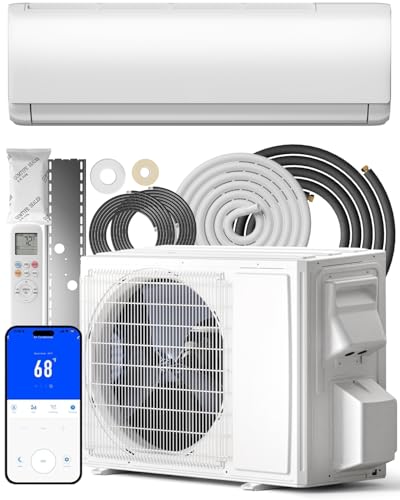
Features noted: 9100 BTU cooling and 9500 BTU heating, suitable for up to 550 sq. ft., temperature range 60°F–90°F, Wi‑Fi control with Alexa and Google Assistant, remote included, self-cleaning function, washable filter, and outdoor unit rated for wide temperature operation (-13°F to 125.6°F).
Best for renters or homeowners who want a single-zone indoor head with smart controls and maintenance-friendly features. Chosen for its built-in self-cleaning and washable filter that support indoor air freshness without extra accessories.
Caution: Coverage guidance targets up to 550 sq. ft.; avoid choosing this unit for significantly larger rooms without consulting a sizing assessment.
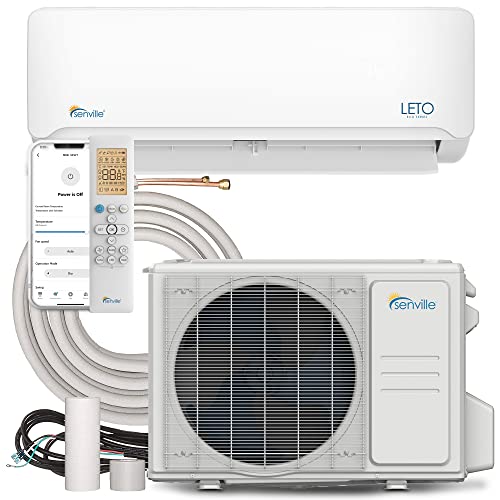
Senville LETO Series 9000BTU Mini Split
Don’t Overpay for HVAC Services – Call 888-894-0154 Now to Compare Local Quotes!
Features noted: 9000 BTU inverter mini split with Alexa compatibility, four-in-one functions (cooling, heat pump, dehumidifier, fan), turbo function, UL Listed and AHRI Certified, and advertised operation down to 5°F (-15°C) for heating performance.
Best for buyers who want a compact indoor head that integrates with voice assistants and provides a full seasonal solution. Selected for its versatile 4-in-1 operation and certification listings that indicate standard compliance.
Caution: The heating function specifies performance limits down to about 5°F; avoid relying on this as the sole heat source in climates consistently colder than the stated performance range.
Kinetheme 12000BTU Mini Split

Features noted: 12000 BTU cooling/heating, 17 SEER2 inverter efficiency, coverage up to 750 sq. ft., rapid response claims (cooling in 30 seconds, heating in 60 seconds), R32 refrigerant, multi-mode controls, 24-hour programmable timer, Sleep and Silent modes, and included installation kit.
Best for medium rooms needing faster temperature response and an included installation kit to simplify setup. Selected for its higher capacity and R32 refrigerant choice that supports lower environmental impact relative to some older refrigerants.
Caution: The rapid response times are marketing claims from the manufacturer; avoid assuming instant steady-state comfort in larger or poorly insulated spaces without professional sizing verification.
Nexaro 12000BTU Pre-Charged Mini Split
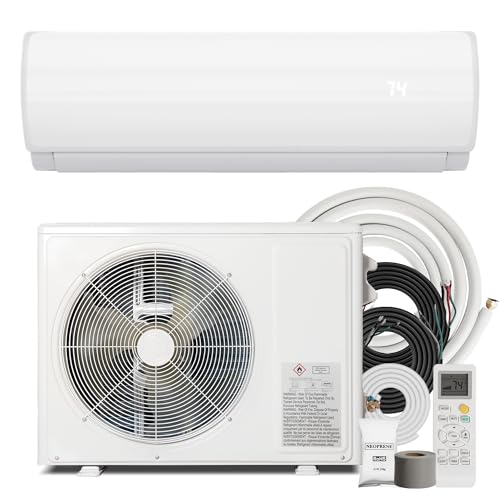
Features noted: 12000 BTU inverter system with pre-charged condenser, coverage claims up to 1250 sq. ft. for some configurations, R32 refrigerant, five operation modes, 4 fan speeds, 24-hour timer, Sleep and Eco modes, and a complete installation kit included.
Best for installers or homeowners who prefer a pre-charged outdoor condenser to reduce on-site refrigerant handling and who may need broader coverage options. Chosen for the pre-charged condenser feature and versatile controls that support installation flexibility.
Caution: Pre-charged systems still require correct line set length and professional installation when runs exceed manufacturer-specified lengths; avoid DIY refrigerant line extensions without certified service.
Buying Guide: How To Choose A Mini Split Head Unit
What room size and BTU capacity do I need?
Match BTU to room square footage and insulation. Small bedrooms often work with 9000–12000 BTU heads. Medium living rooms may need 12000–18000 BTU units. Use manufacturer coverage guidance as a baseline and consult a pro for high ceilings, sun-exposed rooms, or open plans.
How important is SEER2 and inverter technology?
Higher SEER2 indicates better seasonal efficiency. Inverter compressors modulate speed to reduce power cycling and typically save energy compared to fixed-speed units. Choose higher SEER2 models for long-term operating savings, especially in frequent-use zones.
Single-zone head or multi-zone system?
Choose single-zone heads for isolated rooms or rentals. Choose multi-zone systems when you need coordinated heating/cooling for multiple rooms with one outdoor unit. Multi-zone saves outdoor footprint but often requires higher-voltage service and professional planning.
What refrigerant and installation details matter?
R32 is common for newer models and has lower global warming potential than older refrigerants. Pre-charged condensers simplify installation for common line lengths. Verify voltage requirements (115V vs 208–230V) and confirm professional installation rules for refrigerant handling and line-set length limits.
Do I need Wi‑Fi, voice control, or extra functions?
Wi‑Fi and voice control add convenience for remote scheduling and smart-home routines. Self-cleaning and washable filters reduce maintenance. Choose features that match daily use: Wi‑Fi for remote access, quiet modes for bedrooms, and timers for energy management.
How loud will the indoor head be?
Manufacturers publish noise levels; values under 40 dB are common for quiet operation. For bedrooms and media rooms, prioritize models that list low dB figures and offer Sleep or Silent modes.
When should I hire a pro?
Hire a certified HVAC technician for electrical upgrades, multi-zone planning, refrigeration connections beyond factory pre-charge limits, and when permits are required. DIY is feasible for simple wall-mounted heads only if allowed by local codes and you fully understand electrical and mounting needs.
FAQ
Can I replace just the indoor head unit without changing the outdoor unit?
The indoor head can be replaced if the outdoor unit is compatible and the refrigerant type and operating capacity match; consult the manufacturer or an HVAC professional to confirm compatibility.
What voltage do mini split head units require?
Heads are part of systems that run on 115V or 208–230V depending on model and capacity. Check the product specifications to match your home electrical service before purchase.
Don’t Overpay for HVAC Services – Call 888-894-0154 Now to Compare Local Quotes!
Are pre-charged condensers easier to install?
Pre-charged condensers arrive with refrigerant in place for standard line lengths and can reduce field brazing and charging steps. They still require proper sizing, correct line-set lengths, and usually professional installation for best results.
How often should I clean the indoor head filter?
Clean or wash washable filters every 1–3 months depending on use and indoor air quality. Follow the manufacturer’s instructions for self-cleaning cycles when available.
Do mini split heads work in cold climates?
Many heat pump mini splits are rated for low-temperature operation; check the unit’s stated heating performance limits (for example, some list operation down to 5°F or lower) and consider supplemental heating if your location regularly drops below the specified limit.

How to Get the Best HVAC Prices
- Firstly, keep in mind that installation quality is always the most important thing for residential HVAC project. So never sacrifice contractor quality for a lower price.
- Secondly, remember to look up the latest rebates as we talked above.
- Thirdly, ask for at least 3 bids before you make the decision. You can click here to get 3 free estimates from your local contractors, and this estimate already takes rebates and tax credit into consideration and filter unqualified contractors automatically.
Lastly, once you chose the right contractor, remember to use the tactics from this guide: Homeowners Tactics When Negotiating with HVAC Dealer to get the final best price.