The question many people ask is whether a portable air conditioner that no longer has the cooling ability can be refilled with fresh refrigerant. The portable ACs have a closed refrigerant system like a refrigerator or a window AC. In normal circumstances they should not require any addition of refrigerant but what happens when performance declines?
This article will discuss the possibility of recharging a portable air conditioner, the functioning of refrigerants in portable ACs and what to do when your portable AC is low on Freon. It includes the kind of refrigerant to use, the DIY and professional recharge (tools, steps, and prices), legal and safety considerations, and indicators of leaking refrigerants or problems.
| Key Question | Quick Answer |
|---|---|
| Can portable AC units be recharged? | Usually no need under normal conditions – they are sealed systems. If a leak occurs, a recharge is possible but should be done by a licensed professional . |
| Common refrigerant types | Older units used R-22 (Freon); newer models typically use R-410A or R-32 (more eco-friendly). Some small or modern units use R-134a or even R-290 (propane) . |
| DIY vs. Professional recharge | DIY recharging is technically possible but not recommended without HVAC training – it requires special tools (gauges, vacuum pump, refrigerant) and knowledge . Professional service ensures proper handling, charging by weight, and compliance with regulations, typically costing $100–$300 . |
| Legal & safety considerations | In the U.S., handling refrigerants (Freon) often requires EPA Section 608 certification. It is illegal to vent refrigerant into the air . Refrigerants can cause frostbite or be flammable (in case of R-290), so proper safety measures are critical. |
| Signs of low refrigerant | Weak cooling or no cold air output, longer run times, ice on the coils , hissing or gurgling noises from the unit , or oily residue on or under the AC (from a leak) are telltale signs. |
Understanding Portable Air Conditioner Refrigerant Systems
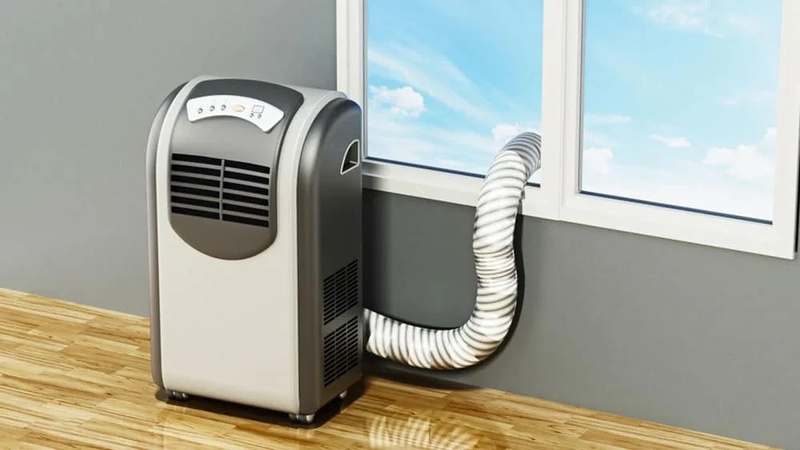
Portable air conditioners work similarly to other air conditioners: they remove heat inside the room by means of a refrigerant and move it to the outside. It is a closed loop (hermetically sealed) system that has refrigerant, a compressor, condenser and evaporator coils and an expansion mechanism. The refrigerant (generically referred to as Freon) is constantly moving through the coils, picking up the heat inside and expelling it to the outside as it goes through a pressure and state change. Since the system is factory sealed, the refrigerant does not wear out with time, in theory, it should never have to be replaced or topped off.
The majority of the modern portable AC units are constructed as a sealed system with no service ports. This implies that they are not made to be periodically filled with refrigerant as may be the case with a car AC. Installation of the refrigerant is done at manufacturing through process tubes that are sealed . The system should be pressurized and effective to cool as long as there are no leaks. Cleaning the filters and coils on a regular basis will make the AC operate efficiently without overworking the refrigerant cycle. Concisely, you do not require to recharge or replenish a portable air conditioner in normal circumstances.
Can You Recharge a Portable Air Conditioner?
Sealed System Design and Why Recharging Is Rare
The simple answer is that there is no need to recharge a portable AC unless there has been a problem. Units built since approximately 2000 tend to be hermetically sealed and do not need to have their refrigerant topped up periodically . A portable or window AC should not lose refrigerant over time as an automobile AC (which may gradually lose refrigerant over the years). When your portable AC is not cooling, it is very unlikely that low refrigerant is the problem, you would first eliminate other possibilities such as dirty filters, clogged air flow, or compressor/control problems.
With that said, the leakage of the refrigerant may occur in portable ACs, particularly when the unit is aged or physically damaged. A pinhole leak in the coils or connections may result due to vibration, corrosion, or manufacturing defects. When a large quantity of refrigerant leaks out, the AC will not be able to cool down efficiently and may end up not cooling at all. In such instances, it is technically feasible to recharge the unit using the right refrigerant. But due to the sealed design, it is not an easy job, it needs to get to the refrigerant lines and install valves to recharge. It is worth mentioning that the only situation when you will ever have to recharge a portable AC is when it has a refrigerant leak. The refrigerant does not get used up with normal operation (no leaks).
When Recharging Is Necessary (Leak Scenarios)
In case your portable AC has been experiencing a loss of cooling power and you have already eliminated the simple solutions (such as cleaning the filter and making sure that the exhaust hose is well-ventilated), the problem may lie in a leak of the refrigerant. The indications of a potential leak are mentioned below in this article (see Signs of Low Refrigerant). When there is a confirmed leak, the refrigerant (after repairing the leak) must be added to resume cooling. This is mostly experienced in the old models or the damaged units. As an example, a 1990s or early 2000s unit with R-22 refrigerant may leak as it ages or a newer unit that was dropped or improperly stored may have a cracked line.
Although recharging a portable air conditioner is not as easy as recharging a car AC, even in the case when a recharge is required. The portable ACs do not usually have recharge ports. To add refrigerant , a technician has to install a service port or piercing valve on the refrigerant line. This includes the opening of the sealed system which when not done properly may lead to more loss of refrigerant or damage. Due to such complexities, manufacturers do not want end-users to recharge their portable units. HVAC professionals usually take care of the task and most of them will determine whether it is even cost effective to do it or replace the unit.
Challenges and Feasibility of Recharging Portable Units
A major problem is that most portable AC systems are regarded as disposable appliances by HVAC technicians. They are quite cheap as compared to central AC systems and repairing may be expensive as compared to replacement. In many cases, you can easily pay the price of diagnostics, leak repair, and a recharge, which is a significant part of the price of a brand new unit. Other professionals observe that they do not normally make service calls on portable or window AC units since the cost of repair would be more than the cost of a new unit. This implies that you may not easily get a technician to recharge a small portable AC, more so, when it is an older or a lower-end model.
The other problem is that a leak should be fixed in order to make a recharge worthwhile. Refrigerant is a temporary solution at best to a leaking system, just adding refrigerant to a leaking system is like putting a band-aid on a leaking pipe. Before recharging, a good technician will attempt to find and seal the leak (where possible). But locating leaks in the small coils of a portable AC may be time consuming or even not feasible. The leak may be in the evaporator or condenser coil which in most cases is not easily repaired without replacing the part. Because of these reasons, it is possible to recharge a portable AC, yet only under certain circumstances (confirmed leak that can be repaired, unit is high-end enough to make it worth repairing, and performed by a professional with the appropriate equipment).
Don’t Overpay for HVAC Services – Call 888-894-0154 Now to Compare Local Quotes!
Types of Refrigerants Used in Portable AC Units
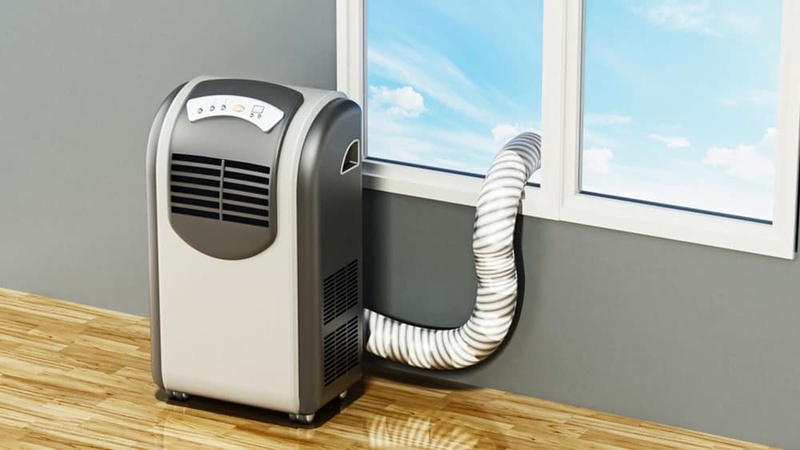
The portable air conditioners employ various kinds of refrigerant based on their age and design. When recharging, it is necessary to use the right type of refrigerant because replacing the wrong type may break the unit or be dangerous. The type of refrigerant is normally on the specification label of the AC (usually on the back or bottom of the unit) or in the manual . The following are the usual refrigerants you may come across:
- R-22 (Freon): This chlorofluorocarbon (HCFC) was common in older air conditioners and in some older portable AC units (usually pre-2010). R-22 is being phased out because it depletes the ozone. It is no longer used in new units and is now very costly and difficult to get legally . In the event you have an older portable AC that uses R-22, a professional would have to recharge it with reclaimed or stockpiled R-22 (which is expensive), or perhaps retrofit the unit to a different refrigerant.
- R-410A: It is the most popular refrigerant in portable and window air conditioners produced over the past 10-15 years. R-22 was replaced in residential AC systems by R-410A (an HFC blend) . It is more efficient and works at higher pressure and it does not affect the ozone layer (but it has high global warming potential). The majority of mid-range and larger portable air conditioners (8,000 BTU and above) available in the 2010s and early 2020s are R-410A. In case of recharging an R-410A system, you should use R-410A refrigerant, and it is impossible to substitute it with R-22 or other ones.
- R-32: R-32 is a recent single-component refrigerant that is beginning to be applied in some portable and room air conditioners. It is in fact one of the constituents of R-410A, but on its own R-32 has approximately half the global warming potential of R-410A and is capable of enhancing efficiency . R-32 may be used in some later-model portable ACs (particularly more efficient or so-called green models). It is important to note that R-32 is considered as mildly flammable (A2L safety class), thus it should be handled with care. An R-32 unit should be recharged with R-32 only.
- R-134a: R-134a is an HFC that has been used in a small number of portable or small AC units (and many dehumidifiers) and is used in car air conditioners. The R-134a is lower in pressure and cooling capacity thus it is usually in smaller BTU units. It is safe to ozone and has a moderate global warming potential. R-134a is more readily available to consumers (automotive refrigerant cans), but it is not recommended to be used to recharge a system designed to use R-410A or R-22 because of incompatibilities . R-134a should only be used when the unit is labeled to use it.
- R-407C and other blends: R-407C is a blend that is applied as a substitute of R-22 in certain air conditioning systems. It can be located in certain portable AC versions of the early 2000s. It possesses some similar characteristics with R-22. Other contemporary R-22 substitutes (such as R-421A, R-422B) are not as probable in portable ACs yet are utilized in HVAC service. In case your unit has one of them, it will be mentioned on the label.
- R-290 (Propane): Some more recent portable air conditioners (particularly in Europe and to a growing extent in North America) are filled with R-290, which is in fact high-purity propane gas. R-290 is a highly environmentally friendly refrigerant (zero ozone depletion and very low global warming potential) and it is suitable to small AC systems. The negative is that it is flammable, it is a hydrocarbon, so the manufacturers only put in a small amount of refrigerant (typically less than 12 ounces) and make the unit safe. In case you possess an R-290 portable AC, it is only a qualified technician who should recharge it, and only using R-290 due to the flammability issue. Do not interchange a different refrigerant in an R-290 system or vice versa.
In short, before any recharge, make sure your unit is specified with the type of refrigerant. Do not mix refrigerants or use an unapproved type in a system, this may be hazardous and will probably destroy the AC. The newer models are primarily using R-410A or R-32 due to their efficiency and environmental advantages . With the development of refrigerant technology, it is possible to observe an increase in the number of portable ACs with environmentally friendly refrigerants such as R-290 or high-tech mixtures, but their servicing will also require special skills.
DIY vs. Professional Recharge Options
DIY Refrigerant Recharge: Tools, Procedures, and Challenges
It is usually difficult to do a DIY recharge of a portable air conditioner and most consumers should not do it. Although how-to videos and guides are available on the internet, there are a number of obstacles to doing it safely and effectively. To even do it, you would require the following tools and supplies:
- A series of HVAC manifold gauges (and hoses) to gauge pressure and regulate the flow of refrigerants into the unit.
- The right kind of refrigerant to your AC (a canister or a can). As an example, a unit that uses R-410A would need an R-410A cylinder.
- A vacuum pump (to remove air and moisture in the system in case it has been opened to repair it).
- A refrigerant charging scale to gauge the amount of refrigerant you are adding in terms of weight as accuracy is important.
- To access the sealed system (unless the unit already has service ports, which is rare), access valves or a piercing valve kit would be needed.
- Simple equipment such as wrenches, screwdrivers, and protective equipment (gloves and glasses).
Refrigerant cylinder and HVAC manifold gauge set are very important in recharging an AC. These must be handled with technical knowledge of pressures and type of refrigerant.
In addition to equipment, you must have a refrigeration safety and principle knowledge. It would consist of finding the process tube or low-pressure line, connecting a piercing access valve, connecting gauges, and perhaps recovering any remaining refrigerant. Then you would seal any leak, vacuum the system and weigh in the exact charge of new refrigerant. Without experience it is easy to do this incorrectly, such as adding excess refrigerant or air to the system, which can damage the compressor or cause poor cooling.
Legal obstacles also exist: in the U.S. many refrigerants can only be sold to certified technicians under federal law. Although small cans of R-134a are available to use in autos, refrigerants such as R-410A and definitely R-22 are not available over-the-counter to unlicensed people. Technically, you have to be EPA Section 608 certified (Type I to handle small appliances) to buy and work with refrigerant on a stationary AC system. The refrigerant and tools have been acquired by DIY people, but not all of them are as easy as purchasing a kit at Walmart.
Due to these reasons, although it is possible to recharge a phone DIY, it is risky and challenging. Poor handling may cause leaks of the refrigerant (or aggravate existing leaks), damage to the system, or injury to a person. Refrigerant is kept in high pressure and may lead to frostbite when exposed to skin and some may even be asphyxiants in enclosed areas. Hence, the majority of specialists warn against DIY recharges unless you possess particular HVAC training and certification . One HVAC professional was blunt when he said about sealed AC units: Not serviceable by consumers.
Professional Recharge Service: Process and Costs
The best way to go is to hire a professional HVAC technician in case you think your portable air conditioner requires recharging. A skilled technician will possess the right equipment, access to refrigerant and experience to perform the job properly. This is what a professional service is usually about:
Diagnosis: The technician will first confirm that indeed low refrigerant is the problem. They can test the operating pressures by fitting gauges (where service ports are available or after fitting temporary ones) . They will also check apparent signs of leakage (oil stains, hissing, etc.). Make sure the compressor is operating and that no other problems (such as a bad thermostat or a dirty coil) are the cause of the poor cooling, since, in case the compressor has failed, the refrigerant will not help .
Leak Repair: In case of suspected leak, the technician will make an effort to identify the leak. This could be by the use of electronic leak detectors or a dye. In others of small portables it may be difficult to locate, but any available leak (such as a joint or connection) must be repaired – usually by brazing the small hole or replacing a part. They will not feel like charging a unit that will leak out again as soon as it is charged.
Recharging: After sealing the system, the tech will use a vacuum pump to remove any air and moisture in the system. Then they will weigh in the precise quantity of new refrigerant as per the specifications of the manufacturer. The quantity (in ounces or pounds) is normally indicated on the nameplate of the unit. The most accurate way of charging is by weight because pressures alone can be misleading particularly in a small AC. The technician will also have the right type of refrigerant (R-410A, R-32, etc.) and will make sure that he/she does not mix refrigerants. Once they have charged the AC, they will then test it to ensure that it is cooling well and also ensure that the pressures and temperatures appear normal.
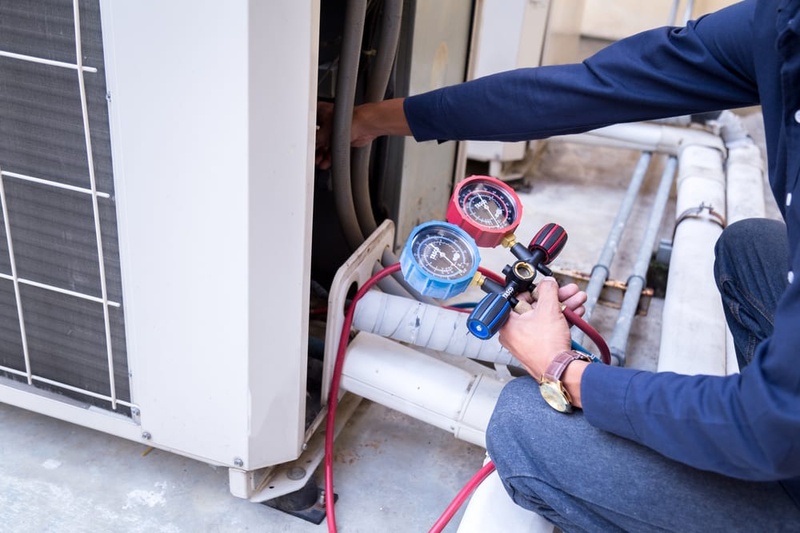
During a recharge, a professional HVAC technician connects a refrigerant canister and gauges to a portable AC unit. The right technique and equipment will make sure that the right amount of refrigerant is added safely.
Cost: The price of a professional to recharge a portable air conditioner may be different. Usually, you could pay a diagnostic or service charge and the cost of refrigerant by the pound and labor to repair. The cost of a recharge service of a small AC is approximately between 100 and 300 dollars on average. The cost is determined by the type of refrigerant (e.g. R-22 is much more costly than R-410A) and the quantity required, and the ease of reaching the system. As an example, R-410A refrigerant could be about 50-80 dollars per pound installed and a 10,000 BTU portable could have 2-3 pounds. Assuming your unit required 2 pounds, the refrigerant component would cost ~$100-160, and labor.
Remember that in case of a large amount of leak repair, it will increase the cost. In certain cases, the technician may recommend not to recharge but replace it, particularly in case the unit is old or the repair is not guaranteed. As it was said before, not all portable AC units are economically feasible to fix. In case your unit is still under warranty, then you should certainly contact the manufacturer first before opening or recharging it yourself as this may cause the warranty to be invalid. In case it is out of warranty, seek an estimate of a professional and compare it with the cost of a new AC. In some cases, the long-term solution is to invest in a new unit that has the latest refrigerant and is fully factory charged .
Comparing DIY and Professional Options
To conclude, DIY recharging may seem to be a cost-effective option, but the risks and difficulties are high. The professionals are trained to deal with refrigerants in a safe manner and to charge the AC correctly (which may improve performance and avoid damage). They should also adhere to EPA guidelines regarding collection of old refrigerant and not letting it escape into the air. On the other hand, professional service is not free and in the case of small appliances, you may not get a technician who will be willing to work on it.
With the right equipment, the necessary skills, and legally acquired refrigerant, you can recharge your car yourself, but you should not do it yourself, especially when you are not sure about any of the steps . There is a great risk of hurting yourself or the AC in case of errors. To the majority of users, it is safer to pay a qualified service or even decide to change the unit. Consider the age and worth of your unit and compare it to the price of repair; recharging an old inefficient portable AC may be a temporary solution and may cost more in the long run in case you have leakages.
Legal and Safety Considerations
Either DIY or professional, there are some legal and safety considerations when working with refrigerants in a portable AC. In the United States, refrigerants are regulated by EPA (Environmental Protection Agency) due to their environmental effects (ozone depletion and global warming potential). According to the Clean Air Act, Section 608, it is unlawful to intentionally release refrigerant to the atmosphere during servicing . Before opening the system, technicians must employ recovery machines to recover any refrigerant.
There is also certification in buying and handling of some refrigerants. To handle controlled refrigerants (Type I certification is required to handle small appliances such as portable ACs), technicians are required to be EPA 608 certified. As a non-commercial person, you are technically required to have this certification to purchase refrigerant such as R-22 or R-410A (some suppliers may sell R-410A to uncertified individuals, but the purpose of the law is to limit it). Penalties are heavy in case of violation of these rules and therefore it cannot be taken lightly. In case you are able to obtain refrigerant, you are legally bound to handle it correctly, i.e. you cannot dispose of an old unit by cutting the lines and releasing the refrigerant; it is to be reclaimed.
Another big issue is safety. Refrigerants are kept in high pressure. When a can or cylinder is not properly connected, you may have a hazardous release of cold, fast expanding gas. Liquid refrigerant can result in serious frostbite when it comes in direct contact. When connecting gauges or working with refrigerant always wear gloves and eye protection. When working, make sure there is good ventilation, particularly when working with flammable refrigerants such as R-32 or R-290. Not even non-flammable refrigerants (R-410A, etc.) can be released in a confined space in large amounts without displacing oxygen, causing a risk of suffocation.
The safety issue is also associated with the use of the correct refrigerant. You should never attempt to recharge a unit with a different refrigerant. Every refrigerant possesses pressure temperature properties. As an example, R-410A may over-pressurize an R-22 system to the point of danger . Or a fire or explosion may occur because a flammable refrigerant is used in a system that is not intended to use it. Never exceed the manufacturer specifications. And bear in mind that combining refrigerants or using the wrong one is a crime in itself (the EPA prohibits using any refrigerant that is not approved to be used in that particular appliance).
Don’t Overpay for HVAC Services – Call 888-894-0154 Now to Compare Local Quotes!
Lastly, it is important to mention that refrigerant poisoning or exposure is usually unlikely, but it is possible, and the symptoms may be dizziness, headaches, or even worse in case of very high concentrations inhaled. That is another reason why these activities should be left to the professionals who are trained to handle these risks. In a nutshell: take all the safety measures, follow the laws regarding handling of refrigerants, and when you are not sure, leave the recharge to a certified technician.
Troubleshooting Signs of Low Refrigerant in a Portable AC
What are the signs that you can notice that your portable AC may have low refrigerant or a leak? These are some of the signs of refrigerant problems to watch out:
- Decreased Cooling Capacity: The first and most noticeable sign is that the AC is not cooling as it used to before. When the unit is on continuously yet it is not able to attain the desired temperature or the air that is released is not as cold, the possible cause is low refrigerant . (Do be sure to rule out that it is not just an over-sized room, heat wave, or a clogged filter, etc.) When they are good and the cooling is poor, then the refrigerant may be in question.)
- Longer or Continuous Running: The AC will not be able to reach the desired temperature, thus it might run much longer or even continuously. You may also realize that your electric bill is also increasing due to the overtime of the unit. A good portable AC will turn off when the room is cooled; when it never appears to turn off, then that is a sign that it is not doing well.
- Ice Buildup on Coils: Low refrigerant may result in the evaporator coil (the cold coil inside the unit) becoming too cold, and falling below freezing. This causes the coil to get ice or frost. When you open the filter compartment you may notice less air flow or you may see ice. Frozen coil is a sure indication of a refrigerant leak or undercharge . You may also see puddles of water overflowing the unit (more than the usual condensation) when the ice melts.
- Hissing or Gurgling Sounds: A leakage of refrigerant may produce some sound. Hissing noise in the unit, particularly when the compressor is running, may be a sign of a minor leakage of the refrigerant (leaking gas) . A bigger leak may give a gurgling noise when the pressure is reduced and the liquid refrigerant boils to gas. When you hear these strange noises that you had never heard before and the unit is not cooling, then it is a good indication that there is a leak.
- Oily Residue or Drips: Refrigerant is a gas (or a easily evaporating liquid), but is combined with a lubricating oil within the system. When there is a leak, in most cases, some of the compressor oil leaks out together with the refrigerant. You may observe some oily film or stains on the outside or on the underside of the AC. As an example, oily liquid which comes out of the drain or any crack is an indication that the refrigerant leaked out together with oil . This normally implies that the unit has lost its charge and cannot cool anymore.
In case you notice one or several of the following symptoms, then it is probable that your portable AC has a refrigerant issue. Regrettably, as observed, there is no easy method a user can use to top up the refrigerant as one can add water to a humidifier. You will have to make a decision of calling a professional to repair or think of replacing the unit. Check the simple maintenance stuff first: clean the air filter, verify that the exhaust hose is not blocked and is not too long (single-hose units), and that the room size and heat load is not too large to be handled by the unit. Weak cooling may sometimes be nothing more than an oversized space or a battle against extreme heat.
Maintenance Tips to Avoid Refrigerant Issues
Although you cannot always avoid a refrigerant leak (it can be caused by factory defects or wear and tear), the maintenance of your portable air conditioner can make it operate efficiently and potentially live longer. These are some of the maintenance tips that can indirectly prevent the need of a recharge:
- Cleaning of Filters: Clean or change the air intake filters of your portable AC regularly (every two weeks when it is used intensively). When the filters are clogged, they limit the flow of air, and this may result in the compressor straining and in other instances freezing of the evaporator coil.
- Clean the Coils: Unplug the unit and remove any accessible covers and gently clean the evaporator and condenser coils (the cold indoor coil and the hot outdoor coil) periodically. Coating of dust and dirt on the coils provide insulation and leads to poor heat transfer. A clogged condenser may cause high pressure in the system, which strains parts; a clogged evaporator may cause frosting. Clean with a soft brush or cloth to clear the dust. Cleaning of coils also minimizes the risk of corrosion that may lead to leakages in the long run.
- Proper Ventilation: The exhaust hose should be well connected and as straight and short as possible. When the air flows well out the exhaust, this implies that heat is taken out effectively. Poor ventilation (kinked or long hoses or insufficient space around the unit) may lead to the build-up of pressure and increase in temperatures, which is not good to the refrigerant system.
- Prevent Physical Damage: Handle the unit with care when moving or storing it. Leaks may result due to damage to the refrigerant lines or coils (e.g. bending the unit sharply, dropping it, or storing it on its side over long periods). Move the unit in an upright position and guard the coils against shocks.
- Run the Unit Within Specs: Don’t run the AC in temperatures outside its designed range (for example,

How to Get the Best HVAC Prices
- Firstly, keep in mind that installation quality is always the most important thing for residential HVAC project. So never sacrifice contractor quality for a lower price.
- Secondly, remember to look up the latest rebates as we talked above.
- Thirdly, ask for at least 3 bids before you make the decision. You can click here to get 3 free estimates from your local contractors, and this estimate already takes rebates and tax credit into consideration and filter unqualified contractors automatically.
Lastly, once you chose the right contractor, remember to use the tactics from this guide: Homeowners Tactics When Negotiating with HVAC Dealer to get the final best price.