Comparison Table

In a nutshell, here is a side by side comparison of Lennox and Bryant on key areas of air conditioners:
| Aspect | Lennox | Bryant |
|---|---|---|
| Energy Efficiency | Up to 28 SEER (industry-leading). Excellent high-SEER lineup for low energy bills. | Up to 26 SEER (top-tier models). Strong efficiency, meets ENERGY STAR® on many units. |
| Noise Levels | Very quiet operation (~59 dB at low speed) with SilentComfort™ technology. | Ultra quiet operation (~51 dB at low speed) with sound-dampening design (Evolution™ series). |
| Durability | Heavy-gauge, corrosion-resistant cabinets (e.g. Quantum™ aluminum coils) for longevity. | Robust DuraGuard™ steel construction and coil protection; easy availability of parts for repairs. |
| Warranty | 10-year parts & compressor limited warranty (with registration); option for 3-year labor coverage at no cost on some models. | 10-year parts limited warranty (with registration); top models include 10-year unit replacement on compressor failure. |
| Smart Features | iComfort® smart thermostat integration for adaptive cooling; some models are solar-ready and adjust to climate automatically. | Evolution™ Connex Wi-Fi thermostat with mobile app control; Bluetooth® diagnostics and OTA software updates on premium units. |
| Cost-Effectiveness | Higher upfront cost but highest efficiency (great for long-term energy savings); premium technology focus. | Generally lower initial cost for similar performance (often ~10% less than Carrier equivalents); known for reliable, hassle-free operation. |
How do Lennox and Bryant air conditioners compare in terms of energy efficiency?
Both Lennox and Bryant produce high-efficiency air conditioners but Lennox is a bit ahead at the very high end. The high-end models of Lennox have a seasonal energy efficiency ratio (SEER) of up to 28.0 which is one of the highest in the industry at present.
As an illustration, Lennox SL28XCV unit is marketed as the most accurate and efficient air conditioner that one can purchase. Bryant Evolution Extreme series is not much behind, with a maximum of approximately 26.0 SEER (approximately 24 SEER2 under the new rating standards). Practically, the premium systems of both brands are much higher than the minimum 14-15 SEER of the builders-grade ones, so the cooling expenses of the homeowners who choose high-efficiency models will be much lower.
Lennox lays a lot of stress on state-of-the-art efficiency technologies. Most Lennox AC systems have two-stage or variable-speed compressors that carefully adjust output to prevent energy wastage. Lennox is also ahead of the curve in green technology such as the SunSource Home Energy option that enables some Lennox air conditioners to be run partially on solar panels.
This will also reduce operating expenses and will be attractive to the environmentally conscious consumers. Bryant, however, attains its efficiency by having a fine-tuned engineering of its compressors and heat exchangers (it has a Microtube refrigeration system that transfers heat more efficiently). Although Bryant does not offer a solar AC addon, nearly all of its models with 16 SEER and higher are ENERGY STAR 16 SEER and higher and offer significant energy savings. To be brief, Lennox may achieve a bit higher peak SEER, yet both brands have a variety of efficient units (mid-teens SEER to mid-20s) available to fit various budgets and climatic conditions.
It should be mentioned that the actual energy savings in the real world are based on the selection of the appropriate capacity and SEER level of your home and climate. In extremely warm climates or in large houses, the extreme efficiency of a Lennox Signature Series (e.g. 2328 SEER) may save a lot of money on monthly expenses.
In moderate climates a Bryant Evolution unit at 1920 SEER may be almost as good in savings, and sometimes at a lower initial cost. The number of models in the 1622 SEER range is large in both brands. All in all, both Lennox and Bryant are good in terms of energy efficiency with Lennox taking the lead in the absolute highest SEER model, but Bryant is also very efficient and the difference in daily operations will be minimal when comparing similar SEER-rated models.
Which brand offers better durability and longevity?
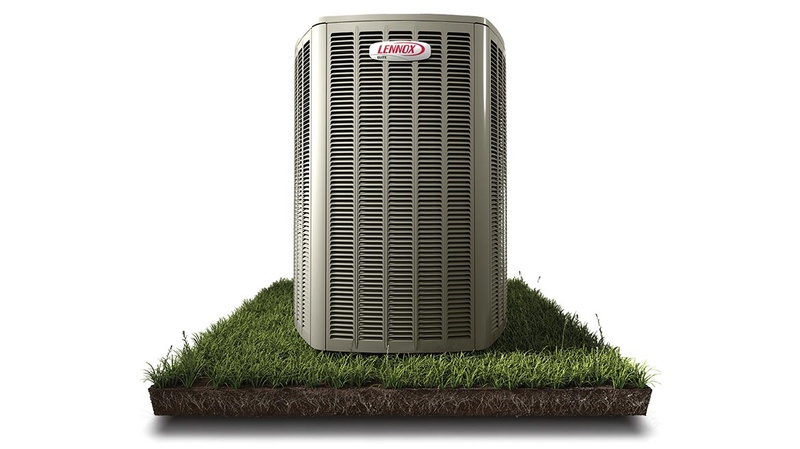
In terms of durability and longevity, both Lennox and Bryant construct air conditioners that are durable and have protective design features, which are made of strong materials. Lennox AC units are made of heavy-gauge galvanized steel cabinets and may be coated with special rust and corrosion resistant coatings.
As an example, Lennox high-end models employ the Quantum Coil which is made of aluminum and is used in the indoor and outdoor coils. The aluminum coils are less susceptible to corrosion than copper and this can be a major advantage in coastal or humid regions where salt air or moisture can reduce the life of an AC. Moreover, Lennox premium cabinets (e.g. the Dave Lennox Signature Collection) are PermaGuard cabinets with SmartHinge louvered panels that do not only prevent coils being hit and covered with debris but also allow easier access to internal components to clean and maintain. Such design decisions indicate that Lennox is concerned with long-term durability, a Lennox unit, with proper maintenance, can last 15-20 years with ease.
Bryant air conditioners also have a good reputation of being well built and durable. The outdoor units of Bryant are covered with the DuraGuard protection package that consists of galvanized steel frame, louvered coil guards and a baked-on powder-coat paint to protect against the elements.
Don’t Overpay for HVAC Services – Call 888-894-0154 Now to Compare Local Quotes!
This rugged design assists Bryant units to resist the years of the sun, rain, and even minor impacts without much damage. Practically, Bryant (as a member of the Carrier family) tends to have similar internal parts as Carrier units, which have a long reputation of being reliable. The fact that Bryant systems are described by homeowners and technicians as being reliable and that their parts are available readily is a very important element of long life. Easy to get (and affordable) parts also imply that in the event something does wear out after years of service, it can be replaced easily, keeping the AC in service longer instead of being out of service or replaced prematurely.
The ease of service is another determinant of longevity. Bryant gets some points here in that as stated its parts can frequently be obtained through many distributors or even aftermarket suppliers. Carrier/Bryant systems are common in many HVAC professionals and therefore there is a lot of expertise and spares.
Lennox, in turn, occasionally employs more proprietary parts (such as some of the control boards or compressors that are Lennox-specific). Although Lennox parts are definitely available via their dealer network, some technicians observe that repairs on Lennox units can be a little more time-consuming or expensive in case they have to order parts at the factory. But that does not imply that Lennox units are more prone to breaking down, it only implies that sometimes, they may need a Lennox specialist to keep them in order. Notably, both brands are massively advantaged by the correct installation and regular maintenance (annual coil cleaning, filter replacement, etc.). A Lennox or a Bryant air conditioner with good care ought to give more than 10 years of trouble-free cooling, and most units last 15-20 years. In simple ruggedness, there is no obvious victor, as Lennox focuses on corrosion and innovative design to be durable, whereas Bryant is all about build quality and serviceability. The availability of service may swing the pendulum: in a salty coastal climate, Lennox aluminum coils may give it an advantage, and in a region with a large number of Carrier/Bryant service companies, Bryant easy part availability may make any needed repairs a non-issue.
How do Lennox and Bryant AC units perform in noise levels?
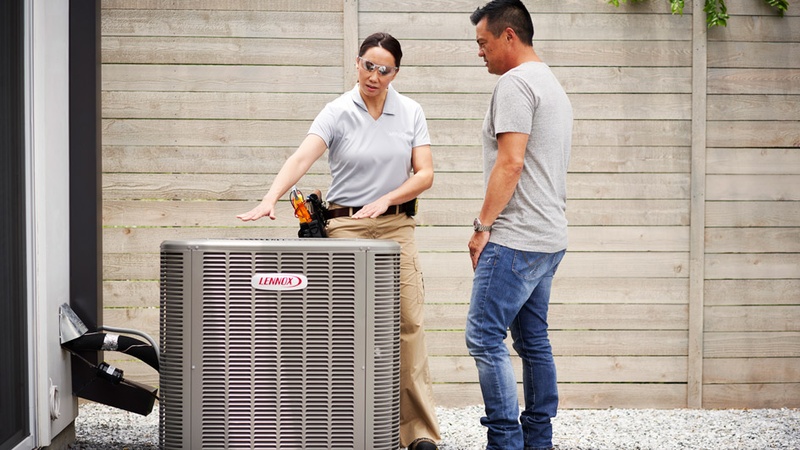
Both Lennox and Bryant place quiet operation among their priorities, and their high-end models are some of the quietest central air conditioners on the market. Lennox air conditioners are designed to produce low sound levels with such features as SilentComfort technology, which incorporates sound-damping insulation and fans that are balanced to perfection.
As an example, the Lennox XC25 (Signature Series) has released noise levels as low as 59 decibels when in use, which is about the same level of a normal conversation. This is approximately half as loud as some conventional 13 SEER single-stage systems of years ago, which tend to operate in the mid-70s dB range. Lennox has done this silent performance in several ways in its design: the compressor itself is placed in an insulated compartment, the fan blades are designed to reduce air turbulence noise, and even the outdoor fan grille is shaped to reduce the sound of air escaping the unit, a sound Lennox calls the whoosh effect.
The air conditioners produced by Bryant are also very good at ensuring that noise is kept to a minimum particularly in the Evolution series. The Bryant Evolution Extreme 26 (variable-speed model 186CNV) has a sound level rating of only 51 dBA at low speed, which is very quiet indeed, even compared to a central AC, and that is quieter than most dishwashers.
Bryant employs two-stage or variable-speed compressors and fans which tend to operate at slower speeds most of the time, which leads to less noise. These units ramp up and down slowly even at higher cooling demand, which is unlike older single-stage systems, which have loud, abrupt compressor startups. Bryant has never lost sight of quiet operation with such features as aeroquiet fan designs and composite base pans to absorb vibration. Most Bryant models, even mid-range ones, promote noise levels of less than 70s dB or even less at full load, and much less at partial load.
Practically, the cooling provided by both Lennox and Bryant is very quiet, which is a world away compared to the clunkers of yesteryear. When we compare apples to apples, Bryant latest top model (51 dB at best) beats Lennox top (about 59 dB at best) in sheer numbers.
But the difference of a few decibels is hardly noticeable to an ordinary listener (keep in mind that decibels are logarithmic; 50s and 60 dB is a minor change). What you hear in a real home environment will also depend on such things as installation (proper isolation of the unit on a pad), distance to the house, and ambient noise. Interestingly, the premium units of both brands will probably not be audible inside unless you are standing directly next to a vent when it turns on, they are that quiet. In the event that noise is a major issue (say, the outdoor unit will be placed under a bedroom window), it is prudent to invest in either Lennox or Bryant high-end models that have variable-speed technology. Even most of their two-stage models are set to operate in a low stage most of the time, maintaining sound levels very low. To sum it up, Bryant can boast of a minor lead on paper concerning the quietest operation, but both brands have air conditioners that are impressively quiet, so cool comfort will not be accompanied by a racket.
What are the warranty terms for Lennox vs. Bryant?
The issue of warranty coverage is also a factor, and both Lennox and Bryant provide good warranties that are characteristic of high-end HVAC brands. In the case of Bryant, the typical warranty on residential air conditioners is 10-year limited warranty on parts to the original homeowner, when the unit is registered within 90 days of installation. (Otherwise, the warranty is reduced to 5 years at that point, unless registration is not possible in the jurisdiction.)
This is a 10-year parts warranty on such parts as compressor, fan motor, and electronics. Besides, the best Evolution models produced by Bryant are frequently accompanied by an additional guarantee: a 10-year unit replacement warranty of the compressor. This implies that in the event of failure of the compressor (the heart of the system) within the first ten years, Bryant will replace the whole condensing unit with a new one, instead of just replacing the compressor. This Red Shield unit replacement guarantee is a good extra that can bring some security to the most costly models.
The warranty of Lennox is quite similar in its duration of most of the products, but it has recently been customizable. Lennox usually offers a 10-year limited warranty on covered parts (including the compressor) on their Merit, Elite and Signature series ACs provided that the unit is registered upon installation (as it is in the industry).
In the past, some Lennox base models were sold with 5-year parts warranties, but today nearly all Lennox residential split-system ACs will be sold with 10-year coverage when registered, the same as Bryant. The point at which Lennox differs is its Warranty Your Way program that was launched within the past few years. Warranty Your Way Lennox offers homeowners a choice of either an extended parts warranty or a labor warranty on specific models with Warranty Your Way. As an example, a buyer of a Lennox Signature series can opt to add 3 years of labor coverage at no additional cost (labor charges to repair during those initial years) rather than adding 5 to 10 years on parts coverage (since parts are already 10 years standard on that line). It is a special service, and most warranties of manufacturers do not cover labor as a default. In comparison, Bryant does not normally cover labor under the factory warranty; the homeowner would have to buy a labor warranty or depend on the installer warranty.
In short, the two brands provide you with 10 years of part peace of mind. The warranty benefit of Bryant is evident in the unit replacement provision of their top-of-the-line models, which can be a major deal, basically a kind of lifetime guarantee on the most important part during the first ten years.
The benefit of Lennox is that they have the flexibility of covering some of the labor expenses during the initial years and that their premium line warranty can be customized to the liking of the homeowner. Either way, to get the most out of it, homeowners must not forget to register the product once it is installed (your contractor usually assists in this). Maintenance should also be followed; failure to do so (such as not replacing filters or not repairing problems) may void the warranty on both brands. On the whole, Lennox and Bryant are equal in terms of warranty duration and conditions, but there are some brand-related advantages that make the purchase more pleasant to the customer.
Which brand provides better smart features and connectivity options?
In the era of smart homes, both Lennox and Bryant have put money into connectivity and smart control capabilities of their AC systems. Lennox has its own line of smart thermostats, iComfort, that is compatible with its HVAC systems to allow enhanced functionality.
When an iComfort S30 or E30 smart thermostat is installed on a Lennox air conditioner, the system can talk to each other and adjust automatically to work best. As an example, Lennox communicating systems exchange data between the thermostat and AC unit to adjust output; the thermostat is aware of the precise capacity the AC is operating at, and can adjust it by 1% on high-end models. The system can be controlled by homeowners through the Lennox mobile app (with the help of the iComfort thermostat) and adjust temperatures, create schedules, and get alerts. Even the best units of Lennox have a feature called Climate IQ 10 that adjusts the cooling depending on your geographic climate e.g. it might focus on dehumidification in case you live in a very humid area. This type of intelligent automation demonstrates the tech-savvy attitude of Lennox. Moreover, Lennox systems are indirectly compatible with voice assistants and smart home systems (e.g., by integrating the app of the iComfort thermostat with Alexa or Google Assistant, it is possible to give voice commands to change the settings).
Bryant offers comparable intelligent features with its Evolution 1 system. Bryant premium ACs are available as communicating-ready, which means that when combined with the Evolution Connex control (smart thermostat), the AC, furnace/blower and thermostat will communicate to achieve the best efficiency and comfort.
The homeowners will receive a slick touch screen interface and Wi-Fi connectivity. The Bryant Home app (and formerly the Cor/Home app by Carrier, since Bryant is owned by Carrier) enables the AC to be controlled remotely anywhere. You are able to program schedules, receive maintenance reminders and even connect the system to smart home systems. Actually, the new Evolution systems of Bryant possess certain high-tech features that are outstanding: the outdoor units are Bluetooth 128; they are connected to technicians. This implies that a service technician can be standing next to the unit and read diagnostics or even update the firmware of the system over-the-air without opening up the control panel using a smartphone app. Although this is more of a convenience to the service than a feature to the homeowner, it will eventually result in faster, more precise maintenance and possibly less service calls. Energy tracking is also supported by Bryant systems via the Evolution Connex, where estimates of energy usage can be viewed by the homeowner, which is excellent news to the energy-conscious.
Regarding smart home integration, the systems of both brands are also compatible with popular smart thermostats (as well as their proprietary control, in case it is not used). As an example, a Bryant AC could technically be operated by a third party thermostat such as Ecobee or Nest (but you would lose the communicating feature and only use the basic on/off control).
Don’t Overpay for HVAC Services – Call 888-894-0154 Now to Compare Local Quotes!
Lennox communicating systems highly recommend the use of iComfort to get all the benefits, yet Lennox also produces non-communicating models, which can be used with any thermostat. Nevertheless, since both Lennox and Bryant have feature-rich own smart controls, the majority of homeowners who want to have a smart HVAC will remain within the ecosystem of the selected brand. There is no clear superiority of one over the other and it usually depends on the interface preference and particular features. Lennox may have an advantage in the ability to adjust to user habits (learning behavior over time), but Bryant has the advantage of having neat features such as firmware updates and extensive diagnostic information.
All in all, both Lennox and Bryant ACs can be included in a smart, connected home. They enable you to set your thermostat to a cool house when you are on the way home, they can be part of home automation scenes (such as putting the AC into economy mode when you arm your security system to go out), and can even send you or your dealer a message when there is a fault.
As a technology lover, you will be very pleased with the connectivity of the best products of Lennox and Bryant. No brand is much better than the other in this regard, as both are following the current trends of smart technology in HVAC.

How to Get the Best HVAC Prices
- Firstly, keep in mind that installation quality is always the most important thing for residential HVAC project. So never sacrifice contractor quality for a lower price.
- Secondly, remember to look up the latest rebates as we talked above.
- Thirdly, ask for at least 3 bids before you make the decision. You can click here to get 3 free estimates from your local contractors, and this estimate already takes rebates and tax credit into consideration and filter unqualified contractors automatically.
Lastly, once you chose the right contractor, remember to use the tactics from this guide: Homeowners Tactics When Negotiating with HVAC Dealer to get the final best price.