When considering the Carrier vs Goodman air conditioners, it is important to know the differences between the two in terms of performance, efficiency, cost, reliability, warranty and reputation as far as U.S homeowners are concerned.
The following table highlights some of the main points of comparison between these two well-known brands of AC:
| Aspect | Carrier | Goodman |
|---|---|---|
| Performance | 13–26 SEER; high-end units offer variable-speed compressors and very quiet operation (as low as ~53 dB). | 13–25 SEER; focus on value, though generally louder (71–75 dB) at full speed. |
| Energy Efficiency | Very high efficiency options available (Infinity series up to ~26 SEER); many Energy Star-rated models for low energy use. | Solid efficiency across lineup (up to ~23–25 SEER on top models); fewer ultra-high SEER models, but still meets modern standards. |
| Price (Installed) | $7,000 – $15,000 | $5,000 – $12,000 |
| Warranty & Support | Standard 10-year parts limited warranty; strong dealer network and slightly higher customer service ratings | Extended warranties on select models (e.g. lifetime compressor warranty, 10-year unit replacement on top-tier units); comparable 10-year parts warranty |
How do Carrier and Goodman air conditioners differ in performance and technology?
Both Carrier and Goodman have a variety of models in terms of cooling performance, however, the Carrier lineup has more advanced technology on the high end.
Carrier has variable-speed compressor units that have advanced controls (including the Infinity series) which can achieve SEER ratings as high as 26.
These high-end Carrier units are able to modulate the speed of the compressor in very small steps, which enables very fine temperature control and humidity reduction.
Goodman has also added more high-tech products to its line such as inverter-driven compressors (e.g. the Goodman GVXC20, approximately 23–25 SEER), but historically Goodman has concentrated on two-stage or single-stage systems that are reliable and aimed at cost-effective operation.
Carrier units are also quieter, at least at the top end.
The noise level of Carrier is as low as approximately 53 decibels on its lowest setting, but Goodman units tend to operate at 71–75 dB on the lowest setting.
This disparity is mostly attributed to the superior fan blade designs, compressor sound blankets and superior cabinet insulation of Carrier.
Goodman builds are solid and might lack the same degree of acoustic engineering, so they are a bit louder in operation.
This should be considered when the outdoor unit is to be located close to bedrooms or neighbors.
Don’t Overpay for HVAC Services – Call 888-894-0154 Now to Compare Local Quotes!
The two brands employ quality parts in their manufacturing. It is worth noting that compressors in both Carrier and Goodman are usually manufactured by Copeland (a reputable compressor manufacturer).
Goodman units have all-aluminum evaporator coils and galvanized steel cabinets that make them resistant to corrosion and durable. Most of its models also have aluminum microchannel coils to enhance heat transfer and minimize refrigerant charge.
Also, the systems of Carrier can include proprietary control boards (particularly, Infinity models) that can communicate with smart thermostats to achieve optimal performance.
Goodman also has its ComfortBridge™ technology (integrated into the furnace/air handler) which auto-adjusts the system without the need of the expensive proprietary thermostat, which is an advantage to homeowners who want the modern performance with a standard thermostat.
Overall, Carrier is the leader in innovative HVAC technology and sophisticated performance characteristics, with extremely quiet performance and superior climate control.
Goodman focuses on simple, sturdy design, providing decent cooling capabilities with a few less high-tech bells and whistles.
Which makes it an ideal choice for homeowners who want a reliable cooling system but do not need the high-end extras.
Which brand offers better energy efficiency, Carrier or Goodman?
The carrier air conditioners tend to be efficient, particularly at the high-end of their product range. The top models of Carrier such as the Infinity 26 have a SEER rating of mid-20s. The Carrier units are ENERGY STAR 1994 registered and most of them surpass the federal minimum efficiency requirements.
Goodman also provides efficient models, but their average SEER of the line is slightly lower than that of Carrier premium range. In the recent models, Goodman has the best central AC units that have a rating of about 1825 SEER. As an example, the Goodman GSXC18 is approximately 18-19 SEER and the inverter based Goodman GVXC20 can be rated to approximately 24.5 SEER. These ratings are rather efficient and definitely satisfy the requirements of the majority of households, yet Carrier still wins with its ultra-high-efficiency products (such as a 26 SEER model, which is at the top of the industry).
Both Carrier and Goodman can offer effective cooling in case you select a model with a higher SEER. Carrier allows you to go to the extreme high-efficiency side, which can be perfect in case you are an environmentally-conscious consumer or have extremely high AC consumption. Goodman efficient models are normally adequate to moderate cooling requirements and already surpass federal standards, which makes them a good combination of cost and efficiency. Remember that the real savings in energy also depend on such factors as thermostat settings, home insulation and local climate, not only on the brand.
What are the price differences between Carrier and Goodman air conditioners?
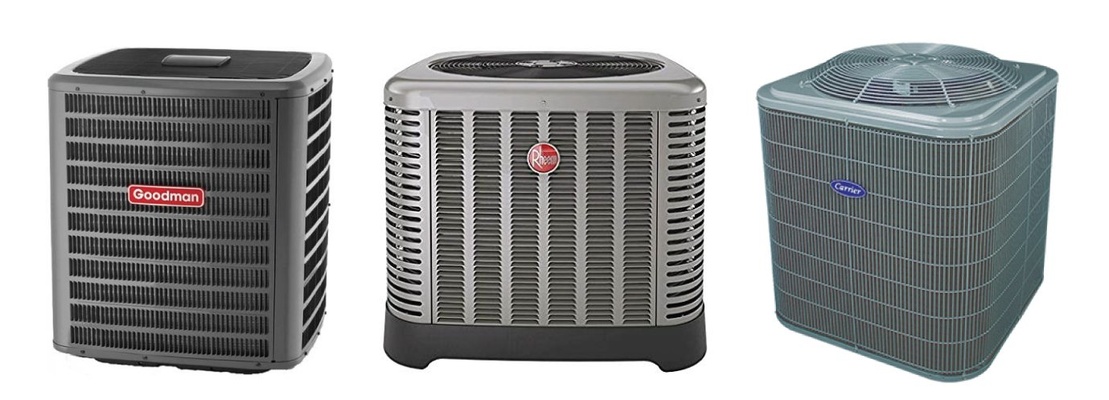
Price is one of the greatest distinctions between Carrier and Goodman.
Carrier is a brand that is mostly regarded as a premium brand and its systems are usually more expensive to purchase. Goodman is a value brand, and the prices of the units themselves are more affordable. Considering the overall installed cost of a central air conditioning system (the outdoor unit, indoor coil or air handler, and installation labor), industry data gives these approximate ranges: Carrier systems cost about 7,000 to 15,000 dollars installed, and Goodman systems cost about 5,000 to 12,000 dollars installed of similar capacity system. These numbers may differ depending upon the model selected (basic vs. high-end), the size (tonnage) needed, and local labor rates, but they provide an idea that Carrier can cost thousands of dollars more at the outset.
Several factors contribute to this price gap:
- Equipment Cost: The individual units of Carrier tend to have a higher MSRP as compared to Goodman. You are partially paying the brand name, sophisticated engineering and in many cases more costly parts. Goodman is a low-cost alternative, and thus their unit prices are lower in the first place.
- Installation Complexity: Carrier high end systems (such as the Infinity series) can be more complex to install and configure (e.g. communicating thermostats or zoning systems). Installation of such advanced systems may be expensive by the HVAC contractors. Goodman units are usually easy to install and common, which may make labor costs competitive.
- Included Features: A Carrier quote may contain additional features such as superior thermostats, air purifiers or dehumidification. Unless upgrades are done, goodman quotes tend to keep to the basics. This implies that a typical Goodman installation may be bare-bones, but a Carrier install may include more comfort options, as well as the price.
- Economies of Scale: Goodman has established a reputation of providing large tract home builders with HVAC systems. Goodman units are quite popular in new construction since they are cheaper. Purchasing in bulk can further reduce the prices of developments. Carrier units are also utilized in new construction, but more commonly in up-scale homes; they are not the common selection of a builder who is attempting to keep down costs.
In the long-term cost view, operating and maintenance costs should also be considered by the homeowners. An energy-efficient Carrier unit will help to save money on monthly electric bills, which will partially offset the increased cost of purchase in the long run. Also, the reputation of Carrier as a reliable brand may translate into lower repair costs during the first ten years of operation (but repair costs of Carrier, in case they are required, may be higher because of more expensive parts or service). The cheaper initial price of Goodman will be attractive when you are on a tight budget or do not intend to live in the house over a long period of time. Even when a Goodman is a little less efficient, the difference in cost of purchase can cover a lot of electricity.
To sum it up, you should be prepared to pay more to get Carrier, you pay more initially to get a high-performance feature-rich system.
Goodman is a cheaper alternative, and it is not as expensive as you can notice. To make an apples-to-apples comparison of costs, homeowners ought to obtain quotes on comparable SEER-rated models of both brands.
Which is more reliable, Carrier or Goodman air conditioners?
Carrier and Goodman both produce dependable systems, with consumer surveys and professional opinion usually giving Carrier a small advantage in reliability.
Carrier scored about 4 out of 5 in reliability in the homeowner survey data as compared to Goodman which scored 3 out of 5.
Practically, it implies that the average number of problems or repairs reported by the owners of the Carrier systems is slightly lower than the number of problems or repairs reported by the owners of Goodman systems. This consistency may be due to the long-established quality control and engineering that Carrier has had since its inception as an industry leader by the inventor of modern air conditioning (Willis Carrier).
Among the factors to consider is that the quality of installation and maintenance is a major factor that determines reliability of both Carrier and Goodman. A bad Carrier installation can be a nightmare and a good Goodman installation can be trouble free. Both brands need the same routine care: changing filters, cleaning coils once a year, checking the level of refrigerant, etc.
Don’t Overpay for HVAC Services – Call 888-894-0154 Now to Compare Local Quotes!
A central air conditioner that is well maintained has a lifespan of about 10-15 years. Carrier units typically have a life of 10-12 years on average before major parts give out and some have been known to go over 15+ years, particularly in milder climates or with light usage. Life expectancy of Goodman units is usually quoted at approximately 8-12 years.
Overall, Carrier’s edge in reliability comes from a track record of longevity and fewer issues, as echoed by many customer feedback sources and HVAC technicians. Goodman is very close behind, and for many homeowners, the reliability difference is negligible – especially given Goodman’s improvements.
How do consumers and experts view Carrier vs Goodman?
Carrier AC units are often praised in reviews as being quiet and effective and customers mention the reduced electric bills when they have a high-efficiency model. Conversely, Carrier has occasionally been accused of being more expensive to purchase and to repair (parts), and some users believe they are paying a premium to own the name.
In a nutshell, Carrier is perceived as a high-end, reliable brand with years of quality experience and Goodman is perceived as the value leader that has narrowed the quality and reliability gap considerably. Customers who want the best performance and a reputation that has been built over the years may be inclined to buy Carrier and those who want affordability and good warranty coverage may be inclined to buy Goodman. In the end, the most suitable option is to be determined by your priorities and the peculiarities of your home, as both brands have a good market presence and a number of happy customers in the corresponding niche, as the market feedback indicates.
How to Get the Best Air Conditioner Prices?
- Firstly, keep in mind that installation quality is always the most important thing for air conditioner project. So never sacrifice contractor quality for lower price.
- Secondly, remember to look up the latest tax credit and rebates.
- Thirdly, ask for at least 3 bids before you make the decision. You can click here to get 3 free estimates from your local contractors, and this estimate already takes rebates and tax credit into consideration and filter unqualified contractors automatically.
At last, once you chose the right contractor, remember to use the tactics from this guide: homeowners tactics when negotiating with HVAC dealer to get the final best price.