For buyers who need powerful cooling for large rooms or small apartments, an 18,000 BTU window air conditioner offers the right balance of capacity and efficiency. Choose an inverter model for quieter, energy-saving operation, a smart model for remote control, or a unit with supplemental heat for seasonal use. Below is a quick comparison of top 18,000 BTU models and which buyer each suits best.
| Product | Best For | Key Feature |
|---|---|---|
| LG 18,000 BTU Dual Inverter Smart Window AC | Quiet, smart-enabled bedrooms or living rooms | Dual Inverter + LG ThinQ app |
| Midea 18,000 BTU Smart Inverter Window AC | Energy-conscious buyers who want app control | Variable-speed inverter + SmartHome App |
| BLACK+DECKER 18,000 BTU Window/Through-The-Wall AC | Simple, remote-controlled whole-room cooling | Multiple modes and full remote control |
| Whirlpool 18,000 BTU Window AC with Supplemental Heat | Rooms that need occasional supplemental heating | Supplemental heat option and electronic controls |
LG 18,000 BTU Dual Inverter Smart Window Air Conditioner
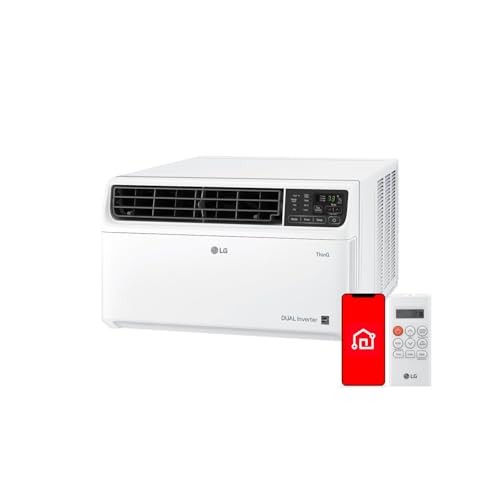
Features: LG ThinQ smartphone control with Google Assistant and Amazon Alexa integration; low noise performance down to 52 dB in low mode; Energy Star certified for energy efficiency; 230V power. The listing highlights ultra-quiet operation and smart remote control via app and voice assistants.
Best for: Choose this if you want quiet, app-controlled cooling for bedrooms or living spaces where noise matters. The dual inverter design is selected because it emphasizes lower sound levels and remote control convenience.
Caution: This model requires a 230V connection; confirm your outlet and installation type before purchase. Avoid this if you cannot provide the required voltage or compatible window mounting setup.
Midea 18,000 BTU Smart Inverter Window Air Conditioner

Features: Variable-speed inverter technology for rapid cooling and energy savings; SmartHome App control and Alexa/Google compatibility; LED display, four modes (Auto, Cool, Dry, Fan), three-speed settings, 24-hour timer, ECO energy saver, washable front-panel filter. The product description notes more than 40% energy savings compared to an energy conservation standard.
Best for: Better for energy-conscious buyers who want flexible modes and remote app control. It is selected for its inverter efficiency and washable filter that simplifies maintenance.
Caution: The listing specifies 208/230V power; ensure electrical compatibility. Avoid this if you need a 115V option or if your window/installation cannot support a heavier, inverter-type unit.
BLACK+DECKER Window or Through The Wall 18,000 BTU Air Conditioner

Don’t Overpay for HVAC Services – Call 888-894-0154 Now to Compare Local Quotes!
Features: 18,000 BTU cooling capacity for up to 1,000 square feet; four levels including auto, low, medium, and high; full-function remote control with sleep mode, energy saver, and 24-hour timer. The listing emphasizes straightforward controls and suitability for larger rooms and living spaces.
Best for: Choose this if you want a straightforward window or through-the-wall unit with easy remote control and basic modes. It is selected for buyers who prioritize simple operation for whole floors or open living areas.
Caution: The listing focuses on cooling modes and remote control; it does not highlight inverter technology or smart-app control. Avoid this if you require app integration or advanced energy-saving inverter features.
Whirlpool 18,000 BTU Window Air Conditioner With Supplemental Heat
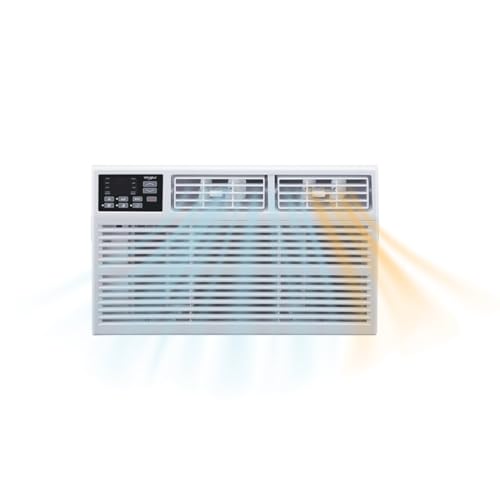
Features: 18,000/17,600 BTU cooling with supplemental heating rated at 10,600/8,600 BTU (listed as supplemental, not primary heat source); electronic control panel with digital display; three cooling speeds, eco mode, sleep mode, programmable 24-hour timer, and 8-way directional louvers; quick window mounting kit for minimum 19.5-inch window height.
Best for: Better for buyers who need occasional supplemental heat along with powerful cooling, such as in northern climates where short-term heating is useful. It is selected for its supplemental heat feature and multi-mode controls.
Caution: The supplemental heat is not intended as the primary heating source in the coldest months. Avoid this if you expect the unit to replace a full heating system.
Buying Guide
How do I know if 18,000 BTU is right for my room?
Many 18,000 BTU units are marketed to cool up to about 1,000 square feet. Consider room size, ceiling height, sun exposure, insulation quality, and number of occupants. Choose 18,000 BTU if your space is around 700–1,000 sq ft or if you have high heat loads from windows or appliances.
Should I choose inverter technology or a standard compressor?
Inverter models vary compressor speed for more consistent temperatures, lower noise, and better energy efficiency. Select an inverter unit if you prioritize quieter operation and reduced energy use. Choose a non-inverter or simpler unit if you want lower upfront complexity and fewer electronics to service.
Do I need a specific voltage or outlet?
Check product listings for voltage. Some 18,000 BTU models require 208/230V or a 230V dedicated circuit. Confirm your electrical capacity and whether your window or through-the-wall setup supports the unit’s power needs before buying.
How important are smart features and app control?
Smart features (Wi‑Fi, app control, voice assistant) add convenience for remote scheduling and monitoring. Choose smart-enabled units if you want mobile control or integration with home automation. Avoid smart units if you prefer local-only control or have privacy concerns about connected devices.
What installation and window requirements matter?
Check minimum window height, mounting kit inclusion, and whether the unit supports through-the-wall installation. Confirm the window type—single-hung, double-hung, or sliding—matches the mounting kit. Some units list a minimum window height; ensure your window meets that requirement.
How much should I plan for maintenance?
Look for washable, easy-to-access filters and front-panel access for cleaning. Regular filter cleaning maintains airflow and efficiency. Consider units that explicitly list washable filters if maintenance convenience is a priority.
When is supplemental heat useful?
Supplemental heat is useful for brief cool-weather periods where a small heater reduces chill without running a full heating system. Do not rely on supplemental heat as a primary heating source in severe cold.
FAQ
Will an 18,000 BTU air conditioner cool a 1,000 sq ft area?
Many manufacturers list 18,000 BTU models as suitable for up to about 1,000 square feet, depending on room conditions like insulation and sunlight. Verify the product’s stated coverage and account for higher cooling load factors.
Are inverter window air conditioners more energy efficient?
Inverter units adjust compressor speed to match cooling demand, which typically reduces energy use and maintains steadier temperatures compared to fixed-speed compressors. Look for Energy Star certification for verified efficiency claims.
Do these units require special wiring?
Some 18,000 BTU models require 208/230V or a dedicated circuit. Check the product’s voltage requirement before purchasing and consult an electrician if your outlet does not match.
Can I install an 18,000 BTU unit in any window?
Installation depends on window height, type, and structural support. Many listings include a mounting kit and state minimum window height. Confirm the unit’s installation requirements against your window dimensions.
How noisy are 18,000 BTU air conditioners?
Noise varies by design. Inverter models and units advertised for low noise list decibel levels or “ultra quiet” performance. If quiet operation matters, choose units that highlight low dB levels in their specifications.
Is supplemental heat in an AC reliable for winter?
Supplemental heat is intended for occasional use and to remove chill in mild cold. It is not meant to replace a primary heating system in very cold climates; check the product’s statement regarding supplemental heating capability.
Don’t Overpay for HVAC Services – Call 888-894-0154 Now to Compare Local Quotes!

How to Get the Best HVAC Prices
- Firstly, keep in mind that installation quality is always the most important thing for residential HVAC project. So never sacrifice contractor quality for a lower price.
- Secondly, remember to look up the latest rebates as we talked above.
- Thirdly, ask for at least 3 bids before you make the decision. You can click here to get 3 free estimates from your local contractors, and this estimate already takes rebates and tax credit into consideration and filter unqualified contractors automatically.
Lastly, once you chose the right contractor, remember to use the tactics from this guide: Homeowners Tactics When Negotiating with HVAC Dealer to get the final best price.