Choose a condensate pump that matches your system size and installation space. For small wall-cassette or mini-split setups, compact low-flow pumps are best; for larger central systems or commercial-style units, select higher GPH and greater lift. Below is a quick comparison table of the top picks for typical residential and light commercial uses.
| Model | Flow / Lift | Best For |
|---|---|---|
| Little Giant VCMA-15ULST | 65 GPH / standard vertical pump | Small residential A/C, dehumidifiers |
| Little Giant VCMA-20ULS | 80 GPH / higher motor power | Medium residential HVAC, furnaces |
| Diversitech ULTRACP-22 | Specifies 22′ max lift | Installations needing high vertical discharge |
| Aquastrong 85 GPH | 85 GPH / up to 20 ft lift | Higher-flow residential units, multiple devices |
| MSELTOS 132 GPH | 132 GPH / 20 ft max lift | Large residential or light commercial drainage |
Little Giant VCMA-15ULST 65 GPH Pump

Features include an automatic vertical-type switch to reduce footprint, a thermally protected 1/50 HP, 1.0 Amp motor, ABS tank and volute, stainless steel motor shaft, and the ability to handle condensate up to 140°F (60°C). The pump includes overflow detection and 20-foot tubing.
Best for small residential installs and dehumidifiers because its compact vertical switch reduces space and it handles typical condensate temperatures. Choose this if you need a compact, thermally protected pump with built-in overflow detection.
Caution: 65 GPH flow and 1/50 HP motor are suitable for low-to-moderate condensate loads; avoid this if your system produces heavy condensate or requires high vertical lift beyond typical residential runs.
Little Giant VCMA-20ULS 80 GPH Pump

This model offers an automatic vertical-type switch, thermal protection, a higher-performance 1/30 HP motor (1.5 Amps, 93 Watts), and durable ABS construction with stainless steel shaft. It is CSA certified for U.S. and Canadian standards and handles water up to 140°F (60°C).
Better for medium residential HVAC systems and furnaces because of the higher motor power and increased flow (80 GPH). Choose this if you want more headroom than 65 GPH pumps without moving to a large commercial unit.
Caution: Although more powerful than the 15ULST, confirm that the pump’s vertical lift and outlet tubing match your installation needs; higher motor power does not automatically mean longer lift specification.
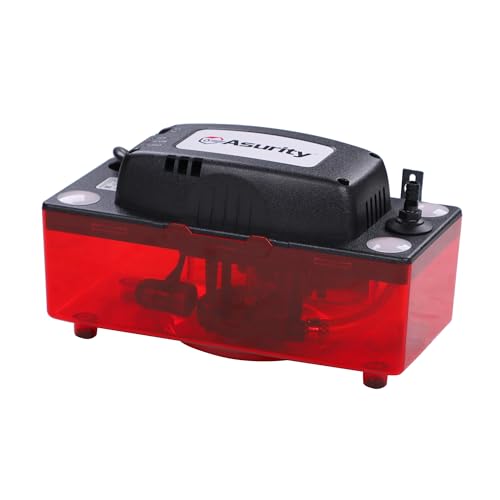
Asurity by Diversitech ULTRACP-22 Condensate Pump
Don’t Overpay for HVAC Services – Call 888-894-0154 Now to Compare Local Quotes!
Key features: automatic operation at a preset reservoir level, 22′ maximum vertical lift, 120V power, and capability to handle condensate up to 160°F. The compact design supports installations in basements, attics, and closets where vertical discharge is required.
Best for installations requiring significant vertical discharge, such as basement units pumping to an upstairs drain or attic runs. Choose this if vertical lift is the primary constraint and you need a pump rated to manage warm condensate safely.
Caution: The higher 22′ lift rating addresses vertical distance but verify tubing length, fittings, and check valves for reliable long-run performance; longer runs may require additional installation care to prevent siphoning or backflow.
Aquastrong 85 GPH HVAC Condensate Pump
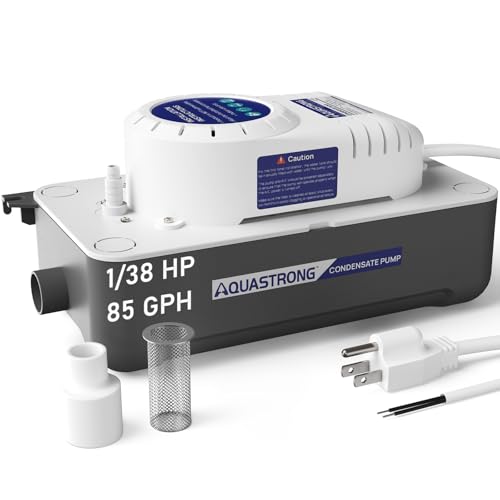
This compact vertical centrifugal pump moves up to 85 GPH with a 20 ft vertical lift and includes a thermally protected motor, a hall-effect switch for automatic operation, a removable 1/2-gallon reservoir, multiple inlet ports, and a barbed outlet with built-in check valve.
Best for higher-flow residential systems or setups where multiple devices connect in parallel due to its multiple inlet ports and 85 GPH capability. Choose this if you need a compact unit with higher flow and multiple inlet connections for combined condensate sources.
Caution: The manufacturer recommends vertical installation on a flat surface or wall; avoid installing it on uneven or horizontal surfaces unless the product instructions explicitly allow it.
MSELTOS 132 GPH 20 FT Condensate Pump

Features include a compact pump design with up to 132 GPH flow, 20 ft maximum lift, automatic safety switch and alarm if inflow exceeds drainage, indicator lights for power/work/overflow, and support for a variety of household and light-commercial condensate sources.
Best for large residential or light commercial systems that need high flow capacity and an audible alarm for overflow risk. Choose this if you want added visual indicators and alarm features for proactive maintenance and overflow prevention.
Caution: The built-in alarm and indicators help diagnose faults, but ensure alarm wiring and safety-switch integration are compatible with your HVAC control or alarm system before installation.
Buying Guide
What flow rate (GPH) do I need?
Estimate condensate production from the A/C unit size and use case. Small mini-splits and bathroom dehumidifiers often need 5–20 GPH capacity; most residential central A/C systems need 50–100 GPH; multiple devices or commercial-style units may require 85 GPH or more. Choose a pump with headroom above your estimated peak condensate flow.
How much vertical lift (head) is required?
Measure vertical distance from pump reservoir to the drain point. Add a safety margin for friction loss over long runs. Pumps specify maximum vertical lift in feet; choose a pump rated above your measured height to avoid strain and reduced flow.
Do I need a safety or overflow switch?
Yes for installations where overflow could damage property or where condensate could back up into equipment. Safety switches can shut off HVAC equipment on pump failure. Choose pumps with built-in hi-level switches or signal leads if you require alarm or shutdown integration.
How important is condensate temperature tolerance?
If you pump condensate from gas furnaces or applications that produce warm water, choose pumps rated for higher condensate temperatures (e.g., 140°F or 160°F). Pumps with thermal protection protect the motor when running hot condensate.
What about installation space and orientation?
Vertical-type switches reduce footprint for limited-space installs. Some pumps require vertical mounting; others are more flexible. Confirm manufacturer installation orientation, available tubing sizes, and inlet port counts if connecting multiple lines.
How often should the pump be maintained?
Inspect and clean reservoir, float, and filter every six months or according to manufacturer guidance. Regular cleaning prevents clogging from debris, biological growth, or scale. Check tubing and check valve condition during maintenance.
Wiring and power considerations
Confirm supply voltage (115V vs. 120V or dual-voltage models) and cord length. Some pumps include signal wires for safety switch integration; plan wiring to the HVAC control or alarm system if automatic shutoff is required.
Noise and motor protection
Thermally protected motors and fan-cooled designs help extend motor life. If silent operation is a priority for indoor installations, look for pumps specifying quieter operation or low-decibel ratings.
FAQ
What size condensate pump should I buy for a central AC?
Choose a pump rated 65–132 GPH for most residential central A/C systems; pick higher GPH if the system serves multiple units or produces heavy condensate.
Don’t Overpay for HVAC Services – Call 888-894-0154 Now to Compare Local Quotes!
Can I install a condensate pump horizontally?
Some models require vertical installation and will note that in instructions. Always follow manufacturer guidance for orientation to ensure proper float and switch operation.
Is a safety switch necessary for a condensate pump?
Safety switches reduce risk of overflow and water damage by stopping the HVAC appliance or triggering an alarm when the pump fails or reservoir overflows. They are recommended for equipment over living spaces.
How do I know if the pump can handle hot condensate?
Check the manufacturer-specified maximum condensate temperature (e.g., 140°F or 160°F). Choose pumps rated for the temperatures produced by your furnace or other heat sources.
How often should I clean the pump reservoir and filter?
Inspect and clean every six months or per the product manual. Frequency may increase in environments with heavy dust or biological growth.
Can one pump serve multiple condensate lines?
Some pumps provide multiple inlet ports designed for parallel connections. Confirm inlet size and capacity to ensure combined inflow does not exceed pump flow rating.

How to Get the Best HVAC Prices
- Firstly, keep in mind that installation quality is always the most important thing for residential HVAC project. So never sacrifice contractor quality for a lower price.
- Secondly, remember to look up the latest rebates as we talked above.
- Thirdly, ask for at least 3 bids before you make the decision. You can click here to get 3 free estimates from your local contractors, and this estimate already takes rebates and tax credit into consideration and filter unqualified contractors automatically.
Lastly, once you chose the right contractor, remember to use the tactics from this guide: Homeowners Tactics When Negotiating with HVAC Dealer to get the final best price.