If you want a discreet ductless mini split that stays low-profile while delivering effective cooling and heating, choose a compact, quiet unit with a flexible installation kit and high SEER2 efficiency. Below are five systems selected for different buyer needs: large rooms, energy efficiency, quiet bedrooms, smart control, and balanced performance for medium spaces.
| Model | Best For |
|---|---|
| Feelfunn 18000 BTU | Large rooms up to 1250 sq. ft.; smart control |
| Temprium 12000 BTU | Energy-conscious buyers and very quiet bedrooms |
| YITAHOME 12000 BTU | Smart features plus air-cleaning modes |
| Rellytech 12000 BTU | Medium rooms with balanced performance |
| Pioneer Diamante Pro 12000 BTU | Established brand with high efficiency |
Feelfunn 18000 BTU

Features: 18,000 BTU cooling and heating capacity, SEER2 20 and HSPF2 9 efficiency, covers up to 1,250 sq. ft., temperature range 60°F–90°F, includes installation kit, remote, Wi‑Fi control, and Alexa/Google Assistant compatibility. Unit claims low noise under 28 dB and a 24-hour timer.
Who this is best for: Choose this if you need a high-capacity, energy-efficient mini split for large living spaces, open-plan rooms, or commercial zones that benefit from smart control. The included installation kit simplifies mounting and piping runs for installers or experienced DIYers.
Why selected: High BTU capacity and smart voice/remote control suit buyers wanting a powerful but discreet system that can be managed remotely. Low noise rating supports bedroom or living-room use where quiet is important.
Caution: Avoid this if your room is much smaller than 1,250 sq. ft., as 18,000 BTU can be oversized for compact rooms and may short-cycle if not properly sized.
Temprium 12000 BTU

Features: 12,000 BTU cooling and 12,300 BTU heating, industry-leading 22 SEER2 efficiency, R32 refrigerant (GWP 675), 115V power, operates down to 5°F and up to 122°F, noise levels as low as 23 dB, Wi‑Fi smart control, installation kit included.
Who this is best for: Better for energy-conscious homeowners or additions (sunrooms, home offices) where low operating cost and whisper-quiet performance matter. The 22 SEER2 rating and R32 refrigerant make it a choice for buyers prioritizing efficiency and lower global warming potential refrigerants.
Why selected: The high SEER2 value and very low noise level make this model suited for bedrooms, nurseries, and spaces where noise and electricity use are top concerns.
Don’t Overpay for HVAC Services – Call 888-894-0154 Now to Compare Local Quotes!
Caution: Verify electrical compatibility; this unit specifies 115V power which matters for homes with different wiring setups and may require a dedicated circuit.
YITAHOME 12000 BTU
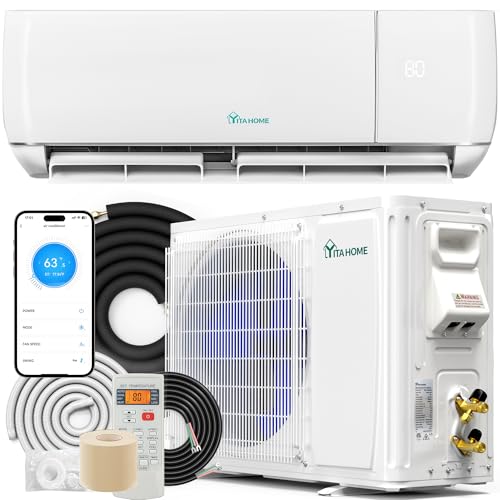
Features: 12,000 BTU capacity, 20 SEER2 rating, inverter compressor, covers about 750 sq. ft., Wi‑Fi enabled and Alexa-compatible, ETL and AHRI certified, five modes (auto/cool/dry/heat/fan), automatic defrost and self-diagnosis, “HEALTH” mode with negative ions and PM2.5 removal, noise under 41 dB, complete installation kit included.
Who this is best for: Choose this if you want smart-home integration and built-in air-quality features. The HE ALTH mode and PM2.5/ion functions suit buyers who want added filtration or cleaner air in living areas or small commercial spaces.
Why selected: The combination of ETL/AHRI certification, smart control, and multiple modes provides balanced functionality for tech-forward homeowners who also want quieter operation than traditional systems.
Caution: Avoid this if absolute whisper-quiet operation is critical; listed noise is under 41 dB, which is higher than the quietest models on this list.
Rellytech 12000 BTU

Features: 12,000 BTU cooling and 12,500 BTU heating, 19 SEER2 efficiency, covers up to 750 sq. ft., pre-charged system with installation kit, 4 modes (cool/heat/fan/dry), ECO mode to optimize energy use, adjustable fan speeds and 90° vertical swing.
Who this is best for: Better for buyers who want a straightforward, pre-charged system for medium-size rooms where adjustable airflow and ECO energy mode matter. The included kit and pre-charging reduce preparation steps for installers.
Why selected: Balanced capacity and practical airflow controls make this unit a sensible choice for living rooms, bedrooms, or offices where consistent comfort and simple energy savings are desired.
Caution: Avoid this if you require Wi‑Fi or voice control; this listing does not mention smart-home connectivity.
Pioneer Diamante Pro 12000 BTU
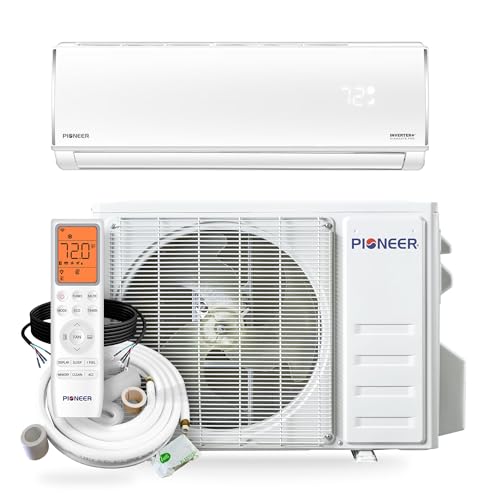
Features: 12,000 BTU/hr, 20 SEER and 9.5 HSPF efficiency, inverter heat pump technology, part of a Diamante series covering 9,000 to 36,000 BTU capacities, includes 16 ft. kit for installation runs.
Who this is best for: Choose this if brand range and proven inverter technology are priorities for residential or light commercial installations. The 20 SEER efficiency and available kit lengths suit a wide range of room sizes and installer preferences.
Why selected: Recognized product series with standard high-efficiency performance supports buyers who want a mainstream, well-documented ductless option with flexible capacity choices.
Caution: Avoid this if you need built-in Wi‑Fi or advanced air-quality modes; the listing emphasizes efficiency and capacity rather than smart features.
Buying Guide
What size (BTU) should I choose?
Match BTU to room square footage, ceiling height, insulation, and sunlight. Rough guide: 9,000 BTU for ~300–550 sq. ft., 12,000 BTU for ~550–750 sq. ft., 18,000 BTU for larger open areas up to ~1,250 sq. ft. Oversizing can cause short-cycling; undersizing can lead to inadequate cooling.
How important is SEER2 and efficiency?
Higher SEER2 means lower electricity use for the same cooling output. Choose 20 SEER2 or above for lower operating costs if you run the unit daily. Compare HSPF/HSPF2 for heating efficiency in cold climates.
Do I need Wi-Fi or smart-home compatibility?
Wi‑Fi and voice control add convenience for remote on/off and scheduling. Choose smart-enabled units if you want app scheduling or integration with home automation. If you prefer simplicity, non‑smart models are often cheaper and simpler to set up.
How quiet should a “hidden” or discreet unit be?
Noise ratings matter for bedrooms and media rooms. Look for indoor noise levels in the low 20 dB range for near-silent operation. Compare manufacturer dB ratings and choose lower values for sensitive spaces.
Don’t Overpay for HVAC Services – Call 888-894-0154 Now to Compare Local Quotes!
What about refrigerant type and environmental impact?
R32 refrigerant has lower global warming potential than older refrigerants. If environmental impact matters, choose units that specify R32 or list GWP values. Also consider SEER2 to reduce ongoing emissions from electricity use.
What installation considerations should I check?
Confirm the included installation kit length and that the outdoor unit position meets local codes. Check electrical requirements (115V vs 230V) and whether a dedicated circuit or professional electrician is needed. Pre-charged systems simplify installation but verify line set length and fittings.
Who should install these units?
Licensed HVAC professionals are recommended for refrigerant connections, brazing, and electrical hookups. Some pre-charged systems allow experienced DIYers to install when local codes permit, but professional installation ensures correct refrigerant handling and performance.
Should I prioritize brand or features?
Prioritize features that meet your use-case: capacity and SEER2 for energy savings, noise level for bedrooms, Wi‑Fi for convenience, and included installation kit for easier setup. Brand recognition can support parts availability and installer familiarity.
FAQ
Can ductless mini splits be hidden? Yes, “hidden” approaches include ceiling cassettes or compact high-wall units placed out of direct sight. Choose units with small indoor profiles and coordinate placement during installation.
How do I size a mini split for my room? Estimate needed BTU based on room square footage, insulation quality, ceiling height, sun exposure, and occupancy. Use manufacturer coverage guidance as a starting point and consult an HVAC professional for precise sizing.
Do mini splits require special electrical circuits? Many mini splits require a dedicated circuit and specific voltage (115V or 230V). Check the product electrical spec and consult an electrician to confirm compatibility with your home wiring.
Is professional installation necessary? Professional installation is recommended for refrigerant connections, pressure testing, and electrical work. Some pre-charged systems reduce complexity, but licensed installers ensure safe and efficient operation.
What refrigerant is best? R32 is commonly used for lower global warming potential. Check the product listing for refrigerant type and consider both refrigerant GWP and unit efficiency (SEER2) when evaluating environmental impact.
How do I keep a quiet indoor unit? Choose models with low indoor dB ratings, use proper mounting to reduce vibration, and place units away from sleeping or high-focus areas when possible.

How to Get the Best HVAC Prices
- Firstly, keep in mind that installation quality is always the most important thing for residential HVAC project. So never sacrifice contractor quality for a lower price.
- Secondly, remember to look up the latest rebates as we talked above.
- Thirdly, ask for at least 3 bids before you make the decision. You can click here to get 3 free estimates from your local contractors, and this estimate already takes rebates and tax credit into consideration and filter unqualified contractors automatically.
Lastly, once you chose the right contractor, remember to use the tactics from this guide: Homeowners Tactics When Negotiating with HVAC Dealer to get the final best price.