For homeowners seeking whole-house climate control without ductwork, choose a multi-zone or higher-capacity mini split matched to your square footage and electrical setup. The selections below cover single-zone high-capacity options and energy-efficient 12,000–18,000 BTU models that fit common U.S. rooms. Top picks are best for: buyers needing higher coverage (Nexaro), DIY-install-capable homeowners (GarveeHome), energy-conscious buyers (Kinetheme, YITAHOME), and smart-home integrators (Senville). Use the summary table to compare at-a-glance coverage and buyer fit.
| Product | Best For | Coverage Notes |
|---|---|---|
| Nexaro 12000BTU Mini Split | Larger single-zone coverage | Claims coverage up to 1250 sq. ft. |
| GarveeHome 12000BTU 230V | DIY installation experienced buyers | 230V unit with pre-charged condenser |
| Kinetheme 12000 BTU 19 SEER2 | Energy-conscious households | 19 SEER2, R32 refrigerant |
| YITAHOME 12000 BTU 20 SEER2 | Quiet, certified efficiency | ETL and AHRI certified, WiFi |
| Senville LETO 12000 BTU | Smart-home integrations | Alexa-enabled, inverter tech |
Nexaro 12000BTU Mini Split
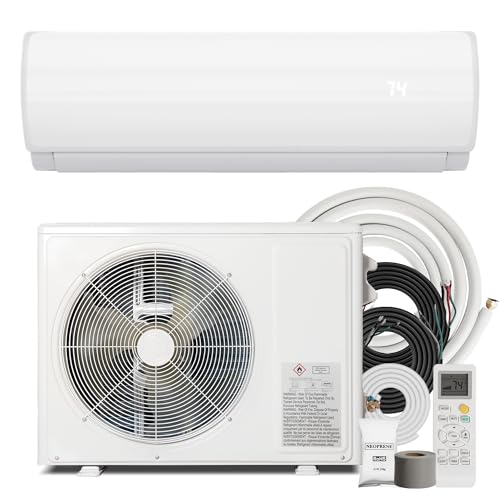
Features state year-round comfort with an inverter compressor and heat pump, R32 refrigerant, and coverage claims up to 1250 sq. ft. The unit lists multiple modes: Cooling, Heating, Auto, Fan, Dry, plus 4 fan speeds, 24-hour timer, Sleep Mode, Eco Mode, and Turbo Boost.
Best for homeowners who need higher single-zone coverage without ductwork. Choose this if you need a powerful ductless option that advertises broad area coverage and advanced modes for seasonal use.
Caution: Larger capacity claims mean you should verify your electrical circuit and load capacity and consult a qualified installer for refrigerant handling and proper system sizing.
GarveeHome 12000BTU 230V Mini Split

GarveeHome lists SEER 18.5 inverter technology, WiFi control, a remote, and a DIY installation kit including line sets and drain hose. The product notes the refrigerant is pre-charged but requires vacuumizing during installation.
Best for experienced DIYers or homeowners comfortable coordinating a professional hookup. Choose this if you want a unit with an included installation kit and the option to handle parts of the install yourself while planning professional vacuuming to complete the refrigerant circuit.
Caution: This model requires a 230V electrical supply and vacuumization during installation; avoid attempting full setup without following the manufacturer’s installation guidance or consulting an HVAC technician.
Kinetheme 12000 BTU 19 SEER2

Don’t Overpay for HVAC Services – Call 888-894-0154 Now to Compare Local Quotes!
The Kinetheme unit lists a 19 SEER2 rating, R32 refrigerant, inverter heat pump, and modes including Cool/Heat/Dry/Fan/Auto with Turbo and ECO modes. The product emphasizes energy efficiency and quiet operation for areas up to 750 sq. ft.
Best for energy-conscious buyers who prioritize efficiency and lower running costs. Choose this if you want a mid-size unit with a solid SEER2 rating and eco-friendlier refrigerant for ongoing energy savings.
Caution: R32 refrigerant handling and SEER2 performance require correct installation and may need a certified technician for refrigerant service and system commissioning.
YITAHOME 12000 BTU Inverter Mini Split
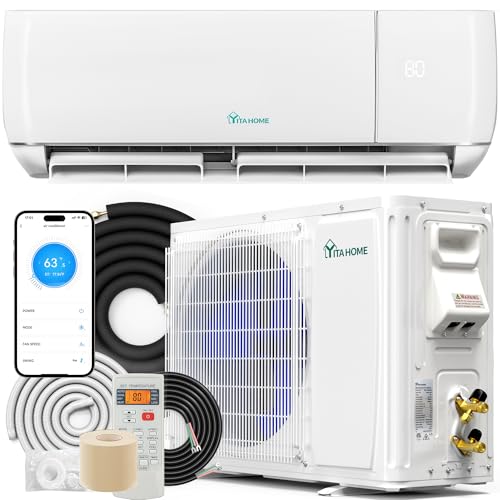
YITAHOME lists 12,000 BTU coverage up to 750 sq. ft., inverter technology with 25% energy savings, ETL and AHRI certification, five operating modes, WiFi and Alexa compatibility, automatic defrost, self-cleaning, iFEEL mode, and noise levels below 41 dB.
Best for buyers who want certified efficiency and quiet operation with smart controls. Choose this if you value ETL/AHRI certifications and a low-noise unit for bedrooms, living rooms, or small open-plan areas.
Caution: Even quiet units still need correct sizing for whole-house use; avoid assuming a single 12,000 BTU unit will replace multi-zone requirements for larger homes.
Senville LETO 12000 BTU Mini Split
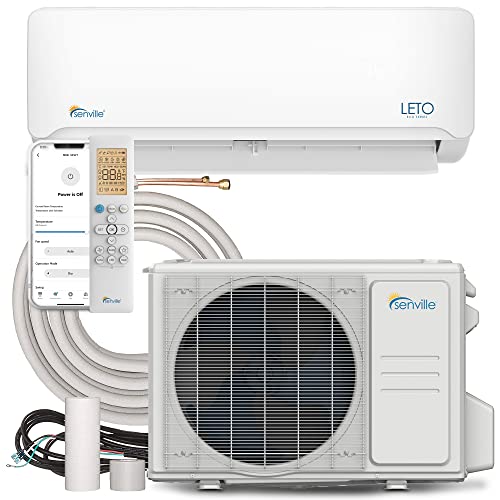
The Senville LETO lists Alexa integration, a multi-function heat pump that works down to about 5°F (-15°C), dehumidifier and turbo modes, a DC inverter, and SEER2 around 20.8 per the product listing. The unit targets year-round performance for homes and businesses.
Best for smart-home integrators and buyers needing reliable low-temperature heating. Choose this if you want voice-control integration and an inverter heat pump with extended low-temperature operation.
Caution: Low-temperature heating capability is useful in cold climates, but verify the unit’s performance specifications and choose multi-zone or additional units if you plan whole-house coverage.
Buying Guide
How do I size a mini split for whole-house use?
Calculate total conditioned square footage, then sum the recommended BTU needs per room considering insulation, ceiling height, sun exposure, and climate. Use manufacturers’ coverage claims as a starting point. For true whole-house solutions, multi-zone systems or several indoor heads with a single outdoor compressor are commonly required.
Single-zone vs. multi-zone: which should I choose?
Single-zone units are suitable for one large open area or targeted rooms. Multi-zone systems allow multiple indoor units connected to one outdoor unit, enabling independent temperature control per room. Choose multi-zone for whole-house control or uneven heating/cooling needs.
What electrical and installation issues should I check?
Confirm voltage requirements (115/120V vs 230V), circuit capacity, and breaker sizing. Many listings include pre-charged condensers but require vacuumizing and professional refrigerant hookup. Plan for a certified installer for line-set connections, electrical work, and system commissioning when necessary.
How important is SEER2 and refrigerant type?
Higher SEER2 ratings indicate better seasonal efficiency and lower operating costs. R32 refrigerant has lower global warming potential than many older refrigerants but requires certified handling. Balance upfront cost and long-term energy savings when choosing efficiency levels.
Do smart features and certifications matter?
WiFi, app control, and Alexa/Google compatibility simplify remote control and scheduling. Certifications like ETL, AHRI, or UL listing indicate third-party safety or performance checks and can be useful when comparing claims across brands.
When is professional installation recommended?
Professional installation is recommended for multi-zone systems, any refrigerant handling, electrical work beyond simple plug-in models, and to ensure correct charging, airflow balance, and warranty compliance. DIY installs are feasible for experienced homeowners when the product explicitly supports it, but verify requirements first.
FAQ
Can one mini split cool an entire house? One mini split can cool an entire house only if the house is small, open-plan, and the unit’s capacity matches the total load; most whole-house applications require multi-zone systems with multiple indoor heads.
What does SEER2 mean for operating cost? SEER2 (Seasonal Energy Efficiency Ratio version 2) measures seasonal cooling efficiency; higher SEER2 values generally mean lower electricity usage for the same cooling output over a season.
Are mini splits noisy? Indoor mini split units are typically quieter than window units. Noise levels vary by model; some listings specify decibel levels (for example, below 41 dB). Outdoor unit noise depends on compressor size and placement.
Don’t Overpay for HVAC Services – Call 888-894-0154 Now to Compare Local Quotes!
Is R32 refrigerant better? R32 has a lower global warming potential than many older refrigerants and can improve efficiency. Handling and service require technicians trained to work with R32.
Can I install a mini split myself? Some units include DIY kits and guidance, but many installations need vacuumizing, refrigerant work, and electrical changes best handled by certified HVAC professionals. Check the product’s installation notes before attempting DIY.
How do I pick the right electrical voltage? Match the unit’s listed voltage (115/120V or 230V) to your home’s circuits. Confirm circuit breakers, dedicated lines, and outlet types; consult an electrician for required electrical upgrades.

How to Get the Best HVAC Prices
- Firstly, keep in mind that installation quality is always the most important thing for residential HVAC project. So never sacrifice contractor quality for a lower price.
- Secondly, remember to look up the latest rebates as we talked above.
- Thirdly, ask for at least 3 bids before you make the decision. You can click here to get 3 free estimates from your local contractors, and this estimate already takes rebates and tax credit into consideration and filter unqualified contractors automatically.
Lastly, once you chose the right contractor, remember to use the tactics from this guide: Homeowners Tactics When Negotiating with HVAC Dealer to get the final best price.