A ductless mini-split AC can be a game-changer in case your garage becomes an oven during summer. They are quiet, powerful, compact, high-efficiency systems that do not require ductwork and are perfect in garages of any size.
We compare the top mini split air conditioners to use in garages below so that you can find the perfect fit whether you have a small one-car garage or a large workshop.
The comparison table shows the best options of small, medium and large garages at various prices.
| Garage Size | Budget Option | Mid-Range Option | Premium Option |
|---|---|---|---|
| Small (up to ~400 sq ft) | Pioneer Inverter+ 9K 9,000 BTU (~400 sq ft), 20.5 SEER Ultra-quiet 23 dB , no WiFi (remote) | MrCool DIY 12K 12,000 BTU (~500 sq ft), ~20 SEER Pre-charged DIY install, 5/7-yr warranty | Mitsubishi 9K 9,000 BTU (~400 sq ft), ~19 SEER Pro install, up to 10-yr warranty |
| Medium (400–600 sq ft) | Senville LETO 18K 18,000 BTU (~800 sq ft), 19 SEER Alexa-enabled , quiet ~38 dB | Cooper & Hunter 18K 18,000 BTU (~800 sq ft), 19 SEER Incl. install kit, 7-year warranty | Mitsubishi 18K 18,000 BTU (~600+ sq ft), ~20 SEER Pro-grade reliability, 10-yr warranty |
| Large (600+ sq ft) | Senville LETO 24K 24,000 BTU (~1,200 sq ft), ~18 SEER Alexa smart control, 34 dB quiet | MrCool DIY 24K 24,000 BTU (~1,000 sq ft), 20.5 SEER DIY install (pre-charged lines) , 7/5-yr warranty | Mitsubishi 24K 24,000 BTU (~1,000+ sq ft), ~16–20 SEER Hyper-heat model available, 10-yr warranty |
Why Choose a Ductless Mini Split for Garage Cooling?
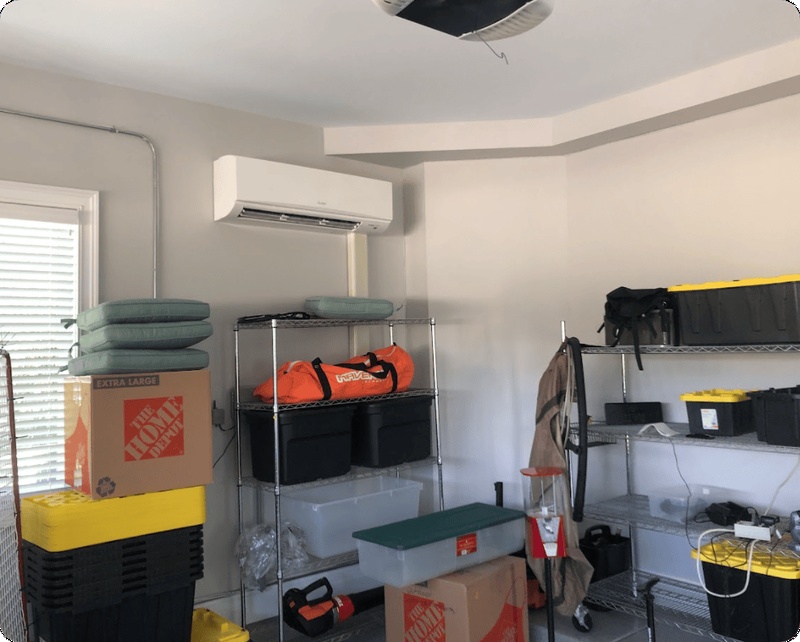
There are unique benefits of mini split air conditioners in a garage. To begin with, they are very energy efficient and employ the inverter technology to regulate the cooling capacity and prevent the energy surges that conventional ACs experience.
This implies reduced operating expenses to make your garage comfortable. Second, mini splits offer high-powered duct-free cooling, and this is ideal in garages that are not linked to central HVAC. Even large garage or workshop spaces can be easily covered by a unit of a sufficient size, and the temperatures will be comfortable even during the hottest summer days.
The other major advantage is the silent operation. Ductless mini split systems operate at a whisper-quiet level as opposed to noisy portable or window AC units. The indoor air handlers of most models are below 40 decibels some as low as ~23 dB, which is quieter than a conversation.
This implies that you can do projects or have fun with hobbies in the garage without the loud compressor overshadowing your thoughts. The compressor unit is left outdoors, which lowers noise indoors even further.
Mini splits provide climate control all year round as well. The majority of them are heat pumps that can be used to heat during winter besides cooling during summer. It is an excellent bonus when you work in your garage or have a hobby room all year round.
As an example, Senville LETO series can be used as both a heater and a cooler, which is a value addition to all-year-round use. Mini split will allow you to guard tools, cars, and stored goods against high temperatures and humidity, keeping your equipment and possessions in a better state.
Lastly, you have the option of having independent climate control of the garage. Mini split allows you to maintain garage at a different temperature than the house, only when necessary.
Don’t Overpay for HVAC Services – Call 888-894-0154 Now to Compare Local Quotes!
This zoned cooling is more effective than running central air to the garage (which is usually prohibitively costly or unpractical). All in all, ductless mini split is the best cooling system to use in garage than window or portable ACs, it is more powerful, more efficient and permanent.
How to Choose the Right Mini Split for Your Garage
When choosing the most appropriate mini split to cool a garage, one should consider a number of factors. Garages present special problems: they are usually very poorly insulated, have large doors and high ceilings, so it is vital to select a system of the right capacity and with the right features.
The principal considerations are the following:
Cooling Capacity (BTU Rating)
A mini split is measured in BTUs (British Thermal Units) and this is what defines the size of an area that it can cool. To begin with, the common sizes of garages are associated with the following capacities:
- 1-car garage (~240 sq ft): ~9,000 BTU
- 2-car garage (~400–500 sq ft): ~12,000 BTU
- 3-car garage (~600 sq ft): ~18,000 BTU
But garages usually need a little extra BTU capacity than an equal size room in your house. Why? The majority of garages are poorly insulated and large spaces around the doors. They are quick to get hot during summer.
To prevent under-sizing, you should consider “sizing up” your system by at least one level when the garage is not insulated or when you are not going to use the AC on a continuous basis. As an example, you may want to go with an 18,000 BTU unit in a 500 sq ft garage that is not insulated or you may want to get a quick cooldown. This will make sure that the AC does not strain in order to counter the heat load.
Ceiling height is another factor you should take into consideration. Garages tend to be higher (10+ feet) or vaulted, giving more air to cool. When your ceiling is higher than the normal 8-9 ft, you should consider it by treating the area as a bigger one.
As an example, a 400 sq ft garage with 12-ft ceiling will actually act as a ~520 sq ft space in cooling load. When this happens, it is advisable to go with the next bigger size of BTUs. Likewise, when you know that the garage door will be open often or you have heat producing activities (e.g. running machinery or bringing in hot vehicles), go with the higher BTU side to make up the difference.
Energy Efficiency (SEER Rating)
The SEER (Seasonal Energy Efficiency Ratio) or the new SEER2 rating shows efficiency. The higher the SEER the more cooling the unit gives per watt of electricity, which saves you money in the long run.
Seek out mini splits with SEER ratings of 15 or 20s or more to be most efficient. SEER 1824 is available in many modern systems. To illustrate, entry-level models such as the Della 12k BTU have a SEER rating of approximately 20 whereas high-end systems can achieve SEER 20+ without any problems. Each of the units mentioned below is a high-efficiency unit and is much more efficient than a portable or window AC unit. During a hot season, a mini split can save a lot of energy expenses.
It is important to note that real efficiency may be dependent on operating conditions, operating at partial load (which mini splits excel at) is most efficient. All the suggested models have inverter compressors that vary output and do not have on/off cycling losses of conventional ACs.
This implies that even the oversized units will reduce to conserve energy after the desired temperature has been attained. As a comparison, SEER is a good indicator: the higher the better, with 14 SEER (2023+ standards) being the minimum, and 18+ being the best.
Noise Level
Noise level is a comfort factor in case you are going to spend time in your garage workshop or gym. Mini splits have a reputation of operating indoors at a whisper.
The decibel (dB) rating of the indoor unit should be checked at low fan speed. A lot of good mini splits work at 25-40 dB inside the house, which is less than a normal conversation. To put it in perspective, the Pioneer 12k model operates at only 23 dB on its quiet mode, which is practically inaudible. Even bigger models such as the Senville 30k BTU only generate about 34 dB in the house, which is very quiet considering the cooling capacity. Our best choices all have low noise design, and you can work or relax in the garage.
Outdoor compressor unit will make certain noise (typically 50-60+ dB, like a background hum outside), but as it is outside the garage, it is typically not a problem. In case your garage is attached and you have neighbors nearby, you may want to think about where to place the outdoor unit, but otherwise, there is little noise in comparison to other options.
In brief, ductless mini splits provide a lot less noisy cooling compared to portable or window ACs, which can reach 55-70 dB in a garage.
Smart Features and Controls
The mini splits of today are usually convenient with smart features. Most of them have a remote control and also allow WiFi connection to control them through a smartphone app or voice assistants such as Alexa and Google Assistant.
In case you desire to have the opportunity to switch on the garage AC with your phone or program it, you should seek models that are marked as smart or have WiFi. As an example, the Senville LETO series is Alexa-enabled right out of the box, so it can be controlled by voice or app. The Della mini split has a built-in smart app that has a sophisticated scheduling and thermostat feature.
These characteristics will allow you to cool the garage when needed or keep it cool when you are away, you could turn on the AC as you drive home so that the garage is cool when you get there.
Most mini splits have an IR remote control to make temperature, fan speed, mode (cool, fan, dry, heat), and timer adjustments even when they do not have built-in WiFi.
Don’t Overpay for HVAC Services – Call 888-894-0154 Now to Compare Local Quotes!
Others also connect to smart thermostats or optional WiFi adapter kits. When home automation matters, consider a model that has in-built smart connectivity. Otherwise, a simple model with a simple remote will also do the trick.
Installation: DIY vs Professional
To install a mini split, the indoor air handler is mounted and the outdoor condenser is installed, and a refrigerant line, drain line and electrical connection is run between the two. This usually involves drilling a hole on the wall to pass the lines and evacuating the lines using a vacuum pump then releasing refrigerant.
Consequently, installation of mini-split is frequently performed by a professional (and most manufacturers will not honor the warranty unless it is installed by a professional).
With that said, mini split kits that are DIY friendly exist. MrCool DIY series is the most popular one, and it includes pre-charged refrigerant lines with quick-connect fittings, so there is no need to use a vacuum pump or an HVAC technician.
This allows an experienced DIYer to install the system using simple tools in a couple of hours. The higher initial cost of equipment can be justified by the savings you will get on the installation cost (usually between 500-1500 dollars). As an example, the 24k BTU MrCool DIY kit is about 2,600 dollars and comes with all the materials required; you would pay the same amount of money on a cheaper unit and professional installation.
A DIY mini split is a good choice to cool your garage on a budget, provided that you are comfortable with electrical work and instructions.
In non-DIY units, you will require a licensed HVAC or electrician to do the refrigerant charging and high voltage wiring. Professional installation will make the system charged properly and safe.
It also gives you the best warranty coverage e.g. Pioneer and Senville only warrant pro installation. We have both DIY-able models and pro install models in this guide, so it is your choice. In case of doubt, seek the services of an HVAC expert to size and install your mini split. Premium systems may be worth the price to have the peace of mind and warranty protection.
Durability and Warranty
Mini split is a big investment and you would not want it to go bad. The positive aspect is that ductless systems are reliable ones, at least when you use well-known brands.
The most important durability factors are the type of compressor (all our recommendations use well-proven inverter compressors) and build quality, but those are difficult to assess as a consumer, so the length of the warranty is a good indicator.
Budget brands normally give about 5 years on compressor and possibly 2 years on parts. As an example, Senville offers 5-year compressor warranty (2 years on parts) on its LETO series.
Mid-level brands such as Cooper & Hunter usually promote 5-7 years warranty, which means that they are sure about their product. Even better, high-end manufacturers such as Mitsubishi and Fujitsu will even provide a 10-year warranty on parts and compressor (when installed by a certified contractor and registered) and some will provide up to 12 years on certain models through elite dealer programs.
Practically, a properly installed mini split ought to last 10-15 years or more with little maintenance (cleaning filters and coils once a year). Mitsubishi is famous with units that continue to run silently through decades.
A big service network and parts that are easy to get in case something goes wrong is one of the benefits of premium brands. Conversely, even the low-end models have proven to be long lasting – e.g. many DIYers have been reporting Pioneer units lasting years and companies tending to support their products.
In making a choice, you should take into consideration the duration of time you require it to serve. In case it is your permanent workshop, it may be worthwhile to invest in a more expensive system. A cheaper unit can also provide you with years of service, especially when it is a temporary solution or you are short of money.
Don’t Overpay for HVAC Services – Call 888-894-0154 Now to Compare Local Quotes!
All you need to do is to make sure that you do not void the warranty by not following installation instructions, and to register your product when necessary to obtain the full coverage.
Best Mini Splits for Small Garages (Single-Car)
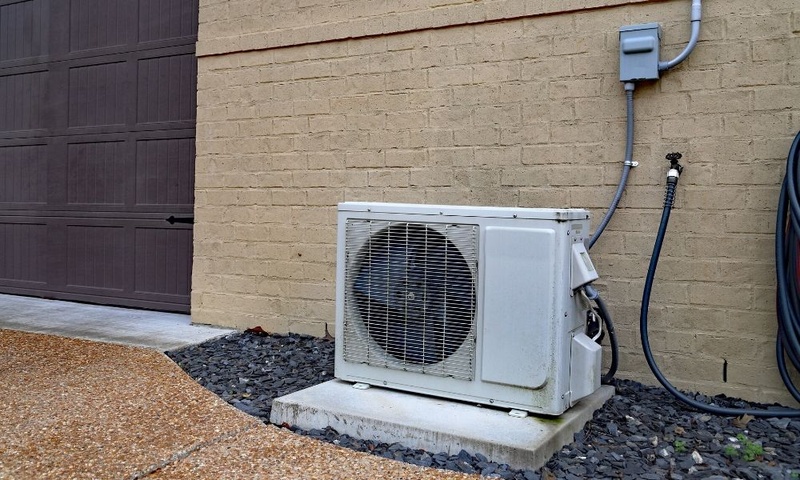
One-car garages (about 200-400 sq ft) do not need a massive AC, but you still want a decent one that will be able to cope with the heat accumulation. The mini split that will suit a small garage is about 9,000 to 12,000 BTU. This will provide you with sufficient cooling capacity with some spare capacity in case the garage is not well insulated.
Our favorite small garages by budget are listed below:
Budget Pick: Pioneer 9,000 BTU Ductless Inverter+

Pioneer Inverter+ 9K BTU mini split is an excellent cheap option in small garages. Pioneer is a long-established brand that provides quality performance at a lower price and their 9,000 BTU (3/4 ton) ductless system is ideal in rooms of up to ~400 sq ft.
Although it is relatively cheap (average price is less than 800 dollars), this unit is impressive in terms of its high 20.5 SEER efficiency rating and excellent quiet operation. It can run as low as 23 dB(A) on the quiet mode of the indoor unit which is practically silent cooling that is excellent in a workshop where you need to hear your tools or music.
- Capacity: 9,000 BTU (ideal for ~300-400 sq ft)
- Efficiency: 20.5 SEER, very energy-efficient for its size
- Noise Levels: Ultra-quiet 23 dB indoor operation on low fan
- Functions: Remote control, sleep mode, automatic cool/heat switchover (this model does not have built-in WiFi)
- Installation: It is packaged with 16-ft copper line set and installation kit . Professional installation is recommended to evacuate lines properly, and to guarantee 5-year parts warranty .
- Warranty: 5 years parts and compressor (reg/pro install). Pioneer is well known with its customer support, one user even reported that the company supplied a replacement part free of charge after the warranty period .
Why it is good in small garages: The Pioneer 9K is a combination of low cost and high performance that cannot be beaten. It will be able to cool a one-car garage without burning a hole in the pocket. The fact that it operates in a whisper-quiet manner is a massive advantage in case you use the garage as a workspace.
It does not have WiFi but it is a simple and reliable unit. Pioneer is difficult to resist by those who have a limited budget and desire to have a reliable cooling.
Mid-Range Pick: MrCool DIY 12,000 BTU Mini Split
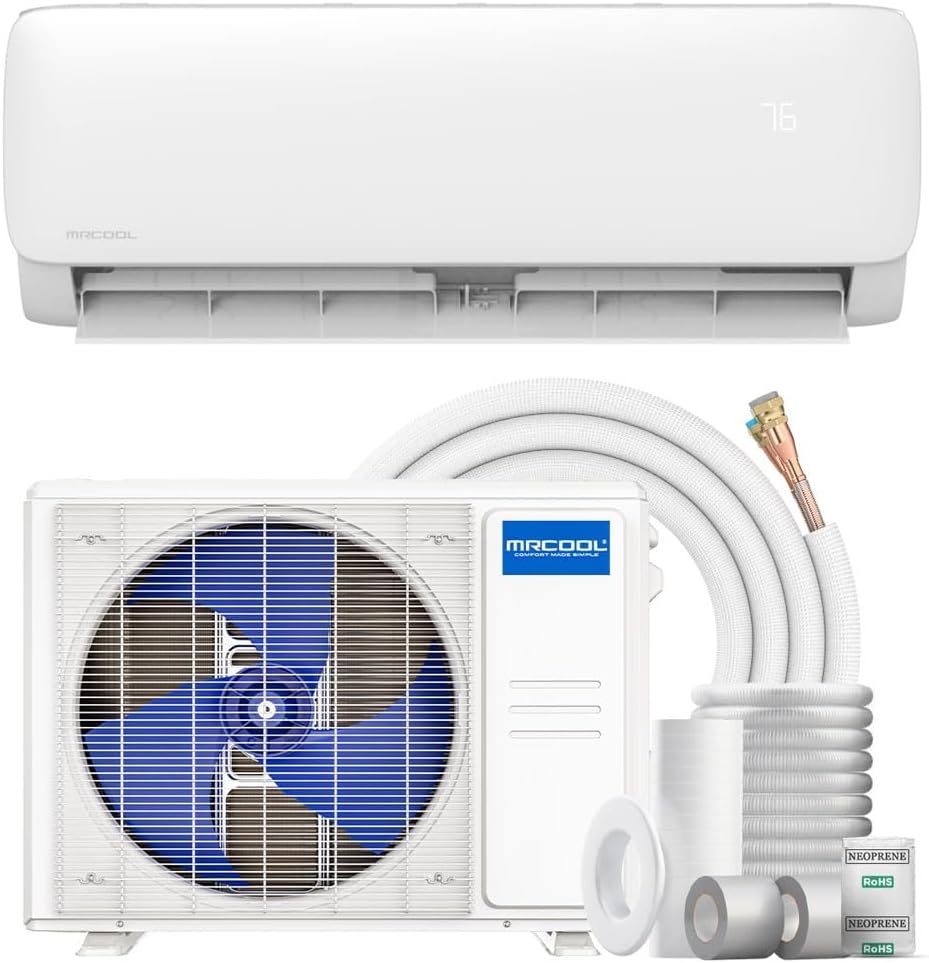
The MrCool DIY 12K BTU mini split is a good mid-range choice of small garage installation by homeowners who prefer to do the job themselves. The DIY series of MrCool is special because it is pre-charged, pre-vacuumed and has quick-connect fittings that enable you to install the unit without special HVAC tools or knowledge.
The 12,000 BTU unit is large enough to cool approximately 500 sq ft and beyond, which is most one-car garages and more. It is as efficient as other models (approximately 20 SEER) and it even gives heating to as low as 5 degrees Fahrenheit in winter.
- Capacity: 12,000 BTU (1 ton), suitable to ~500 sq ft or a large single garage area.
- Efficiency: ~20 SEER (the ratings can change depending on the model year, but are usually very efficient).
- Sound: Low sound; indoor unit usually in the low-30 dB range at low speed (similar to others in its category).
- Specs: Completely DIY installation kit (including pre-charged 25-ft refrigerant line) , wireless remote, and smartphone app support (MrCool units are typically WiFi-enabled through their app, so you can control it remotely).
- Installation: DIY-friendly no vacuum pump required. The quick-connect line set included in it allows you to connect it and release the refrigerant without any difficulties. You will still require to have a 110V or 220V electrical circuit (check whether you have the 115V model that runs on normal outlet voltage or the 230V model). The selling point here is the ease of installation.
- Warranty: 5-year parts, 7-year compressor warranty , very good. Notably, MrCool will respect the warranty even in the event of self-installation (unlike most brands) as it is a DIY product. This provides the assurance that you are not losing coverage by not getting the pro install.
Why it rocks in small garages: The MrCool DIY 12K allows you to get the same professional level of cooling without paying an installer, and that can save you up to $1000. It is a mid-range unit that is ideal when you are slightly handy and would like the pleasure of installing your own system.
It is a little higher than the Pioneer or Senville at first but when you consider the cost saved on installation, it is quite competitive. All in all, MrCool is a good performer and the easiest path to a mini split-cooled garage to those who like to do things themselves.
Premium Pick: Mitsubishi 9,000 BTU (M-Series)
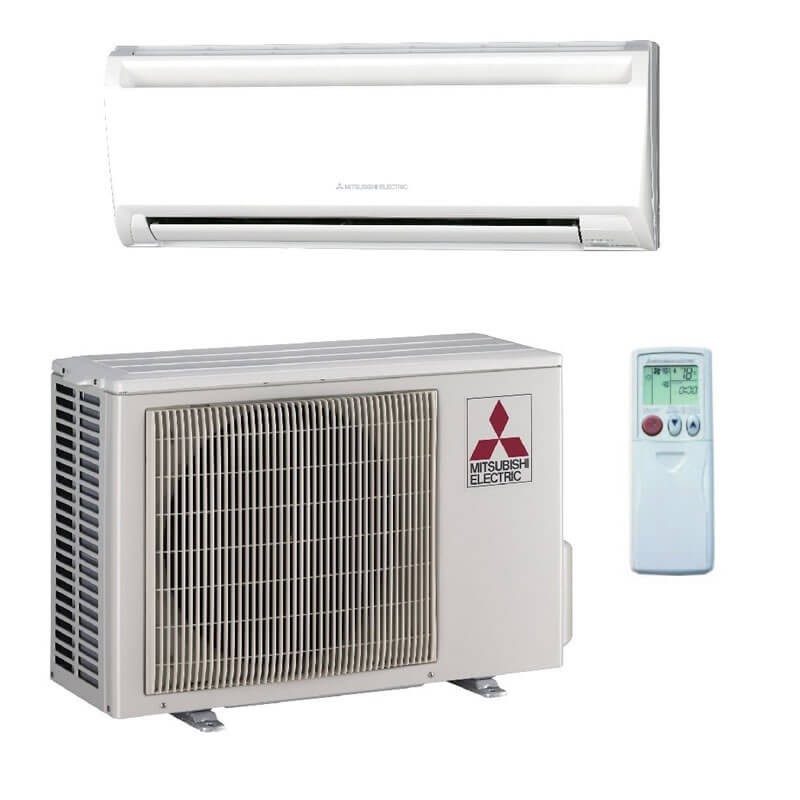
When money is not a big issue and you need the best of the best, the Mitsubishi 9,000 BTU ductless system is the best of the best in a small garage. Mitsubishi Electric is known to be of high build quality, reliable and performance.
Their 3/4-ton models (e.g. the Mitsubishi M-Series MSZ/MUZ units) will easily cool a single-car garage and have extra capacity to spare. Although you will be paying a higher price initially, you will have ultra efficient performance, near silent indoor units, and long lasting durability with a good warranty.
- Capacity: 9,000 BTU (can cover ~400 sq ft in most conditions, even tough ones).
- Efficiency: SEER ratings of about 19-24 depending on the specific model. Mitsubishi is always efficient; most of the models are Energy Star certified and they work very well both in cooling and heating.
- Sound: Very low. Indoor units of Mitsubishi are well known by their silence, some of them work at ~19 dB at low fan, which is practically inaudible. The outdoor units are also very silent and shake less because of improved engineering.
- Features: Varied. Wall-mounted units are available or you can have ceiling cassette or floor-mounted indoor units. The majority of them have a handheld remote. In case you want to add it, Mitsubishi provides the Kumo Cloud WiFi adapter to control it through the phone application. Higher-end models of their systems have such advanced features as i-see Sensor (detects temperature differences in the room), but even the entry-level models have all the standard modes (cool, heat, dry, fan, auto) and programmable timers.
- Installation: It needs professional installation. Mitsubishi units are distributed by contractors and are to be installed by a certified HVAC technician, particularly to obtain the full warranty coverage. It will cost more than a DIY, but you are getting a high-quality system that is tuned by the professionals.
- Warranty: Standard 10-year parts and compressor (with product registration) warranty when installed by an authorized contractor . Mitsubishi Diamond Dealers are some of the contractors who can provide warranties of up to 12 years. This is a comprehensive coverage, which indicates the anticipated life span of such units, which is 15+ years without any problem.
Why it is so good in small garages: The mini splits of Mitsubishi are the best. A 9k BTU Mitsubishi will cool a small garage quicker and more comfortably than nearly any other system, and it will do it quietly and efficiently over a long period of time.
It is a perfect option in case you have a premium garage workshop or studio and you are concerned with reliability and performance. Although the price (usually 1,200-1,500 dollars per unit and installation) is quite high compared to the low-end brands, the durability and the ease of use make it worth the money to many owners. Briefly, in case you are interested in high-end climate control in your garage, Mitsubishi is the answer.
Best Mini Splits for Medium Garages (Two-Car)
Garages of the 400-600 sq ft (average 2-car garage) size require slightly more cooling capacity. We suggest considering 12,000 to 18,000 BTU mini splits to these spaces, but 18k will be preferable in case the garage is not insulated or in case it receives a lot of heat.
These are the best mini split systems we recommend to medium-sized garages of various budgets:
Budget Pick: Senville LETO Series 18,000 BTU
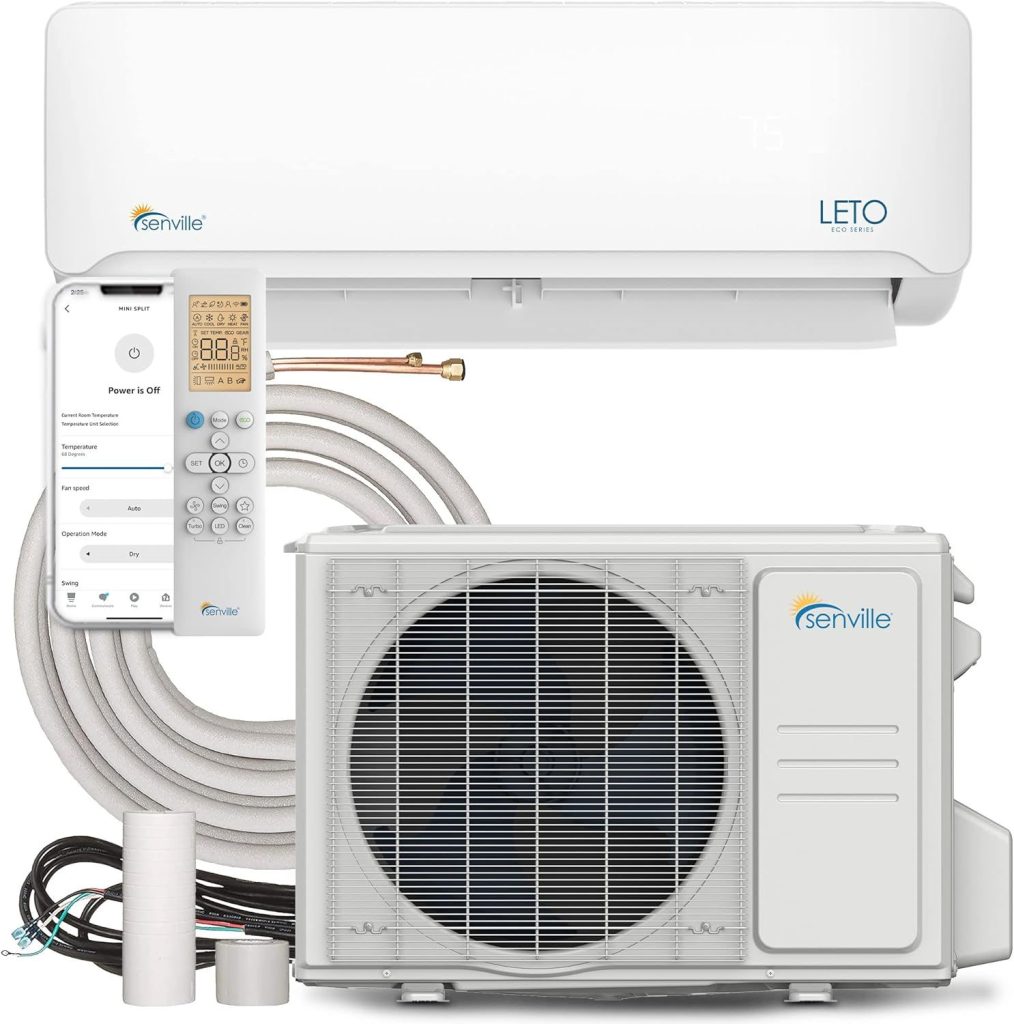
The LETO series 18K BTU mini split by Senville is a low cost upgrade in capacity without compromising features. Senville boasts of a lot of value in their units, which are efficient and even smartly connected at lower costs.
The 18,000 BTU unit has a capacity of approximately 800 sq ft, which is suitable to a two-car garage or a large one-car converted into a workshop. Although it is an affordable option, it has a decent SEER of 18-19 and has built-in WiFi (Alexa compatibility) to make it convenient to use.
- Capacity: 18,000 BTU (suitable to ~600-800 sq ft). This will include a standard 2-car garage (400-500 sq ft) with some spare cooling capacity in reserve, which is excellent in hot climates or garages that leak.
- Efficiency: ~18.6 SEER (the bigger Senville models are a little less SEER than their smaller models, but still efficient) .
- Noise: Low noise; should be in the mid 30s dB indoors at low fan. (By way of comparison, the larger 30k unit is 34 dB and the 9k is 38 dB so an 18k is in that quiet range.) It will not interfere with your work place.
- Specifications: In-built WiFi and Alexa and Google Assistant compatibility – you can switch it on/off or adjust temperatures using voice or app. It has such modes as Turbo (fast cooling), dehumidification, sleep mode, etc. It also has a remote control. Senville units are also pre-charged with refrigerant to the mentioned line length, which makes the installation easier.
- Installation: Professional installation is recommended. Senville offers a line set (typically 16 ft) and wiring kit. Although not a DIY quick-connect system, most handy homeowners self-install Senville by vacuuming the lines, though to keep the warranty one should have a licensed HVAC tech perform the startup. It is 220V and therefore you will require a 230V circuit.
- Warranty: 5 years compressor, 2 years parts standard (extendable if installed by HVAC professional and registered, in some cases). The warranty is shorter on parts than some competitors, which is a trade-off f

How to Get the Best HVAC Prices
- Firstly, keep in mind that installation quality is always the most important thing for residential HVAC project. So never sacrifice contractor quality for a lower price.
- Secondly, remember to look up the latest rebates as we talked above.
- Thirdly, ask for at least 3 bids before you make the decision. You can click here to get 3 free estimates from your local contractors, and this estimate already takes rebates and tax credit into consideration and filter unqualified contractors automatically.
Lastly, once you chose the right contractor, remember to use the tactics from this guide: Homeowners Tactics When Negotiating with HVAC Dealer to get the final best price.