Traiden Air is a relatively new brand of ductless mini split with high efficiency heating and cooling systems at affordable prices. These small inverter heat pump systems are advertised to be powerful, simple to install, and have new-age features such as Wi-Fi control.
Traiden mini split key advantages and disadvantages are briefly described below, and the detailed review of the performance, energy efficiency, installation, durability, pricing, customer service, and the comparison of Traiden to the well-known brands such as MrCool, Pioneer, and Mitsubishi are provided.
| Pros | Cons |
|---|---|
| • High efficiency (inverter units rated up to 23+ SEER) • Affordable pricing (lower cost than many competitors) • Quiet operation (~42 dB indoor noise) • Heating + Cooling (heat pump for year-round use) • Wi-Fi control on many models for smart operation | • Newer brand – shorter track record for long-term reliability • Installation manuals poorly translated (not in English) • Warranty service may require online claims and wait times • DIY install needs HVAC tools/skills (not true plug-and-play) • Remote lacks backlight; minor indoor unit noise (buzzing) reported |
Performance and Cooling/Heating Capabilities
Traiden mini splits provide good cooling and heating capability in their category. There are models of different capacities (e.g. 9,000, 12,000, 18,000, 24,000 up to 36,000 BTU) to fit different room sizes.
According to the users, these units are effective even in the hottest weather conditions, e.g., one 12,000 BTU Traiden was able to cool down a 24×23 ft uninsulated garage in a 98°F humid day in Georgia. This implies that the systems are able to sustain fixed temperatures under difficult conditions without any problem.
There is also good heating performance. Traiden mini splits are heat pumps that can heat rooms during winter, which makes it a year round climate control.
Their heating performance will decline at very low outdoor temperatures, like most standard mini splits, but in moderate winter conditions they provide good heat. The units have inverter compressors which adjust output to keep the indoor temperatures stable. Not only does this prevent the hot/cold swings of the traditional on/off systems, but also allows the Traiden to adapt to the demand by ramping up on hot or cold days and idling low when less cooling/heating is required.
The other strength is the silent performance of the indoor air handlers of Traiden. The manufacturer gives sound levels of approximately 42 dB(A), or as quiet as a library, so the unit can operate without interfering with conversations or sleep.
This is reflected by the homeowners, where reviews tend to mention how the units are very quiet. The outdoor condenser units are also made in such a way that they do not produce much noise and therefore the system as a whole runs in the background. Such performance, high cooling capacity, decent heating, and low noise levels bring Traiden to the same level as numerous other mini split systems that are used every day.
Energy Efficiency and Inverter Technology
Traiden mini splits are big on energy efficiency. These systems can have high SEER ratings due to inverter-driven compressors and advanced controls. Traiden standard line has approximately 18 SEER, whereas the inverter models of higher range have a rating of up to ~23 SEER.
Amazingly, the top-of-the-line Inverter Plus has efficiencies up to 30 SEER, which is in the best tier of mini split efficiency. These high SEER ratings indicate that the unit will be able to cool (or heat) with much less electricity than the older fixed‑speed ACs. Practically, the users will notice significant savings in their energy bills, particularly when they are changing an inefficient system.
Don’t Overpay for HVAC Services – Call 888-894-0154 Now to Compare Local Quotes!
The inverter technology allows the compressor to operate at variable speeds to suit the cooling load and prevents the start-stop cycles that are wasteful. The distributor of Traiden says that this exact control does away with the on/off cycling of the conventional systems and provides consistent comfort without emptying your bank account.
Also, ductless mini splits such as Traiden are energy-saving in nature since you are able to cool only the rooms you want, as opposed to cooling an entire house, which is a waste of energy. To reduce the total power consumption, many Traiden owners install a single-zone unit to serve a particular area (garage, bedroom, addition) in order to prevent overworking their central HVAC.
SEER efficiency is high and this means real savings. Traiden claims to save up to 80 90 % of energy in certain applications, which is probably an overly-optimistic estimate, but it does highlight their emphasis on low operating cost.
Practically, a well sized Traiden mini split with a SEER in the 20s can be one of the most cost-effective methods to cool or heat an area. They are Energy Star certified and may be eligible to receive utility rebates or tax credits because of their efficiency (e.g. the 18,000 BTU inverter unit is AHRI certified at 19 SEER2). In general, the efficiency credentials of Traiden are on par with more well‑known brands, e.g. the mini splits of Pioneer are also rated ~1723 SEER, and even exceed the top of the line Mitsubishi units in terms of ratings. This implies that consumers do not need to compromise efficiency in order to have a cheaper unit.
Installation and Ease of Setup
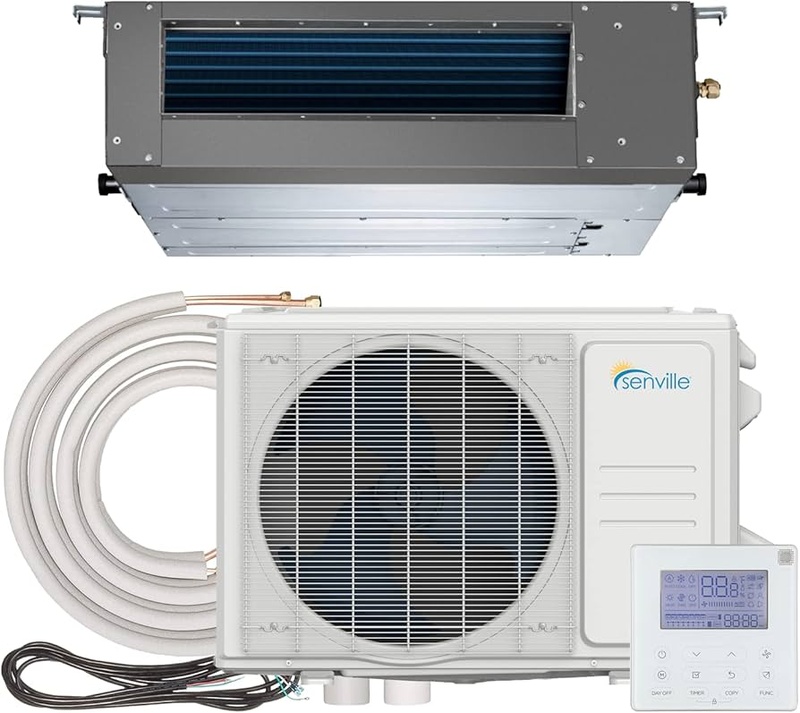
Traiden sells its systems as DIY-friendly and has easy installation kits, and in fact, every unit includes a full install package. The kit normally consists of the indoor air handler and outdoor condenser, a pre-flared copper line set (~1011 ft), control wires, drain hose, wall mount bracket, and putty to seal.
Traiden also has 115 V models (9k-12k BTU) that can be plugged into a normal 110⯿V outlet, and no electrician is required to install a 230⯿V circuit. This plug and play power is convenient and quite rare (MrCool DIY series also has an 115 V version, but many mini splits need 208/230 V).
Nevertheless, even with the hardware included, the installation of a mini split is a task that needs attention and certain skills. The refrigerant is pre-charged in the condenser of Traiden units, however, the refrigerant lines should be connected and evacuated.
These are not no-vacuum quick-connect couplings as the MrCool DIY; you will have to use a vacuum pump to remove air in the lines and have a closed system. Even the company itself notes that although it is easier than installing central air, mini-split installation requires both electrical and refrigerant work, which must be performed according to the codes and best practices. To keep the warranty and to be safe, Traiden must be installed by a licensed HVAC tech (or at least a tech must sign off the warranty card). Concisely, Traiden units can be installed by a skilled Do-It-Yourselfer, although the Do-It-Yourselfer must possess HVAC expertise or hire a specialist to perform such important tasks as pressure testing and vacuuming the lines.
Installation is like other ductless systems: the indoor air handler is mounted on the wall, a ~3-inch hole is drilled through which the line set and cables are run, the outdoor compressor is mounted on a pad or wall bracket, the copper lines, wiring, and drain are connected, the lines are vacuumed, and finally the refrigerant is charged.
Some Traiden users have managed to self-install; one customer observed that the instructions were inadequate but the installation is a snap. Speaking of that, documentation is a frequent issue, as several customers state that the manual is not written in clear English. This may confuse the first-time install. Luckily, the gap is filled by online resources: the reseller of Traiden offers how-to videos, and numerous DIYers resort to YouTube or forums to get advice. Installation of a Traiden mini split can be done with patience and the right tools and usually consumes a day or less.
After being installed properly, the reward is a well-running system. Traiden kits have pre-flared refrigerant lines that are ready to connect, but be sure to tighten all flare nuts sufficiently, one HVAC enthusiast reported that his Traiden had a small leak at a flare that had to be tightened and recharged.
This is not unusual with any mini split when details of installation are overlooked. In general, Traiden is easy to install and is positively reviewed (particularly against the installation of new ductwork), but a professional or experienced DIY assistant can make sure that the work is done properly.
Durability and Build Quality
Being a relatively new brand, the question of long-term sustainability of Traiden arises. Quality control is a priority at the company – the units are constructed with the help of rigorous testing and are meant to last. Although there is not a lot of independent longevity data, Traiden supports its products with a long warranty which is one of the best in the industry.
The majority of Traiden systems are sold with an 8-year compressor warranty and 2-year parts warranty (10 years on the compressor on some models or when installed by a professional). This kind of warranty shows that the manufacturer is sure about the compressor and core parts. To put it in perspective, this is comparable to most name brands, e.g. Mitsubishi provides 10-12-year warranties when pro-installed, and other low-end brands, such as Pioneer, usually offer 5 years parts/compressor, so Traiden is actually generous in this respect.
Behind the scenes, Traiden mini splits probably have parts of large OEM suppliers. Most of the so-called off-brand mini splits in North America are re-branded products of large manufacturers such as Midea or Gree, and Traiden seems to be one of them.
Indeed, the industry experts observe that most mini splits have common internal components, one user discovered that an expensive privately-labeled unit had the same manual and parts as a Pioneer unit that was a fraction of the price. This implies that the build quality of Traiden is likely to be the same as the other popular ductless units as they can be produced on the same lines. The secret of long life is usually good installation and maintenance (cleaning filters, no leaks of refrigerant, etc.). Anecdotally, numerous budget mini splits (Pioneer, Senville, etc.) have been reported to be running well past 5 8 years when installed well. Traiden units should also be expected to have comparable potential lifespan, which provides homeowners with many years of dependable service.
The current user experiences in the real world are mostly positive as far as the durability of Traiden is concerned. The owners often remark that the units operate “great” through several seasons, and they are surprised at the construction given the price.
Some minor problems have been reported: e.g. some users reported a slight buzzing sound of the indoor fan, and some reported early installation problems such as a leaking connection. Nevertheless, these cases seem to be isolated ones, the buzzing was caused by a specific unit (not a general issue) and the leak in the line was solved by tightening the fitting. Other reviews point out that the unit is largely how quiet it is and nobody complains of any major failures out-of-the-box. It is also notable that the outdoor units of Traiden are coated with Gold‑Fin (according to their site) to prevent corrosion and the indoor units have washable filters and an anti‑fungal feature to maintain the internals clean. These design features make it durable because it does not rust or develop mold.
All in all, Traiden is not as well established as Mitsubishi with decades of reputation behind it, but initial signs are that it is a well made system at the price, and durability seems to be similar to other well known mini split brands in the same category.
Pricing and Value for Money

Aggressive pricing is one of the best attractions of Traiden. Traiden mini split is usually much cheaper than similar products of high-end brands. As an example, a 12,000 BTU (1 ton) Traiden single-zone mini split can be purchased at a price of between 500 and 800 dollars of the equipment.On Traiden own store we find a 12k BTU inverter unit at $749 (on sale at $499), 18k BTU at $999 and the largest 36k BTU unit under 2000 dollars. Such prices normally cover the installation kit as outlined. In comparison, a DIY friendly MrCool 12k BTU kit may cost about 1500 dollars (with pre charged lines included), and a high end Mitsubishi 12k BTU unit may cost 1200-1800 dollars just to purchase the unit (not including the cost of installation). Traiden is definitely marketed as a premium product, offering the same cooling/heating power at a small fraction of the initial cost.
Don’t Overpay for HVAC Services – Call 888-894-0154 Now to Compare Local Quotes!
This reduced cost can be converted to thousands of savings on an average installation. Even when you pay an HVAC expert to install a Traiden (which may cost a couple of hundred dollars), the sum is frequently well below the cost of a fully installed Mitsubishi or Daikin system by a huge margin. Traiden is a sweet spot for homeowners who want to add AC to one room or garage without breaking the bank or those who are on a budget.
Besides, the features that you receive at the price are also remarkable, including inverter technology, a good remote, some models with Wi-Fi, and good efficiency ratings. Traiden is not a no-frills low-end model; it is rather similar to other well-known mid-range brands (Pioneer or Senville) but even cheaper in certain situations.
Traiden warranty and support package further adds value to the money. A mini split that costs 600 dollars with an 8-10 year compressor warranty is a great deal as long as the company stands behind it.
But one should remember that some of the cost savings in brands such as Traiden is due to the distribution model, they are sold online or through a few dealers, and there is no large contractor network. This implies that in case of a mishap, you may be waiting to have a part shipped to you, instead of a local dealer replacing it on the spot. Nevertheless, to a large number of purchasers, the dramatic front end savings are worth this trade off. Basically, Traiden provides 90 percent of the performance and features of high end mini splits at maybe 50 percent (or less) of the cost, which makes it an attractive option to cost conscious consumers.
Customer Service and Warranty Support
Traiden customer service is a hit and miss, as is the case with new brands. On the one hand, Traiden (and its distributors such as Mr. Mini Split) do offer support through phone and online, and they have a warranty claim procedure on their web site.
Customers who purchase via authorized resellers tend to deal with the resellers on any problems, e.g. Mr. Mini Split in Oklahoma helps buyers with questions and warranty claims. Support has been a positive experience to many users who have managed to get assistance in troubleshooting or getting missing parts. As an example, individuals have claimed to have received timely responses when they called Traiden or the seller to help them with the setup or inquire about the unit.
Traiden, however, is a smaller brand and, therefore, does not have such a comprehensive service network as larger manufacturers do. In case of a unit failure, you may be forced to use a local HVAC technician (which you would have to pay in case of a problem that is not as simple as replacing a part) or wait on warranty parts.
It is important to mention that HVAC units sold online are also subject to warranty peculiarities, which is that HVAC contractors are reluctant to perform warranty repairs on equipment they did not sell. In these instances you might have to send defective parts back and forth. An industry professional said that the majority of online mini-split retailers will ship warranty parts to the customer but may charge handling fees and have longer lead times. Traiden purchasers must be willing to do a little DIY when making warranty claims (e.g. replacing a circuit board or fan motor should one be sent out to replace it).
To date, the reputation of Traiden on warranty support is still in the making. Some complaints about hard time getting warranty service have been posted in forums and social media, but there are also numerous reports of problems being solved.
A good warranty process will be facilitated by ensuring that you have registered the product and have a good installation record. The official policy of Traiden is that as long as the unit was installed properly (preferably by a licensed technician who completes the card), they will stand up to 2 years on parts and longer on the compressor. In fact, this coverage is superior to certain big-box brands. With that said, the established brands have an upper hand in customer support: e.g. Mitsubishi is known to have a great technical support and wealth of service resources to contractors. You might not have that polish with Traiden but you are paying a lot less.
To conclude on support: Traiden customer service is responsive in general but may be restricted in comparison to the dealer networks of the premium brands. Customers who appreciate a local place to touch and a fast service may be biased towards brands that have local dealer installers.
However, the people who are comfortable working over phone/email to get support and maybe do some minor fixes themselves will find the support offered by Traiden sufficient. With the expansion of the brand, we can expect such positive changes as the increase in the number of authorized service centers. In the meantime, the trick is to buy it with a reputable seller who will represent you in case something goes wrong. The general experience has been reported as satisfactory by many Traiden owners, considering the savings in cost, with the general feeling being that any minor inconveniences in dealing with support are worth it, since the unit itself is a good product and was such a good price, e.g. Great product. Great price.”
Traiden vs Competing Mini Split Brands
Traiden vs MrCool
Through its DIY mini split systems, MrCool has gained a household name. The largest distinction between Traiden and MrCool is in the installation method. The DIY series (e.g. the 3rd and 4th Generation units) of MrCool are shipped with pre-charged quick-connect line sets so they can be installed with no tools at all (no vacuum pump and no refrigerant handling required).
This plug and play convenience is one of the key selling points and explains why MrCool is more expensive. Traiden units, on the contrary, are easy install in the sense that they come with accessories, but still need the old-fashioned installation procedure involving flaring and vacuuming. MrCool is the obvious choice of a homeowner who definitely does not want to use HVAC tools to install it. But in case the homeowner is not so much against hiring a technician an hour or two, Traiden can save much money. To give an example, a 12k BTU MrCool DIY kit may be about 1400-1600 dollars, but a similar Traiden unit is about 500-800 dollars, even after paying a pro 300 dollars, Traiden would be cheaper.
Traiden and MrCool are rather similar in terms of their performance. They both have inverter compressors and have the option of heat pumps. The 12k units of MrCool are usually about 20 SEER (the new)
Don’t Overpay for HVAC Services – Call 888-894-0154 Now to Compare Local Quotes!

How to Get the Best HVAC Prices
- Firstly, keep in mind that installation quality is always the most important thing for residential HVAC project. So never sacrifice contractor quality for a lower price.
- Secondly, remember to look up the latest rebates as we talked above.
- Thirdly, ask for at least 3 bids before you make the decision. You can click here to get 3 free estimates from your local contractors, and this estimate already takes rebates and tax credit into consideration and filter unqualified contractors automatically.
Lastly, once you chose the right contractor, remember to use the tactics from this guide: Homeowners Tactics When Negotiating with HVAC Dealer to get the final best price.