As soon as your air conditioner begins to give off a musty smell, it is not just a bad smell that you have to deal with, but it is usually an indication of some problems that should be addressed. The presence of musty odors usually means that you have moisture issues and that mold or mildew may be growing in your AC system, which can impact the efficiency of your system as well as the air quality in your home.
Knowing the cause of these odors and how to deal with them can make your home comfortable and your air healthy.
| Common Causes | Quick Solutions |
|---|---|
| Dirty air filters | Replace filters every 1-3 months |
| Clogged drain line | Flush with vinegar solution |
| Mold on evaporator coils | Professional cleaning or DIY coil cleaner |
| Excess humidity | Use a dehumidifier or adjust AC settings |
| Standing water in drain pan | Empty and clean the drain pan |
Why Does Your Air Conditioner Smell Musty?

Air conditioner musty odors do not just come out of the blue, they occur because of certain conditions in your HVAC system. Microbial growth, especially molds and mildew which grow in the dark and damp environment inside your air conditioning unit, is the main culprit of most musty odors.
As these microorganisms multiply, they release volatile organic compounds (VOCs) which give your home that musty odor that you smell.
The main preconditioner of mold growth in AC systems is excessive moisture. It is normal to have condensation in your air conditioner when it cools down the hot air, but the moisture should be drained correctly through the condensate pan and the drain line.
When these drainage systems clog or get faulty, the water gets stagnated and provides the best environment where mold and bacteria thrive.
Musty odors are a big contributory factor of dirty evaporator coils. Dust, pollen and other particles may accumulate on these coils as air passes over them. These particles together with moisture during the cooling process provide an environment that is rich in nutrients to grow mold and bacteria.
It is even worse in seasons of high humidity whereby your AC will have to strain more to dry the air.
Another frequent cause of musty odors is the neglected air filters. Clogged filters limit the flow of air and are unable to trap the particles. This enables the contaminants to build up on the internal parts causing performance problems as well as odor problems.
Also, filthy filters may get wet and be the home of mold.
Don’t Overpay for HVAC Services – Call 888-894-0154 Now to Compare Local Quotes!
Seasonal Factors That Intensify Musty Odors
The issue is usually more evident in certain seasons. Spring and summer have increased humidity that leads to increased condensation in air conditioning systems, which provide moisture to the growth of molds. Also, in case your AC has not been used in colder months, moisture could have been left inside, and colonies of molds could have settled without being disturbed.
Long spells of AC idleness like when on vacation or when the seasons are changing can worsen the development of musty odor. When there is no air circulation and drainage, moisture becomes stagnant in the system.
By the time you restart the unit, the mold and the odors that have accumulated are instantly spread in your house.
Health Concerns Associated with Musty Air Conditioner Smells
That stale odor that comes out of your air conditioner is not only unappealing but it may be an indication of health risks. Allergic reactions and respiratory issues may occur when people who are sensitive to mold spores and microbial contaminants in the air of your home are exposed to them. The usual symptoms are sneezing, coughing, watery eyes, irritation of the throat, and nasal congestion.
Individuals with asthma or pre-existing respiratory disorders are at risk of having their symptoms worsened by the presence of mold in the air, and even an asthma attack. Children, the aged, and people with weak immune systems are especially susceptible to these effects, and it is therefore of great importance to have musty AC odors resolved promptly in homes with high-risk members.
Chronic respiratory diseases can be developed as a result of long-term exposure to mold spores. Certain molds species can produce mycotoxins which can lead to more severe health issues in case of prolonged exposure. Although not every mold releases toxic substances, the possibility of this risk is high enough to consider combating musty odors as one of the priorities in ensuring healthy indoor air quality.
In addition to respiratory problems, other people can feel headaches, fatigue, and inability to concentrate when they are exposed to mold and bacterial VOCs. The symptoms can be related to the so-called sick building syndrome, when the poor indoor air quality causes the general discomfort and health complaints that can be improved when outside the affected building.
How to Identify the Source of Musty Smells
It is important to identify the precise cause of musty smell in your air conditioning system in order to treat it. The first thing to do is to identify the time of the smell, is it instant when the AC is turned on or does it build up after some time the system has been in use? In case the odor is most intense when the unit is initially turned on, then the cause is probably in the ductwork or close to the air handler.
In case it appears gradually, the issue may be associated with continuous condensation problems.
Check your air filter which is usually the most accessible part. A filter that is visibly dirty, wet or moldy has to be replaced. Then, inspect the condensate drain pan that is beneath the indoor evaporator unit. The presence of standing water or visible mold growth in this region is a sign of drainage issues that should be dealt with.
Check the available duct work to determine whether it is wet or has mold growing on it. Discoloration, water stains or even real patches of mold are problem areas that need cleaning or fixing. Be especially careful of duct sections in damp places such as the basement or crawl spaces, where condensation and mold are more likely.
Various odors of AC may represent various issues. Although musty smells are usually indicators of mold and mildew, other smells such as burning, rotten eggs or chemical smells are indicators of other problems that might need the expertise of a professional.
Making the difference between the two can aid in reducing the origin of the issue.
Using Your Senses to Detect Problem Areas
In addition to smell, visual inspection may be of help. Check the vents, ducts, and air handler unit to see whether there are water droplets or moisture. Dampness on the ceiling or walls around the vents may be a sign of moisture issues that may be causing musty smells. Likewise, you should also hear strange noises such as gurgling in drain pipes, which may indicate blockages that do not allow the drainage to occur.
To be more accurate, you can think of utilizing a moisture meter to detect wet spots that are not wet to the eye. These instruments may be used to locate concealed moisture issues inside walls or insulation around ducts. Also, there are professional-level mold testing kits that may determine the type and level of mold in case you are worried about certain health hazards.
DIY Solutions for Eliminating Musty Smells from Air Conditioners
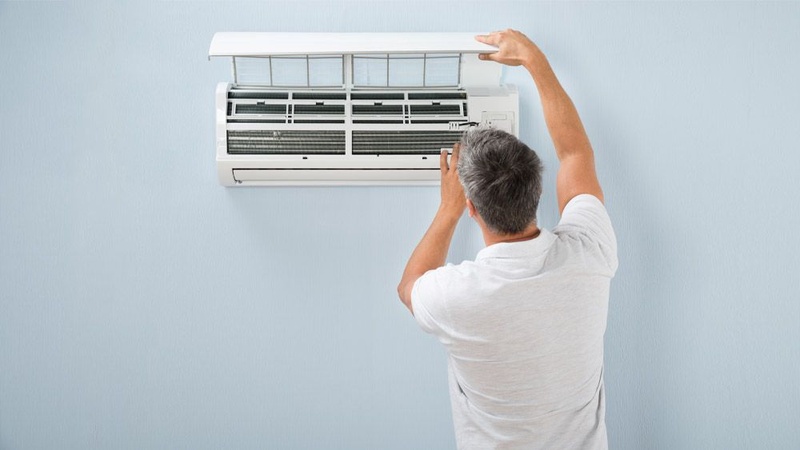
Cleaning or replacing the air filter may be the first step in dealing with musty AC odors. This is a very easy maintenance procedure that should be done 1-3 months between uses and can instantly increase air quality and decrease odors. In houses that contain pets, allergies or a lot of dust, more replacements might be needed.
Select quality filters that have the right MERV rating in your system.
Another good DIY solution is to clean the condensate drain line. Shut down your AC system altogether, and find the drain line (usually a PVC pipe) close to the outdoor unit. To kill bacteria and dissolve clogs, pour 1 cup of distilled white vinegar or hydrogen peroxide down the line. After 30 minutes continue with plain water.
In recalcitrant clogs, a wet/dry vacuum at the outside end of the line can be used to suck blockage.
The drain pan of the condensate must be emptied and cleaned on a regular basis. Once the system is turned off, drain pan should be removed where possible and washed using a solution of equal parts of water and bleach or vinegar to kill mold and bacteria. Make sure it is dry and reinstall it.
Don’t Overpay for HVAC Services – Call 888-894-0154 Now to Compare Local Quotes!
It may be worth adding algaecide tablets that are meant to be placed in AC drain pans to prevent future growth.
Cleaning Accessible Components
When you are able to reach your evaporator coils, it is possible to clean them carefully and eliminate a large portion of the odors. Switch off all power to the system and carefully brush any exposed coil surfaces with a soft brush and commercial coil cleaner that is air conditioner specific. Never bend the fragile fins and always follow the manufacturer instructions.
Wash well in case the cleaner needs it and make sure that all cleaning solution is washed off.
In ductwork that is accessible, mold can be removed by wiping the surfaces with a solution of bleach (1 part bleach to 10 parts water). Make sure that there is adequate ventilation when doing this and use protective clothing such as gloves, eye wear and mask. Pay particular attention to the regions around vents where condensation could take place.
Restore system operation after surfaces are dry.
Treatable components that are accessible should be treated with EPA-registered disinfectants that are specific to HVAC systems. These products are made to kill mold and bacteria without destroying sensitive parts. Label instructions should always be followed carefully since the wrong use may lead to damage of components or health risks.
Natural Deodorizing Methods
There are some natural methods that can assist you in controlling musty smells as you work on their causes. Activated charcoal can be placed close to the return vents and this can absorb the odors as the air circulates in your home. Change these natural deodorizers after a few weeks so that they can remain effective.
Antimicrobial essential oils, including tea tree, eucalyptus, or lavender, can also be used to fight odors in a proper way. Put a couple of drops in your washable filter or put cotton balls with essential oils close (not inside) vents. It is never advisable to apply oils directly to AC parts since it may cause plastic parts to be damaged or cause fire.
Baking soda is a natural deodorizer and may remove musty odors. Spray it lightly in the vicinity of the return vents or clean drain pans using it. To be more concentrated, open containers of baking soda in the rooms where musty smell is the strongest.
Change after 30 days or odors reappear.
When to Call a Professional
Most of the musty AC odor problems may be solved using DIY techniques, but some cases should be addressed by professionals. In case you have cleaned the available parts properly and changed filters but still have constant musty odors, then there are some issues deep in the inaccessible parts of your system.
These are complicated problems that require specialized tools and expertise of professional HVAC technicians.
Any visible mold that covers a large area (over 10 square feet) must be taken care of by professionals who are well trained and equipped. Mold remediation that involves a large area needs containment measures to ensure that the spores do not circulate in your house during the cleaning process.
Special HEPA vacuums and containment systems are used by professionals and cannot be recreated by DIY techniques.
Mechanical problems that may be severe are suggested by system performance problems that occur along with musty odors, including loss of cooling ability, strange sounds, or ice on parts. Such symptoms can be indicators of refrigerant leaks, compressor problems, or electrical problems that should be diagnosed and fixed by a professional.
Don’t Overpay for HVAC Services – Call 888-894-0154 Now to Compare Local Quotes!
In such situations, trying to perform DIY repairs may break costly parts or cause safety risks.
What Professional Service Includes
A professional AC cleaning is usually thorough and involves cleaning of evaporator and condenser coils with special equipment and cleaning chemicals. Technicians will take apart parts to reach every surface on which mold and bacteria can develop. They will also carry out a thorough check up of the drainage system, removing blockage and treating drain pans with the right anti microbial agents.
In extreme cases of molds, the experts can advise on duct cleaning services involving the use of high-powered vacuum machines and rotary brushes to clean the whole ductwork system. Although regular duct cleaning is not always required, it may be helpful in case of serious mold problems or following water damage disasters.
Technicians are also able to install upgrades during their professional service that can prevent future odor problems. UV light systems installed close to coils have the ability to kill molds and bacteria before they form colonies. In the same way, more particulates can be trapped using advanced filtration systems or electronic air cleaners than regular filters, thereby limiting the nutrients that can be used by the microbes to grow.
How to Avoid Being Ripped Off and Get a Fair Repair Price
It is not easy to find a good AC repair specialist, some of them will give you the lowest prices since they are inexperienced or have a bad reputation, and some will give you a very high price on the same job. That is why the best thing you can do to receive quality repairs at a reasonable price is to compare estimates of the best-rated local pros.
Visit each of them, get to know about their history and the experience of the technicians who will work on your car. Select a professional AC repair contractor who has a fair price. You may speed up this process with the help of our Free Local Estimates service.
By completing a simple form and sending it, you will shortly receive a call by three of the best AC repair and installation companies in your area. They are pre-vetted in terms of experience and all of them are licensed and insured to protect you. Click below to start and secure your home and wallet today.
Preventing Musty Smells in Air Conditioners
The first step in avoiding musty AC odors is to manage the humidity inside the house. Keeping the relative humidity at 30-50 percent can help you greatly in preventing the growth of mold in your HVAC system. You might want to consider a whole-house dehumidifier that can be used with your air conditioning system to provide complete moisture control especially in humid areas.
Odor prevention is essential by creating a regular maintenance program. Replace filters as recommended by the manufacturer- generally 1-3 months depending on use and environmental conditions. Have a professional maintenance done at least once a year, preferably before the seasons of heavy use.
Such regular checks will be able to detect and correct minor problems before they become major odor problems.
Ventilation in your home will ensure that there is less moisture in the HVAC system. Activate bathroom and kitchen exhaust fans when moisture is produced and when the activities are completed. Make sure that these fans exhaust to the outside and not into attics or crawl spaces where they may re-distribute moisture back into your house.
It is also advisable to leave your thermostat fan setting on the on position occasionally to ensure that there is constant air flow.
System Upgrades That Help Prevent Odors
In case of drainage issues in your system, you may want to consider a condensate pump that comes with an algaecide tablet reservoir. These pumps are in motion to push water out of your air handler and have antimicrobial treatments that do not allow bacteria and molds to grow. In the case of systems in especially difficult conditions, float switches that automatically turn off the AC in case water starts to collect can eliminate odors as well as water damage.
UV light systems that are fitted in air handlers offer constant protection against microbial growth. Such systems subject the mold spores, bacteria, and viruses to ultraviolet light that destroys their DNA, making them unable to reproduce. Although UV systems are more costly than other solutions at first, they provide continuous protection and do not need regular maintenance and replacement.
More sophisticated filtration systems will be able to remove a large number of odor-causing particles that may circulate in your system. Standard filters do not trap smaller particles as HEPA filters or electronic air cleaners, and so there is less organic matter to support mold growth. Antimicrobial coated media filters offer extra protection against microbial growth on the surfaces of the filters.
Maintenance Tips to Keep Your AC Fresh

It is advisable to come up with a seasonal maintenance program to avoid the development of musty odors. Prior to the onset of summer, clean the accessible parts thoroughly, test the drainage systems and change filters to ensure that your system is ready to be used intensively.
On the same note, do end-of-season maintenance when switching to heating, and make sure that no moisture is left in the system when the system is not in use.
Ensure that the surrounding of your outdoor condenser is free of debris, plants and stagnant water. This unit requires proper air circulation around it to operate efficiently and the build up of organic materials such as leaves or grass cuttings can add moisture and mold spores.
Keep at least two feet clearance all around the unit and the top should be clear.
When you are not going to use your AC over long periods, make preventive actions to prevent the development of musty odor. When possible, operate the system on fan-only mode every now and then to keep the air moving.
In case of longer shutdowns, it may be worthwhile to hire a professional to do a shutdown service which involves extensive drainage and cleaning of parts prone to moisture build up.
Record-Keeping for Effective Maintenance
Keep a maintenance record that records the changes of filters, professional services, and problems that may arise. This record assists in the determination of trends in the system performance and also gives useful information to the technicians when they visit the system to service them. Write down the times odors are experienced, whether there is a seasonal pattern, and how different treatments are working.
Set up calendar reminders on regular maintenance procedures according to the manufacturer and the requirements of your system. The majority of smart phones and digital calendars have the option of setting recurring reminders which can keep you on schedule with maintenance. It may be a good idea to take dated photos of parts when cleaning them to monitor their state over time.
In case of rental houses or vacation homes where the AC may not be used regularly, come up with a particular maintenance routine to avoid mustiness when you are not there. This could be programmable thermostats that operate the system on a schedule, humidity sensors that turn on dehumidification when required or agreements with property managers to conduct regular inspections.
Such preventive measures are especially significant in the humid climate.
Understanding Different Air Conditioner Odors
Although this article is about musty odors, it is important to know the various odors of ACs to be able to know the particular problem. Burning odor is usually a sign of electrical problems or overheated components that need professional help as soon as possible. Switch off your system as soon as you smell burning odors since they might be an indication of fire risks.
Sulphur or rotten egg odors may be a sign of a natural gas leakage in case your system is connected to gas lines, or a dead animal in the ducts. The first one should be evacuated immediately and your gas company should be contacted, and the latter should be removed by professionals.
Sulfur-like odors should not be overlooked because natural gas leaks are dangerous.
Refrigerant leaks are usually detected by the chemical or sweet odor, especially in the older systems that contain R-22 refrigerant. Such leaks are inefficient to the system and may be hazardous to health when exposed to long periods. It must be repaired professionally, since refrigerant is a specialized certification and equipment.
The smell of tobacco is normally a sign of dust burning on heating elements when you change the cooling to heating mode. This is normally temporary but can be a sign of too much dust build up that needs to be dealt with during maintenance.
In case the odor continues even after the initial heating cycles of the season, it is advisable to seek professional examination.
Special Considerations for Different AC Types
Each of the central air conditioning systems, window units, and ductless mini-splits has its own issues regarding odor prevention and treatment. Central systems that have a large ductwork can have odor issues in areas that are difficult to reach and only professional duct cleaning services can solve the problem completely. Whole-house humidity control and periodic professional maintenance are most advantageous to such systems.
The window units are easier to clean yourself, but they might attract more outdoor pollutants because of their position. Seasonally clean and remove these units, especially the drain ports which tend to get clogged with algae. Before covering or storing window units, make sure that they are thoroughly dry and clean.
Ductless mini-split systems need their blower wheels and condensate pumps to be cleaned regularly, as these are the places where mold is likely to grow. The internal parts of these systems have the ability to hold moisture and dust in their blower units. Most mini-splits have self-cleaning options that are to be followed as per the instructions of the manufacturer.
Also, the condensate pumps of such systems might need more frequent maintenance than the conventional central AC drain lines.
Apartment and Rental Property Considerations
Renters in rental houses have special problems with the AC odors, because they can have no access to the system parts and can be unable to make changes. Report and document musty odors to property management as soon as possible since they may be signs of bigger moisture issues that may compromise the integrity of the building. Record all the correspondence on AC matters.
In the case of landlords and property managers, it is a good idea to work on a proactive maintenance program of all units to avoid tenant complaints and safeguard your investment. Have a regular professional maintenance instead of waiting to get reports by tenants.
It is possible to consider the installation of humidity monitors in units to detect possible moisture issues before they result in the development of molds and the health issues of tenants.
The AC odor issues in multi-unit buildings can be caused by the neighboring units or shared spaces. Collaborate with building management to find and correct building-wide humidity, roof leaks or ventilation problems that may be creating conditions conducive to mold growth within the HVAC system.

How to Get the Best HVAC Prices
- Firstly, keep in mind that installation quality is always the most important thing for residential HVAC project. So never sacrifice contractor quality for a lower price.
- Secondly, remember to look up the latest rebates as we talked above.
- Thirdly, ask for at least 3 bids before you make the decision. You can click here to get 3 free estimates from your local contractors, and this estimate already takes rebates and tax credit into consideration and filter unqualified contractors automatically.
Lastly, once you chose the right contractor, remember to use the tactics from this guide: Homeowners Tactics When Negotiating with HVAC Dealer to get the final best price.