This paper will talk about the average cost and installation fee of 2 ton, 3 ton, 4 ton and 5 ton Bryant AC units. This is to help the home owners in the United States to make informed decisions on the selection of the right system to be used in cooling.
The approximate cost ranges (unit + installation) and the potential efficiency (SEER) levels are provided in the following table of quick reference. These are estimates and they can vary according to the location, contractor fees and model line.
| Bryant AC Size | Estimated Unit Cost | Estimated Installation Cost Range (Total) | Typical SEER |
|---|---|---|---|
| 2 Ton | $1,200 – $2,500 | $3,000 – $5,500 | 14 – 18 |
| 3 Ton | $1,500 – $2,800 | $3,500 – $6,500 | 14 – 20 |
| 4 Ton | $1,700 – $3,000 | $4,000 – $7,000 | 14 – 20 |
| 5 Ton | $2,000 – $3,500 | $4,500 – $8,000 | 14 – 20 |
What Factors Affect Bryant AC Prices?
The pricing of a Bryant AC involves a number of factors, even though a specific size of the AC is taken into consideration, such as 2-ton, 3-ton, 4-ton, or 5-ton:
Features & Models of SeriesBryant tends to offer different series (Legacy, Preferred, and Evolution) with their efficiency ratings, noise-reduction properties, and high technology. Higher-tier models often have variable-speed compressors, two-stage operation, or smart thermostats, which add to the initial cost but may lead to greater comfort and energy savings.
Efficiency RatingAir conditioners are usually measured by the Seasonal Energy Efficiency Ratio (SEER). The more the SEER rating, the lesser the amount of electricity will be consumed to cool a house.
The ultra-high-efficiency units are costly to buy but can result in lower monthly utility bills. In selecting a Bryant AC, the homeowner must weigh the trade-off between the initial cost and the energy savings that he or she will enjoy over a long period of time
Cooling Capacity (Tonnage)The tonnage or size of the AC indicates the quantity of heat that the AC can remove in a house. The larger the tonnage the more costly it is (not just in the unit but also in the electricity to run it). However, a smaller unit can be cheaper but it will raise energy costs and poor cooling.
Local Price DifferencesThe cost of labor, local laws and weather may influence the pricing. The HVAC contractors may be needed more in warmer areas and this may affect the overall installation costs.
Other Components and UpgradesAdditional components may be added including new thermostats, indoor air quality add-ons (UV lights, advanced filtration) and new ductwork. In other situations, upgrading to a more advanced thermostat will have a significant impact on comfort and system performance, but will raise the price of the initial investment.
Installation ComplexityThere is a risk of extra expenses in the case of a worn-out, poorly designed, or rehabilitation-needed ductwork. The larger systems like 4-ton and 5-ton systems might require a few modifications to enhance airflow. The home layout and the presence of installation space (e.g. attics or crawl spaces) also influence labor time and cost.
Don’t Overpay for HVAC Services – Call 888-894-0154 Now to Compare Local Quotes!
How Much Does a 2-Ton Bryant AC Typically Cost?

A 2 ton Bryant AC would be perfect in small houses or rooms of 800 to 1200 square feet which depends on the quality of insulation and the climate in the locality.
Unit Price: 1200-2500 dollars
Cost of Total Installation: $3,000-$5,500 (labor and materials)
Model and Efficiency: A basic Bryant Legacy model might be on the low-cost end of the spectrum and an Evolution series 2-ton with variable-speed abilities would be more costly.
Installation complexity: If the existing furnace or air handler is already compatible with a 2-ton AC, the installation process would be less time consuming and hence labor costs would be saved. However, the price can go higher in case of electrical panel upgrade or installation of more ductwork to enhance airflow.
Region: The prices differ according to regions and in the regions where the costs of labor and demand of AC installation are high.
Energy ConsiderationsMany of the 2-ton Bryant models have a SEER of about 14-18. The use of a system with a higher SEER can be beneficial to those homeowners who use air conditioning frequently.
A slightly less SEER unit may also suffice, in case the house is well-insulated and in a moderate climate, since it would be cost-effective.
What Is the Average Price for a 3-Ton Bryant AC?
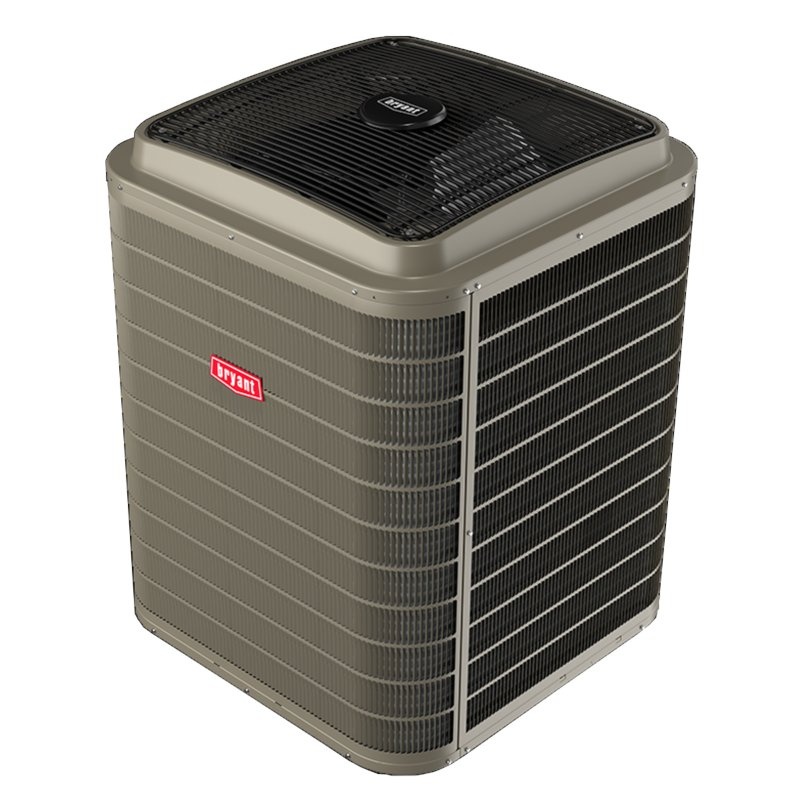
A 3 ton Bryant AC is a typical choice in medium sized homes and it typically serves the living space of 1,200 to 1,500 square feet. It is a cost effective capacity on average sized suburban lots and provides reliable cooling that is not prone to short-cycling when correctly sized.
Cost per unit: $1,500-$2,800
Installation: $3,500-$6,500
Preferred vs. Evolution Models: Bryant Preferred series is slightly higher priced than the Legacy due to more noise reduction and higher energy efficiency. The best technology is the evolution series that can raise the total cost of installation.
Energy Efficiency Upgrades: An upgrade to a 16 SEER or 18 SEER model will be more expensive. However, the homeowners in hot climates can recuperate the difference through lower energy bills during the life of the AC.
Other Equipment: The final bill can be hundreds of dollars to install or replace line sets, thermostats or condensate pumps. The homeowners should also consider any unexpected repair or retrofit of the duct system.
Sizing Tip
A properly sized 3-ton system will ensure long periods of cooling, even humidity, and, perhaps, reduced wear and tear on the compressor. An over-sized AC can short-cycle, causing higher energy bills and poor removal of humidity.
What are the prices of 4-ton Bryant AC units?
A 4-ton Bryant AC can be appropriate in a house of approximately 1,500 to 1,800 square feet (or even bigger in mild climates). This size is usually appropriate to bigger single-family houses with more than one room and higher cooling loads.
- Unit Cost: 1,700 dollars to 3,000 dollars
- Installation Cost: 4000-7000 dollars
Cost Factors of Contribution
- Labor Intensity: A 4-ton unit typically requires greater ductwork or special modifications to the existing systems. This can lead to expensive labour.
- Efficiency Options: The higher the SEER the more costly the system. The more expensive models of the Evolution series, some of the 4-ton models, have such high-tech features as communicating thermostats, variable-speed blowers and humidity control, which increases the cost and comfort level.
- Outdoor Unit Location: The location of the outdoor condenser can affect the ease of the installation. Where special support brackets are needed on the unit or there is a shortage of space in the house, the time and materials will add to the costs of installation.
Performance Advantages A 4-ton Bryant AC will be capable of cooling a larger space without having to face the drawbacks of an undersized system. Frequent cooling will lead to reduced humidity, more equal temperatures and fewer repairs due to stress in the long term. An open floor plan or high ceilings may make owners of open floor plans or high ceilings to understand that a 4-ton unit can do a better job at keeping them comfortable than a smaller capacity system.
Why Consider a 5-Ton Bryant AC System?
The best solution to the homes of about 1,800 to 2,300 square feet (or even bigger in case of insulation, layout and climate) can be a 5-ton Bryant AC. This is even more in regions where there is a long hot summer and high rate of humidity.
Don’t Overpay for HVAC Services – Call 888-894-0154 Now to Compare Local Quotes!
Unit Cost: $2,000-$3,500
Cost of Total Installation: $4,500-$8,000
The 5-ton system is made to carry more load and this implies that the cost of materials will be higher, compressors will be larger and components will be heavier.
Homes that require 5-ton unit may also require heavier ductwork replacement and other equipments which will add to the labor and material costs.
The majority of the 5-ton Bryant models with high SEER rating are variable-speed compressors, better sound-dampening, and Wi-Fi thermostat-compatible technology. These characteristics will increase the comfort of the indoor environment at an increased price.
Who needs a 5-Ton Unit?Single-family homes, especially those in the warm and humid parts of the world, are also beneficial in the aspect of a system that can quickly cool the place. A 5-ton AC might be a requirement in case the house has open-floor designs, multiple floors, or large window areas that allow extra heat to enter the house and cause an imbalance in the cooling process.
Are High-Efficiency Bryant Units Worth the Investment?
Besides the tonnage problem, the choice of high efficiency Bryant AC can make a huge difference in both short-term and long-term expenses.
The existing air conditioners are rated with SEER of up to low 20s, which is far more efficient than the 10 to 13-SEER air conditioners that are common in houses constructed 10 to 20 years ago.
A 16+ SEER AC can save on power bills especially in regions where air conditioning is used extensively all the year round. The savings in energy can be large during the life of the equipment (which can be 15 years or more).
The higher end models are more likely to have two-stage or variable-speed compressors that run at lower speeds and longer periods and offer better humidity control and more even temperatures. This will result in less variation in temperatures and comfortable living condition.
ACs that are high efficiency minimize the carbon footprint of a house by consuming less electricity. This may be a major factor to the environmental-friendly home owners who would wish to conserve energy.
Local utility or governmental incentives to install high-efficiency air conditioners exist. Some of the increment of the initial cost will be covered by these rebates or tax credits. The homeowners are encouraged to inquire about the energy-saving programs in their state to know whether their chosen model of Bryant is qualified.
What Influences the Total Installation Cost?
The price of the AC unit itself is a rather high one, but the price of installation can differ greatly. Being aware of these factors can help homeowners to make better plans on their budget:
- Labor Rates HVAC – professionals tend to be paid on an hourly or a fixed rate. Labor rates can be higher in areas where the standard of living is more expensive or where labor market is tight.
- Licenses and Inspections – In some cities, it is necessary to have permits and inspection when installing or replacing AC. The permit fees can be between 100 and 400 dollars or more depending on the local regulation.
- Ductwork Condition – If the ducts are too small, leak or are covered with debris, additional expenses will be spent to repair or replace them. Poor ductwork can undermine the performance of a new system and thus professional contractors tend to carry out a thorough evaluation before installation.
- Electrical Upgrades – Older homes may need an electrical upgrade to the electrical panel or the wiring in order to handle the electricity demands of a new AC. This type of project can cost a few hundred or a few thousand dollars depending on the size of the project.
- The cost of the site of the installation can be lower. Labor time is more when a contractor is forced to work in small crawl spaces or in special roofing areas.
Installation costs in the majority of the cases can be up to 30-50 percent of the overall project cost. Home owners must obtain several quotes to make sure that they are offered competitive prices and a skilled and experienced installation crew.

How to Get the Best HVAC Prices
- Firstly, keep in mind that installation quality is always the most important thing for residential HVAC project. So never sacrifice contractor quality for a lower price.
- Secondly, remember to look up the latest rebates as we talked above.
- Thirdly, ask for at least 3 bids before you make the decision. You can click here to get 3 free estimates from your local contractors, and this estimate already takes rebates and tax credit into consideration and filter unqualified contractors automatically.
Lastly, once you chose the right contractor, remember to use the tactics from this guide: Homeowners Tactics When Negotiating with HVAC Dealer to get the final best price.