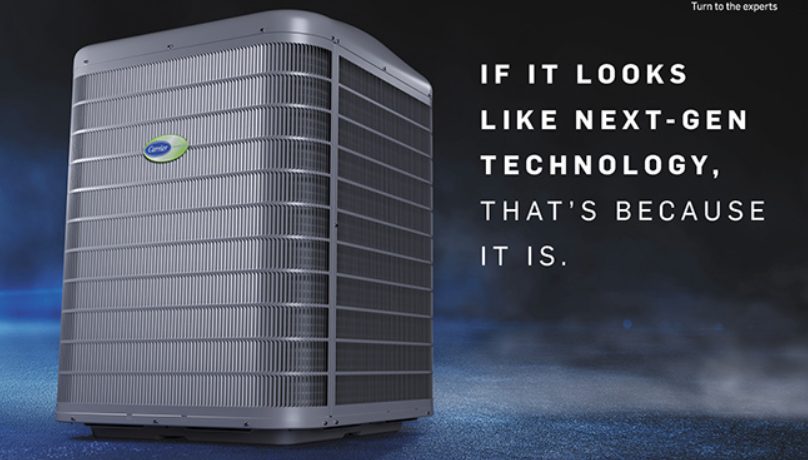
Carrier is a household brand in residential HVAC, and it produces three primary lines of central air conditioners that are suited to various requirements: the high-end Infinity Series, the mid-range Performance Series, and the entry-level Comfort Series.
All of the series provide dependable cooling with the Carrier quality that is known but they vary in features, efficiency, and price points.
The homeowners have the option of using the Infinity models that are the best of the best in terms of technology, the Performance models that are well balanced and the Comfort units that are basic but offer cost effective cooling.
All the existing Carrier AC models are equipped with environmentally friendly Puron refrigerant (R-410A) and are up to 2023 U.S. efficiency standards (SEER2), so they are compliant with all regions.
Carrier Infinity Series Air Conditioners
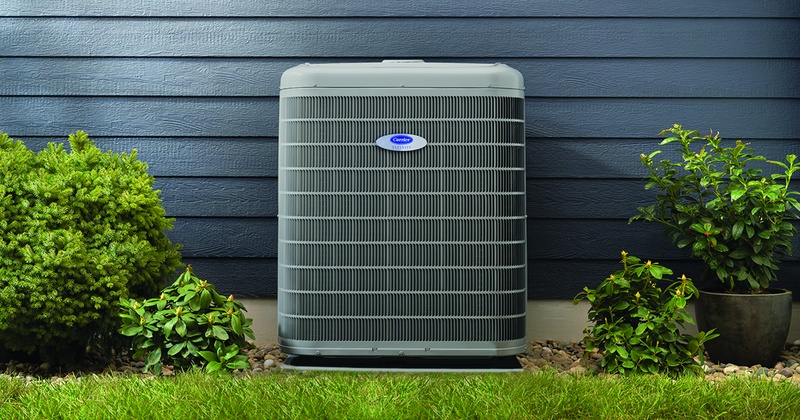
The Infinity Series is the high-end residential AC product line of Carrier, which is stuffed with the latest features of the company. Infinity models use Greenspeed technology that combines an inverter-driven variable-speed compressor with a highly advanced control system.
This design enables the compressor to be modulated between ~25% and 100% capacity, providing only the amount of cooling required and permitting longer, low power operation to achieve outstanding efficiency and comfort. Consequently, Infinity air conditioners have very high Seasonal Energy Efficiency Ratios (SEER) up to approximately 24 SEER2 on the newest models (one of the highest in the industry) which means the homeowner will pay less on his or her electricity bill.
Key Features and Technology: The Infinity series is full of innovations. Every model in this level is a communicating system, which implies that the outdoor unit, the indoor unit, and the thermostat constantly share information in order to maximize performance.
The AC can automatically set the settings to be most efficient and accurate in comfort when combined with the exclusive Infinity System Control thermostat. The variable-speed feature of the Infinity does not only make it more efficient, but also makes the indoor environment more comfortable by removing the sudden temperature changes. It operates together with the Ideal Humidity System of Carrier to offer the best humidity control, which can eliminate much more moisture in the air than the single-stage units. Infinity has many models that are ENERGY STAR 199 certified because they surpass the energy-efficiency standards.
Smart Thermostat Compatibility: The infinity series units are compatible with the smart thermostats made by Carrier to take full advantage of the communicating technology. The suggested controller is the Wi-Fi enabled Infinity System Control that provides remote access using smartphone app and even voice control using Amazon Alexa.
This premium thermostat will open all Infinity capabilities (such as zoning control up to 8 zones and energy consumption monitoring) and make sure that the variable-speed compressor will work as efficient and responsive as possible. Although technically Infinity ACs are compatible with standard 24V thermostats, it is recommended to use the proprietary control to take advantage of the advanced features such as Greenspeed modulation and advanced diagnostics. Essentially, the Infinity line offers an out-of-the-box smart HVAC experience, which is why it is perfect in high-tech smart homes.
Don’t Overpay for HVAC Services – Call 888-894-0154 Now to Compare Local Quotes!
Noise Levels: Another outstanding feature of the Infinity series is that it is very quiet. These units operate at whisper levels due to the sound-dampening design (which includes Carrier Silencer System II and compressor sound blankets) and the variable-speed compressor.
The top-end Infinity 26 model, to give one example, has sound ratings as low as ~51 dB, which is roughly the same as a conversation in the home. This is much quieter as compared to the traditional ACs which usually operate at the mid 70 dB. Actually, the Infinity series is about 50 percent quieter than most of the standard models and it is almost unnoticeable when it is in operation. Even the slightly lesser Infinity models (e.g. five-stage compressors) have minimum sound levels of about 56 dB, which is very quiet.
Warranty and Reliability: Carrier provides the Infinity series with a strong warranty. New Infinity AC systems have a 10-year parts limited warranty when registered (including such parts as the compressor and coils).
This gives the homeowners ten years of worry-free existence in terms of manufacturing defects. The units are constructed using the best materials and protective elements such as WeatherArmor coil guards to resist the elements. It should be mentioned that these advanced systems are very reliable when installed and maintained properly, and most Carrier dealers provide an extended labor warranty, or maintenance plan on Infinity systems, due to their higher initial cost. In general, Infinity series ACs have a reputation of long-term reliable performance when installed by a certified Carrier expert.
Pros:
- Maximum efficiency: Outstanding SEER2 ratings (up to ~24) to save energy.
- Better comfort: Variable-speed compressor delivers a high degree of temperature control and outstanding humidity removal.
- Ultra-quiet operation: Among the quietest central ACs available (~51–56 dB).
- High-tech: Smart Infinity Control communicating system; Alexa and remote-controlled.
- Good warranty: 10-year parts warranty with registration, and also qualifies to rebates/tax credits because of high efficiency.
Cons:
- Premium price: Much more expensive to buy initially compared to other series (most expensive of Carrier line).
- Complicated set up: Needs professional installation and configuration (needs communicating thermostat to be fully functional).
- Repair costs: Variable-speed/communicating parts may be costly to repair or replace after the warranty period.
- Too much in small houses: The sophisticated functions can be excessive to the homeowner with low cooling requirements or limited budget.
Carrier Performance Series Air Conditioners

Performance Series is the middle-range line of central air conditioners provided by Carrier, and it is the middle ground between the advanced functionality of Infinity and the basic functionality of Comfort series air conditioners.
The performance series models are created to provide a good efficiency and comfort improvement at a more affordable price than Infinity. They are available in various sizes and designs, both single-stage and two-stage compressors to meet varied needs of homes. Essentially, a Performance series AC is an excellent option to homeowners who desire to have a higher level of comfort and efficiency than entry-level models but do not want to spend the most money on all the bells and whistles.
Key Features and Technologies: Performance series units do not typically have the fully communicating controls that the Infinity line has, but they still have advanced engineering.
The higher-end Performance models (e.g., the Performance 17) have a two-stage compressor that can run at a lower stage (~70% capacity) when it is not so hot to achieve better comfort and efficiency and ramp up to 100% when it is hot. The two-stage operation also provides more balanced temperatures and better humidity control than single-stage units (which are either on full blast or off). Other Performance models such as the Performance 16 have a simple single-stage compressor that is reliable. Most of them in this series have the following features like Carrier InteliSense technology, which is an onboard advanced diagnostic system that helps in troubleshooting and makes sure that even when some sensor failures happen the AC continues to operate. All Performance series ACs are the same Puron refrigerant (R-410A) and all have modern coil designs to resist corrosion. Not as feature-rich as Infinity, these units are nevertheless more feature-rich than basic models, frequently featuring a compressor sound blanket and high-efficiency fan motors.
Efficiency (SEER Ratings): The Performance series is available in mid- to high efficiency. SEER2 ratings on new models vary between about the mid-14s to about 17-19 SEER2 depending on the unit.
As an example, the Performance 16 (model 24SPA6) is up to ~16.5 SEER2 and the Performance 17 (24TPA7) two-stage unit is about 17 SEER2. Most of the Performance models are ENERGY STAR 18 registered in terms of energy efficiency due to these values. Practically, a Performance series AC will consume more electricity than an Infinity of the same capacity, however, significantly less than an older or baseline 13-14 SEER unit. The two-stage models also save energy and provide more uniform cooling because they operate at low stage most of the time. Owners of homes in warmer climates or with larger homes may be inclined to the higher-SEER Performance models (or even Infinity) to reduce operating expenses, and owners of homes in milder climates may find the lower-SEER Performance units sufficient and more economical.
Smart Thermostat Compatibility: Performance series air conditioners are compatible with standard 24V thermostats, allowing the homeowner the freedom to choose the thermostat. They work with many smart thermostats, such as Carrier COr/Ecobee smart thermostats and third-party favorites, including Google Nest or ecobee.
A Performance AC does not need a proprietary controller like the Infinity series, but can be used with a Wi-Fi enabled programmable thermostat to allow remote control and energy saving schedules. Remarkably, Carrier has recently introduced Ecobee to Carrier smart thermostats, which are compatible with the system and even allow the InteliSense (TM) capabilities in some Performance models. This is capable of improving the user experience through maintenance warnings and performance optimization. Although you will not have the fully integrated communication of Infinity, a smart thermostat can do a lot to enhance convenience and comfort on a Performance series system.
Sound: The Performance series is well balanced in sound. These units are not as quiet as the older or entry-level ACs, but they are not as whisper-quiet as the Infinity line.
A clear advantage of Two-stage Performance models is the noise since at low stage, they produce less noise. As an example, the newest 2-stage Performance model by Carrier produces sound levels of about 67 dB at the lowest level of operation. Single-stage Performance units are likely to work at the upper 60s to low 70s (dB). Performance 16 (single-stage) has an as low as rating of approximately 71-72 dB, which is a normal sound level. To put it into perspective, these sound levels can be compared to a normal dishwasher or a moderate rain. They lack the complete Silencer acoustical treatments although some models have insulation such as a compressor blanket to absorb noise. All in all, an AC of the Performance series installed correctly will operate in the background at a relatively low noise level, so low that it will not interfere with conversations inside the house and should be heard at a backyard only moderately.
Warranty and Reliability: Carrier offers the same good warranty on Performance series models as it does on Infinity: a 10-year limited parts warranty on the original homeowner upon registration. It must be registered within 90 days (otherwise it falls back to 5 years in most states).
This warranty is applicable to the compressor, fan motor, coil and other working parts. The performance series units are also reliable in use when they are maintained, they employ tested compressor technology (the single-stage scroll compressors and two-stage compressors have less electronics than the variable-speed of Infinity, which some view as a plus in long-term reliability). With regular maintenance (cleaning coils, replacing filters, checking refrigerant charge) a Performance AC should last 15-20 years with ease. These middle units are popular among many homeowners because of the perfect combination of affordability and durability. Where there are problems, the parts are usually easily accessible due to the extensive dealer network of Carrier. It is also important to mention that the quality of installation is also relevant in this case: a properly installed and tuned Performance unit can be as comfortable as an Infinity system at a lower price, and the improperly installed one can be less efficient and less durable.
Pros:
- Moderate performance: Acceptable energy efficiency (most models 1617 SEER2) and a detectable increase in comfort compared to single-stage units.
- Affordable: Mid-range prices provide a great value, as it is cheaper than Infinity, but still utilizes numerous advanced Carrier technologies.
- Better comfort: Two-stage models offer more stable temperatures and humidity control as compared to basic models.
- Flexible control: Works with different thermostats (no proprietary control needed), including Wi-Fi smart thermostats to monitor and control remotely.
- Low-level noise (comparative): Less noisy than entry level ACs – low 70s dB or less, two stage models approximately 67 dB at low speed.
Cons:
Don’t Overpay for HVAC Services – Call 888-894-0154 Now to Compare Local Quotes!
- Medium efficiency: SEER2 ratings are not as good as Infinity or best competitors; may not receive the highest rebates or credits.
- Less high-end features: Does not have the fully variable capacity and high-end communications of the Infinity line (e.g. no true modulating compressor).
- Full power noise: Single-stage models are as loud as ~72 dB at full power, which is noticeable when nearby the unit.
- Add-ons: To reach the comfort levels of Infinity, some extra components (such as a more expensive thermostat or air purifier) might be required, which will slightly diminish the cost benefit.
- Warranty details: Still 10-year parts, like Infinity, but Comfort series (below) can provide similar warranty at an even cheaper price point to those on a tight budget.
Carrier Comfort Series Air Conditioners
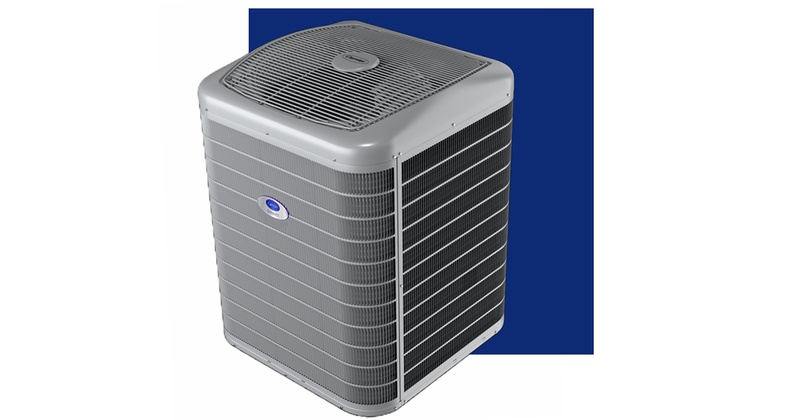
The Comfort Series is the lowest level of central air conditioners offered by Carrier, and is aimed at low-cost basic comfort. The models are very suitable to the homeowner who requires a simple cooling system that does not have sophisticated features.
Comfort series ACs are the ones that focus on cost savings at the beginning but still offer the efficiency that is necessary according to the modern standards. They are available in various capacities to chill small to large houses, but they adhere to a less complicated design: all Comfort units employ a proven single-stage compressor and possess more common parts. That is, the Comfort series is no-frills cooling at the Carrier brand quality, so it is a good option when you need to buy something cheap, or when you need to rent a house, or when you need to replace an old system with a similar one.
Key Features and Design: Being the economy line, the Comfort series lacks the high-tech features of the other lines. Comfort models usually have a long-lasting single-stage scroll compressor, a permanent split capacitor (PSC) fan motor (in most cases) and simple protective housings (such as a galvanized steel louvered coil guard) to guarantee the durability of the outdoor unit.
They do not have the two-stage or variable capacity option, which implies that the compressor is either 100% on or off. This simplicity may imply less parts that could break, and in many cases a cheaper price of any repairs in the future. Comfort series units are constructed to comply with or slightly exceed minimum efficiency standards: the current models are based on R-410A refrigerant and have enhanced coil designs to achieve efficiency levels with the least amount of complexity. Although you will not find any specialized technology such as Greenspeed or InteliSense here, the Comfort line still has the advantage of the overall HVAC experience of the Carrier company, such as the compressor and fan being designed to deliver consistent cooling year after year with no more than a simple cleaning.
Efficiency (SEER Ratings): Comfort series air conditioners are of moderate efficiency rating suitable to meet the minimum energy codes and provide acceptable operating costs. Earlier Comfort models had efficiencies of 1314 SEER, but the most recent models are more efficient: up to approximately 16.5 SEER2 on the highest Comfort model (which is approximately 17+ SEER in the older rating system).
This implies that even the economy Carrier units are now ENERGY STAR 12 certified, which is an improvement in the design. But the majority of Comfort units will be 14-15 SEER2 (which will cover the 2023 federal minimums in all regions). Realistically, a Comfort series AC will consume more power than a Performance or Infinity model of the same tonnage, possibly several hundred dollars more annually in a hot climate than an ultra efficient model. Nevertheless, a new Comfort AC can reduce energy consumption drastically when it replaces a very old 8-10 SEER unit. It offers an economical alternative to individuals who desire dependable cooling, but do not require the high efficiency equipment because of other factors such as low usage (e.g. vacation home or mild climate).
Smart Thermostat Compatibility: Similar to the Performance series, the Comfort series units have standard single-stage thermostat connections, thus they are compatible with all thermostat controls. Basic programmable thermostats can be used by homeowners or they can switch to smart thermostats to have more control.
Although the Comfort AC does not come with a communication module, it is easily compatible with Wi-Fi thermostats, like the Carrier C 2r /Ecobee, Nest, Honeywell Lyric, etc., to enjoy the modern conveniences. It implies that even a simple Comfort unit can be used in a smart home system, you can change temperatures through phone or voice assistant by using the capabilities of the thermostat. The use of a Carrier-branded thermostat does not have a special advantage in this situation (other than providing professional installation and support), because the device will just turn on and off with cooling calls. A caveat: Comfort models do not have staged cooling, so the thermostat can only implement simple on/off control (no variable adjustments), although the energy savings of features such as learning schedules or geofencing of a smart thermostat may still be achieved. In general, Comfort series ACs are easy to integrate into any home control system providing the user with the freedom to add smart control as desired.
Noise Levels: The Comfort series air conditioners are single-stage units, so they tend to have only one sound level whenever they are in use. They are usually louder than Infinity or Performance models, but not out of the ordinary range of residential AC.
Sound levels should be about in the low-to-mid 70s (dB) at maximum volume. As an example, one of the most popular Comfort models (Carrier Comfort 15) has a rating of about 71 dB at the lowest sound level, which is similar to a vacuum cleaner in a neighboring room or a noise of traffic in the street at a certain distance. It is typical noise level of AC units; you can hear it when you are standing directly in front of the outdoor unit but it is not usually obtrusive when you are inside the house. Comfort series are generally not equipped with anything fancy in the sound suppression department, no compressor blanket or fancy fan blade design, so you get the normal hum of a working compressor and the whoosh of the fan. Nevertheless, perceived noise can be addressed by the location of the outdoor unit and installation (such as locating the unit so that it is not near the bedroom windows or planting some small sound barriers such as shrubs). In short, although Comfort ACs are not the quiet units that Infinity systems are, they are just as quiet as most standard ACs in the market and this is a fair trade-off to the lower price to most homeowners.
Warranty and Support: Although the Comfort series is the least expensive line, it is still covered by the reliable warranty of Carrier. New Comfort AC units are registered with up to a 10-year parts limited warranty to the original owner.
Some Comfort models have a shorter base warranty when unregistered or when they were older stock manufactured prior to some dates, but all current models with Puron refrigerant receive the 10-year coverage when registered correctly.) This implies that the homeowners will get the same warranty term on critical components even at the low price point. The warranty information should be read carefully, the 10-year is on parts only; labor is normally only covered under extended warranty plans. Also, due to the simplicity of Comfort series units, most HVAC technicians know them very well and can work on them without any difficulty. Spare parts (such as contactors, capacitors, fan motors) tend to be cheaper than those of variable-speed units. The dealer network of Carrier can offer annual tune-ups to maintain the Comfort AC in a good condition. On the whole, you lose a few features with the Comfort line, but you do not lose support or the support of the manufacturer, so these units are a safe bet in case your main concern is basic cooling at a low price.
Pros:
- Affordability: The lowest starting price of any of the AC lines offered by Carrier, which makes it affordable to those with small budgets or those who need to replace something simple.
- Trustworthy fundamentals: Single-stage compressor design that is simple and long lasting with the right maintenance.
- Meets standards: All the current models meet the minimum SEER2 requirements in the country, and some of them even meet the ENERGY STAR® requirements because of their increased efficiency.
- Simple to maintain: Less complex technology implies that most HVAC technicians can maintain these units with ease; parts are widely accessible and are usually cheaper.
- Easy to integrate: Compatible with any standard thermostat – can be upgraded to a smart thermostat to enjoy modern convenience without the need of special controls.
Cons:
- Reduced efficiency: The SEER2 ratings are moderate (usually 14-16 range) and this translates to increased operating costs when compared to Performance or Infinity units.
- Simple comfort: Single-stage operation may cause greater temperature fluctuations and reduced humidity control (on/off cycling) than more sophisticated systems.
- Noisy operation: The operation is louder than multi-stage models (approximately 70+ dB when operating) and may be an issue in noise sensitive applications.
- Less features: Does not have modern add-ons such as variable speed, advanced diagnostics or sound insulation; basically cools the air and that is all.
- Resale value: It might not be as appealing in luxury real estate markets where buyers will demand high-end HVAC systems (such as Infinity or similar) to be installed.
Installed Cost and Pricing for Carrier AC Units
Planning to buy a new Carrier air conditioner, one should take into account the cost of the unit and the cost of installation. The prices may change significantly depending on the model, capacity (tonnage), the regional labor rates, and any extra work required (new ductwork or electrical upgrades).
Don’t Overpay for HVAC Services – Call 888-894-0154 Now to Compare Local Quotes!
General ranges of typical installed costs of each Carrier series are as follows:
| Series | Approx. Installed Cost Range* |
|---|---|
| Comfort Series | $3,000 – $8,000 |
| Performance Series | $5,000 – $10,000 |
| Infinity Series | $8,000 – $15,000+ |
*Ranges are estimates for a typical residential central AC (2.5–4 ton capacity) including standard installation. Actual costs can be lower or higher depending on home size, existing infrastructure, and location. High-cost areas or complex projects (larger systems, difficult installations) may push Infinity system costs beyond $15k, while a small Comfort unit in an easy install could be under $3k. Always obtain multiple quotes for a precise estimate.
The Infinity series units are on the high end of the price scale as indicated above. Their superior technology and maximum efficiency is at a premium price- usually twice or thrice the cost of a Comfort series unit of the same capacity.
An Infinity system that is variable-speed and installed can be easily run in the upper four figures to low five figures. Nevertheless, such expenses can be paid back with time through cheaper energy bills and possible rebates. A lot of Infinity models are eligible to utility rebates or federal tax credits because of their high efficiency, which can actually offset the net cost to the homeowner. The Performance series, in its turn, is somewhere in the middle: you may anticipate about a few thousand dollars more than a Comfort series to get the extra features. As an example, a simple Comfort 3-ton AC may cost ~$5,000 installed, a similar Performance 3-ton (with better SEER and two-stage compressor) may be about $6,000-$7,000. The Comfort series is the least costly, and offers the most cost effective solution, smaller sized units in this series (e.g. 2-ton in an apartment) can be as low as the mid-$3,000s installed, but larger 5-ton Comfort units in high cost markets may be as high as or slightly over $8k. These numbers presuppose that the installation is not complicated; the installation of a new furnace or a significant change in ducts will add to the overall cost of the project no matter which AC series is chosen.
There is also the regional variation. In regions of the country where labor is more expensive (large coastal cities such as New York, Los Angeles, etc.), you may find the quotes on any Carrier unit to be on the higher side of the scale.
The climate requirements also affect the prices, as in very hot areas, it may be more frequent to invest in an Infinity unit (and some dealers sell them at competitive prices because of the volume), and in cooler areas, the demand of the ultra-high SEER ACs is not as high. No matter what series you are interested in, the most accurate way to get a price on your particular situation is to have an in-home assessment done by a Carrier authorized dealer. According to the advice of Carrier itself, the average cost of installing a central AC is between approximately 3,000 and 15,000 dollars, the simplest and the most sophisticated systems included.
Comparison with Trane and Lennox Competitors
The Infinity, Performance, and Comfort lines of Carrier are not in a vacuum, they are competing with similar products lines of other leading HVAC companies such as Trane and Lennox.
The three brands are all highly respected by the American homeowners and have a tiered product line that reflects the good/better/best strategy.

How to Get the Best HVAC Prices
- Firstly, keep in mind that installation quality is always the most important thing for residential HVAC project. So never sacrifice contractor quality for a lower price.
- Secondly, remember to look up the latest rebates as we talked above.
- Thirdly, ask for at least 3 bids before you make the decision. You can click here to get 3 free estimates from your local contractors, and this estimate already takes rebates and tax credit into consideration and filter unqualified contractors automatically.
Lastly, once you chose the right contractor, remember to use the tactics from this guide: Homeowners Tactics When Negotiating with HVAC Dealer to get the final best price.