If you need a 12V portable air conditioner for camping, van life, or tailgating, choose a model that runs via a car inverter or is explicitly designed for tents and vehicles. The five units below are portable, tent/RV-friendly air conditioners with compact designs and features suited for vehicle-adjacent use. Pick Outohome or BAYKUL 5000 for lightweight camping, BougeRV for app control, BAYKUL 6-in-1 for year-round heating and cooling via inverter, and FO-KOKO for faster dual-hose cooling.
| Product | Cooling (BTU) | Best For |
|---|---|---|
| Outohome 5200BTU | 5200 BTU | Lightweight camping and quick tent cooling |
| BougeRV PC35 3500BTU | 3500 BTU | Small tents/RVs with app control needs |
| BAYKUL 5000 BTU | 5000 BTU | Quiet sleep-mode portable cooling for small rooms |
| BAYKUL 6800 BTU (6-in-1) | 6800 BTU cooling / 7500 BTU heating | All-season use and inverter compatibility |
| FO-KOKO Dual Hose 6800 BTU | 6800 BTU | Faster cooling in tents and small enclosed spaces |
Outohome 5200BTU Portable Camping Air Conditioner
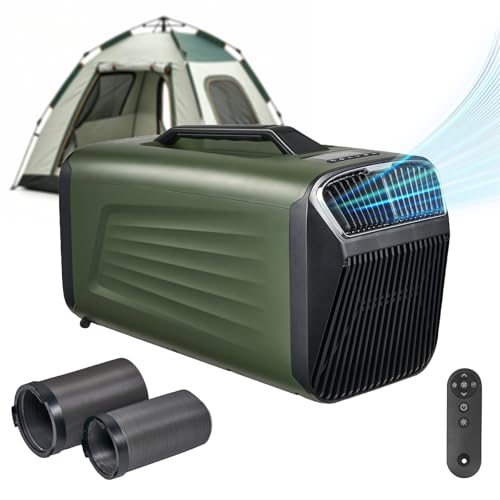
Features from the listing:
- 5200 BTU cooling capacity with GMCC compressor; rapid temperature drop (listed as up to 18°F/10°C in 5 minutes in cooling mode).
- Temperature range 60°F–88°F (16°C–30°C).
- Energy consumption listed as less than 400 W/hour.
- Compact design: 22.4 x 11.2 x 13.8 inches, 31 lbs, built-in handle for one-hand carry.
- Intended for camping, tents, RVs, trucks, vans, and small indoor rooms where wall installation is not possible.
Best for: Choose this if you want a compact, energy-efficient unit for short-term camping trips or to cool small vehicle-adjacent spaces quickly. It was selected for its strong cooling capacity relative to size and listed low power draw.
Caution: The product listing gives power consumption in watts but does not specify direct 12V DC operation; use with inverters or appropriate power sources per your setup. Avoid this if you require confirmed direct 12V DC operation without an inverter.
BougeRV PC35 3500BTU Portable Air Conditioner
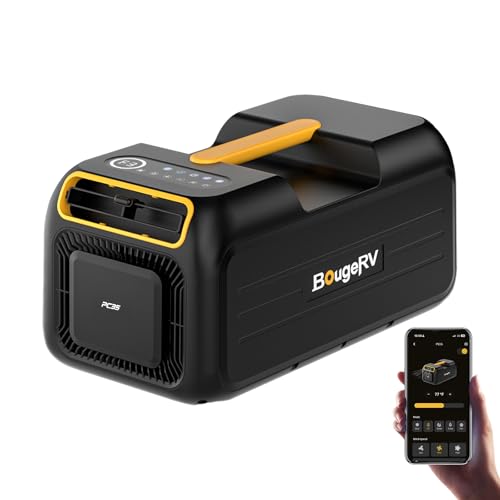
Features from the listing:
- 3500 BTU claimed rapid cooling (up to 18°F/10°C drop in 10 minutes in strong mode) for small spaces up to ~35 sq. ft.
- Adjustable temperature range 61°F–90°F and long-range airflow (listed reach up to 10 feet indoors).
- Smart app control via BougeRV App with control range up to 33 ft for temperature, modes, and timer.
- Portable design with ergonomic handle for indoor and outdoor use.
Best for: Choose this if you prioritize remote app control and a user-friendly portable design for small tents, RVs, or van setups. It was selected for its smart-control features that simplify adjustments while camping or inside a vehicle-adjacent space.
Caution: The listing emphasizes app control and a 3500 BTU rating appropriate for very small spaces; avoid this if you need higher BTU capacity for larger tents or vehicles.
BAYKUL 5000 BTU Portable Tent Air Conditioner

Don’t Overpay for HVAC Services – Call 888-894-0154 Now to Compare Local Quotes!
Features from the listing:
- 5000 BTU cooling with GMCC compressor; listed fast cooling (up to 18°F/10°C drop in 5 minutes).
- Temperature range 60°F–88°F (16°C–30°C) and energy consumption under 400 W/hour.
- Sleek, ultra-portable dimensions 21.1 x 11.2 x 11.8 inches and weight 31 lbs with handle.
- Four modes: Cool, Dry, Sleep, Fan; 24-hour timer and noise in sleep mode listed as 46–50 dB. LED soft light strips included.
Best for: Choose this if you want quieter overnight operation and a mid-range BTU unit that balances portability and cooling power for small rooms, tents, or vehicle setups. It was selected for its sleep mode and multi-function modes suitable for longer rest periods.
Caution: Noise is listed for the fan and sleep mode range; avoid this if you require very low decibel levels below the listed 46 dB range for sensitive sleepers.
BAYKUL 6-in-1 Portable Air Conditioner (6800 BTU Cooling)
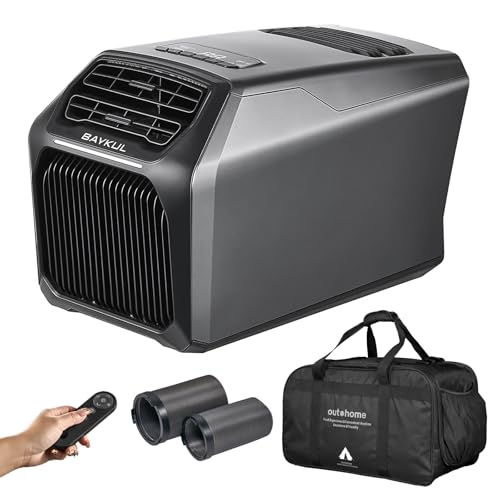
Features from the listing:
- 6800 BTU cooling and 7500 BTU heating; claims rapid performance and uses R-32 refrigerant.
- 6-in-1 functionality: Cooling, heating, fan, dehumidifier, sleep mode, timer.
- Runs on standard 110V AC outlets or car inverters; RF remote control included.
- Compact design with carry bag and listed quiet operation (46 dB).
Best for: Choose this if you need an all-season, inverter-compatible unit that handles both heating and cooling for an RV, van, or indoor space. It was selected for explicit car-inverter compatibility and multi-function flexibility useful year-round.
Caution: The listing specifies operation via car inverters rather than direct 12V DC; avoid this if you require a unit that runs directly from a 12V outlet without an inverter.
FO-KOKO Dual Hose 6800 BTU Portable Camping Air Conditioner

Features from the listing:
- Dual-hose design claiming 50% faster cooling than single-hose models and increased heat dissipation.
- 6800 BTU cooling and 7500 BTU heating; 30s fast cool and 60s fast heat claims; 5-in-1 modes (Cool/Heat/Dry/Fan/Sleep).
- Temperature adjustable from 60°F to 86°F and lightweight design at 34 lbs with a carry bag.
- Marketed for tent, RV, van, car, garage, and indoor/outdoor use; labeled as ultra-portable.
Best for: Choose this if you prioritize faster cooling in small enclosed spaces and want dual-hose efficiency in a portable package for tents or vehicle-adjacent setups. It was selected for the dual-hose design that supports faster heat exchange.
Caution: The listing emphasizes dual-hose performance versus single-hose models; avoid this if your space cannot accommodate the required hose routing or you need confirmed direct 12V DC operation without inverter use.
Buying Guide
Do I need a true 12V DC unit or an inverter-compatible AC?
Most portable “vehicle-friendly” air conditioners are inverter-compatible, meaning they run on standard AC power supplied by a DC-to-AC inverter connected to a 12V battery. True direct 12V DC air conditioners are rarer. Choose inverter-compatible units if you plan to power an AC unit from a vehicle battery with a proper inverter. Confirm the product listing or manual for direct 12V operation before assuming it runs from a cigarette lighter socket.
How much BTU do I need for a tent, van, or RV?
Match BTU to enclosed space: small tents or very compact vans may be adequately cooled by 3000–5000 BTU units, while larger vans, RVs, or multi-person tents benefit from 5000–7000+ BTU. Higher BTU reduces runtime to reach the desired temperature but usually increases power draw. Use the product BTU rating and the space size listed by the manufacturer to compare capacity.
What power consumption and electrical setup should I consider?
Check listed wattage and whether the unit needs a standard 110V AC source or is explicitly compatible with car inverters. Units listing power consumption under ~400 W are more likely to be viable with a quality inverter and adequate battery capacity. For off-grid use, calculate inverter watt rating plus battery amp-hours to ensure sufficient runtime.
How important are modes, noise, and sleep settings?
Modes such as Sleep, Dry (dehumidify), and Fan provide flexibility. Sleep mode values and listed decibel ranges (e.g., 46–50 dB) indicate quieter operation for overnight use. Choose units with sleep-mode noise figures if quiet overnight cooling is a priority.
Why consider dual-hose vs single-hose designs?
Dual-hose designs separate intake and exhaust airflow, which can improve cooling speed and efficiency for enclosed small spaces. Choose dual-hose units if you need faster cooldown and can route both hoses; choose single-hose or compact units if hose management or tent openings are limited.
What portability features matter for camping and van life?
Look at weight, dimensions, handles, and included carry bags. Units around 30–35 lbs with ergonomic handles or carry bags are easier to transport. Compact footprints fit better in small vehicle cargo areas. Consider the physical space and how you will route hoses or vents in a tent or vehicle.
Which additional features help day-to-day use?
App control lets you change settings remotely; RF remotes are useful behind walls or in RV compartments. Timer functions and LED or soft lighting can add convenience. Check feature lists to confirm what is included.
FAQ
Can I run these portable AC units directly from a vehicle 12V outlet?
Not unless the product explicitly states direct 12V DC operation. Several listings specify compatibility with car inverters, meaning they require an inverter to convert 12V DC to 110V AC. Always check the product specifications for direct 12V support.
How do BTU ratings translate to cooling performance in tents or vans?
BTU indicates cooling capacity. Higher BTU units cool faster and can handle larger volumes. For small tents or compact vans, 3000–5000 BTU may suffice; larger enclosed spaces or multi-person setups benefit from 5000–7000+ BTU units.
Don’t Overpay for HVAC Services – Call 888-894-0154 Now to Compare Local Quotes!
Are dual-hose portable AC units noticeably better?
Dual-hose designs generally offer faster cooldown and more efficient heat dissipation in enclosed spaces compared to single-hose models. They require space for both intake and exhaust hose routing. Effectiveness depends on setup and ventilation constraints.
What power considerations affect runtime when camping?
Runtime depends on unit wattage, inverter efficiency, battery capacity, and ambient temperature. Lower-wattage units use less power but may provide less cooling. Calculate expected amp draw from the unit wattage and your battery amp-hours to estimate runtime.
Is noise level important for overnight use?
Yes. Units with listed sleep-mode noise around mid-40 dB are quieter for sleeping. Compare the listed decibel ranges to ensure acceptable noise for your needs.
How do I verify a unit will work with my vehicle setup?
Confirm whether the unit supports car inverters or direct 12V operation in the product specifications. Check dimensions and hose requirements for installation in tents or vehicles. If needed, consult the manufacturer or product manual for inverter wattage recommendations and installation guidance.

How to Get the Best HVAC Prices
- Firstly, keep in mind that installation quality is always the most important thing for residential HVAC project. So never sacrifice contractor quality for a lower price.
- Secondly, remember to look up the latest rebates as we talked above.
- Thirdly, ask for at least 3 bids before you make the decision. You can click here to get 3 free estimates from your local contractors, and this estimate already takes rebates and tax credit into consideration and filter unqualified contractors automatically.
Lastly, once you chose the right contractor, remember to use the tactics from this guide: Homeowners Tactics When Negotiating with HVAC Dealer to get the final best price.