For buyers who want a cleaner window view and lower indoor noise, U-shaped or split-window air conditioners place the compressor outside and deliver quieter cooling. The Midea 8,000 and 10,000 BTU models are best for energy-conscious smart-home buyers and smaller to mid-size rooms. The AKIRES 12,000 BTU and Antarctic Star 12,000 BTU units are better for larger rooms up to 550 sq ft and buyers who want multiple modes and simple installation. Below is a quick comparison to match needs at a glance.
| Model | BTU / Coverage | Best For |
|---|---|---|
| Midea 8,000 BTU U Shaped (Midea Store) | 8,000 BTU / Cools ~350 sq ft | Small to mid rooms; smart control and low noise |
| Midea 10,000 BTU U Shaped (Midea Store) | 10,000 BTU / Cools ~450 sq ft | Larger bedrooms or medium living spaces; energy savings |
| AKIRES U-Shaped 12,000 BTU (AKIRES Store) | 12,000 BTU / Cools up to 550 sq ft | Large rooms; multi-mode control and full window view |
| Antarctic Star U-Shaped 12,000 BTU (Antarctic Star Store) | 12,000 BTU / Cools up to 550 sq ft | Large rooms; easy installation and natural light |
Midea 8,000 BTU U Shaped Smart Inverter Window Air Conditioner
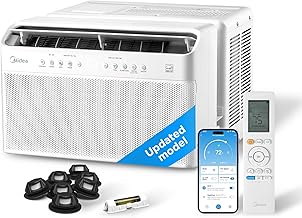
Features referenced: U-shape design to block outside noise, ultra-quiet operation as low as 32 dBA, inverter system (Cooling Watts: 710W), airflow roomside 215/150 CFM, refrigerant R32, more than 37% energy savings vs traditional units, ENERGY STAR certification, Wi‑Fi enabled with SmartHome app, Alexa and Google Assistant compatibility, and included remote.
Best for buyers who want the quietest indoor operation and smart-home control. Choose this if you need an energy-efficient U-shaped unit for a small to mid-size room (around 350 sq ft) with voice or app control. The inverter design reduces power draw compared to non-inverter units.
Caution: avoid this if your room is significantly larger than the listed ~350 sq ft cooling capacity; the unit is sized for smaller spaces and may not cool larger rooms efficiently.
AKIRES U-Shaped Window Air Conditioner 12,000 BTU

Features referenced: 12,000 BTU cooling capacity up to 550 sq ft, 6-in-1 modes (Cool, Dry, Fan, Auto, Sleep, Energy Saver), temperature range 62°F–86°F, U-shaped design isolates compressor outside to lower indoor noise (about 40 dB), preserves full window view, touch panel and remote control, 3 fan speeds, 4-way adjustable airflow, and 24‑hour timer.
Best for buyers who need higher cooling capacity and flexible modes for large rooms or living spaces. Choose this if you want multiple operation modes, a visible full window, and straightforward controls with timer options.
Caution: avoid this if you require the absolute lowest indoor noise level; the listed noise is around 40 dB, higher than some inverter U-shaped models that advertise ~32 dBA.
Midea 10,000 BTU U Shaped Smart Inverter Window Air Conditioner
Don’t Overpay for HVAC Services – Call 888-894-0154 Now to Compare Local Quotes!
Features referenced: U-shape design using window to block outside noise, ultra-quiet operation as low as 32 dBA, inverter system (Cooling Watts: 890W), refrigerant R32, over 35% energy savings compared to traditional units, ENERGY STAR certification, Wi‑Fi enabled for SmartHome app, Alexa and Google Assistant compatibility, and remote control.
Best for buyers with mid-to-large bedrooms or medium living rooms (around 450 sq ft) who prioritize energy savings and smart controls. Choose this if you want inverter efficiency with lower noise and app/voice control for schedule and remote operation.
Caution: avoid this if your room exceeds the listed ~450 sq ft cooling capacity; larger rooms may require a higher BTU model for consistent comfort.
Antarctic Star U-Shaped 12,000 BTU Window Air Conditioner

Features referenced: full window view and ultra quiet with compressor outside (about 45 dB), 12,000 BTU cooling for rooms up to 550 sq ft, 6 modes (Cool, Dry, Fan, Auto, Sleep, Energy Saver), 3 fan speeds, 4-way adjustable airflow, temperature range 62°F–86°F, easy installation with included accessories, fits single-hung and double-hung windows with minimum opening 16″, window width 24″–48″, and max sill 11″.
Best for buyers who want an easy-to-install saddle window AC that preserves the entire window view and floods the room with light. Choose this if you need rapid cooling for large rooms and prefer included installation accessories and clear window-fit guidance.
Caution: avoid this if you expect the quietest operation—listed indoor noise is approximately 45 dB, which is higher than inverter-based models claiming ~32 dBA.
Buying Guide
What Is a Split-Window (U-Shaped) Air Conditioner?
Split-window or U-shaped air conditioners mount across a window with a U-shaped body so the noisy compressor and condenser sit mostly outside the living space. This preserves the window view and reduces indoor noise compared with traditional through-the-window units. Choose this style when noise reduction and natural light are priorities.
How Do I Choose the Right BTU Size?
Match BTU to room square footage for efficient cooling. Use manufacturer coverage as a guide: roughly 8,000 BTU for small rooms (~300–350 sq ft), 10,000 BTU for mid-size rooms (~400–500 sq ft), and 12,000 BTU for larger rooms (up to ~550 sq ft). Choose the next higher BTU if the room is sunny, has high ceilings, or many occupants.
Inverter vs Non-Inverter: Which Is Better?
Inverter models adjust compressor speed to maintain temperature, improving energy efficiency and lowering noise. Non-inverter units cycle on/off and can be less efficient. Choose inverter U-shaped units if energy savings and quieter operation are important.
How Much Does Noise Matter?
Manufacturers list indoor noise in decibels; lower dBA indicates quieter operation. For bedrooms or offices, target models claiming the low 30s dBA. For living rooms where noise is less critical, mid-40s can be acceptable. Compare listed dBA values when noise is a priority.
Will a U-Shaped Unit Fit My Window?
Check the unit’s stated window opening requirements. Some models list minimum opening height, compatible window types (single-hung/double-hung), width ranges, and maximum sill depth. Choose units that explicitly state compatible window sizes or include installation accessories for your window type.
Which Features Should I Prioritize?
- Coverage (BTU) matching your room size.
- Noise level (dBA) for bedrooms and offices.
- Energy efficiency (inverter tech or ENERGY STAR labeling) to lower running costs.
- Controls: Wi‑Fi, app, remote, or voice compatibility for convenience.
- Operation modes: sleep, dry/dehumidify, energy saver, timer for flexibility.
- Installation details: included hardware and window size compatibility.
FAQ
Are split-window (U-shaped) air conditioners quieter than traditional window ACs? Yes. U-shaped designs place the compressor outside the living space, lowering indoor noise compared to traditional through-the-window units. Listed indoor noise levels vary by model.
Can U-shaped units be installed in double-hung windows? Some models explicitly list compatibility with single-hung and double-hung windows and provide required opening dimensions. Check the product’s window-size guidance before purchase.
Do U-shaped ACs have smart controls? Some models offer Wi‑Fi, app control, and voice assistant compatibility. If smart control is important, choose units that state Wi‑Fi and Alexa/Google Assistant support.
How do I know which BTU capacity I need? Use the manufacturer’s coverage guidance: smaller rooms ~300–350 sq ft use ~8,000 BTU, mid rooms ~400–450 sq ft use ~10,000 BTU, and larger rooms up to ~550 sq ft use ~12,000 BTU. Consider sun exposure and occupancy when selecting BTU.
Are inverter U-shaped units more energy efficient? Yes. Inverter technology adjusts compressor speed to maintain temperature and often delivers substantial energy savings versus non-inverter units. Look for energy-savings claims or ENERGY STAR listings.
What installation considerations should I plan for? Verify window opening dimensions, sill depth, and whether required hardware is included. Some models include installation accessories and state exact fitting ranges. If unsure, measure your window before ordering.

How to Get the Best HVAC Prices
- Firstly, keep in mind that installation quality is always the most important thing for residential HVAC project. So never sacrifice contractor quality for a lower price.
- Secondly, remember to look up the latest rebates as we talked above.
- Thirdly, ask for at least 3 bids before you make the decision. You can click here to get 3 free estimates from your local contractors, and this estimate already takes rebates and tax credit into consideration and filter unqualified contractors automatically.
Lastly, once you chose the right contractor, remember to use the tactics from this guide: Homeowners Tactics When Negotiating with HVAC Dealer to get the final best price.