
If you need a 12-volt air conditioner for a van, choose a DC rooftop unit sized for your cabin and battery capacity. For small single-occupant vans, compact 10–11,000 BTU models with soft-starts or low draw work best. For larger camper vans or multi-person use, 12–15,000 BTU 12V units or heat-pump models deliver faster cooling and optional heating. Below is a quick comparison table to match capacity and features to typical van buyers.
| Model | BTU / Feature | Best For |
|---|---|---|
| Gidrox 10000 BTU (Heater) | 10,000 BTU, PTC heater, 12V DC | Small vans, buyers wanting heating |
| Gidrox 12000 BTU (Heat Pump) | 12,000 BTU cooling, heat pump | Year-round use, efficient heating |
| Jrswin 15000 BTU | 15,000 BTU, 3-speed fan | Larger vans or multi-person setups |
| Xenjum 11000 BTU (Cool Only) | 11,000 BTU, soft-start, quiet | Off-grid campers needing low surge |
| Somokg 11000 BTU DIY | 11,000 BTU, soft-start, lightweight | DIY installers and solo campers |
Gidrox 10000 BTU 12V DC RV Air Conditioner with Heater

Features include rapid 3-minute warm-up or cooling, advanced PTC heater technology, direct 12V DC operation (no inverter required), low average power draw (~350W in night conditions), and ultra-quiet operation with selectable Turbo, ECO, and Sleep modes.
Best for van owners who need both cooling and immediate supplemental heat. Choose this if you want a single unit that provides quick heat on cold mornings and cooling in hot weather without an inverter.
Caution: The heater is PTC-based and suitable as a fast supplemental heat source; it may not replace a primary heater for extreme cold or very large interiors.
Gidrox 12000 BTU 12V DC RV Air Conditioner with Heat Pump
Features include a built-in heat pump delivering up to 9,000 BTU heating and 12,000 BTU cooling, high EER (up to 12.3), direct 12V DC power with ~350W average nighttime consumption, and quiet operation with Turbo/ECO/Sleep modes.
Best for buyers who want year-round climate control and higher cooling capacity. Choose this if you need more cooling power than 10,000 BTU and want efficient electric heating without a separate heater.
Caution: Heat-pump heating performance decreases as outside temperatures drop; avoid relying on it as the only heat source in very cold climates without verifying performance specs for your conditions.
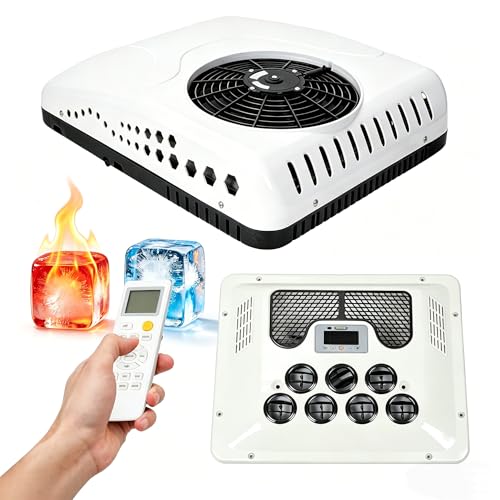
DC 12V RV Air Conditioner, 15000 BTU Rooftop A/C Unit
Don’t Overpay for HVAC Services – Call 888-894-0154 Now to Compare Local Quotes!
Features listed include powerful 15,000 BTU cooling and heating capacity, a 3-speed fan for adjustable airflow, and high-efficiency 12V DC operation intended for extended off-grid use.
Best for larger vans, multi-person campers, or buyers who need maximum cooling capacity in a DC unit. Choose this if your van interior approaches the upper end of typical van volumes or you frequently camp with several occupants.
Caution: Higher BTU units demand larger battery capacity and may require more robust roof mounting and airflow clearance; avoid this if you have constrained battery capacity or a small single-occupant van.
Xenjum 12V RV Air Conditioner, 11000 BTU Low-Profile (Cool Only)

Features include 11,000 BTU cooling, rapid 3-minute cold-down, a soft-start that reduces startup surge by 70%, 12V battery-powered off-grid operation compatible with a 400Ah battery, and very quiet operation (~35 dB).
Best for off-grid van owners prioritizing battery-friendly operation and minimal startup surge. Choose this if your system relies on batteries and solar and you want a low-noise, energy-efficient unit with reduced surge complexity.
Caution: This model is cool-only; avoid this if you require electric heating from the same unit during cold weather.
12V RV Air Conditioner, 11000 BTU Mini DIY Install
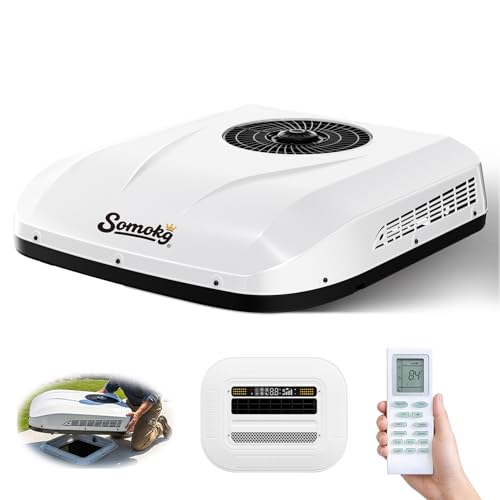
Features include 11,000 BTU cooling driven by a high-frequency compressor, integrated soft start that cuts startup surge by about 70%, designed for lightweight DIY installation, quiet operation (~35 dB), and compatibility with battery or solar systems.
Best for DIY installers and solo campers who want a lightweight, low-surge 12V rooftop unit. Choose this if you plan a one-person install and prioritise low weight and quiet operation for minimal disruption.
Caution: DIY installation requires correct roof cutout, secure mounting, and proper electrical sizing; avoid this if you are not comfortable with vehicle roof modifications or electrical work.
Buying Guide
How do I choose the right BTU for my van?
Match BTU to van interior volume and typical occupancy. Small single-occupant vans often need 10–11,000 BTU. Larger or multi-person vans perform better with 12–15,000 BTU. Higher BTU cools faster but requires more battery capacity and airflow clearance.
What power draw and battery size should I plan for?
- Compare listed average power consumption; several units list ~350W nighttime draw. Use those numbers to size battery and inverter if needed.
- Manufacturers reference a 400Ah battery for all-night operation in some units; use this as a planning baseline but confirm with your real-world load and other appliances.
- Soft-start or integrated soft-start units reduce startup surge by up to ~70%, lowering the need for large inrush handling equipment.
Do I need a heat pump or heater?
Choose heat-pump or PTC-heater models if you want electric heating without a separate propane or diesel heater. Heat pumps are more efficient for moderate cold, while PTC heaters provide instant supplemental warmth but may not be sufficient as a sole heating solution in extreme cold.
How important is soft-start and low startup surge?
Soft-start reduces inverter or battery stress and can eliminate the need for a high-capacity generator or inverter. If you have limited battery or solar capacity, prefer models advertising soft-start or low startup surge.
What about noise and sleeping comfort?
Noise ratings like 35–45 dB indicate quiet operation suitable for sleeping. If you prioritize restful nights, choose models with sleep mode or lower dB specifications.
Installation and roof considerations
- Confirm roof cutout dimensions, weight limits, and airflow clearance before buying.
- DIY-ready lightweight units reduce installation complexity but still require proper sealing and fastening.
- Professional installation may be advised for high-BTU units or complex electrical setups.
FAQ
Can a 12V air conditioner run all night on batteries?
Some 12V units are specified to run through the night when paired with sufficiently sized batteries (manufacturers often reference a 400Ah battery). Actual runtime depends on power draw, battery health, and other loads.
Do I need an inverter for a 12V DC rooftop AC?
Many 12V DC rooftop units are designed to run directly from a 12V battery without an inverter. Verify manufacturer specifications to confirm direct DC operation versus any inverter requirement.
Are 12V rooftop AC units suitable for off-grid solar setups?
Yes, units with low average draw and soft-start features are designed for off-grid use. Successful integration requires matching solar generation, battery capacity, and charge controllers to the unit’s energy profile.
Will a cool-only unit keep me warm in winter?
Cool-only units do not provide heating. Choose models listed with a heat pump or PTC heater if you need electric heating. For extreme cold, consider a dedicated heater or confirm the unit’s heating limits.
How do I reduce installation risks?
Measure roof cutout carefully, use proper gaskets and fasteners, seal all penetrations, and size wiring and fuses to manufacturer recommendations. If unsure, use a professional installer for safety and weatherproofing.
Don’t Overpay for HVAC Services – Call 888-894-0154 Now to Compare Local Quotes!

How to Get the Best HVAC Prices
- Firstly, keep in mind that installation quality is always the most important thing for residential HVAC project. So never sacrifice contractor quality for a lower price.
- Secondly, remember to look up the latest rebates as we talked above.
- Thirdly, ask for at least 3 bids before you make the decision. You can click here to get 3 free estimates from your local contractors, and this estimate already takes rebates and tax credit into consideration and filter unqualified contractors automatically.
Lastly, once you chose the right contractor, remember to use the tactics from this guide: Homeowners Tactics When Negotiating with HVAC Dealer to get the final best price.

