For buyers who need permanent cooling without a window unit, through-the-wall air conditioners provide efficient, space-saving solutions. Choose the LG 10,000 BTU for energy efficiency and mid-size rooms, the LG 11,800 BTU for larger spaces, the Frigidaire 12,000 BTU for air ionization and quiet operation, the TCL 8,000 BTU for smart-home control, and the ROVSUN 8,000 BTU if you want a combined heat and cool option. The table below summarizes the core fit for each pick.
| Model | Best For | Coverage | Key Feature |
|---|---|---|---|
| LG 10,000 BTU | Energy-conscious mid-size rooms | Up to 440 sq. ft. | R-32 refrigerant, EER 10.7 |
| LG 11,800 BTU | Larger rooms and apartments | Up to 530 sq. ft. | Higher cooling capacity, universal fit |
| Frigidaire 12,000 BTU | Improved air quality and quiet operation | Up to 550 sq. ft. | Built-in air ionizer |
| TCL 8,000 BTU | Smart-home users and medium rooms | Up to 350 sq. ft. | Alexa/Google Assistant compatible |
| ROVSUN 8,000 BTU with Heat | All-season use in smaller rooms | Up to 350 sq. ft. | Cooling plus 4,200 BTU heating |
LG 10,000 BTU Through The Wall Air Conditioner

Features reported: Energy Efficient R-32 refrigerant with an EER of 10.7, designed for through-the-wall installation, 9,800 BTU capacity (listed as 10,000 in title), 3 cooling speeds, 3 pre-programmed modes, Turbo fan, Energy Saver mode, Dry mode removes up to 2.9 pints/hour, and 4-way air deflection.
Best for buyers seeking energy efficiency in mid-size rooms. Choose this if you want a higher EER and R-32 refrigerant for better cooling efficiency. The 3-speed fan and multiple modes suit bedrooms, living rooms, and apartments up to the listed coverage.
Caution: This unit is designed specifically for through-the-wall installation and is not properly vented for standard window installation.
LG 11,800 BTU Through The Wall Air Conditioner

Features reported: Uses R-32 refrigerant with an EER of 10.6, 11,800 BTU cooling designed for through-the-wall installation, dimensions 24” W x 20.1” D x 14.4” H, 3 cooling speeds and 3 pre-programmed modes, turbo fan, effective for rooms up to 530 sq. ft.
Best for buyers who need higher capacity for larger rooms or open-plan spaces. Choose this if you want a larger cooling footprint and a universal design that fits most sleeves. The turbo fan and multiple modes provide flexible cooling control for living rooms and larger bedrooms.
Caution: Like other through-the-wall units, this model is not intended for standard window mounting and requires proper sleeve or wall opening.
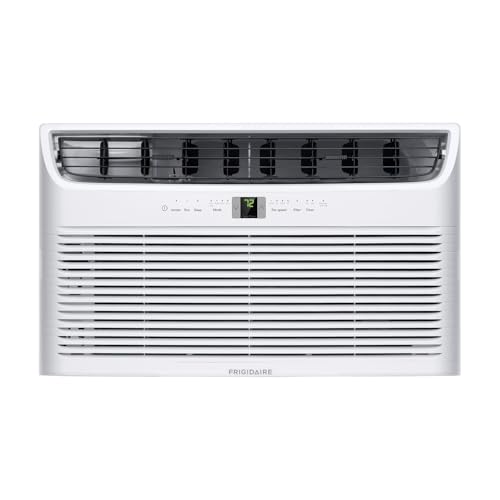
Frigidaire 12,000 BTU 115V Wall Air Conditioner
Don’t Overpay for HVAC Services – Call 888-894-0154 Now to Compare Local Quotes!
Features reported: 12,000 BTU cooling capacity for rooms up to 550 sq. ft., built-in air ionizer to reduce airborne particles, fan mode with 3 speeds, remote control included, described as quiet and energy efficient for the 115V model.
Best for buyers who prioritize indoor air quality and quieter operation. Choose this if you want an air ionizer integrated into the wall AC to reduce airborne particles and a unit rated for larger rooms on standard 115V circuits.
Caution: Ensure your wall sleeve or opening matches the unit dimensions and that your electrical circuit is appropriate for a 12,000 BTU 115V wall unit.
TCL 8,000 BTU Smart Through-The-Wall Air Conditioner
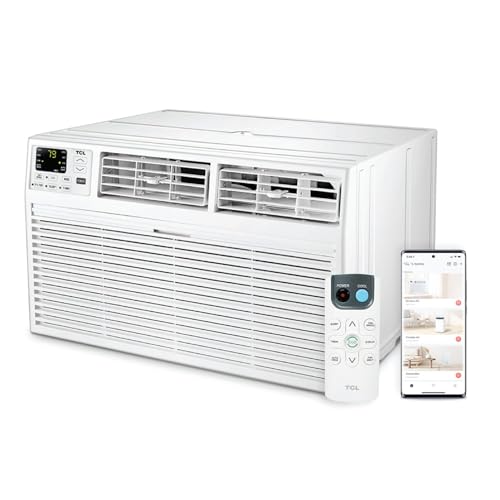
Features reported: 8,000 BTU capacity for spaces up to 350 sq. ft., built-in dehumidifier (Dry Mode), remote control, and compatibility with Amazon Alexa and Google Assistant for voice control.
Best for smart-home users with medium-sized rooms. Choose this if you want voice and remote control integration and a dehumidifier mode to manage humidity. The smart features allow adjusting temperature without manual interaction.
Caution: This unit is sized for up to 350 sq. ft.; avoid this model if you need cooling for significantly larger areas.
ROVSUN Smart 8,000 BTU Through The Wall AC With Heat

Features reported: 8,000 BTU cooling and 4,200 BTU heating, dehumidifier, 5 modes (Heat, Auto, Cool, Dry, Fan), 3 fan speeds, 24-hour timer, ECO energy-saver, washable front filter, swing louvers, LED display, app and voice control compatibility.
Best for buyers who want year-round climate control in smaller rooms. Choose this if you need both cooling and supplemental heating in a single through-the-wall unit and you want smart app or voice control.
Caution: The listed heating capacity is 4,200 BTU; avoid relying on this unit as a primary heat source in very cold climates where higher heating capacity is required.
Buying Guide: How To Choose An In-Wall Air Conditioner
What room size should the unit cover?
Select BTU capacity based on square footage: smaller rooms typically need 6,000–8,000 BTU, mid-size rooms 9,000–12,000 BTU, and larger rooms 12,000 BTU or more. Match the unit’s listed coverage to your room for efficient operation.
Does energy efficiency and refrigerant type matter?
Yes. Higher EER values indicate more cooling per watt. R-32 refrigerant, listed on some models, is noted for energy efficiency compared to older refrigerants. Prioritize units with clear EER or energy-saving features if electricity cost or efficiency is a concern.
What electrical and installation details should I check?
Verify voltage and plug type (e.g., 115V vs. 230V) and confirm your wall sleeve dimensions or that the unit fits standard sleeves. Through-the-wall units are not the same as window units and normally require a permanent sleeve or opening. Check that your home electrical circuit can handle the unit’s requirements.
Are smart features and remote control important?
Smart control and voice assistant compatibility add convenience for remote operation and scheduling. Remote control is standard on many models. Choose smart features if you plan to integrate the AC into a home automation routine or want app-based scheduling.
Do dehumidifier and air quality features matter?
Built-in Dry modes remove moisture and can improve comfort in humid climates. Air ionizers or filters help reduce airborne particles. Prioritize these features if humidity control or air quality is a primary concern.
What about noise and fan modes?
Look for explicit mentions of quiet operation if bedroom or study use is expected. Multiple fan speeds, sleep modes, and turbo fans provide flexible airflow and noise control options.
How to compare fit and finish?
Check unit dimensions and whether a trim kit, rear grille, or sleeve is included. Some models list universal fit information; confirm measurements to ensure a clean installation and finish.
FAQ
- Can a through-the-wall unit be installed in a window opening? No. Most through-the-wall units are not properly vented for standard window installation and require a dedicated wall sleeve or opening.
- How do I pick the right BTU for my room? Match the unit’s listed coverage to your room square footage. Add capacity for kitchens or spaces with high ceilings, and choose higher BTU for larger open areas.
- Are smart features worth it? Smart features are useful if you want remote scheduling, voice control, or integration with home automation. They do not affect core cooling performance.
- Do these units offer dehumidification? Many models include a Dry or dehumidifier mode that removes moisture; check the product features for moisture removal rates if specified.
- Can a through-the-wall AC provide heat? Some models include supplemental heating capability. Check the listed heating BTU; small heating capacities are best as supplemental heat rather than primary heating in cold climates.
- What maintenance is required? Regularly clean or replace the washable front filter and ensure the exterior grille and rear condensate paths are clear. Follow manufacturer guidance for seasonal maintenance.

How to Get the Best HVAC Prices
- Firstly, keep in mind that installation quality is always the most important thing for residential HVAC project. So never sacrifice contractor quality for a lower price.
- Secondly, remember to look up the latest rebates as we talked above.
- Thirdly, ask for at least 3 bids before you make the decision. You can click here to get 3 free estimates from your local contractors, and this estimate already takes rebates and tax credit into consideration and filter unqualified contractors automatically.
Lastly, once you chose the right contractor, remember to use the tactics from this guide: Homeowners Tactics When Negotiating with HVAC Dealer to get the final best price.