For buyers who want a ductless system they can install themselves, choose a unit with a pre-charged line set, clear DIY instructions, and the correct voltage. Top picks below cover small rooms to whole-room solutions and include models that are explicitly marketed as DIY-friendly. Best for: MRCOOL 18k (easy quick‑connect DIY installs), Feelfunn 9k (small rooms, 115V), GarveeHome 12k (experienced DIY with vacuum step), ActiveTrail 12k (115V DIY kit), MRCOOL 24k (larger rooms, quick‑connect).
| Model | Best For | Voltage/Size |
|---|---|---|
| MRCOOL DIY 18k BTU | DIYers wanting a simple quick‑connect install | 240V / ~750 sq ft |
| MRCOOL DIY 24k BTU | Larger single‑room cooling with DIY quick connect | 240V / ~1,000 sq ft |
| Feelfunn 9000BTU | Small rooms and apartments on 115V | 115V / up to 550 sq ft |
| GarveeHome 12000BTU | Experienced DIYer comfortable vacuumizing line set | 230V / up to 750 sq ft |
| ActiveTrail 12000BTU | 115V DIY installs focused on energy efficiency | 115V / up to 750 sq ft |
MRCOOL DIY 18k BTU (240V)

Features from the listing:
- Up to 22.7 SEER2 efficiency with variable speed DC inverter compressor technology.
- Easy DIY installation: pre-charged R-410a 25ft quick connect line that doesn’t require special tools, equipment, or training.
- Designed to heat and cool a single ~750 sq ft room.
Who this is best for and why: Best for homeowners who want a larger-capacity DIY mini split and a true quick‑connect installation. The pre‑charged, quick‑connect line set reduces the need for specialized HVAC tools and professional refrigerant work, making it suitable for competent DIYers with basic electrical skills.
Caution: The unit is 240V and requires appropriate electrical circuit capacity and a compatible disconnect; plan for professional electrical hookup if you are not comfortable with high-voltage wiring.
MRCOOL DIY 24k BTU (240V)
Features from the listing:
- Up to 20.5 SEER2 efficiency with variable speed DC inverter compressor technology.
- Easy DIY installation with pre‑charged R‑410a 25ft quick connect line—no special tools required.
- Designed to heat and cool a single ~1,000 sq ft room.
Who this is best for and why: Best for buyers who need higher capacity for larger rooms or open-plan spaces and still want the DIY quick‑connect convenience. The higher BTU rating covers bigger areas without multiple heads.
Caution: This is a 240V system and will typically need a heavier‑gauge circuit and possibly a dedicated breaker; confirm your home electrical panel can support the load before purchase.
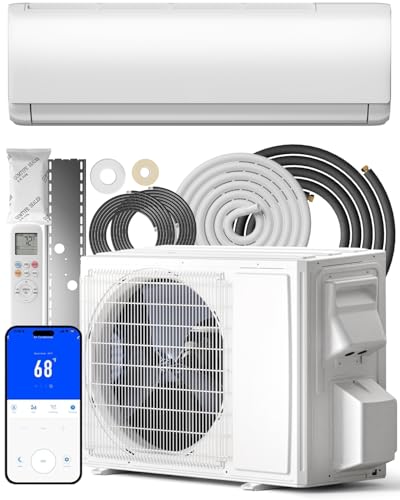
Feelfunn 9000BTU 115V Mini Split
Don’t Overpay for HVAC Services – Call 888-894-0154 Now to Compare Local Quotes!
Features from the listing:
- 9100 BTU cooling and 9500 BTU heating, suitable for spaces up to 550 sq ft.
- 115V power, WiFi control, remote, low noise, and self‑cleaning high‑temperature function.
- Outdoor unit operates in wide temperature range and includes washable filter.
Who this is best for and why: Best for apartment renters or small‑room owners who need a 115V option that can run on standard household circuits. The self‑cleaning and washable filter features help reduce maintenance needs for users installing their first mini split.
Caution: The lower BTU rating means this unit is not appropriate for large open areas; choose a higher BTU model for bigger rooms.
GarveeHome 12000BTU DIY Kit

Features from the listing:
- SEER 18.5 inverter technology, energy-efficient cooling and heating for rooms up to 750 sq ft.
- DIY installation kit includes line sets, drain hose, remote control, and step‑by‑step guide.
- Pre‑charged refrigerant shipped, but the unit needs vacuumizing during installation per the manufacturer note.
Who this is best for and why: Better for DIYers who have some HVAC experience or access to vacuum pump equipment. The included kit and guide reduce parts sourcing, while the SEER rating provides energy savings for year‑round use.
Caution: The manufacturer notes the pre‑charged refrigerant still requires vacuumizing during installation; avoid this unit if you cannot perform or arrange a proper vacuum and leak test.
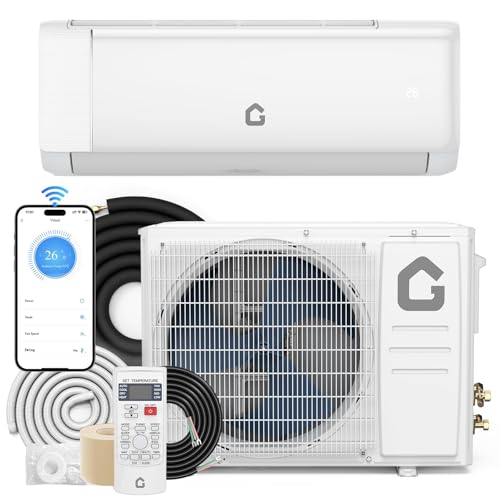
ActiveTrail 12000BTU 115V Mini Split
Features from the listing:
- 12,000 BTU inverter technology for spaces up to 750 sq ft.
- SEER 22 efficiency and eco‑friendly R32 refrigerant aimed at energy savings.
- Simple DIY install kit includes pre‑charged line sets, drain hose, remote, and manual.
Who this is best for and why: Choose this if you want a 115V DIY option with a high SEER rating and modern refrigerant. The included pre‑charged kit makes it suitable for homeowners working with standard household circuits.
Caution: Though marketed for DIY, professional installation is recommended if you are unfamiliar with refrigerant handling or electrical code compliance.
Buying Guide: How To Choose A DIY Mini Split
What room size and BTU do I need?
Match BTU capacity to the room square footage and insulation level. Lower BTU units (8k–12k) work for small rooms and studios. Higher BTU units (18k–24k) suit larger rooms or open plans. Oversizing can cause short cycling; undersizing leads to insufficient cooling.
Do I need 115V or 230/240V?
115V units plug into standard household circuits and are easier for renters or homes without heavy wiring. 230/240V units provide more power for higher BTUs but usually require a dedicated circuit and potential electrical work.
What does “pre‑charged” and “quick‑connect” mean for DIY?
Pre‑charged units come with refrigerant already in the line set. Quick‑connect fittings let you attach indoor and outdoor units without brazing or charging refrigerant. These features reduce the need for specialized HVAC tools.
When should I vacuum and charge the system?
If the product notes that the refrigerant is pre‑charged but requires vacuumizing, you must pull a vacuum and test for leaks before start‑up. If you cannot perform vacuuming and leak testing, hire an HVAC technician for that step.
How important is SEER/SEER2 efficiency?
Higher SEER2 ratings indicate better energy efficiency and lower operating costs. Choose higher SEER2 for year‑round use and places with high cooling loads. Balance efficiency with upfront electrical and installation considerations.
What electrical and permit considerations apply?
Confirm circuit breaker capacity, wire gauge, and disconnect requirements for 230/240V models. Local codes may require permits or licensed electricians for high-voltage wiring. Check local regulations before purchasing.
Should I install it myself or hire a pro?
Choose DIY if the unit has a true quick‑connect pre‑charged kit, you are comfortable with mechanical and electrical tasks, and local codes allow homeowner installation. Hire a pro for vacuuming, brazing, complex electrical work, multiple head installations, or when local codes mandate licensed installers.
FAQ
Can I install a mini split without HVAC experience? Yes if the unit is pre‑charged with a quick‑connect line set and you are comfortable with mounting, basic wiring, and following instructions; otherwise hire a technician.
Do DIY mini splits require refrigerant handling certification? Many pre‑charged DIY models reduce the need for refrigerant charging, but some steps (vacuuming, leak testing) may still require certified service depending on local regulations.
Don’t Overpay for HVAC Services – Call 888-894-0154 Now to Compare Local Quotes!
Is 115V or 240V better for a DIY install? 115V is easier for standard household circuits and smaller rooms; 240V supports larger BTU units but often needs a dedicated breaker and professional electrical work.
How do I know which BTU fits my room? Use room square footage, ceiling height, insulation quality, and window exposure to estimate BTU. Manufacturers list recommended coverage; choose the closest higher capacity for heavily sunlit or poorly insulated spaces.
Will a DIY mini split save money long term? Energy savings depend on SEER2 efficiency and usage patterns. Higher SEER2 models are more efficient but may have higher installation requirements. Factor operating savings against installation complexity.
What maintenance do DIY mini splits need? Regular filter cleaning, occasional outdoor coil cleaning, and checks for leaks or drainage issues. Follow the manufacturer’s maintenance schedule included with the unit.

How to Get the Best HVAC Prices
- Firstly, keep in mind that installation quality is always the most important thing for residential HVAC project. So never sacrifice contractor quality for a lower price.
- Secondly, remember to look up the latest rebates as we talked above.
- Thirdly, ask for at least 3 bids before you make the decision. You can click here to get 3 free estimates from your local contractors, and this estimate already takes rebates and tax credit into consideration and filter unqualified contractors automatically.
Lastly, once you chose the right contractor, remember to use the tactics from this guide: Homeowners Tactics When Negotiating with HVAC Dealer to get the final best price.