Yes — 110V (110/115/120V) mini split systems can work in many RVs that have adequate shore power or inverter capacity. Choose a 9,000 BTU 115V unit for small RVs or a 12,000 BTU 110V unit for larger rigs with stronger electrical supply. Below is a quick comparison table followed by detailed product profiles for different RV buyer needs.
| Model | Voltage | BTU | Best For |
|---|---|---|---|
| Feelfunn 9000BTU | 115V | 9,100 | Quiet, all-season comfort |
| Senville LETO 9000BTU | 110/120V | 9,000 | Efficient inverter performance |
| ROVSUN 9000BTU | 115V | 9,000 | Small RVs up to ~400 sq.ft. |
| Rellytech 9000BTU | 115V | 9,000 | Simple pre-charged system |
| MEPTY 12000BTU | 110V | 12,000 | Larger RVs with higher electrical capacity |
Feelfunn 9000BTU Mini Split AC/Heating System (115V)
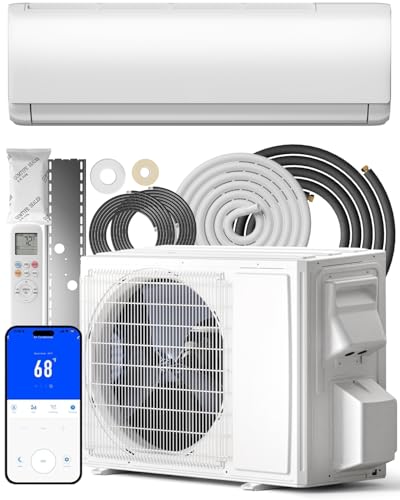
According to the product description, this Feelfunn unit offers 9,100 BTU cooling and 9,500 BTU heating, is rated 22 SEER2, and runs on 115V. The listing highlights fast cooling/heating for rooms up to 550 sq. ft., Wi‑Fi and voice control compatibility (Alexa, Google Assistant), a remote, and a self‑cleaning function with a washable filter. The outdoor unit operates across a wide temperature range.
- Best for RV owners who want voice or phone control and a quiet, self‑cleaning indoor unit.
- Choose this if you need a 9,000BTU-class 115V system with smart controls and year‑round heating capability.
- Limitation: The listed coverage (up to 550 sq. ft.) exceeds typical RV cabin size and assumes ideal installation; verify airflow and roof/side‑mount options for your RV.
Senville LETO Series 9000BTU Mini Split (110/120V)
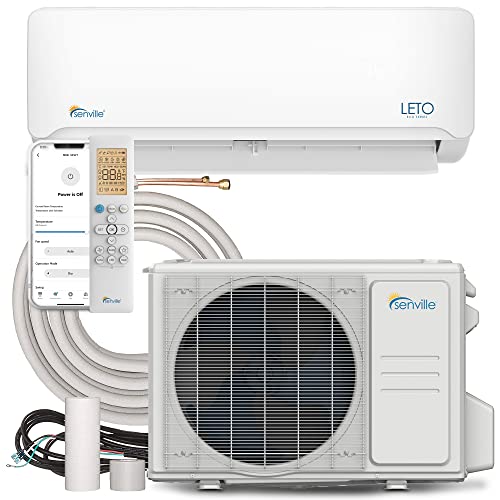
The Senville LETO 9000BTU unit is listed as an inverter heat pump with 110/120V compatibility and SEER2 21.5. The listing notes Alexa and app control, a 4‑in‑1 function (cool/heat/dehumidifier/fan), a UL‑listed DC inverter, and operation down to low outdoor temperatures claimed by the manufacturer.
- Best for RV owners prioritizing inverter efficiency and reliable low‑temperature heating performance.
- Choose this if you want a UL‑listed inverter mini split that integrates with smart home assistants and preserves efficiency in varying conditions.
- Limitation: The listing describes home and commercial use; confirm physical mounting and routing for condensate/drain lines in an RV installation.
ROVSUN 9000BTU Wi‑Fi Mini Split (115V)

The ROVSUN listing describes a 9,000 BTU unit with inverter technology, 19 SEER, Wi‑Fi, heat pump functionality, and operation suitable for spaces up to 400 sq. ft. The features call out quiet operation as low as 28 dB in mute mode and advanced energy saving via compressor speed control.
- Best for compact RV owners who want quiet operation and energy savings during overnight use.
- Choose this if bedroom‑quiet performance and inverter energy savings are priorities for your RV setup.
- Limitation: Coverage and noise numbers are from the product listing; actual cabin noise and space will vary based on installation and mounting location.
Rellytech 9000BTU Mini Split (115V)

The Rellytech listing states 9,000 BTU cooling and heating with a pre‑charged condenser. It highlights 4 modes (cool/heat/fan/dry), an ECO smart function to optimize energy use, multiple fan speeds, and a 90° vertical swing for air distribution.
- Best for RV installers who prefer a pre‑charged system to simplify refrigerant handling during installation.
- Choose this if you need a compact 9,000BTU system with ECO mode and adjustable airflow for tighter cabins.
- Limitation: The product listing does not specify RV‑specific mounting hardware; check what installation kit components are included for your rig.
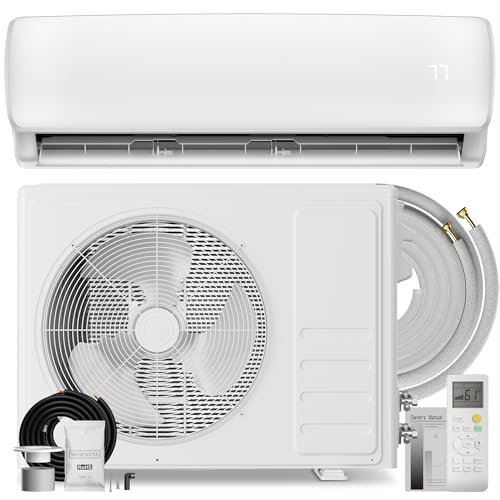
MEPTY 12000BTU Mini Split (110V)
Don’t Overpay for HVAC Services – Call 888-894-0154 Now to Compare Local Quotes!
MEPTY lists this 12,000 BTU 110V inverter mini split as 19 SEER2 with rapid cooling and heating, pre‑charged R32 refrigerant, and 4‑in‑1 modes (cool/heat/fan/dry). The product listing emphasizes energy savings via adaptive compressor speed and fast temperature response.
- Best for larger RVs or towable fifth wheels that can support higher power draw and need stronger capacity.
- Choose this if your RV electrical system (shore power or inverter) can supply the higher startup and running current of a 12,000BTU unit and you want pre‑charged convenience.
- Limitation: A 12,000BTU system can exceed typical RV cabin size and electrical limits; verify panel capacity and circuit protection before choosing this unit.
Buying Guide
How much BTU is right for my RV?
Match BTU to cabin volume, insulation, and climate. Small RV cabins typically do well with 9,000BTU units; larger motorhomes or cooled living areas may require 12,000BTU. Use listed coverage as a guideline, not a guarantee, and account for solar load and windows.
Will a 110/115/120V mini split run on RV shore power or an inverter?
110–120V mini splits can run from RV shore power if the shore pedestal and internal breaker support the unit’s startup and running amperage. Running from an inverter requires an inverter large enough for the AC’s startup surge and continuous load. Check the product’s listed voltage and consult an electrician or marine/RV electrical specialist to confirm compatibility.
Do I need a pre‑charged condenser for RV installations?
Pre‑charged condensers simplify installation because they arrive with refrigerant already in the system. For RV installations where refrigerant handling is difficult, a pre‑charged unit reduces the need for field charging. Confirm the included installation kit components and line lengths allowed by the manufacturer.
How important is inverter technology and SEER2 rating?
Inverter compressors adjust speed to meet load, reducing short cycling and lowering energy consumption—useful for limited RV electrical capacity. SEER2 indicates seasonal efficiency; higher SEER2 generally means better long‑term energy performance. For RV use, inverter models typically offer quieter operation and lower steady‑state amperage.
What installation considerations are specific to RVs?
Plan mounting for limited wall/roof space, condensate drainage, refrigerant line routing, and safe electrical connections. Confirm the physical dimensions, required hole for line sets, and whether an installation kit includes necessary fittings. Ensure vibrations and motion while traveling are addressed with secure mounting.
What about smart controls and noise?
Wi‑Fi and voice control let you pre‑cool or pre‑heat before arrival, useful for seasonal RV use. Noise figures in product listings indicate indoors operational levels; for sleeping comfort, choose models that list low dB values or “sleep” modes. Always consider where the indoor head will be mounted relative to sleeping areas.
FAQ
- Can I install a 110V mini split myself in an RV? Many units are marketed as DIY‑friendly with pre‑charged condensers and installation kits, but RV‑specific routing, electrical hookups, and warranty conditions may require professional installation.
- Will a mini split handle heating in cold climates? Listings for heat pump models often include minimum outdoor operating temperatures. Choose a model that lists reliable heating performance at the outdoor temperatures you expect.
- Does Wi‑Fi control work reliably in remote campgrounds? Wi‑Fi and app controls work when the unit and your phone are on the same network or the unit has cloud capability. Remote control via mobile data depends on the unit’s cloud service and campground connectivity.
- Are these units safe for RV electrical panels? Listed voltage compatibility indicates the unit operates at 110/115/120V, but safety depends on your RV’s breaker and wiring capacity. Consult a qualified technician to confirm circuit protection and wiring adequacy.
- What refrigerant do these units use? Some listings identify R32 pre‑charging; others list only pre‑charged condensers. Check the product listing for the refrigerant type before installation and service considerations.
- How to choose between 9,000BTU and 12,000BTU units? Choose 9,000BTU for smaller cabins and lower electrical draws; choose 12,000BTU only if the RV size, insulation, and electrical system can support the higher capacity and startup current.

How to Get the Best HVAC Prices
- Firstly, keep in mind that installation quality is always the most important thing for residential HVAC project. So never sacrifice contractor quality for a lower price.
- Secondly, remember to look up the latest rebates as we talked above.
- Thirdly, ask for at least 3 bids before you make the decision. You can click here to get 3 free estimates from your local contractors, and this estimate already takes rebates and tax credit into consideration and filter unqualified contractors automatically.
Lastly, once you chose the right contractor, remember to use the tactics from this guide: Homeowners Tactics When Negotiating with HVAC Dealer to get the final best price.