The most energy efficient air conditioner depends on room size and features like inverter compressors, Energy Star ratings, and smart controls. For large rooms and multi-season use choose the Midea Inverter 12,000 BTU; for quieter, top-rated efficiency pick the Frigidaire Gallery 10,000 BTU; for small bedrooms the Amazon Basics 5,000 BTU fits best; choose the Midea 8,000 BTU if you want a compact inverter with app control; choose the MilleLoom 12,000 BTU if you want WiFi and strong dehumidification. Summary table below highlights best uses.
| Product | Best For |
|---|---|
| Midea Inverter 12,000 BTU | Large rooms, energy savings with heat option |
| Frigidaire Gallery 10,000 BTU | High-efficiency performance and quieter operation |
| Midea 8,000 BTU Inverter | Medium rooms needing smart control and efficiency |
| MilleLoom Window AC 12,000 BTU | WiFi control and strong dehumidification for medium rooms |
| Amazon Basics 5,000 BTU | Small rooms and budget-conscious buyers |
Midea Inverter 12,000 BTU

Features: 12,000 BTU cooling, Energy Star certified, inverter technology, CEER 13.3, multi-season cooling and heat, smart control via app and voice, 5 modes, 24-hour timer, washable filter, auto shutoff, defrost control. The product description highlights up to 35% energy savings versus the Energy Conservation Standard.
Best for: buyers who need efficient cooling for large rooms up to 550 sq. ft. and want a heat pump option for shoulder seasons. Chosen because inverter tech and Energy Star certification are explicitly listed, providing measurable energy-saving design.
Caution: The heat pump function will not operate reliably if outdoor temperature is below 41°F, per the product information; avoid this unit if you need heating in very cold climates.
Frigidaire Gallery 10,000 BTU

Features: Inverter technology, energy efficient cooling, Electronic controls, ENERGY STAR Most Efficient award, up to 47% annual energy savings over a standard air conditioner, extra quiet operation at 42 dBA per the product information.
Best for: buyers who prioritize top energy performance and quieter operation in medium rooms up to ~450 sq. ft. Selected because the unit is explicitly described as ENERGY STAR Most Efficient and lists both improved energy savings and lower noise levels.
Caution: While noise is reduced to 42 dBA, some users in very quiet spaces may still notice operation; choose this if lower noise and top efficiency matter most.
Midea 8,000 BTU Smart Inverter

Don’t Overpay for HVAC Services – Call 888-894-0154 Now to Compare Local Quotes!
Features: 8,000 BTU inverter cooling, Energy Star certified, wireless app and Alexa control, 4 modes (Auto, Cool, Dry, Fan), 3 speed settings, 24-hour timer, ECO energy saver, washable filter, more than 35% energy savings versus the Energy Conservation Standard is stated in the feature list.
Best for: buyers with medium rooms up to 350 sq. ft. who want an energy-saving inverter unit with smart controls. Chosen for its combination of inverter efficiency and app/voice control that supports scheduled, targeted cooling to reduce runtime.
Caution: This is sized for mid‑sized rooms; avoid this model if you need to cool spaces larger than the listed coverage area for optimal efficiency.
MilleLoom Window AC 12,000 BTU
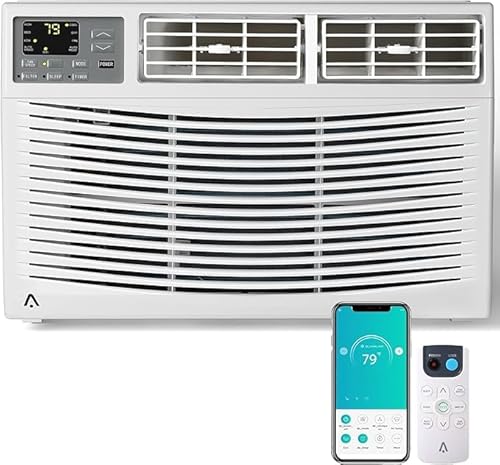
Features: WiFi-connected controls and remote app control, 12,000 BTU cooling up to 550 sq. ft., electronic and remote control, 3-in-1 (cool, fan, dehumidify), three fan speeds, removes up to 3.6 pints of humidity per hour, digital controls.
Best for: buyers who want smart remote control and stronger built-in dehumidification in medium to large rooms. Chosen because remote app control enables scheduled operation that can reduce energy use by limiting run time.
Caution: The feature list does not explicitly state Energy Star certification; choose this if WiFi control and dehumidification are higher priorities than a certified efficiency label.
Amazon Basics 5,000 BTU Window AC

Features: 5,000 BTU cooling up to 150 sq. ft., cool and fan functions, washable filter, adjustable window kit, intuitive mechanical controls, 7 temperature settings, 2-speed cooling and fan modes, 2-way air direction control.
Best for: buyers with small bedrooms, home offices, or budget-focused purchases who need an efficient small-capacity unit. Chosen because smaller BTU units can be more energy-efficient when matched to small room sizes and the washable filter reduces maintenance-related efficiency loss.
Caution: This unit is non-inverter with a lower cooling capacity; avoid this model if you need to cool medium or large rooms efficiently.
Buying Guide
How Many BTUs Do I Need?
Match BTU capacity to room size to maximize efficiency. Oversized units cycle on/off more frequently which wastes energy. Undersized units run continuously and use more power. Use the manufacturer’s square-foot guidance to choose the correct BTU rating.
Is Inverter Technology Worth It?
Yes for ongoing energy savings. Inverter compressors vary speed to maintain temperature, which reduces start-stop cycles and typically lowers energy use. Look for explicit inverter wording and CEER/EER values in product specs.
Should I Prioritize Energy Star Or CEER Ratings?
Energy Star or ENERGY STAR Most Efficient labels indicate verified efficiency. CEER and EER numbers quantify performance; higher CEER/EER means more cooling per watt. Prefer certified models when long-term energy costs are a priority.
Window Unit Versus Portable Unit — Which Is More Efficient?
Window units are generally more efficient than portable units because exhaust and heat exchange occur outside the building envelope. Choose portables only when window installation is not possible and expect lower efficiency.
Do Smart Controls Save Energy?
Smart controls, timers, and voice control can reduce runtime by scheduling cooling around occupancy. Use app scheduling and temperature setpoints to avoid unnecessary operation and lower energy use.
What About Noise And Dehumidification?
Lower dBA ratings correlate with quieter operation; quieter units may run at higher efficiency settings that maintain comfort without overcooling. Built-in dehumidifiers remove moisture and can allow higher thermostat setpoints while maintaining comfort, reducing energy consumption.
Installation And Maintenance Considerations
Proper installation ensures the unit is sealed and vents are unobstructed—poor installation increases energy use. Regularly clean washable filters listed in product features to maintain airflow and efficiency.
FAQ
- What makes an air conditioner energy efficient? Efficient units use inverter compressors, higher CEER/EER ratings, and smart controls; Energy Star certification indicates third-party efficiency validation.
- Are window units more efficient than portable ACs? Yes. Window units vent heat directly outdoors and typically use less energy than portable models that expel heat through flexible hoses.
- Will smart app control reduce my energy bills? Smart controls can reduce run time through scheduling and remote shutoff, which can lower energy consumption if used to avoid unnecessary operation.
- How often should I clean filters to keep efficiency? Clean washable filters regularly according to the manufacturer’s guidance; dirty filters reduce airflow and make the compressor work harder, increasing energy use.
- Is inverter technology always the best choice? Inverter technology generally offers better part-load efficiency. Choose inverter units for regular daily use or larger spaces; for occasional, short-term use a basic unit may suffice.
- Does ENERGY STAR guarantee the lowest running cost? ENERGY STAR indicates higher efficiency compared to typical models, but actual running cost depends on unit size, local electricity rates, installation quality, and usage patterns.

How to Get the Best HVAC Prices
- Firstly, keep in mind that installation quality is always the most important thing for residential HVAC project. So never sacrifice contractor quality for a lower price.
- Secondly, remember to look up the latest rebates as we talked above.
- Thirdly, ask for at least 3 bids before you make the decision. You can click here to get 3 free estimates from your local contractors, and this estimate already takes rebates and tax credit into consideration and filter unqualified contractors automatically.
Lastly, once you chose the right contractor, remember to use the tactics from this guide: Homeowners Tactics When Negotiating with HVAC Dealer to get the final best price.