For buyers who want low-noise cooling, the clear answer is to choose a window air conditioner with explicit quiet-mode features, low decibel ratings, or inverter/U-shaped designs that reduce vibration. The selections below suit different needs: choose the Midea U for ultra-quiet, inverter-controlled whole-room cooling; Electactic 6,000 BTU for a quiet mid-size room option; Midea 5,000 BTU for a small-room, low-noise basic unit; Frigidaire 5,000 BTU for a bedroom-focused quiet model; and Amazon Basics 6,000 BTU for a budget-friendly quiet digital option. Summary table of these picks follows.
| Model | Best For | Notable Quiet Feature |
|---|---|---|
| Midea U Smart Inverter 12,000 BTU | Large rooms that need ultra-quiet operation | U-shape design, operation as low as 32 dBA |
| Electactic 6,000 BTU Quiet Window AC | Medium bedrooms and offices wanting quiet performance | Operates below 45 dBA, 4-speed fan |
| Midea 5,000 BTU EasyCool | Small bedrooms and home offices | Quieter than a household refrigerator |
| Frigidaire 5,000 BTU Window AC | Small rooms needing lower-noise sleep use | Quiet performance at 52 dBA |
| Amazon Basics 6,000 BTU Digital | Budget buyers who want remote and digital controls | Digital settings and remote for easier quiet operation |
Midea U Smart Inverter 12,000 BTU

- Ultra quiet design: U-shaped unit isolates outdoor noise and reduces vibration.
- Inverter technology for lower operating noise and energy efficiency.
- Smart controls: Wi‑Fi enabled with app and voice assistant compatibility.
- Designed to cool larger rooms (listed capacity up to 550 sq ft).
Best for buyers who need powerful cooling with the lowest possible noise. This model was selected because the U-shape plus inverter system targets both sound reduction and steady compressor operation.
Caution: This is a higher-capacity unit intended for larger spaces; avoid this if you only need to cool a small bedroom or if your window setup does not support the U-shaped design.
Electactic 6,000 BTU Quiet Window AC

- 3-in-1 operation: cool, dry, fan modes with 4-speed fan and sleep mode.
- 6,000 BTU capacity suited for rooms up to 250 sq. ft.
- Operates below 45 decibels according to the product listing.
- Removable filter and remote control for convenient quiet operation.
Best for medium bedrooms or home offices where low noise and multiple modes are priorities. It was selected for the explicit noise claim below 45 dB and the variety of operating modes that allow quieter fan-only or sleep settings.
Caution: The listed noise level is product-provided; actual in-room noise depends on installation and window sealing quality.
Midea 5,000 BTU EasyCool
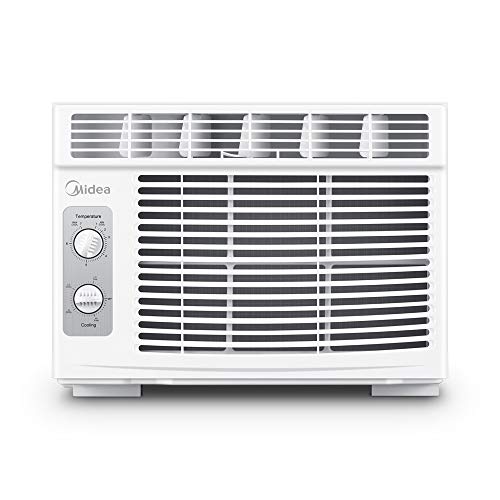
- Designed for small rooms up to 150 sq. ft. with mechanical controls.
- 7 temperature settings, 2 cooling speeds, and 2-way air direction control.
- Described as quieter than a household refrigerator and includes a reusable filter.
- Energy-efficient CEER rating listed for lower running costs compared to older units.
Best for small bedrooms or home offices where minimal noise and simple controls matter. Choose this if you want a compact, low-noise unit with straightforward mechanical operation.
Caution: This unit uses mechanical controls; avoid this if you prefer full digital programming or app connectivity.
Don’t Overpay for HVAC Services – Call 888-894-0154 Now to Compare Local Quotes!
Frigidaire 5,000 BTU Window AC

- Effortless Temperature Control to maintain preset temperatures.
- Two fan speeds and easy-to-clean washable filter.
- Quiet performance listed at 52 dBA, suitable for bedrooms up to 150 sq. ft.
- Auto restart feature after power interruptions.
Best for buyers prioritizing a quiet bedroom unit with automatic temperature maintenance. The Frigidaire was selected because the product specifies a quiet operating level suitable for sleep use and small rooms.
Caution: The 52 dBA figure is a product-supplied noise rating; quieter inverter designs may still outperform this model in real-world quietness.
Amazon Basics 6,000 BTU Digital Window AC

- 6,000 BTU capacity for rooms up to 250 sq. ft., with cool and fan-only modes.
- Digital temperature display and remote control for quiet convenience.
- Washable filter for simple maintenance and dust capture.
- Multiple temperature settings and 2-speed fan for adjustable quiet operation.
Best for budget-conscious buyers who want digital controls and remote operation to run quieter modes from across the room. This model was selected for its combination of digital convenience and appropriate room capacity.
Caution: The product description lists quiet operation but does not provide a specific decibel rating; noise can vary with installation and fan speed settings.
Buying Guide: How To Choose A Quiet Window Air Conditioner
How loud is “quiet” for a window AC?
Quiet window ACs typically range from about 30 dBA (very quiet) to around 55 dBA (moderate). Look for explicit dBA figures in product listings if noise is the primary concern. Sleep or low-power modes usually reduce noise compared with full cooling output.
Should I prioritize decibel rating or technology (inverter, U-shape)?
Prioritize both. A low dBA rating gives a measurable noise target. Inverter compressors and U-shaped or vibration-dampening designs reduce compressor cycling and structural noise. If you need sustained low noise for sleeping or recording, choose an inverter or U-shaped model with a documented low dBA.
What room size and BTU should I choose for quiet performance?
Match BTU to room size to avoid constant compressor cycling, which increases noise. Underpowered units run continuously and can be noisier. Use manufacturer room-size guidance (e.g., 5,000 BTU for ~150 sq. ft., 6,000 BTU for ~250 sq. ft., 12,000 BTU for much larger rooms) and pick a unit sized for your space.
How does installation affect noise?
Proper window sealing and secure mounting reduce vibration and rattling. Use foam sealing strips, ensure the unit is level, and tighten mounting hardware to minimize structural noise. Poor installation can make an otherwise quiet unit louder.
Are sleep modes and fan speeds important?
Yes. Sleep and low-speed fan settings reduce compressor and fan output, lowering noise. Multiple fan speeds let you find a balance between cooling and quietness. Choose units with sleep modes for overnight quiet operation.
What about energy efficiency and quiet operation?
Energy-efficient units, especially inverter models, often run at lower power and reduce noise by avoiding frequent on/off cycles. Look for energy-saving features or inverter technology to combine lower noise with lower running cost.
FAQ
-
Will a quieter unit cool less effectively?
Not necessarily. Quiet units can still deliver rated cooling capacity. Check BTU ratings and room-size recommendations to ensure the unit will cool your space efficiently even at lower sound levels.
-
How can I reduce noise after installation?
Seal gaps around the unit, add weatherstripping, secure the mounting brackets, and place vibration-absorbing pads if recommended. Using lower fan speeds or sleep mode also reduces noise.
-
Is inverter technology worth the extra cost for quietness?
Inverter compressors typically run more quietly because they modulate speed instead of turning on and off. They are worth considering if continuous low-noise operation is important.
-
Does decibel rating from the manufacturer reflect in-room noise?
Manufacturer dBA ratings provide a benchmark, but actual in-room noise depends on installation, window type, and room acoustics. Use ratings as a comparison tool, then follow installation best practices.
-
Can I use a window AC with the window open to reduce noise?
No. Window ACs require a mostly closed window opening with the outdoor portion exposed to the outside to function properly. An open window will reduce efficiency and can increase noise transfer.

How to Get the Best HVAC Prices
- Firstly, keep in mind that installation quality is always the most important thing for residential HVAC project. So never sacrifice contractor quality for a lower price.
- Secondly, remember to look up the latest rebates as we talked above.
- Thirdly, ask for at least 3 bids before you make the decision. You can click here to get 3 free estimates from your local contractors, and this estimate already takes rebates and tax credit into consideration and filter unqualified contractors automatically.
Lastly, once you chose the right contractor, remember to use the tactics from this guide: Homeowners Tactics When Negotiating with HVAC Dealer to get the final best price.