It costs about 300 dollars to recharge an HVAC Freon refrigerant in the U.S. and the average homeowner costs are approximately 200 dollars to 600 dollars. This is the cost of the call of the professional service, labor and the refrigerant itself.
Real prices are all over the place depending on the refrigerant (old R-22 versus new R-410A or R-32), size of the cooling system, and where you live. AC recharge work on residential units tends to be in the low hundreds, whereas commercial HVAC systems (which contain more refrigerant) may be in the high hundreds or even thousands of dollars.
A brief summary of the AC refrigerant recharge prices is given below:
| Cost Aspect | Typical Price |
|---|---|
| National Average (Residential AC) | $300 |
| Typical Range (Residential AC) | $200 – $600 |
| Low-End (minor top-off) | $100 |
| High-End (extensive refill) | $600+ |
| Older R-22 System | $180 – $600 (higher due to R-22 cost) |
| Newer R-410A System | $100 – $320 (common range) |
| Service Call Fee (diagnosis) | $75 – $130 typically |
Factors Affecting AC Refrigerant Refill Cost
A number of factors will dictate the amount of money you will part with to have your home or commercial air conditioner refilled with refrigerant. Knowing these will make you better estimate your price on AC Freon recharge:
- Refrigerant Type: The type of refrigerant (coolant) your system uses is a large factor in cost. The older refrigerants such as R-22 Freon are now significantly more costly than newer refrigerants such as R-410A, because of phase-outs and because of shortage. Future refrigerants like R-32 or R-454B will also be expensive at first when they are being introduced.
- Refrigerant Required: AC systems come in different sizes (in tons of cooling capacity) and each ton of AC will need approximately 2–4 pounds of refrigerant. A bigger system or a serious leak will require more pounds of Freon and this will directly add to the cost. As an example, a 4-ton unit may require 8–16 lbs of refrigerant, which is about twice the price of a 2-ton unit recharge.
- System Type and Size: The kind of air conditioner—central AC, heat pump, ductless mini-split, window unit, or a big commercial HVAC—affects the cost of recharging. The cost of refilling whole-house systems and commercial units is higher than that of small window ACs due to the large amount of coolant that they have. Costs by system type are shown in sections below.
- Labor and Service Fees: To work with refrigerants, it is necessary to hire a licensed HVAC technician. Technicians usually have a service call fee (usually between 50 and 130 dollars) to simply diagnose the problem, and then charge a rate of approximately 70 to 150 dollars per hour to do the work. These charges differ with companies and regions. Other companies include the first pound of refrigerant into a flat fee and others charge per pound and labor.
- Geographic Location: The location of your region and local market influences pricing. The urban areas or the areas with higher cost of living are likely to have higher labor rates (nearer to the $150/hour end) and the rural areas may have lower hourly rates. But in distant locations, the refrigerant may be more expensive because of the transportation charges that the contractor will charge. Climate is a factor as well—in very hot areas (e.g. the American South in summer) there is a high demand of AC service, and the rates may be high during the peak season.
- Leak Repairs or Other Services: A recharge is normally an indication of a refrigerant leak in the system (coolant is not consumed during normal operation). In that case, the leakage should be detected and repaired, which increases the repair expenses along with the refrigerant recharge. The cost of leak detection is ~$50–$150+ and the actual leak repair is between $200 and up to $1,500 depending on the severity and location. The total bill would be further added by other repairs (bad coils, etc.)
- Service Provider Pricing: The pricing of different HVAC service providers is different. Established large companies can have higher rates or minimum fees and independent contractors can have lower per-pound rates. Other technicians will charge a premium on the first pound of refrigerant and a little less on subsequent pounds (to cover set up cost). It is worth getting a couple of quotes where possible.
Refrigerant Types and Their Cost Differences (R-22 vs. R-410A vs. R-32)

One of the largest variables of cost is the type of refrigerant in your air conditioning system. This is the comparison of the prices of common refrigerants and the reason:
| Refrigerant Type | Average Price per pound (Installed) | Common Application |
|---|---|---|
| R-410A (Puron) | $50 – $80 | The majority of ACs installed in homes 2010–2025 |
| R-22 (Freon) | $90 – $150 | Older ACs that were constructed before 2010 |
| R-454B | ~$80 | New systems 2025 and on (R-410A replacement) |
| R-32 | TBD (est. like R-410A) | New systems 2025 and later (R-410A replacement) |
R-410A: This is what residential HVAC has used in the last decade-plus. It is fairly cheap and accessible—about 50–80 dollars per pound with labor in 2024. It could cost about 300–800 dollars to fully recharge a typical home AC (5–10 pounds of R-410A). Note however that R-410A (also branded as Puron) is an HFC refrigerant that is in the sights of phasedown because of its global warming potential.
Beginning in 2025, manufacturers in the U.S. will no longer use R-410A in new equipment, and this may slowly increase its price in the years to come (as it happened with R-22).
R-22 Freon: R-22 is the old Freon in ACs before 2010 and it has become extremely costly because of the phase-out that has been required. Since 2020, the U.S. stopped production and import of R-22. This has led to shortage of supplies and a high price increase.
HVAC companies which are still able to obtain R-22 usually charge 100–150+ dollars per pound to recharge a system. The current data show that the installed cost of R-22 coolant is approximately 90–150 dollars per pound, whereas others state that the cost can reach ~200–250 dollars per pound in 2024 because of the shortage.
It is easy to spend two to three times as much recharging an old R-22 system as a modern R-410A system of the same size. As an example, a full charge of a medium-sized home AC that operates on R-22 (say 8 pounds required) may cost between 800–1200 dollars or even more.
Don’t Overpay for HVAC Services – Call 888-894-0154 Now to Compare Local Quotes!
Most professionals recommend that when your older unit leaks a lot, it might be cheaper to invest that money in a new R-410A or R-32 based system than to invest the money in R-22 refills at a cost of $1000+.
R-32 and R-454B: These are the newer refrigerants that are being introduced in the market around 2025 as more environmentally-friendly alternatives to R-410A. R-32 is a single component refrigerant whereas R-454B is a mixture (about 70 percent R-32 and 30 percent R-1234yf). They are less harmful to global warming and are considered mildly flammable (A2L class) refrigerants.
By 2025, R-32 is being switched to by some brands (Daikin, Goodman, Amana), whereas others (such as Carrier and most manufacturers) will switch to R-454B. Recharges of these refrigerants are still new to homeowners.
Initial estimates pegged the cost of service refill of R-454B at about 80 dollars per pound, which is equivalent to or slightly more than R-410A.
Wholesale prices of R-32 have been quoted at about 11 dollars per pound (when purchased in bulk cylinders), but the cost of installing R-32 in 2025 will probably have a markup on the expertise of the technician on the new A2L handling procedures.
In the long term, when R-32 and R-454B become common, they might stabilize or even beat the price of R-410A. At least, at the current moment, you can expect to pay at least the same amount as R-410A, and possibly more, to service brand-new systems with these refrigerants.
Other refrigerants such as R-134a or R-404A are not typically used in central home AC systems (R-134a is typical in refrigerators and cars, R-404A in commercial refrigeration). R-407C is another R-22 replacement, in some commercial or retrofit applications, but its prices (about 60–130 dollars per lb installed) are on the same order of magnitude as R-410A.
Always ensure that your technician fills the right type of refrigerant that your system needs, you can not mix the types of refrigerants.
AC Size vs. Refrigerant Recharge Cost
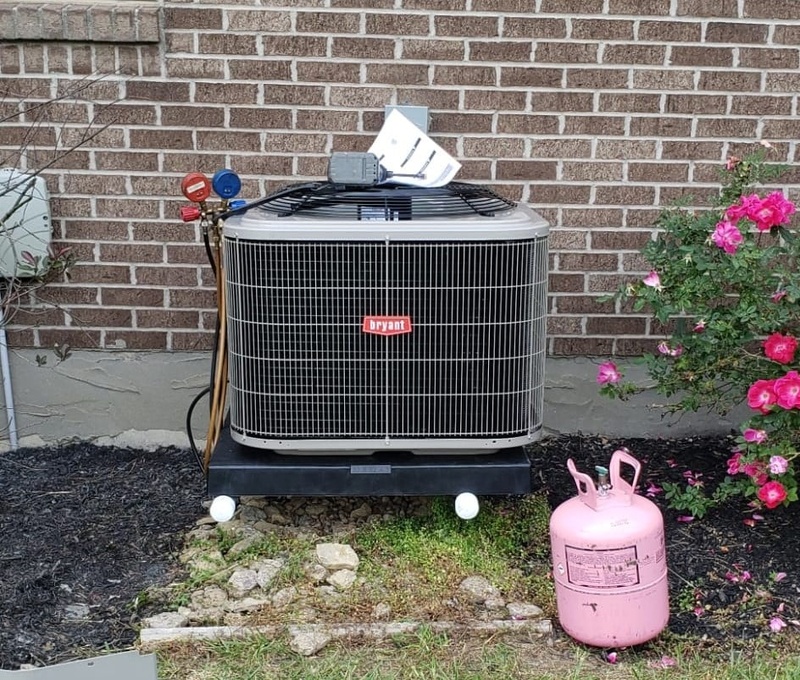
The larger or more cooling power your HVAC unit has (measured in tons, 1 ton = 12,000 BTU/hr cooling) the more refrigerant it requires and the more it costs to recharge.
The bigger systems contain more pounds of coolant:
| AC Size (Tons) | Refrigerant Required (lbs) | Cost of Recharge (estimated) (with R-410A) |
|---|---|---|
| 1.0 ton | 2 – 4 lbs | 100 – 320 dollars |
| 1.5 ton | 3 – 6 lbs | 150 – 400 dollars |
| 2.0 ton | 4 – 8 lbs | 200 – 640 dollars |
| 3.0 ton | 6 – 12 lbs | 300 – 960 dollars |
| 4.0 ton | 8 – 16 lbs | 400 – 1280 dollars |
| 5.0 ton | 10 – 20 lbs | 500 – 1600 dollars |
The typical single-family home central air conditioner is 2 to 5 tons (approximately 24,000 – 60,000 BTU). As the above table indicates, it may cost as little as 300 dollars (assuming only 6 lbs of R-410A is needed) to as much as 1000 dollars (assuming a large leak that requires 12+ lbs) to recharge a typical 3-ton home AC with R-410A.
That would place the price on the lower end of these scales.
Multi-stage or high efficiency AC systems occasionally have additional refrigerant (additional coils or larger line sets). As an example, a 5-ton 18+ SEER multi-stage system would have 15+ lbs of refrigerant in it. Recharging of such a system may cost more than 1,500 dollars.
The technician should always weigh the refrigerant or use good gauges, you only pay the amount that you actually use to get to the manufacturers specified charge.
Residential vs. Commercial HVAC Recharge Pricing
Although the recharging of refrigerant is also the same, commercial HVAC systems are more costly than residential systems because of their size and complexity.
Comparing them, this is how they are:
Residential AC Units: Home air conditioners (central ACs, heat pumps, mini-splits, etc.) normally consume 1–5 tons of cooling capacity per unit. Recharge prices of these, as we have discussed, are averaged at a few hundred dollars ($200–$600 in most cases).
As an example, the cost to refill a typical central AC or heat pump unit is approximately $150–600 and a ductless mini-split costs approximately 100–300 to recharge. These prices presuppose R-410A refrigerant; in case the home unit works with R-22, the prices will be more expensive (usually 400–800+ dollars).
Commercial HVAC Units: Commercial (office, store, etc.) systems tend to be much larger capacity—several 5-ton units or large rooftop package units of 10–20+ tons. They need much more refrigerant. One 10 ton commercial AC would have 20–30 lbs of R-410A.
Consequently, it is easy to spend $1,000 to $2,000 or more in refrigerant and labor alone to fully recharge. When several large units are serviced, the costs are multiplied. In one of the reported cases, a complete refrigerant refill service of a large commercial HVAC system cost approximately $4,000–$5,000 at the maximum.
Don’t Overpay for HVAC Services – Call 888-894-0154 Now to Compare Local Quotes!
Refrigerants such as R-410A or R-134a (chillers) may also be used in large quantities in commercial units, but R-22 is no longer used in large quantities in commercial applications because it has been phased out.
- Service Structure: Commercial HVAC service contracts can contain regular inspections and refrigerant service, which can help to spread the cost. But in case of an out-of-contract recharge, commercial technicians tend to charge more per hour and might need more than one tech on-site (safety and efficiency when dealing with large equipment), which adds to labor costs. Premium fees can also be charged on emergency service calls after-hours (to restore cooling to a business).
Cost by Type of AC Unit
The other method of pricing of refrigerant recharge is by the air conditioning system. The refrigerant capacity and the complexity of service varies in different AC configurations:
| AC Unit | Average Cost of Recharging |
|---|---|
| Central Air Conditioner | $150 – $600 |
| Heat Pump (Central) | $150 – $600 |
| Mini-Split (Ductless) AC | $100 – $300 |
| Window AC Unit | $75–$240 |
Central AC / Heat Pump: These systems cool (and in the case of heat pumps, also heat) a whole house through ductwork. They possess an indoor coil and an outdoor condenser, which are linked together with refrigerant lines.
The cost of a full recharge may be on the high end (up to 600 and above) when the system is low on the coolant especially in large houses. A majority of central systems are R-410A when manufactured after 2010 or R-22 in older systems.
Ductless Mini-Splits: These are mini-split systems that do not have ducts, and they are frequently applied to cool down single rooms or additions. Mini-split ACs tend to be R-410A (and newer ones may be R-32). They are lower refrigerant charges—most mini-splits may require only ~2 pounds to recharge.
The average price of recharging a mini-split is about 100–300 dollars.
With a multi-zone ductless system (multiple indoor units with a single outdoor unit), the refrigerant charge will be greater, and the expenses will follow (potentially in the central AC price range in case it has the same total tonnage).
Window Air Conditioners: Window or portable ACs have only 1–3 pounds of refrigerant and are typically factory sealed. It is not always feasible to recharge a window AC (costs between $75 and 240) as a service, since most HVAC companies will not do it due to the cost of the labor being close to the cost of a new unit.
When a window AC leaks Freon, in most instances it is more economical to replace the unit instead of paying to have it disassembled, fixed and recharged.
Commercial Packaged Units / Rooftops: As mentioned above these can be literally very large central systems. An example of a rooftop package unit which cools a whole commercial building could be 10 tons and contain 25+ lbs of R-410A.
It may cost more than 1,000 dollars to recharge one of them.
When there are several such units in a commercial building or a large chiller system, the costs are multiplied and special refrigerants may be used (e.g. large chillers may use R-134a that costs ~$50–$110 per lb installed, like R-410A). Professional HVAC service providers always deal with commercial units because they are complex.
Breakdown of Costs in an AC Recharge Service
In order to have a clearer idea of how your money is spent, here is a list of the common cost elements of an AC refrigerant recharge service:
| Cost Element | Normal Price Range |
|---|---|
| Diagnostic Fee / Service Call | $50 – $130 |
| Labor Charge (per hour) | $70 – $150 |
| Refrigerant (R-410A, per lb) | $50 – $80 |
| Refrigerant (R-22, per lb) | $90 – $150 |
| Leak Detection | $50 – $150 (UV dye, nitrogen test, etc.) |
| Leak Repair | $400 – $1,500 (hole filling, brazing) |
| Refrigerant Recovery/Disposal | $30 – $100 |
| Environmental Fees, Taxes | $20 – $50 (location dependent) |
On a simple small recharge on a system that does not require any major leak repair, you may only be paying the service fee, an hour labor and a few pounds of refrigerant. That would come to about 200–300 dollars.
Conversely, when a leak needs to be found and repaired, the technician may take a few hours and specialty tools, which would cost a few hundred dollars in labor and materials.
Don’t Overpay for HVAC Services – Call 888-894-0154 Now to Compare Local Quotes!
The refrigerant itself (particularly, when it is R-22) may not be even the smaller part of the bill in case of a leak repair.
Watch out for possible surcharges or differences in the way companies charge:
Other HVAC companies will put the initial pound or two of refrigerant in a flat service rate and charge by the pound after that.
A refrigerant recovery fee (to safely remove and dispose of any remaining Freon in your system) is usually included, but otherwise may be a line item of its own at $30–$100. This is mandated by the law to avoid venting of the refrigerant to the atmosphere.
- The price of refrigerant may be reduced in case your recharge is performed as a repair under the warranty or a maintenance contract.
- On the other hand, an emergency weekend call may be subjected to an overtime premium.
- Where possible, request an itemized quote. You are supposed to be charged on a per pound basis on refrigerant and any other services. This will assist in making sure that you are not overpaying on Freon than what is added. Technicians are supposed to gauge the amount they input (many of them will indicate the scale or readings).
DIY vs. Professional AC Freon Recharge

Is it possible to refill your Freon at home AC system to save money?
The answer is no in nearly every case and trying to do so may be illegal and even dangerous.
Refrigerant handling of stationary HVAC systems is highly regulated as opposed to recharging a car AC using a DIY kit. Most varieties of Freon can only be purchased by certified technicians and it is in fact illegal under federal law to vent or release refrigerants as an unlicensed individual.
You have to be EPA Section 608 certified since 2018 even to purchase the common refrigerants used in AC units.
How to Avoid Being Ripped Off and Get a Fair Repair Price
Finding the right AC Freon rechage expert can be tricky—some companies offer rock-bottom prices because they’re inexperienced or have poor reputations, while others charge far too much for the same work. That’s why the smartest way to get quality repairs at a fair price is to compare estimates from top-rated local pros. Meet with each, learn about their history and the experience of the technicians that will do the work. Choose an experienced AC Freon rechage repair contractor with reasonable rates. You can expedite this process by using our Free Local Estimates service.
When you fill out a quick form and submit it, you’ll soon be contacted by three of the top AC Freon rechage repair and installation companies near you. They are prescreened for experience, and all are licensed and insured for your protection. Click below to get started and protect your home and wallet today.

How to Get the Best HVAC Prices
- Firstly, keep in mind that installation quality is always the most important thing for residential HVAC project. So never sacrifice contractor quality for a lower price.
- Secondly, remember to look up the latest rebates as we talked above.
- Thirdly, ask for at least 3 bids before you make the decision. You can click here to get 3 free estimates from your local contractors, and this estimate already takes rebates and tax credit into consideration and filter unqualified contractors automatically.
Lastly, once you chose the right contractor, remember to use the tactics from this guide: Homeowners Tactics When Negotiating with HVAC Dealer to get the final best price.