Bryant heat pumps are known to provide quality heating and cooling to most home settings. They are a compromise between efficiency, energy efficiency and durability.
Comparing systems, most home owners would like to know the approximate prices and installation costs of capacities of 2 to 5 tons. This guide provides in-depth information on the typical heat pump models of Bryant, the cost considerations and the selection of the appropriate size to achieve effective year-round comfort.
Overview Of Bryant Heat Pumps
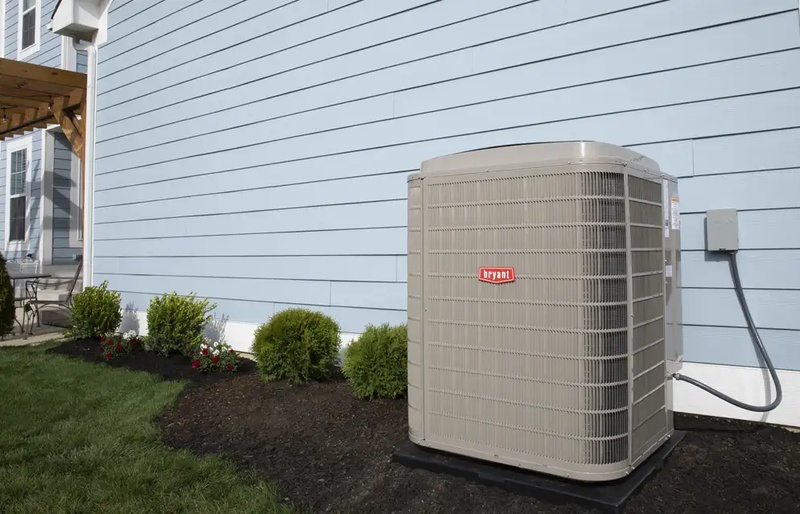
Bryant is a company that has been in the HVAC business more than one hundred years and has earned a name of quality and innovation. Their heat pumps are attractive to the households in various climates, as they offer reliable heating in cold seasons and effective cooling when the weather is hot.
A lot of Bryant systems include such technologies as two-stage compression or variable-speed fans to increase comfort and control utility expenses.
Bryant is a company that has durability as a product. The Air-Conditioning, Heating & Refrigeration Institute (AHRI) estimates that heat pumps manufactured by reliable companies can serve 10 to 15 years or even longer, especially when they are well maintained.
Bryant offers good warranty choices and customer service, which is why it is a favorite among homeowners who want to find a compromise between the price and quality.
Factors Affecting Bryant Heat Pump Costs
A number of factors determine the overall cost of a Bryant heat pump. Although capacity or tonnage is a major role, it is not the only factor. The overall price may be influenced by efficiency ratings, system features, labor costs, and home modifications.
More advanced features, such as improved humidity control or smart thermostat compatibility, can increase the initial price but potentially provide energy savings in the long term.
There is another dimension of regional labor variations. The regions that have a high cost of living tend to have higher HVAC installation costs. The ductwork may require upgrading or sealing in older homes to operate efficiently, which may increase the cost of installation.
A balance of these factors can assist homeowners to choose a Bryant heat pump that fits into the budget and performance requirements.
Don’t Overpay for HVAC Services – Call 888-894-0154 Now to Compare Local Quotes!
Comparing Tonnages And Their Applications
The tonnage of a heat pump shows its cooling capacity. The smaller homes or zones normally use lower-tonnage units whereas larger living areas use higher-tonnage models. Accurate sizing is important to maintain constant temperatures, efficiency, and long life of the system.
A small unit can overwork and fail, and a large system can turn off prematurely and consume energy.
Generally, a 2-ton unit would be perfect in a small 800 to 1,200-square-foot house. A 5-ton system, in its turn, can be used in a bigger property of about 2,500 square feet or even more.
The right capacity is determined by specific household factors such as insulation, quality of windows, and the climate of the area. An optimum match can be confirmed by consulting a certified HVAC technician.
Estimated Bryant Heat Pump Prices By Tonnage
The following table gives an estimate of price ranges of Bryant heat pump units and the average installed cost on a typical home application. These are just estimates and do not include possible rebates or incentive programs.
| Tonnage | Approximate Bryant Unit Price Range | Typical Installed Cost Range |
|---|---|---|
| 2 Ton | $1,700 – $2,700 | $3,800 – $6,200 |
| 2.5 Ton | $1,900 – $2,900 | $4,000 – $6,600 |
| 3 Ton | $2,100 – $3,300 | $4,300 – $7,000 |
| 3.5 Ton | $2,300 – $3,500 | $4,600 – $7,500 |
| 4 Ton | $2,500 – $3,700 | $4,900 – $8,000 |
| 5 Ton | $2,700 – $4,000 | $5,200 – $8,600 |
The installed cost represents both labor and equipment. The cost can be increased by complex installations, aged ducts or zoning systems. On the other hand, the total cost can be reduced with the help of eligible rebates or seasonal promotions.
2 Ton Bryant Heat Pumps
A 2-ton Bryant heat pump is usually sufficient in small houses or in specific parts of the house that is about 800 to 1,200 square feet. The output capacities of these systems are typically 24,000 BTU/hour, which is a balance between energy efficiency and low property requirement.
Smaller houses usually have less installation expenses since the ductwork is less complex and fewer materials are needed.
In most instances, 2-ton models have technology that helps to make them more comfortable, like sound-dampening insulation or variable-speed fan motors. There might be a minimal variation in the purchase price between the base-efficiency and the premium-efficiency versions by homeowners.
These added costs of high-efficiency equipment can be offset by checking local utility incentives.
2.5 Ton Bryant Heat Pumps
A 2.5-ton Bryant unit might be more suitable to slightly bigger households or households with greater cooling needs. The capacity is able to serve living spaces of about 1,200 to 1,500 square feet. It is a versatile option to small single-family homes or old houses with good insulation.
The energy efficiency ratings in this segment can be very different. The models with greater Seasonal Energy Efficiency Ratio (SEER) or Heating Seasonal Performance Factor (HSPF) rating may be more expensive to purchase but can produce reduced monthly expenses.
Considerations of ducts are also not to be ignored. A high-efficiency 2.5-ton heat pump will not work as well as it should when duct leakage or poor sizing compromises the airflow.
3 Ton Bryant Heat Pumps
A 3-ton heat pump is a common medium-sized option in many American households. It normally accommodates areas of about 1,500 to 1,800 square feet. This ability provides even heating and cooling in a wide range of climates, whether it is humid summers or winters that are colder.
The 3-ton products offered by Bryant could be high-tech compressor designs to allow accurate temperature control. The homeowners tend to install advanced thermostats that automatically adjust to save energy.
Installation is critical: the refrigerant charge, level positioning and sealed ductwork can add years to the life of the system and minimize possible repairs.
3.5 Ton Bryant Heat Pumps
A 3.5-ton Bryant heat pump may be the right size step up when a 3-ton system is a little undersized. These units are usually comparable to properties of about 1,800 to 2,100 square feet that offer sufficient space to accommodate additional rooms or open floor plans.
They are made to manage more cooling loads without oversizing.
Based on certain models, 3.5-ton Bryant units can be combined with such features as two-stage compression, which improves the removal of humidity. This may be particularly useful in areas that have prolonged hot summers.
The price is higher than on smaller capacities, but the increased comfort and efficiency may justify the investment, particularly in climates where strong cooling capacity is required.
Don’t Overpay for HVAC Services – Call 888-894-0154 Now to Compare Local Quotes!
4 Ton Bryant Heat Pumps
A 4-ton Bryant heat pump is often the right choice in a bigger family house or a house with a sprawling design. These systems are usually designed to serve about 2,100 to 2,400 square feet and are used to keep even temperatures in multi-room systems.
They are able to take more heat loads and are able to run efficiently when properly sized.
High efficiency model can be selected to avoid high utility bills, as the capacity is higher. Some 4-ton units have advanced fan motors that operate at different speeds to adapt to the present indoor conditions.
The change is useful in ensuring comfort without much cycling. Homeowners who are more concerned with quieter operation will frequently be able to locate Bryant models with insulated compressor compartments to reduce noise.
5 Ton Bryant Heat Pumps
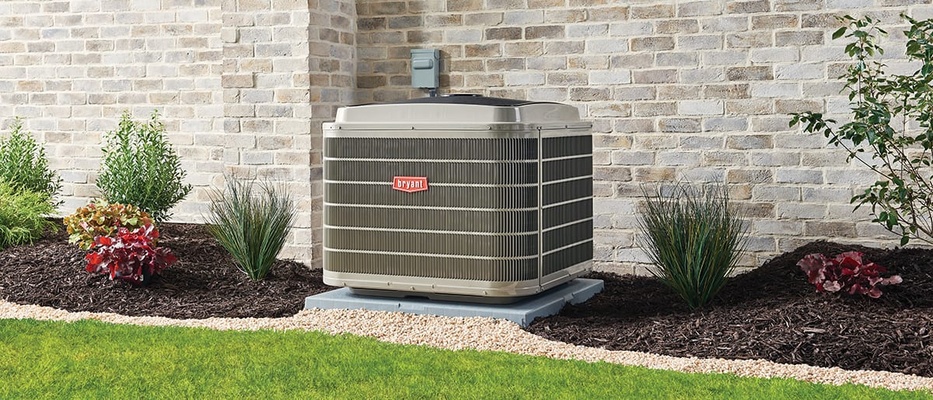
Homes that are as large as 2,500 square feet and above might need a 5-ton Bryant heat pump. This ability suits well to the properties that have large living spaces or large open floor plans.
The extra capacity can provide essential cooling in hot and humid areas to reduce severe indoor environments.
A 5-ton system can be more expensive to purchase due to the increased size. It is however important to size the heat pump to the real needs of the home.
Oversizing may lead to temperature imbalance, humidity problems and short cycling, which is inefficient. Homeowners can make sure that their 5-ton Bryant system is comfortable and efficient with a correct load calculation.
Installation Steps And Considerations
A good installation starts with a load calculation, a Manual J, which takes into consideration square footage, insulation levels, and local climate information. HVAC technicians consider duct conditions, electrical provisions, and other aspects of the house to be set up smoothly.
After determining the correct tonnage, they go ahead to eliminate old equipment and site preparation.
The outdoor unit should have sufficient space to allow airflow and the indoor air handler or furnace component should be linked to ducts that are well sealed. Once the equipment is mounted, the installers fill the system with refrigerant and leak check.
A professional commissioning process will make sure that all parts including the thermostat are synchronized to work in the best way possible.
Maintenance And Lifespan Of Bryant Heat Pumps
Regular service will significantly increase the life of a Bryant heat pump. Simple things, such as monthly air filter checks and replacements, ensure effective airflow. A trained technician should inspect it once a year and identify issues early, be it a leak of the refrigerant or a dying capacitor.
When the technicians visit the services, they usually check the amount of refrigerant, clean the coils, and ensure that the electrical connections are intact. The U.S. Department of Energy observes that well-maintained heat pumps have the capacity to last more than ten years.
Homeowners can prevent expensive repairs and extend the life of the overall system by following suggested maintenance schedules.
Don’t Overpay for HVAC Services – Call 888-894-0154 Now to Compare Local Quotes!
Energy Efficiency And Potential Rebates
Bryant manufactures heat pumps that vary in efficiency, which is marked by SEER and HSPF ratings. More efficient models can be eligible to utility or federal rebate programs.
As an example, ENERGY STAR-certified systems frequently qualify to receive financial incentives intended to encourage more environmentally friendly heating and cooling systems.
Even minor variations in SEER ratings can have a large long-term utility savings. The lower energy costs over the life of a heat pump can make up the extra cost paid initially to buy a more efficient model.
By verifying state or local government incentives, and utility company incentives, one may find hidden cost savings of upgrading to a higher efficiency Bryant system.
Choosing The Right Bryant Heat Pump Model
The product line of Bryant addresses various requirements of homeowners. The simple models provide a strong reliability and are affordable, whereas the units of the premium series have high-tech controls to make precise temperature changes.
Consideration of climate, size of home and long term energy objectives will reduce the search.
The residents of moderate climates might not need the best heating performance, and the families living in severe winters or hot summers might need advanced features. Also, the local utility rates and energy projections in the future may influence the decision of whether it is worth investing in an ultra-efficient model.Consulting with an experienced HVAC contractor may be useful in selecting the best combination of cost and comfort.
Key Takeaways
The Bryant heat pumps have a broad variety of capacities, 2 ton to 5 ton, which can be used in small apartments and large houses. Although precise prices vary based on model efficiency, labor fees, and possible duct adjustments, the overall cost of installation usually starts at approximately 3,800 dollars and may reach up to 8,000 dollars in case of bigger or more sophisticated systems.
Selection of the correct tonnage by calculating the load in detail assists in attaining reliable comfort. Installation and regular maintenance services offered by professionals help to increase the lifespan of the system, and every Bryant heat pump will work optimally.
The owners of the houses also get a chance to use the rebates and energy-saving options, which in the end makes the investment in a Bryant heat pump both feasible and affordable.

How to Get the Best HVAC Prices
- Firstly, keep in mind that installation quality is always the most important thing for residential HVAC project. So never sacrifice contractor quality for a lower price.
- Secondly, remember to look up the latest rebates as we talked above.
- Thirdly, ask for at least 3 bids before you make the decision. You can click here to get 3 free estimates from your local contractors, and this estimate already takes rebates and tax credit into consideration and filter unqualified contractors automatically.
Lastly, once you chose the right contractor, remember to use the tactics from this guide: Homeowners Tactics When Negotiating with HVAC Dealer to get the final best price.