Heat pumps are made to transfer heat to another location, and this guarantees effective home comfort. Nevertheless, a common problem that most homeowners encounter is the following: the heat pump is on, but no warm air is released.
The U.S. Energy Information Administration estimates that about 12 million American households use heat pumps as the main source of heating. Their significance is highlighted by the fact that they are widely adopted. It is important to know the possible reasons why a unit may fail to give hot air in order to restore warmth effectively.
The principle of a heat pump is that it moves heat, not produces it, which is why the heat pump is very energy-efficient. Once it ceases to blow warm air, the offender may be as simple as a maintenance neglect or as complicated as electrical problems. Most of the time, the problem can be solved by frequent inspection and routine servicing. Otherwise, professional help can be required.
Find out below typical causes and solutions to a heat pump that is not heating efficiently, as well as how to avoid a future breakdown.
How a Heat Pump Works
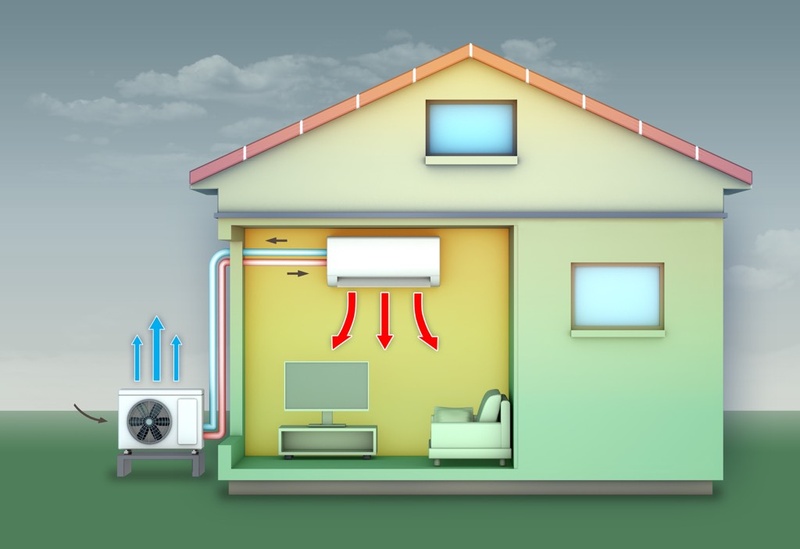
Heat pump is a refrigeration cycle that extracts heat outside and discharges it inside. It is made up of parts like a compressor, an evaporator coil, a condenser coil and a reversing valve. These components act together to transfer heat instead of burning fuel. This process is more difficult but feasible in colder temperatures. In case the heat pump does not blow hot air, it can be checked whether the cause lies in the core components. The subsequent paragraphs divide possible problems and solutions.
Common Causes of Heat Pump Not Heating
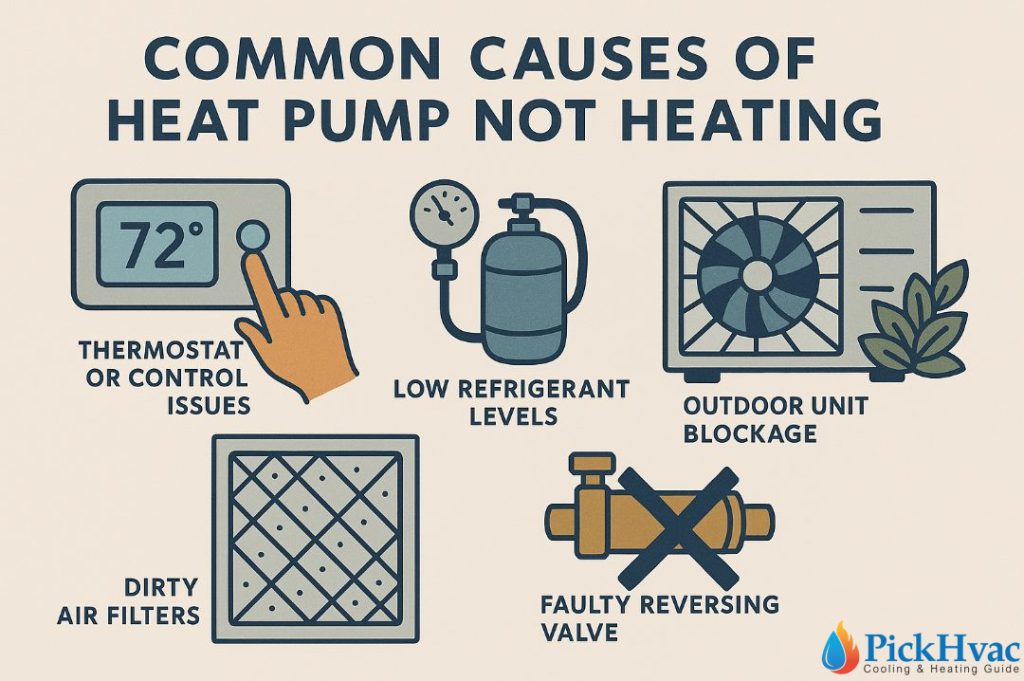
Thermostat or Control Issues
A heat pump system has a thermostat as the control hub that tells it to turn on and off. A bad or improperly set thermostat may make the heat pump run in the incorrect mode or fail to run altogether. In other cases, the settings may be on cool rather than on heat, resulting in cool or lukewarm air. When diagnosing heating issues, the first thing that is usually checked and adjusted is the thermostat settings.
It is also important to ensure that the wiring between the thermostat and the heat pump is not broken. The loose connections may lead to intermittent signals. Constant temperatures can also be maintained by installing a modern programmable or smart thermostat. In case of problems, contact a technician to check the thermostat is working and the thermostat is communicating with the unit properly.
Low Refrigerant Levels
Heat pumps depend on the refrigerant to absorb and transfer heat. As the refrigerant level decreases, heat transfer is inefficient resulting in cold or simply cool air. Low refrigerant is usually as a result of leakage in the coil or copper piping. Leaks of refrigerants not only decrease the heating efficiency but also become a threat to the environment when not attended to.
It is essential to detect it early. Check the outside unit and hissing sounds that can indicate a leak. Leaks should be diagnosed and fixed by a qualified HVAC professional and then the system should be recharged with the right refrigerant. Refrigerant topping will just be a temporary solution unless the cause is addressed.
Dirty Air Filters
Air filters avoid the circulation of dust and debris in the HVAC system. These filters may get clogged with time and this may limit the flow of air and the heat pump may end up working harder without producing enough heat. The homeowner is advised to check the filters monthly and replace or clean them according to the manufacturer recommendation. Clogged filters do not only decrease the amount of heat produced, but may also raise the energy expenses.
Don’t Overpay for HVAC Services – Call 888-894-0154 Now to Compare Local Quotes!
Clean air filters also ensure that the heat pump works at its maximum capacity. Actually, the Department of Energy recommends that cleaning of filters can enhance the efficiency of a unit by as much as 15 percent. This is a cheap and easy measure that can easily fix the lukewarm airflow problem.
Outdoor Unit Blockage
The outdoor unit needs constant supply of fresh air to remove heat efficiently. Leaves, grass or snow piles may block the airflow. With reduced airflow, heating capacity is reduced and the indoor blower may only blow cooler air. It is necessary to clean the exterior component regularly by removing the leaves, dirt, and other obstructions.
During winter, make sure that the unit is not covered with ice. When there is accumulation of ice, the defrost cycle of the heat pump should be activated. When it fails to, the system has a hard time in drawing heat. Clearing the outdoor unit may help a long way in maximizing performance, particularly in colder regions where snow and frost are prevalent.
Faulty Reversing Valve
The heat pump can be reversed by the use of a reversing valve. In case of a failure of this valve, the system can be stuck in the cooling mode, blowing cold air. In many cases, a faulty or stuck reversing valve needs special care of an HVAC technician. It may be fixed in case the problem is not serious, however, in case of serious damage, replacement is required.
The diagnosis of a faulty reversing valve is done by inspecting the voltage signals and refrigerant flow. The symptoms can be the blowing of cold air in winter or warm air in summer by the system. Since the reversing valve is one of the key parts of heat pump functioning, it is essential to diagnose and fix it in time to ensure that the heat output is restored.
Identifying Symptoms and Causes
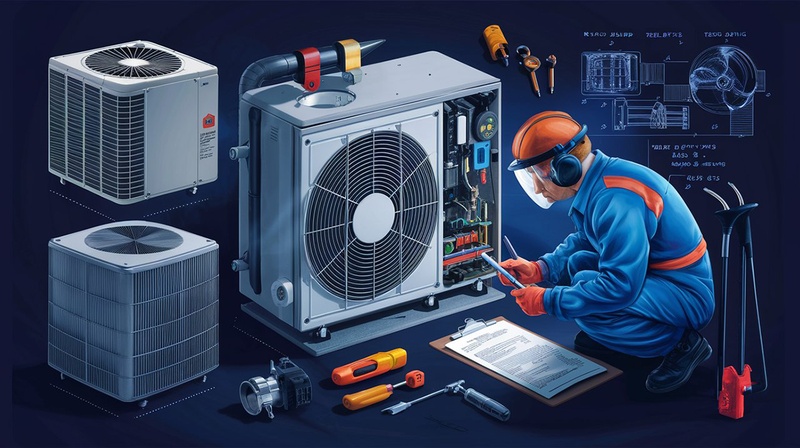
It is possible to identify the symptoms of a faulty heat pump that can help to reduce the possible causes. There are some signs which are quite obvious, such as low heating output or unresponsive system, but there are some which are less obvious.
A short table of common problems, associated symptoms and suggested solutions is provided below.
| Cause | Symptoms | Possible Fix |
|---|---|---|
| Thermostat Issues | System runs inconsistently or on wrong mode | Check wiring, recalibrate or replace thermostat |
| Low Refrigerant | Cool air, hissing noises, ice buildup | Locate leak, repair, and recharge refrigerant |
| Dirty Filters | Reduced airflow, higher energy bills | Replace or clean filters regularly |
| Blocked Outdoor Unit | Restricted airflow, system strain | Clear debris, maintain clearance |
| Reversing Valve Failure | System stuck in cooling mode | Repair or replace faulty valve |
Fixes for a Heat Pump Not Blowing Hot Air
Regular Maintenance and Cleaning
An effective heat pump care begins with regular maintenance. This involves routine inspection of the indoor air filter, outdoor coils as well as fan blades. Clean and clear parts will make the system have a constant air exchange. Cleaning the debris around the outdoor unit and examining the indoor unit to see whether there is leakage of water also prevents breakdowns.
Tasks such as these are simple and they will not put a lot of strain on the motor and compressor, extending the life of the system.
It is also important to make professional maintenance visits at least once a year. A technician is able to identify early warning signs like small leaks of refrigerants before they develop into big issues. Other extensive checks are cleaning of coils, tightening of electrical connections and ensuring that the thermostat is accurate.
Testing and Adjusting Thermostat Settings
The heat pump may fail to generate heat when required in case the thermostat is improperly set on the cool or auto mode. Checking the thermostat setting is a time and money saver. Sometimes it is possible to start the heating process by confirming the right mode and changing the temperature by a few degrees.
In case the system continues to fail to produce heat, it may be required to replace the thermostat or call an expert to examine its wiring.
Most modern programmable thermostats have the option of multi-staging so that the heat pump does not operate in high capacity unless required. In case of any conflicts in such environments, it can be confusing to the cycle of the heat pump. Such glitches can be solved by resetting the thermostat to factory settings, or updating its firmware in case it has one.
Replenishing and Repairing Refrigerant
The most common problem when the heat pump has low refrigerant is a leak. An expert technician is supposed to conduct a leak detection test to identify damaged lines or coils. Leaks should be sealed or fixed prior to the addition of refrigerant otherwise the new refrigerant will just leak out again.
After repairing leaks, recharging the system to the manufacturer specifications is the best way to have an optimal performance of the system.
Various heat pump models might need a particular type of refrigerants, including R-410A or R-22 (but R-22 is phased out). Make sure you use the right type always. The wrong refrigerants or inaccurate charge may destroy the compressor and it may be expensive to repair it.
Cleaning and Replacing Air Filters
Clogged filters may clog the system and reduce the amount of heat. To prevent this, filters ought to be inspected once a month during the peak heating or cooling seasons. The high-efficiency filters trap smaller particles, but they may clog more quickly than the standard filters.
In changing filters, observe the manufacturer instructions on compatibility and frequency of replacement.
Washable filters can be cleaned using water and a mild detergent but make sure they are completely dry before replacing them. Changing or cleaning filters on a regular basis can greatly improve the quality of indoor air and maintain the heat pump in a good state.
Clearing Outdoor Unit Obstructions
The outdoor part should have proper air circulation. Blockages are avoided by trimming vegetation and clearing debris within two feet of the unit. During winter, the outdoor unit may be covered with heavy snow and this prevents the absorption of heat. Snow and ice should be removed gently to ensure the airflow and the defrost cycle works properly.
Don’t Overpay for HVAC Services – Call 888-894-0154 Now to Compare Local Quotes!
The defrost control board or sensors may be defective, and in case the system ices over regularly, it is necessary to have it checked by a professional. By taking care of the ice build up early enough, home owners save on the wear and tear of the compressor and also ensure that the heating output is consistent.
Repairing or Replacing the Reversing Valve
The reversing valve is necessary to change between heating and cooling. In case of failure, the heat pump can be in the incorrect mode. An electrical and pressure test can be used to verify a bad valve by a service technician. Occasionally, a stuck reversing valve may be released with a light knock but when the component is badly worn a new one is usually the most sensible long-term answer.
The cost of labor and parts differs across regions, but it is usually less expensive to pay attention to it at once than to tolerate the system to operate inappropriately. Operating a heat pump with a faulty reversing valve may overwork other parts and cause more serious repair work in the future.
When Professional Help is Needed
Although certain repairs, such as replacing filters or cleaning out debris, can be easily handled by the majority of homeowners, there are issues that require special expertise. Certified professionals should deal with electrical failures, refrigerant leaks, or reversing valves. DIY repairs of these parts may nullify warranties and even be dangerous.
When the heat pump does not react to simple troubleshooting or there is a constant problem with its performance, it is better to book an HVAC inspection. A professional inspection will make sure that all mechanical or electrical problems are detected and fixed without risk.
How to Avoid Being Ripped Off and Get a Fair Repair Price
It is not so easy to find a good heat pump repair specialist, there are companies that will give you the lowest prices since they are new or have bad reputations and there are those that will give you a very high price on the same job. That is why the best way to find quality repairs at a reasonable price is to compare quotes of the best-rated local professionals.
Visit each of them, get to know about their background and the experience of the technicians who will perform the work. Select a heat pump repair contractor who has a good experience and who has competitive rates. You may speed up this process with the help of our Free Local Estimates service.
Once you complete a short form and send it, you will receive a call in the nearest future by three of the best heat pump repair and installation companies in your area. They are pre-screened in terms of experience and all of them are licensed and insured to protect you. Start now and secure your home and wallet by clicking below.
Preventive Measures for Long-Term Efficiency
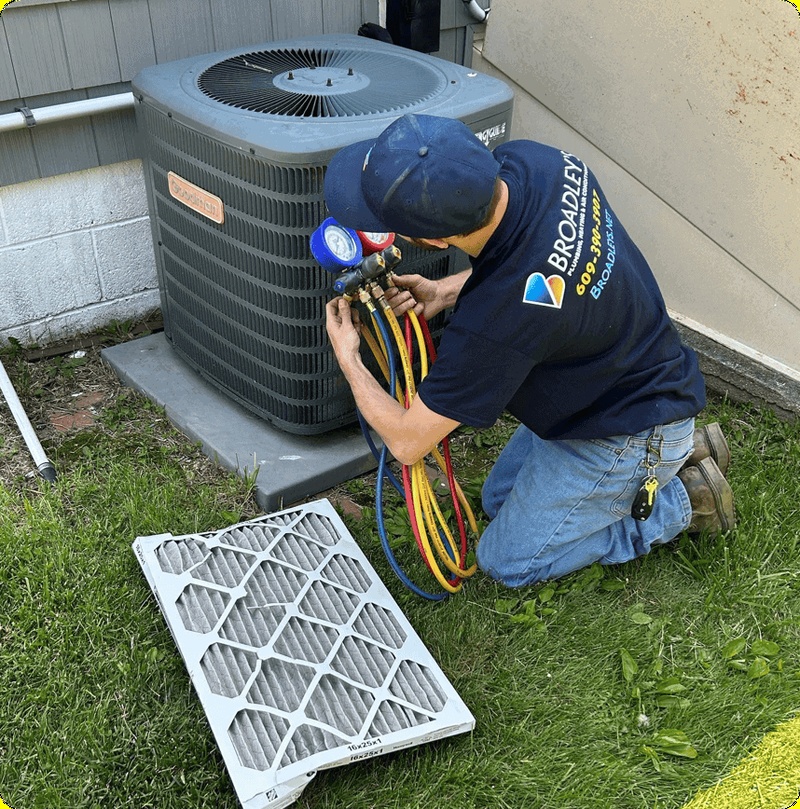
Preventive maintenance helps your heat pump to work reliably. Many manufacturers recommend annual professional tune-ups, and in others, they are mandatory to keep the warranty in place. The most important preventive measures are cleaning coils, checking the level of refrigerant, and inspecting electrical connections that are loose or corroded. The proactive actions increase the life of the system and reduce unforeseen downtime.
In addition, make sure that the drainage system of the unit is not clogged so that the water does not accumulate around the indoor air handler. Stagnant water may result in the growth of molds and destruction of internal parts. A heat pump that is well taken care of can last up to 15 years or more with proper care.
Additional Considerations
In case of a drop in outdoor temperature, the heat pumps might depend on backup or additional heating to keep the indoor environment comfortable. This backup heat may be electric resistance strips in some older units which are expensive to operate. Replacing the old heat pump with a new, cold-climate heat pump will also save a lot of energy and guarantee a steady amount of heat even at low temperatures.
Regions with very cold winters could also be an option in the future technologies, which include dual-fuel systems that combine a heat pump with a gas furnace. When the efficiency of the heat pump reduces, these setups change to the furnace. The advice of an HVAC expert can be used to identify the most suitable upgrades of equipment to suit particular climates and house designs.
Conclusion
The inability of a heat pump to blow hot air may be disturbing, particularly in winter. However, the causes are as easy as cleaning a dirty filter to as complicated as the reversing valve. Early diagnosis of symptoms and routine maintenance make the solution faster. In case of uncertainty, professional HVAC services will provide the knowledge to identify and fix serious failures.
Being aware of the possible problems does not only minimize the downtime but also protects the efficiency of a heat pump. When well maintained, with regular tune-ups, and when strange performance symptoms are addressed in a timely manner, homeowners can count on cost-effective and environmentally friendly heating provided by a heat pump well into the future. In case of the individuals who are thinking of larger upgrades or energy efficiency, it might also be interesting to look into the emerging technologies and dual-fuel systems as an expansion.
Don’t Overpay for HVAC Services – Call 888-894-0154 Now to Compare Local Quotes!

How to Get the Best HVAC Prices
- Firstly, keep in mind that installation quality is always the most important thing for residential HVAC project. So never sacrifice contractor quality for a lower price.
- Secondly, remember to look up the latest rebates as we talked above.
- Thirdly, ask for at least 3 bids before you make the decision. You can click here to get 3 free estimates from your local contractors, and this estimate already takes rebates and tax credit into consideration and filter unqualified contractors automatically.
Lastly, once you chose the right contractor, remember to use the tactics from this guide: Homeowners Tactics When Negotiating with HVAC Dealer to get the final best price.