When the fan of a central air conditioner stops rotating or it indicates that it is rotating weakly, the cooling process comes to a halt. The temperature inside the buildings goes up, the energy bills tend to go up and the major parts of the systems can be overworked. Being aware of the main causes and ways of troubleshooting gives homeowners the knowledge that is necessary to fix the problem as quickly as possible and avoid even more costly breakdowns.
When the cause is identified precisely, it becomes easier to apply solutions that will guarantee that the fan is back to its normal working condition.
The Role of the Fan in Central Air Conditioning
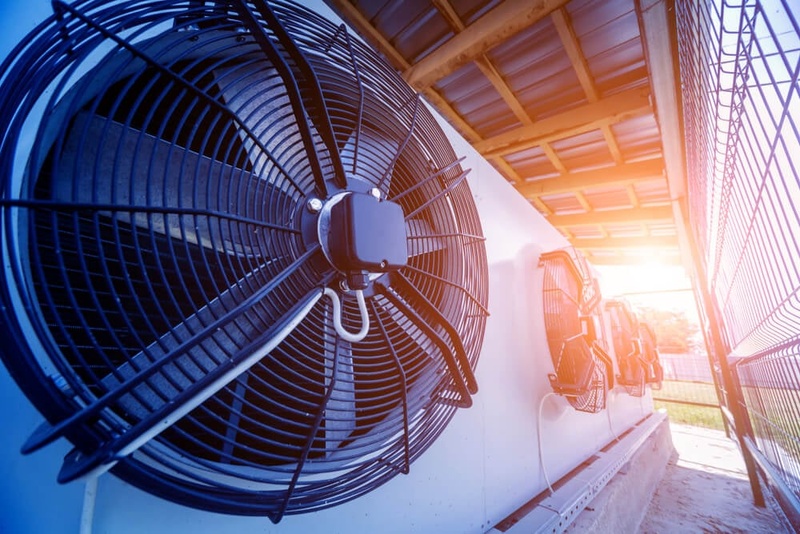
The fan of the central air conditioner is needed to remove heat out of the system. The outdoor fan assists in getting rid of the heat that has been gathered inside the house and the indoor blower brings the cooled air back through the ducts. The failure of either of these fans prevents the unit to be able to sustain comfortable temperatures. There is a possibility of increased condenser pressures which can damage the compressor.
When the indoor blower is faulty, the airflow is minimal and this enables the evaporator coil to freeze. The prompt restoration of normal fan operation is important in maintaining efficiency and equipment life.
Early Indications of Fan Failure

A minor change in performance is in most cases the first indicator of trouble. Others will observe that the air conditioner is not able to stabilize at a desired temperature or they will hear some strange buzzing or humming near the outdoor unit. When the fan is slow to move, stops and restarts, or has a strange smell, it is possibly about to break.
The early symptoms can be identified and preventive measures can be taken in time, which in most cases includes checking the blockage or booking a professional check-up. Timely action will avoid the wider damage that may be caused in the system.
6 Causes and Troubleshooting of AC Fan Failure
Once an AC fan ceases to rotate or cannot provide a steady flow of air, the cooling system will not be able to control the temperatures inside the building anymore. There can be a number of reasons, including electrical issues, physical barriers, and so on. Six of the most typical reasons are discussed in the sections below, and each of them is accompanied by troubleshooting actions that can assist homeowners in solving each particular problem.
Knowing the causes of AC fan failure and how to fix them will help restore normalcy at a quicker rate and eliminate the chances of causing additional damages to other parts of the system.
1. Power Disruptions and Wiring Issues
The fan that is not moving and making noise can sometimes be a sign of power disruption. Breakers can trip when there is sudden overload and fuses in the disconnect box can blow. Wires that are damaged or frayed also interfere with the flow of current and the motor is left without the voltage required. The first step that a homeowner can take is to ensure that the breaker is on and it has not tripped again after being reset. When the breaker keeps tripping, then there is a possibility of a short circuit or a motor that is pulling too many amps.
Furthermore, a multimeter will be able to verify that the proper voltage is getting to the contactor or motor leads. In case no voltage is measured, it may be a loose or corroded connection within the unit. Wiring that is damaged should be repaired or replaced when the system is turned off to prevent electrical shock. In case the problem is not as superficial as a single loose wire, professional help will guarantee that all connections are checked properly, and there will be no safety risks or frequent outages.
Don’t Overpay for HVAC Services – Call 888-894-0154 Now to Compare Local Quotes!
2. Capacitor Failure
Capacitors provide the additional torque that a fan motor requires to begin rotating and continue. Capacitors wear out over time, or during power surges and heat, and lose the capacity to store the required electrical charge. An obvious indication is a buzzing motor that does not spin the blades, or a blade that spins a little and then quits. In other cases, the capacitor shell can swell or leak oil-like fluid.
Troubleshooting is done by visually examining the capacitor to see whether it has bulges and then checking its values with capacitance meter against the specifications of the manufacturer. In case the values measured are beyond acceptable limits, then replacement is required. It is important to install a new capacitor that has the same voltage and microfarad ratings to work properly. Trying to use a generic or wrongly rated capacitor may reduce the life of the motor and cause the fan to be erratic. When dealing with capacitors, it is important to discharge them properly so as to prevent electric shock.
3. Motor Overheating and Burnout
Fan motors, both outdoor and indoor, may overheat when they are operated under continuous load or when the ambient temperatures are high and there is no adequate airflow. Insulation on motor windings is destroyed by heat, and will burn out permanently. When a burning odor is present, particularly around the motor housing, there may be overheating. The fan might in other instances run and turn off after a short period.
In troubleshooting, the use of multimeter to check motor windings can be used to identify open or shorted windings. When the readings indicate that the windings are damaged, replacement of the motor is the best solution in most cases. But the technicians usually also seek underlying stresses, like plugged vents, dirty condenser coils or worn bearings. Recurring overheating can be avoided by cleaning up the debris and making sure that the air flows well around the motor. In case of severe overheating of the motor, replacement and better ventilation is usually a more dependable long term solution.
4. Contactor, Relay, and Control Board Complications
Fan activation is based on low-voltage thermostat signals that are passed through relays or a control board and then current is provided to the motor. A defective contactor may become stuck such that it does not allow power to flow or it does not break power. A worn relay coil may be accompanied by clicking or chattering. In case the fan is never supplied with the right voltage, it will not work even when the compressor is turned on.
The troubleshooting is normally done by checking the voltage on the contactor and making sure that the coil is energized when the system needs cooling. When contact points are heavily pitted or when the coil cannot pass continuity tests, the contactor or relay should be replaced. The fan turning off and on could be due to a control board not reading the commands correctly and in this case the board may require inspection or replacement. As these parts have to be in line with the specifications of the system, it is advisable to leave the diagnosis and selection of parts to an HVAC expert.
5. Thermostat Calibration and Wiring Errors
Even though it controls the whole cycle of HVAC, a thermostat can be ignored when the outdoor fan fails to rotate. But improper wiring, improper calibration or a faulty internal sensor may cause the fan never to get a start signal. When the thermostat is set to cool and the fan is not running, a technician usually checks that all the wires are in the right terminal and that the thermostat software is set to the air conditioning system.
A multimeter can also be used to test that 24 volts is getting to the contactor coil. In case of no voltage, there is probably a thermostat or wiring issue. Realignment or replacement of a defective device usually corrects the normal functioning of the fan. Firmware bugs In certain newer smart thermostats, bugs in the firmware may cause the fan not to turn on reliably, necessitating a firmware update or a reset. These easier repairs can save time and avoid unnecessary part replacement by first verifying them.
6. Physical Obstructions
Fan blades cannot rotate freely when they hit debris or when they encounter physical obstacles. The fan assembly can be blocked by twigs, leaves or even small animals preventing it to turn. There may be a scraping or grinding noise or the fan may appear to be struggling and then stop completely. It is always necessary to check the visible objects around the blades with power disconnected at the breaker.
In case the blades are bent, they might result in imbalance, which causes early failure of the bearings or the motor. Smooth rotation can be achieved by realigning or replacing the damaged blades. Blocking extra debris can be ensured by ensuring that the fan guard is intact and has no gaps. Being proactive, i.e. cutting vegetation and cleaning the outdoor unit on a regular basis, minimizes future obstructions. It is prudent to listen to any remaining noise and confirm that the fan is operating at normal speed even after cleaning up the debris as there might be some damage to the motor shaft or bearings that is not visible.
Comparing Single-Stage vs. Two-Stage Fan Issues
Single-stage units drive their fan at a single constant speed, and diagnosis is a little easier. When the fan stops completely, the problem is usually linked to a capacitor or contactor problem since there is only one electrical path. Variable-speed systems or two-stage systems vary the fan speed according to the instant cooling requirements. These systems are based on extra sensors and control modules, which means more points of failure.
A fan may run at high speed and never change to low speed indicating a fault in the partial control module. The technicians normally check the wiring diagram to ensure that each speed relay is getting the right signals. Knowing the system to be either single-stage or multi-stage makes troubleshooting easy and the replacement parts should be able to perform as per the manufacturer.
Key Differences Between Indoor and Outdoor Fan Failures
Even though the two fans are vital to the cooling process, their failure has different results. When an outdoor fan fails, the condenser cannot get rid of heat and the refrigerant lines build up high pressure. This case may cause regular shutdowns or overloading of the compressor. In comparison, when the indoor blower fan fails, the air circulation in the house reduces. This may cause the evaporator coil to freeze because of inadequate airflow resulting in eventual water damage and ineffective control of humidity.
Identifying the fan that is experiencing difficulty helps to reduce the probable causes. Outdoor fans are exposed to debris, weather, and direct contact with the elements, and indoor blowers are more concerned with duct limitations and filter problems. Individual checking of the performance of each fan assists in identifying the right repair strategy.
Maintenance Tips to Prevent Fan Problems
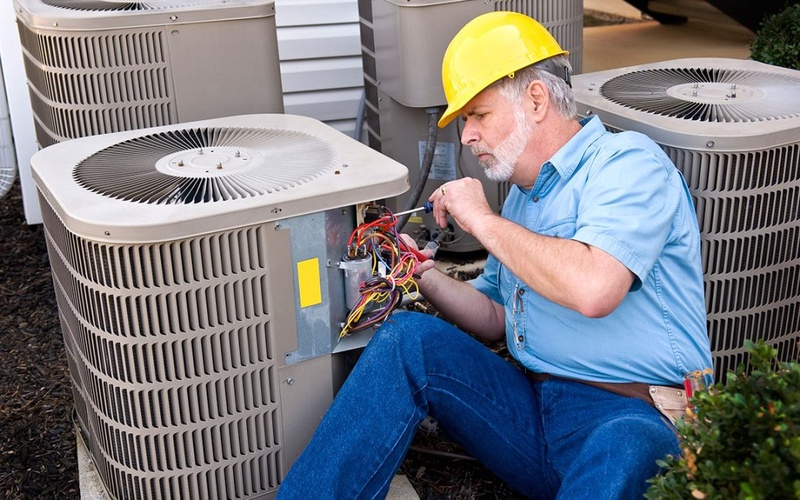
The most important way of reducing fan malfunctions is through preventive care. Other simple measures such as cleaning or changing air filters once every one to three months will ease the load on the indoor blower. Having the condenser coils free of dirt, leaves or grass clippings ensures that the outdoor fan has the best airflow. Maintaining an open space of at least two feet around the outdoor unit prevents the accumulation of heat which may overload the motor. Checking of fan motors, capacitors and contactors is usually done during annual professional inspection.
In these visits, technicians are able to lubricate or change bearings in the older models and check the amperage draw of the motors. When the system is well maintained, there is less chance of fan failure and the possibility of disruptive and costly repairs during peak cooling season.
Comparing Repair Costs and Projected Lifespans
Repairs involving fans include simple repairs such as replacement of a capacitor to more complex repairs such as replacement of a motor or installation of a control board. The issue of capacitors is usually less than 150-200 dollars to fix, and a new motor can be more than 400 dollars with labor. With older systems that are reaching the end of their usual 10-15 year life cycle, it may not be cost effective to replace large components like motors or control boards. The constant fan problems may be an indication that other parts are also about to fail.
In case the repair bill keeps on increasing, it might be more economical in the long run to shift to a newer high-efficiency system. The comparison of the cost of the immediate repair with the possible energy savings and the reduction of the future breakdowns will assist homeowners in choosing the most appropriate course of action.
Complexities of Variable-Speed Technologies
Most of the current high efficiency units have variable-speed blower motors and sophisticated outdoor fan motors to achieve higher comfort and energy savings. These motors change speed gradually according to the temperature requirements or the level of humidity. Although it is advantageous, the additional complexity brings in additional sensors and control logic. A bad drive module may prevent the fan to rotate at any of its preset speeds.
Technicians are frequently required to refer to manufacturer diagnostic codes or special software in order to identify trouble spots. These motors may be more costly to repair or replace, since they have specialized electronics. They can however have less total wear due to the fact that they start and stop more gradually. Properly maintained, variable-speed fans can extend the life of the air conditioner and provide more even climate control.
Don’t Overpay for HVAC Services – Call 888-894-0154 Now to Compare Local Quotes!
Safety Considerations During DIY Troubleshooting
There is a risk associated with working on the motors of air conditioners and electrical components. Before any inspection, the system must be always turned off at the thermostat and the circuit breaker. Even when the unit is off capacitors can store charge. Electric shock may occur by accidentally touching the terminals of the capacitor.
The possibility of injury can be reduced by using insulated tools and protective gloves. In case of a simple reset fails to resolve the problem or the wires look charred or melted, then it is prudent to seek the services of a certified HVAC technician. They are trained and equipped to do safe diagnostics and repairs and warranties are not voided and the completed work is up to local electrical codes.
Why Short Cycling Happens
Short cycling is a situation whereby the air conditioner keeps switching on and off without a full cooling cycle. An outdoor fan that is not spinning may result in overheating of the condenser and this may cause the compressor to stop within a short time. After the system cools, it can restart only to switch off a few seconds later when the fan is stagnant. This fast cycling exerts a lot of stress on parts, increasing power use and the possibility of system failure.
Short cycling is usually corrected by solving the reason behind the stalled fan, thus enabling normal pressure control. Failure to pay attention to such repeated starts may increase the wear of the compressor and other components and greatly decrease the overall life of the unit. Quick repair or replacement of fans therefore averts broader destruction.
When Replacement Might Be Preferable
Even though most of the fan problems can be fixed by replacing parts, a system that is old and often experiences mechanical or electrical breakdowns may be long overdue to be completely upgraded. In case the air conditioner is older than 12-15 years, uses outdated refrigerants such as R-22, or has several worn components, repairing it may cost as much as or even more than buying a new one. The high-efficiency models are usually accompanied with better reliability, reduced operating expenses and warranties that give peace of mind.
Getting quotes on repairs as well as new installations will enable the homeowner to compare their choices. A system that uses too much power and requires regular service calls can have a decreasing returns on each repair and a new air conditioner can be the more cost effective long term solution.
How to Avoid Being Ripped Off and Get a Fair Repair Price
It is not easy to find a good AC repair specialist, as some of them will give you the lowest prices due to their lack of experience or bad reputation and others will overcharge you to do the same job. That is why the best and the most intelligent decision to receive quality repair at reasonable cost is to compare the estimates of the best-rated local professionals. Visit each of them, learn their history and experience of the technicians who will work on your car. Select a professional AC repair contractor who has affordable prices. You may accelerate this procedure with the help of our Free Local Estimates service.
By completing a short form and sending it, you will soon receive a call of three of the best AC repair and installation companies in your area. They are pre-screened in terms of experience and all of them are licensed and insured to protect you. Start now and secure your home and wallet by clicking below.
Professional Diagnosis and Long-Term Assurance
A certified HVAC technician will be able to systematically check every part of the power and control circuits of the air conditioner. They can verify that the fan motor, capacitor, relays and control boards are operating within normal parameters using voltmeters, ammeters and occasionally manufacturer specific diagnostic equipment. When the motor is partly damaged or the thermostat is giving wrong signals all the time, such problems are evident in diagnosis readings. Detailed inspections also uncover secondary issues such as coils that are dirty or ducts that leak and compromise performance.
As soon as the root cause is determined, technicians will be able to suggest specific repairs or debate whether an upgrade is necessary. Trusting the professional experience does not only save time but also helps to avoid the repetition of problems and guarantee the safety standards.
Troubleshooting vs. Preventive Care
Whereas troubleshooting is a response to a current issue, preventive care is meant to prevent fan failures before they begin. Annual tune-ups help detect minor problems like poor capacitors or worn-out motor bearings. Periodic cleaning of the coil around the condenser unit and changing of the air filters that are clogged in the house also relieves the burden on the indoor and outdoor fans. Such preventive measures will make the system maintain the same or close to the initial efficiency. In the event that fan failures do take place unexpectedly, a technician can use previous service records to identify trends or verify that other components require examination.
A combination of short-term troubleshooting and long-term maintenance will prolong the life of the whole HVAC system and minimize the instances of comfort disturbance.
Choosing the Right Solution
The solution to a stalled or non-spinning fan is to know the root cause of the problem, be it due to a failed capacitor, overheated motor or a wiring problem. Easy tests of circuit breakers and visible obstructions can result in a quick repair. Problems that are more complex involving contactors, thermostats or variable-speed controls may require professional testing. In making the choice of repair or replacement, the homeowners are advantaged by considering the cost, the age of the system, and the possible efficiency.
The central air conditioner can achieve predetermined temperatures, manage humidity and consume power efficiently with a well-functioning fan. Combining informed troubleshooting with regular maintenance, homeowners can make sure that downtimes of the fans are reduced, comfort is maintained, and the failure of major components is avoided.

How to Get the Best HVAC Prices
- Firstly, keep in mind that installation quality is always the most important thing for residential HVAC project. So never sacrifice contractor quality for a lower price.
- Secondly, remember to look up the latest rebates as we talked above.
- Thirdly, ask for at least 3 bids before you make the decision. You can click here to get 3 free estimates from your local contractors, and this estimate already takes rebates and tax credit into consideration and filter unqualified contractors automatically.
Lastly, once you chose the right contractor, remember to use the tactics from this guide: Homeowners Tactics When Negotiating with HVAC Dealer to get the final best price.