In the case of American homeowners who are comparing Bryant and Trane air conditioning systems, both brands enjoy a good reputation in the HVAC industry.This post will look into their energy efficiency, price, durability, technology, noise, warranty, customer support, and user reviews. Before getting into details, the table below gives a brief overview:
| Aspect | Bryant Air Conditioners | Trane Air Conditioners |
|---|---|---|
| Energy Efficiency | Up to 21 SEER2 | Up to 21.5 SEER2 |
| Pricing (Installed) | $2,300–$7,000 (Legacy to Evolution series) for unit + install. Offers high efficiency at lower cost. | $4,600–$12,000 (XR base to XV premium) installed. Known as a premium brand with higher upfront cost. |
| Durability | Average lifespan ~15–20 years with proper maintenance. Galvanized steel cabinet with baked-on paint. | Also ~15–20 years. Features all-aluminum Spine Fin™ coils and WeatherGuard™ top. Rigorously tested. |
| Noise Level | As low as 55 dB on top Evolution models (ultra-quiet). Mid-range ~67–71 dB at low fan speed. | As low as 55 dB on premium XV20i (very quiet at partial load). Most units 55–75 dB range. |
| Warranty | 10-year parts limited warranty . Evolution Extreme models include 10-year unit replacement if the compressor fails. | 10-year parts and coil, 12-year compressor limited warranty |
| User Feedback | Praised for value – high efficiency comparable to Carrier at a lower price. | Lauded for solid build and performance. |
Which Air Conditioner Is More Energy Efficient?

Both Bryant and Trane have very efficient air conditioners, particularly in their higher end models, but there are minor differences at the highest end. The Evolution Extreme series of products is the flagship of Bryant with up to 21 SEER2 cooling efficiency. As a matter of fact, Bryant has been awarded ENERGY STAR Most Efficient designation due to its high ratings.
The most efficient AC unit in the market is the XV20i TruComfort 21.5 SEER2 variable-speed, the best model of Trane.
The efficiencies in the mid-range are also similar. Bryant mid-level Preferred series provides approximately 16–18 SEER2 and the low-cost Legacy line provides up to 16.5 SEER2, which is above the minimum efficiency requirements.
The mid-range systems (XR16, XR17) of Trane usually have 15-17 SEER2, which is enough to meet modern needs but is not as high as the best models.
Both brands employ the variable-speed compressor technology on their high-end products to achieve seasonal efficiency. The compressor in Bryant is inverter-driven and can be modulated between 25 and 100 percent capacity in 1 percent increments and the Trane TruComfort system can be modulated in very small steps (down to 0.1 percent changes).
Such systems minimize on/off cycling and are able to hold more constant temperature and humidity.
In general, both Bryant and Trane have models that reduce cooling expenses drastically as compared to the older ones. The very top of the line Trane may have a marginal performance advantage on paper, but the latest Evolution Extreme models of Bryant are also very efficient.
Practically, high-efficiency models of both brands are the best options to consider in case one is interested in low energy bills and low environmental footprint.
How Do Bryant and Trane Air Conditioners Compare in Price?
Bryant vs Trane may have different pricing, where Trane is usually a more expensive brand to purchase. Real prices however depend on the model, size and installation specifications.
In the case of Bryant, the average installed cost is approximately between $2,300 and $7,000 on a central AC depending on series and capacity. The entry-level Legacy series (single-stage) is at the bottom, followed by the Preferred and Evolution models which are more expensive.
Don’t Overpay for HVAC Services – Call 888-894-0154 Now to Compare Local Quotes!
The unit-only costs (equipment and not labor) may be between $1,200 and $3,700, which makes Bryant a relatively cheap unit to get the performance.
The average installed cost is greater in the case of Trane, which is usually between $4,600 and $12,000 for a complete system. Prices of unit only are usually between $2,200 and $3,900, but installation costs a lot.The mid-range Trane (15-17 SEER2) may cost $6K-10K installed and the top-of-the-line variable-speed systems may cost close to $10K or more.
Trane is a luxury brand of HVAC systems, and the justification of the increased cost is the extensive testing and exclusive designs. Bryant is a member of the Carrier family, and it uses the same core technology at a slightly reduced price.Bryant is the better value to many homeowners because it offers similar efficiency and features. Nevertheless, the actual difference depends on location, dealer, and promotions. The difference in price may be large; sometimes, Trane may cost just a little bit more.
In general, Bryant is much more affordable in case budget is a significant factor. The high-end reputation of Trane and the possible high-end features may be worth the initial investment in case you are willing to pay the price.
Which Brand Offers Greater Durability?
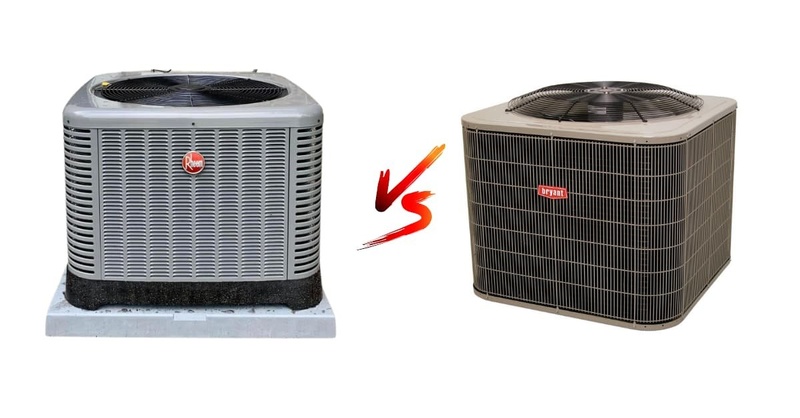
Bryant and Trane both have a reputation for constructing long lasting air conditioners that have a lifespan of 15-20 years when well maintained. Both brands use durable materials and designs to be wear and environmentally resistant.
Bryant employs heavy-gauge, galvanized steel cabinets that are powder-painted baked on, and louvered coil protection to prevent hail and debris. The characteristics assist the units to withstand different climates.
Bryant ACs are normally copper tube/aluminum fin coil or newer all-aluminum coil. They may last 15–20 years with regular professional care.
Trane focuses on its sturdiness as the It is Hard to Stop a Trane. It has all-aluminum Spine Fin™ coils, that are corrosion resistant and can withstand harsh conditions. The top is a WeatherGuard™ top that protects the fan opening against direct debris and the base pan is rust-proof.Trane also carries out a lot of torture testing in the labs to prove longevity.
Both brands have a reputation of reliability in the field. Other professionals place Trane a little above because of its stringent testing but Bryant has been equally competent in the field.
Finally, the lifespan will be affected most by such factors as proper sizing, installation, and regular maintenance. Both Bryant and Trane are unlikely to develop serious durability problems, so they are both good options when it comes to long-term performance.
What Innovative Technologies Do Bryant and Trane Use?
Both Bryant and Trane use high-tech technologies to achieve the best comfort, efficiency, and convenience:
- Variable-Speed Compressors: The best Evolution models offered by Bryant have an inverter-driven compressor that adjusts capacity between 25 percent and 100 percent in 1 percent increments. The same happens with Trane TruComfort™, which adjusts output continuously. This will maintain the temperature and humidity inside the building constant, reducing energy consumption during mild weather.
- Smart Thermostats & Communication: Bryant has the Evolution Connex control, a touchscreen thermostat that is Wi-Fi and Bluetooth enabled. It talks to the AC, furnace, and other HVAC components to maximize performance. The ComfortLink II thermostat offered by Trane offers the same intelligence and remote access via its own app. The two systems allow homeowners to control and monitor comfort levels remotely.
- Refrigerants: Bryant has introduced Puron Advance (R-454B) in some of the high end models. This refrigerant is less harmful to global warming than R-410A. Trane is also moving to next generation refrigerants, but a good number of the existing models are still utilizing R-410A. The two brands keep up with the changing environmental standards.
- Exclusive Coil Designs: Trane Spine Fin coil is an exclusive design that seeks to enhance heat transfer and corrosion resistance. Similar efficiency improvements are frequently achieved with enhanced aluminum or copper/aluminum microchannel coils used by Bryant (and Carrier).
- Diagnostic Features: InteliSense technology developed by Bryant can warn homeowners or technicians about possible problems. Trane is diagnostics enabled and can talk to ComfortLink thermostats and dealer specific software.
In general, the two brands are leaders in HVAC technology. Bryant or Trane, the best models are variable-speed cooling, high-end climate control, and compatibility with smart home systems.
What Do Users Say About Bryant vs Trane Air Conditioners?
Both Bryant and Trane have mostly positive feedback by the users and experts:
- The owners of Trane often boast about the reliability and performance of their units. Most of them point out to consistent indoor temperatures, superior humidity management, and silent performance. It is mentioned that Trane components may be more expensive, yet the first decade failures are not so frequent.
- The users of Bryant also refer to the acquisition of the best Carrier-level technology at a reduced cost. High efficiency, silent cooling and dependable comfort are valued by many. One gets a feeling of good value. Like any brand, there are a few complaints that appear, but they are usually associated with poor installation or a single equipment problem.
How to Get the Best AC Prices?
- Firstly, keep in mind that installation quality is always the most important thing for hvac project. So never sacrifice contractor quality for lower price.
- Secondly, remember to look up the latest tax credit and rebates.
- Thirdly, ask for at least 3 bids before you make the decision. You can click here to get 3 free estimates from your local contractors, and this estimate already takes rebates and tax credit into consideration and filter unqualified contractors automatically.
At last, once you chose the right contractor, remember to use the tactics from this guide: homeowners tactics when negotiating with HVAC dealer to get the final best price.