Amana air conditioners are durable, have good performance and good warranty cover.
Amana is one of the brands that many homeowners in the United States take into account when they want to purchase a new central air conditioning system. This paper will discuss the average prices of 2 ton, 3 ton, 4 ton and 5 ton Amana AC, installation charges, efficiency and other aspects that may affect the final invoice.
Quick Reference: Amana AC Costs and Prices
| Ton Capacity | Approximate Unit Price Range | Approximate Total Installed Cost Range |
|---|---|---|
| 2 Ton | $1,500 – $2,500 | $3,500 – $6,000 |
| 3 Ton | $1,800 – $3,050 | $4,000 – $7,050 |
| 4 Ton | $2,000 – $3,500 | $4,500 –$7,500 |
| 5 Ton | $2,200 – $4,050 | $5,000 – $8,050 |
What Are Typical Price Ranges for Amana AC Units?
Amana has different models of air conditioners to serve different efficiency requirements and budgets. The brand usually targets the mid- to high-efficiency models, and the Seasonal Energy Efficiency Ratio (SEER) ratings start at approximately 14 SEER on the low end and go up to 24 SEER on the high-end models. The SEER rating indicates the energy efficiency of the system when operating under ideal conditions with the higher the rating the more energy efficient the system.
Entry-Level Models:
The less sophisticated models of Amana are usually cheaper in initial purchase. These systems typically feature single-stage compressors, typical efficiency ratings (approximately 1416 SEER) and simple features.
Mid-Tier Models:
Mid-range Amana systems are usually two-stage compressors to better regulate temperature, moderate SEER (1618), and noise-reduction capabilities to make them less noisy.
High-End Models:
Don’t Overpay for HVAC Services – Call 888-894-0154 Now to Compare Local Quotes!
Premium models may include variable-speed compressors, sophisticated onboard diagnostics, high SEER ratings (1824), and better humidity control. They have a more expensive price tag, but have lower monthly operating costs and are more comfortable.
In purchasing an Amana AC unit, the cost of the equipment alone may be as low as about 1500 dollars and as high as 4000 dollars depending on the capacity, the level of efficiency, and other features. The cost of installation is usually twice or even thrice that amount due to labor, new thermostats, line sets or other parts.
Why Does AC Capacity (Tonnage) Matter for Price?
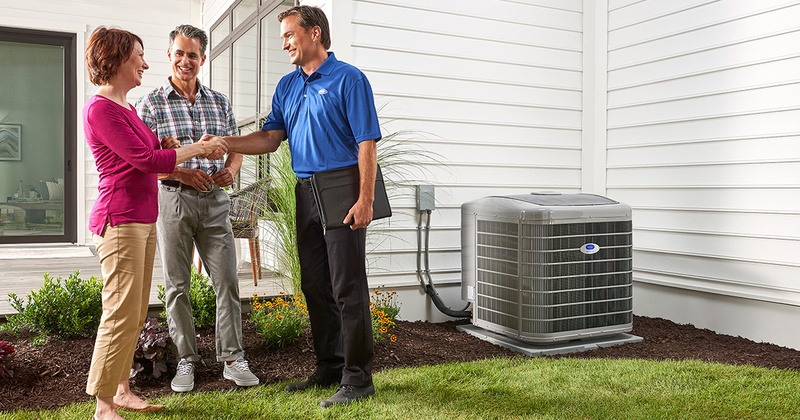
The tonnage (or capacity) of an air conditioner indicates the amount of cooling that can be provided by the air conditioner in an hour. Simply put, 1 ton of cooling capacity has the ability to eliminate about 12,000 British Thermal Units (BTUs) of heat in an hour. The bigger the home, the more tonnage systems are required to keep the indoors cool and the smaller the home, the less tonnage systems are required to cool the home.
Equipment Cost
The air conditioner with a higher capacity is characterized by larger internal parts (compressor, condenser coil, blower capacity, etc.). These larger parts tend to increase the price of the base unit. Consequently, a 5-ton Amana AC unit will tend to cost more than a 2-ton unit, all other things being equal, in terms of efficiency rating.
Energy Requirements
Units with greater tonnage require increased electricity. Although the disparity in the daily usage may not be enormous in case the system is properly sized, an oversized one may result in increased bills on a monthly basis. On the other hand, an undersized unit may operate longer consuming more energy and wearing out.
Installation Complexity
A 5-ton system may need a stronger ductwork and may need further adjustments to allow sufficient airflow. Such additional measures may be converted into increased installation expenses and time spent on the site by the HVAC contractor.
An oversized system can cause short cycling and inefficient humidity control and an undersized system may not be able to cool the house adequately. The HVAC professionals usually carry out a load calculation (e.g., Manual J) to identify the most appropriate size of a particular property.
How Much Do 2-Ton, 3-Ton, 4-Ton, and 5-Ton Amana AC Units Cost?
The following are considerations and prices of each category of capacity. The numbers presented here correspond to the quick-reference table but contain more context.
Amana 2 ton AC
Average House Size: 800-1,200 square feet, based on insulation and climate region.
- Unit Price Range: $1,500-$2,500.
- Total Installed Cost: $3,500-$6,000.
- Best suited to: Smaller houses, condominiums or apartments with moderate cooling loads.
A basic single-stage compressor is usually bought in a 2-ton unit. When homeowners choose a two-stage or variable-speed compressor, which is of a higher end, the costs increase to the upper end of the range.
Amana 3 ton AC
Average Home Size: 1,200-1,600 square feet but climate and house design can change these figures.
- Unit Price Range: $1,800 -$3,000.
- Total Installed Cost: $4,000-$7,000
- Best suited to: Small to mid-sized houses that have moderate to high cooling loads.
This capacity is one of the most widespread in the United States. Competition in the market of 3-ton systems is high and therefore contractors can compete on prices.
Amana 4 ton AC
Average House Size: 1,600-2,000 square feet, depending on insulation, window orientation and climate.
- Unit Price Range: $2,000 -$3,500
- Total Cost: $4,500-$7,500
- Best suited: Medium to large houses with greater cooling requirements or in places where summers are long and hot.
This capacity can be a sweet spot of homes that need more powerful cooling but do not want to enter the highest level of equipment.
5-Ton Amana AC
Average Household Size: More than 2000 square feet, usually in warm weather or two-story homes.
- AC Unit Price: $2,200-$4,000
- Total Installed Cost: $5,000-$8,000
- Best suited to: Big residential areas or houses in areas where there is high summer heat.
Quotes on installations may be even higher in case of custom duct alterations or improved indoor air-handling units.
How Does Installation Complexity Affect Costs?
The installation of a central air conditioner does not only involve setting a condenser outside the house. The complete project may include:
Don’t Overpay for HVAC Services – Call 888-894-0154 Now to Compare Local Quotes!
Ductwork Evaluation or Replacement
The efficiency and overall performance can be decreased by older or undersized ducts. In case they are leaking or not sealed properly, contractors might suggest to fix them or replace the ducts altogether, which would cost an additional $1,000-3,000 and more to the overall bill.
Electrical Upgrades
Depending on the amperage of the new system, the electrician may have to add a dedicated circuit, replace the breaker panel, or add a new line in case the current electrical system is not adequate. This may range between several hundreds to more than a thousand dollars depending on the extent of work.
Installation and Fixing
Other homes might not have a perfect place to put the outdoor unit and this might need concrete pads, leveling or special mounting brackets. The increased labor may add to the expenses in case the system has to be relocated to a different place.
Line Set Replacement
The copper refrigerant lines that connect the outdoor condenser to the indoor coil may also require replacement in case they are corroded, undersized, or unsuitable to the new type of refrigerant. A few hundred dollars of materials plus labor can be used to install new line sets.
Code and Permit Requirements
AC installations usually need permits at local jurisdictions. The cost of permit is usually between 50 and 300 dollars, although in some regions it may be more. The HVAC work also has to comply with the local codes and this may influence the labor time.
What Additional Equipment or Upgrades Might Affect Pricing?
Besides the air conditioner itself, there are a range of upgrades or add-ons that homeowners can look at to enhance comfort, indoor air quality and energy efficiency.
It is possible to save on labor costs and guarantee compatibility by replacing an older furnace or air handler during the same time as the AC installation. This is particularly useful when both units are getting old or when one of them is already failing. Nevertheless, it may add a lot to the cost of the project.
Smart or programmable thermostats (e.g. Wi-Fi enabled thermostats or thermostats with learning algorithms) are able to optimize cooling schedules, saving energy in the long run. The prices are between less than 100 dollars to more than 300 dollars on the advanced models and installation charges in case it is done by the contractor.
UV lights, electronic air cleaners or high-efficiency filtration systems may be incorporated to decrease allergens and enhance indoor air quality. These upgrades are quite expensive and can range between a couple of hundred dollars to more than a thousand dollars.
When the house has more than one level or distinct zones with distinct cooling needs, a zoning system with motorized dampers and separate thermostats can send cooled air only to the places that need it. This installation can increase the total cost by 2,000 dollars or more and can lead to increased comfort and reduced utility bills in the future.
Amana already provides good standard warranties (usually the compressor in some models is covered by limited lifetime). Nevertheless, other homeowners choose to buy long-term parts-and-labor warranties or service contracts to have an extra financial cushion.
How Can Homeowners Reduce Amana AC Installation Costs?
It is possible to get a better picture of average labor costs and identify outliers by comparing estimates of at least three reputable HVAC contractors. Requesting itemized quotes will also enable homeowners to know how much they will pay on equipment, labor, and extras.
Other HVAC companies provide discounts in the off-peak seasons (fall or early spring) when the demand on AC is not so high. Rebate programs on certain high-efficiency units are sometimes run by manufacturers, and may lower the purchase price.
Although add-ons such as zoning systems or smart thermostats may be useful, they may prove to be a strain on the budget. It is possible to control the expenses, prioritizing the basic equipment and then adding the upgrades.
Most local utility companies offer incentives on energy efficient equipment installations. This may be in the form of rebates on higher-SEER equipment or special programs that subsidize a percentage of duct work upgrades or smart thermostats.
Don’t Overpay for HVAC Services – Call 888-894-0154 Now to Compare Local Quotes!
In the event that the homeowner is already planning on insulation improvements, window replacements, or other energy-saving retrofits, a combination of the improvements can improve comfort and decrease the overall cooling load.
This may then allow a smaller tonnage AC, which may reduce the total system cost.
How to Get the Best Amana AC Prices?
- Firstly, keep in mind that installation quality is always the most important thing for air conditioner project. So never sacrifice contractor quality for lower price.
- Secondly, remember to look up the latest tax credit and rebates.
- Thirdly, ask for at least 3 bids before you make the decision. You can click here to get 3 free estimates from your local contractors, and this estimate already takes rebates and tax credit into consideration and filter unqualified contractors automatically.
At last, once you chose the right contractor, remember to use the tactics from this guide: homeowners tactics when negotiating with HVAC dealer to get the final best price.