This post will discuss the most effective window air conditioning systems to use at home, the ENERGY STAR certified inverter systems and the efficient conventional systems
At PickHVAC, we compare their cooling efficiency, noise, and smart capabilities to assist you in selecting the most energy-efficient window air conditioner that suits your requirements.
A brief comparison of our favorites is given below:
| Model | Capacity (BTU) | Efficiency | Noise Level |
|---|---|---|---|
| Midea U-Shaped Inverter | 8,000 | Inverter (15 CEER), ENERGY STAR | 42 dB |
| LG Dual Inverter Smart | 14,000 | Dual Inverter, ENERGY STAR | 44–55 dB |
| Frigidaire Gallery U-Shape | 8,000 | Inverter, ENERGY STAR | 40 dB |
| GE Profile ClearView | 8,300 | Inverter, ENERGY STAR | 41 dB |
| Windmill WhisperTech | 8,000 | Inverter, ENERGY STAR | 40 dB |
| Dreo Inverter Window AC | 8,000 | Inverter, ENERGY STAR | 42 dB |
| Frigidaire Efficient 6,000 BTU | 6,000 | Traditional (EER 12), ENERGY STAR | 50–55 dB |
With Window AC Energy Efficiency
In determining the efficiency of a window air conditioner, two important factors to put into consideration are the EER and the CEER. These ratios are the amount of cooling (BTUs) per watt of electricity consumed – the higher the number the more efficient the unit.
EER of old window ACs is usually 9-11, but the most efficient ones today have CEER of 15 or higher, which means that they can provide the same cooling using much less energy. As an example, the Midea U-shaped inverter AC has a CEER of 15 and consumes more than 35 percent less energy than a conventional model . Each of the models discussed here is ENERGY STAR ® certified, meaning that it is at least as efficient as the high efficiency standards established by the EPA on room air conditioners.

A decision to use an ENERGY STAR unit will save you approximately 10 percent or more on energy bills compared to a conventional model.
The other determinant of efficiency is adequate BTU sizing of your room. An oversized air conditioner will short-cycle (turn on and off repeatedly), and it will consume energy and not dehumidify the space. On the other hand, an undersized unit will be operating all the time and yet it will fail to cool the room.
Inverter vs. Traditional Window AC Units
The use of inverter technology is one of the greatest features in the efficiency of air conditioners.
The conventional window air conditioners have a single-speed compressor which switches on to the full power and switches off completely to maintain temperature. This cycling on/off is not efficient and may lead to audible noise and temperature fluctuations.
Conversely, an inverter AC has a variable-speed compressor which is able to adjust its output. The compressor does not stop but just slows down when the desired temperature is achieved, keeping the room climate constant. This results in easier, less energy-wasting operation, as the unit only consumes as much energy as necessary to maintain the temperature . The inverter models prevent the energy spike of frequent restarts, and can save a lot of electricity, particularly at part-load.
The savings in efficiency of inverter technology are significant, manufacturers typically quote 30-40 percent energy savings over non-inverter units. As an example, the Dual Inverter series of LG and the U-shaped inverter units of Midea have about one-third energy savings over comparable BTU fixed-speed units . These models readily qualify as ENERGY STAR and in certain instances, they can be ENERGY STAR Most Efficient.
Although inverter ACs are more expensive to purchase, the energy saving will be worth it in the long run through low electric bills. They are a great option to any person who uses his AC regularly or over a long time (like during hot summers) since the overall energy savings will be high.
Inverter window air conditioners have other benefits besides efficiency. They are much quieter to live with, since by not switching on and off so abruptly they avoid the loud compressor kick-in sound, and they also have more consistent temperatures. Most inverter units are at sound levels of the low-40 decibel range on low settings, which is similar to a library. Actually, inverter window ACs are the quietest in the market; the Frigidaire Gallery U-shape, to give an example, operates at only 40 dBA on low mode .
Top Energy-Efficient Window Air Conditioners for Home Use
The following are some of the top 7 window AC units that are the most energy efficient to use at home. The models are available in a variety of sizes and styles, including the latest inverter models and one conventional model:
#1 Midea U-Shaped 8,000 BTU Smart Inverter Window Air Conditioner

Midea U-Shaped Inverter AC is commonly referred to as the most efficient window air conditioner in its category.
The window has a special U-shape design that enables it to close between the indoor and outdoor parts and this significantly enhances insulation and noise control.
The first window AC to receive the ENERGY STAR Most Efficient award, this 8,000 BTU model has an impressive CEER 15 that provides more than 35 percent energy savings compared to standard models . This AC will provide you with strong cooling of rooms of approximately 350 sq. ft. with very minimal power consumption. It is also among the silent models in the market and thus it is ideal to be used in bedrooms or in home offices.
- Cooling Capacity: 8,000 BTU (appropriate to a room of ~300-350 sq. ft.)
- Energy Efficiency: High-efficiency DC inverter compressor (CEER ~15). Consumes 35 percent less power than conventional designs . ENERGY STAR Most Efficient.
- Noise Level: Very silent- as low as 42 dB. The U-shape ensures that the loud compressor is out of the house thus noise is minimal.
- Smart Features: In-built Wi-Fi that supports Alexa and Google Assistant. The settings can be controlled through the Midea Air app or voice. There is also an IR remote.
- Advantages: U-shaped design enables you to open the window to get fresh air; high efficiency and extremely low noise; mounting bracket is included and it is easy to install; all smart features.
- Cons: Heavy and bulky compared to standard 8,000 BTU units
#2 LG Dual Inverter Smart Window Air Conditioner (14,000 BTU)

LG Dual Inverter is one of the best options when one requires more cooling output at high efficiency. LG LW1522IVSM is a 14,000 BTU window AC that has dual inverter compressors, i.e. it is a twin-rotary compressor design that is further optimized in terms of efficiency and smoothness.
The model has the capacity to cool down large rooms or small apartments (up to 700 sq. ft.), but it has an ENERGY STAR rating and a CEER that is approximately 35 percent higher than the minimum requirement
Practically, it cools your room fast and uses less power as compared to the older 10,000 BTU units. Being of high capacity, users have reported that it is quiet in its operation, particularly at low speeds or in Sleep mode when the sound levels may reduce to 44 dB. It is a great combination of strength and effectiveness in the residential application.
- Cooling Capacity: 14,000 BTU (can cover 600-700 sq. ft.; LG also sells this Dual Inverter model in 8k, 10k, 12k, etc. to cover smaller rooms)
- Energy Efficiency: Cooling output is continuously adjusted by dual inverter compressor technology (two rotary compressors). CEER 15, far beyond normal – approximately 35 percent more efficient than the DOE minimum of this size . ENERGY STAR qualified.
- Noise: It is quiet considering its size – 44 dB on low fan (sleep mode) and about 55 dB on high. The two inverter system and brushless fan motor maintain the noise level low, but at full cooling, you will hear some noise because of the high airflow.
- Smart Features: LG ThinQ Wi-Fi capable – control with smartphone app or voice (Alexa, Google). You may turn it on/off remotely, schedule or track energy consumption. There is also a full-function remote.
- Advantages: Powerful cooling in large rooms; high efficiency dual inverter consumes less energy despite high BTU capacity; fairly quiet; strong smart connectivity and integration; available in a variety of sizes to suit any application.
- Cons: It is a heavy unit (more than 100 lbs on the 14k BTU)
#3 Frigidaire Gallery U-Shape Inverter Window Air Conditioner (8,000 BTU)

The Frigidaire Gallery U-Shape 8,000 BTU AC is a close alternative to the Midea U, as it has the same design and efficiency and a couple of additional features. It has an inverter compressor and the identical saddle-shaped form factor that allows you to close the window via the unit.
Frigidaire is the one with extra functions such as an air quality sensor and optional advanced filter to eliminate allergens, which is excellent when you need cooling and cleaner air. It is excellent in terms of performance: it is approximately 40 percent more efficient than typical 8k units and it is very quiet (approximately 40 dB at low speed ). It is capable of cooling medium-sized rooms (up to 350 sq. ft.) evenly and softly. This model also has Wi-Fi connectivity, a good application, and voice controls. Its combination of style, smarts and efficiency is a favorite among users, but it costs more, as it is a premium device with a premium Gallery branding.
- Cooling Capacity: 8,000 BTU (suitable in rooms of size 300-350 sq. ft., e.g. a large bedroom or a medium living room)
- Energy Efficiency: Full inverter compressor- surpasses ENERGY STAR. CEER is estimated to be 15. This unit is made to be as efficient as possible; Frigidaire claims about 40 percent energy savings compared to non-inverter 8k models. Certainly a green option.
- Sound Level: Super quiet. It has a low fan mode of 40 dBA which is one of the lowest in its category. At the higher fan speeds, noise remains in the mid-40s dB. The U-shape prevents the majority of noise to enter. Most reviewers remark that it is hardly noticeable when it is on.
- Smart Features: Wi-Fi enabled – compatible with the Frigidaire app (Android/iOS) to control remotely and program. It is also compatible with Alexa and Google Home to control with voice. It also has an indoor air quality sensor with an LED indicator that turns different colors depending on the quality of the air (and can be connected to an optional carbon air filter to purify the air).
- Advantages: Modern sleek design with U-shape to be efficient and reduce noise; very energy efficient; very quiet (one of the quietest ACs on the market); Wi-Fi and voice controls; air quality monitoring is added and has the ability to work as a dehumidifier; it comes with a support bracket to install it safely.
- Cons: High cost – it is among the more expensive 8k BTU models
#4 GE Profile ClearView Inverter Window AC (8,300 BTU)

Another U-shaped inverter design is the Profile ClearView series of GE which maximizes efficiency and your window view.
The ClearView 8,300 BTU model is ENERGY STAR qualified and is made to ensure that the compressor part is below the window, leaving you with a clear view outside (thus the name ClearView).
It has a variable-speed inverter compressor that makes it highly efficient and quiet and cools rooms of up to 375 sq. ft. GE markets this model as being ultra-quiet; independent tests have shown about 41 dB on low fan, which is outstanding.
It is also a Wi-Fi enabled unit with GE SmartHQ app that allows remote control and monitoring. Its efficiency specs are similar to other high-end inverters, one thing to note is that some of the early models of ClearView were slightly lower SEER/CEER (11-12) than the Midea/Frigidaire but GE has probably fixed this in newer models. When used in practice, customers note that they save a lot of energy and they are happy with the amount of light that the design allows into the window.
- Cooling Capacity: 8,300 BTU (suitable to 300-400 sq. ft. areas. GE also has larger ClearView units to 12,000 BTU to cover larger rooms.)
- Energy Efficiency: ENERGY STAR, inverter compressor. Projected CEER of 12-15 (the actual CEER can vary by variant; all are efficient enough to pass California and DOE strict standards). There is also improved insulation on the window. Look forward to using about 20-30 percent less energy than a non-inverter GE of the same size.
- Noise: Very quiet – about 41 dB at low speed was observed on the spec (almost as quiet as the Midea and Frigidaire). The noise is significantly reduced compared to a typical window AC even when the output is high due to the inverter technology and the U-shape that ensures that noise is kept out.
- Smart Features: Wi-Fi enabled using the GE SmartHQ app. You will be able to control temperature, modes, and fan speeds remotely or by voice (Alexa and Google Assistant compatible). It is also possible to schedule the app and there are certain energy usage insights. It also has a remote.
- Pros: One-of-a-kind full-window view design (you do not lose natural light); high efficiency inverter technology; quiet operation; smart controls through app/voice; well-known brand with good customer service; compatible with double-hung windows 21-36” wide just like other U-shaped models.
- Cons: Installation is somewhat complicated (as with other U-shaped units, you have to be patient when aligning the saddle and bracket)
#5 Windmill 8,000 BTU Inverter Window Air Conditioner (WhisperTech)

The Windmill AC is a contemporary, design-savvy window air conditioner that now comes with WhisperTech inverter technology, to be more efficient and quieter. The original AC by Windmill created a splash with its streamlined curved front and ease of installation and the new 8,000 BTU model does the same with an Energy Star inverter compressor under the hood.
It has a rating of rooms of up to 350 sq. ft. and it is very quiet running, the term whisper is not an exaggeration, as the noise level is only about 40-50 dB range at the most. In terms of efficiency, Windmill boasts of about 10 percent less energy consumption compared to the conventional units (the early models had an EER of 11.9, and the inverter model is expected to be even more efficient). It also employs the more environmental friendly R32 refrigerant that has a lower global warming potential compared to the older R410A. Using Wi-Fi, you can also control the Windmill AC using a smartphone app or voice commands.
The unit is an excellent option when aesthetics and low-noise operation are of equal concern to you as cooling and efficiency.
- Cooling Capacity: 8,000 BTU (approximately 300-350 sq. ft., suitable to bedrooms, offices or living rooms in an apartment)
- Energy Efficiency: WhisperTech inverter compressor – Energy Star. Although precise CEER is not released, it is estimated to be about 12-15. The unit is made to cycle softly and have even cooling. It also has an Energy Saver mode and is R32 refrigerant to have a greener profile.
- Sound: Very low. Users testify that it is difficult to know when it is on except the cool air. The manufacturer calls it ultra-quiet and independent reviews tend to say it is one of the quietest ACs they have ever used. Approximately (42 dB on low fan.)
- Smart Features: Wi-Fi compatible using the Windmill app. Alexa and Google Assistant compatible to be controlled by voice. You are able to program, switch the unit on/off remotely and even monitor usage. The unit has an auto-dimming LED display and its design is simplified to have a top air discharge to enhance circulation.
- Pros: Modern design looks good and is compatible with decor; silent and effective cooling; simple installation with all hardware included (no assembly of accordion panels); smartphone app is easy to use; it uses a more environmentally friendly refrigerant (R32); filter can be accessed easily and even includes an additional carbon filter to improve air quality.
- Cons: A bit expensive to be an 8k BTU unit (you pay a premium to have a good design)
#6 Dreo Inverter Window Air Conditioner (8,000 BTU)
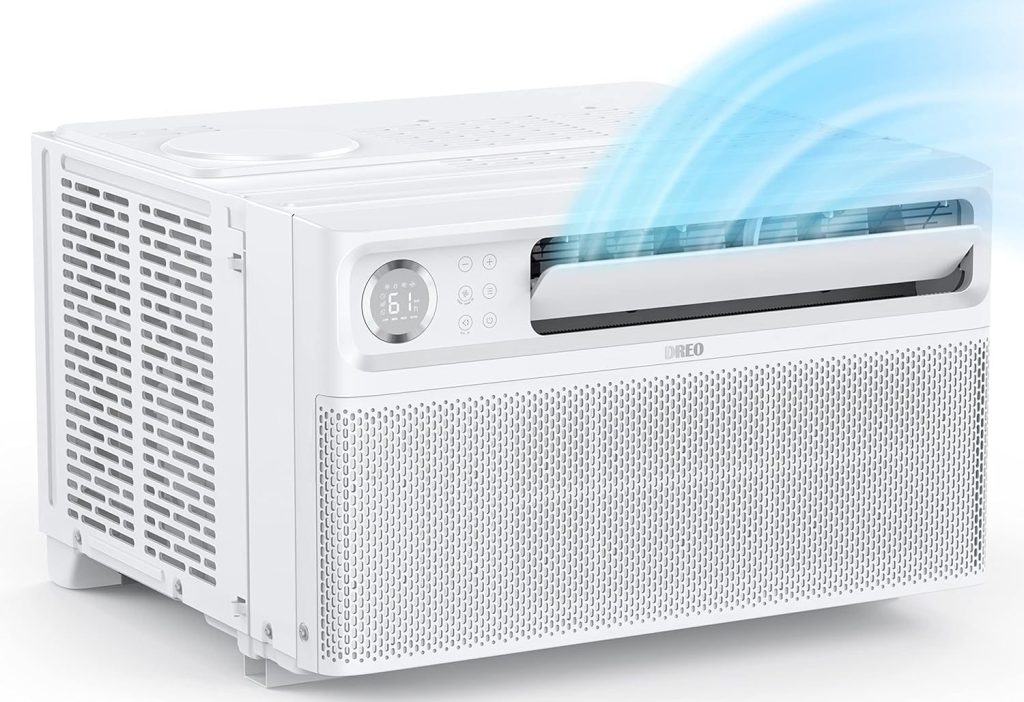
Dreo is a relatively recent brand in the home appliance industry and their 8,000 BTU inverter window AC has already made a name as a value-packed, energy-efficient AC.
It is an ideal model to use in small to medium rooms (approximately 200-350 sq. ft.) and provides the main advantages of the inverter technology, especially, Dreo claims to save up to 35 percent of energy and operates very quietly at only 42 dB in its lowest mode.
It is ENERGY STAR certified and is in a smaller form factor that is simpler to install than the heavier U-shape units. Although it lacks in-built Wi-Fi, it has a remote and a digital panel that has a thermostat. The low cost of the Dreo inverter AC is appealing to the wallet-conscious consumer who does not want to compromise on efficiency.
- Cooling Capacity: 8,000 BTU (suitable to 250-350 sq. ft., but some users claim it can cool a bit larger rooms in case they are well insulated)
- Energy Efficiency: DC inverter technology – approximately 35 percent more efficient than non-inverter units of the same size. ENERGY STAR. It contains Energy Saver mode and 24-hour timer to reduce power consumption. Excellent decision to reduce the electricity bills in a small room.
- Noise Level: 42 dB at low fan, quite impressive. In numerous reviews, it is said that you can sleep with it on. It is quieter than older ACs, even when the fan is running at high speeds, owing to the variable-speed compressor. It also has a night mode that is quiet.
- Smart Features: This unit does not have Wi-Fi (this is one of the ways that Dreo keeps the price affordable). It also has a remote control and LED display that has touch controls. Temperature, fan speed (4 speeds) and modes (Cool, Dry, Fan, Eco) can be easily adjusted. It does not have Wi-Fi, which is a drawback to some, but otherwise, it is easy to use.
- Advantages: Extremely energy-efficient at the price (inverter at a price that is closer to non-inverters); compact and lightweight construction that makes it easier to install; quiet operation that is suitable in bedrooms; affordable and good cooling performance; all basic functions (thermostat, timer, energy-saver) are present without any unnecessary frills.
- Cons: No smart Wi-Fi; 8,000 BTU might not be enough to heat a large room or an open-plan space; the brand is relatively new, so its long-term reliability remains to be seen; some users would like it to have more detailed installation hardware or weatherstripping (but you can always visit the hardware store to get what you need).
#7 Frigidaire 6,000 BTU Energy Star Window Air Conditioner
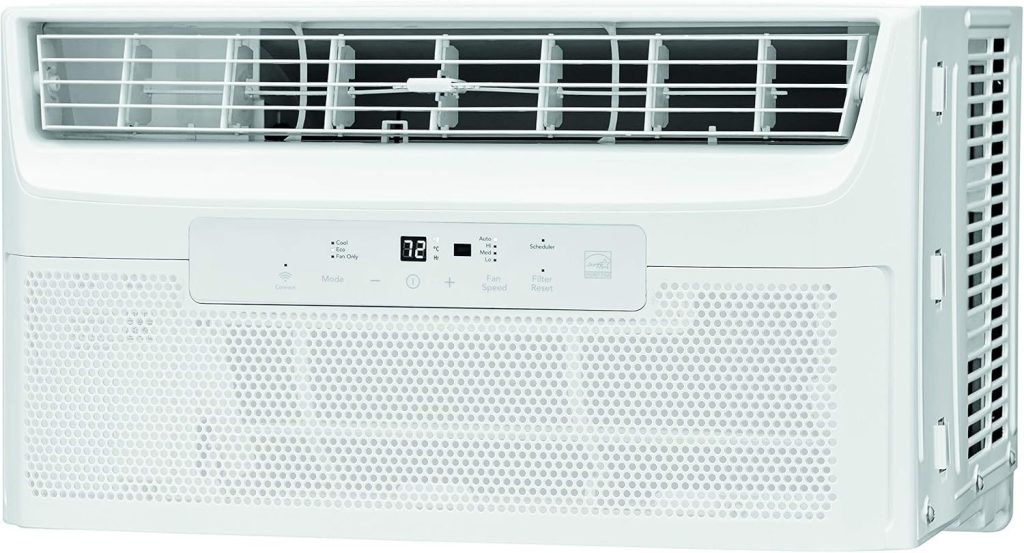
To complete our list we have a more conventional window AC unit that is suitable to people with smaller rooms or smaller budgets but still want decent efficiency. The Frigidaire 6,000 BTU Window Air Conditioner (model FFRE or similar) is a conventional unit with a high EER that shows that you do not have to have inverter technology to save energy in a small room.
It is ENERGY STAR rated and has an EER of about 12.1, which is on the higher end of the efficiency scale of standard compressor models of this size. This 6k BTU model is ideal in bedrooms, dorms or home offices of up to 250 sq. ft. It has multi-speed fan, digital thermostat and convenient remote control. It is not as quiet as the inverter models above, and it does not have as many features, but it is not as loud as some other models (approximately 50-55 dB on low) and most people can sleep through it. It also possesses an Eco mode which switches the fan off and on to save more energy after the desired temperature has been achieved.
- Cooling Capacity: 6,000 BTU (approximately 150-250 sq. ft., suitable to use in small bedrooms or studio rooms)
- Energy Efficiency: EER 12.1, very good rating of a non-inverter AC of this capacity. ENERGY STAR. It consumes significantly less power than the older 5k-6k units (just under 500-550 watts on full cool). It also features a “Eco” mode which switches off the compressor when it is not needed to maintain temperature and saves energy.
- Noise Level: 50 dB on low fan speed (a soft hum). It can go up to mid-50 dB range on high. This is not as loud as most of the bigger conventional units, and this is because of the smaller compressor. It also has a Sleep mode that reduces the fan speed during night time to reduce noise.
- Smart Features: No Wi-Fi, has a full-function remote and electronic controls. It has an on/off timer of 24 hours and a thermostat that can be adjusted. Comfort can be customized by three cooling speeds and three fan speeds. Some of its models also have an inbuilt ionizer option to enhance the freshness of the air.
- Advantages: Cheap and easy to find; low power consumption in its category (high efficiency without inverter); lightweight- easier to install (approximately 41 lbs); good cooling and dehumidifying capacity
- Cons: Not as quiet as inverter models (you will hear the compressor cycle); not as smart; to cover a larger room you will need a higher BTU model
What are Other Key Features that You Should also Care About
Another important factor is the noise level.
A good AC is not only energy-saving, but it is also supposed to make you comfortable without a racket. In most cases, inverter units are more silent since the compressor has the ability to operate at lower speeds. Unit design counts too: U-shaped window ACs (such as the Midea and Frigidaire) move the compressor part out of the window, reducing the noise indoors drastically.
Comparing models, check the decibel (dB) rating, where available.
A couple of decibels can make a difference, to give an example, 5060 dB is a normal conversation and the quietest window ACs can be as low as 45 dB on low. Each of our best choices focuses on silent work, so they can be used in bedrooms and living rooms where sound may be annoying. Such features as “Sleep Mode” or multi-speed fans can also be used to customize the noise level at night or when you want to have silence.
You should also take into consideration smart features and controls which can promote efficient usage. Most of the newer window ACs are now built with Wi-Fi and smartphone apps, so you can change settings or program operation remotely. The energy can be saved through smart scheduling, i.e. the AC should not be on when you do not need it e.g. you can program the unit to switch off when you fall asleep or start cooling your house an hour before you get home after work.
Higher-end models (LG, Midea, Frigidaire, Windmill all offer it) are usually integrated with voice assistants such as Amazon Alexa or Google Assistant, so you can control the AC with your voice or incorporate it into smart home routines. Even those units that do not have Wi-Fi usually have a remote control and a programmable timer. These features can be used to avoid wasting energy (no longer leaving the AC on all day) and maximize comfort by cooling when needed.