Choose an energy-efficient window air conditioner based on room size, inverter or standard compressor, and smart controls. For small bedrooms and offices, select a 5,000–6,000 BTU unit (best: Midea 5,000 BTU or Amazon Basics 6,000 BTU). For medium rooms or open-plan areas, choose an 8,000–10,000 BTU inverter model (best: Electactic 8,000 BTU or Midea 10,000 BTU U-Shaped Inverter). For smart control and remote operation, choose Wi‑Fi models like ACHAZEL 6,000 BTU. Summary table below lists the five top picks and their key efficiency features.
| Product | Best For | Key Efficiency Feature |
|---|---|---|
| Midea 10,000 BTU U-Shaped Inverter AC | Larger rooms, highest efficiency | DC inverter tech; ENERGY STAR; 35% energy savings (listed) |
| Midea 5,000 BTU EasyCool AC | Small bedrooms and offices | CEER 11.0 listed; compact 5,000 BTU |
| Electactic 8,000 BTU Window AC | Medium rooms up to 350 sq ft | Energy-saving modes; product lists estimated yearly cost |
| Electactic 6,000 BTU Window AC | Medium-small rooms with dehumidifying needs | Energy saver and multiple modes |
| ACHAZEL 6,000 BTU Smart AC | Users wanting Wi‑Fi control and energy features | Smart app control; listed energy-saving operation |
Midea 10,000 BTU U-Shaped Inverter AC

Features listed: U-shaped design for reduced external noise, highly efficient DC inverter system, operation as low as 32 dBA, R32 refrigerant, rated 890W cooling power, Wi‑Fi enabled, voice control compatibility, and listed over 35% energy savings with ENERGY STAR certification.
Best for homeowners who need strong cooling for larger rooms and want the most energy-efficient window option. Selected because the product lists inverter technology, ENERGY STAR certification, and quantified energy savings, which directly address energy-efficiency search intent.
Caution: The unit is larger and requires a compatible window opening and professional or careful DIY installation planning. Avoid this if your window size or mounting capacity does not support the U-shaped design.
Midea 5,000 BTU EasyCool AC
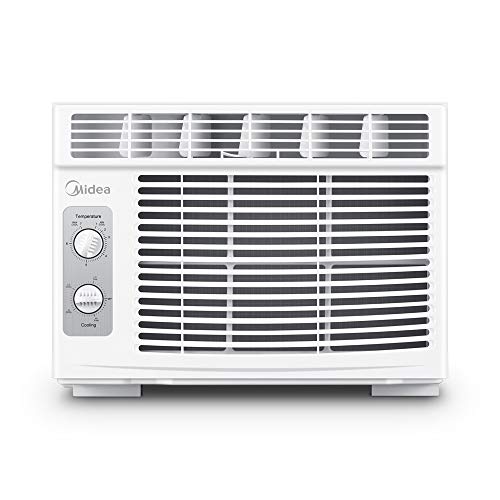
Features listed: 5,000 BTU cooling for up to 150 sq. ft., 7 temperature settings, 2 cooling and 2 fan speeds, 2-way air direction control, reusable filter, and a listed Combined Energy Efficiency Ratio (CEER) of 11.0.
Best for small bedrooms, home offices, or single-room use where low energy draw and compact capacity matter. Chosen because the CEER value is explicitly listed, helping buyers compare energy efficiency per unit of cooling output.
Caution: The 5,000 BTU capacity limits cooling effectiveness in larger rooms. Avoid this if you need to cool rooms larger than the listed coverage area.
Electactic 8,000 BTU Window AC

Don’t Overpay for HVAC Services – Call 888-894-0154 Now to Compare Local Quotes!
Features listed: 8,000 BTU cooling for up to 350 sq. ft., adjustable 61°F–88°F range, six modes including Eco and Sleep, 24-hour timer, four airflow directions, three fan speeds, and a stated yearly energy cost estimate in product features.
Best for medium-size living rooms or open-plan spaces that need balanced cooling and energy savings. Selected because the unit offers an Eco mode and a published estimated yearly energy cost, allowing buyers to compare operational expense.
Caution: The stated annual energy cost is an estimate listed by the manufacturer; actual cost will vary by local electricity rates and usage patterns.
Electactic 6,000 BTU Window AC

Features listed: 6,000 BTU cooling for up to 250 sq. ft., three operating modes (cool, dry, fan), dehumidification up to 56 pints/day (listed), four fan speeds, auto and energy-saver modes, sleep mode, and removable reusable filter. Operates under 45 dBA as stated.
Best for rooms where humidity control matters alongside cooling. Chosen because the energy-saver and multiple modes let users reduce runtime and power draw in moderate climates.
Caution: Dehumidification capacity listed is based on manufacturer data; actual moisture removal depends on room conditions and runtime.
ACHAZEL 6,000 BTU Smart AC

Features listed: 6,000 BTU coverage up to 250 sq. ft., Wi‑Fi control via SmartLife/SmartHome app, remote control, temperature range 61°F–88°F, three fan speeds with auto adjustment, modes including cooling, dry, fan, and auto, and a washable reusable filter.
Best for buyers who prioritize remote control and scheduling to reduce wasted runtime. Selected because smart scheduling and remote control can improve efficiency by allowing users to pre-cool or shut off the unit remotely.
Caution: Smart features depend on a stable Wi‑Fi connection and the SmartLife app; avoid this if you prefer purely mechanical controls or have unreliable home internet.
Buying Guide
How Much Cooling (BTU) Do I Need?
Match BTU to room size. Smaller rooms (up to 150 sq. ft.) typically need 5,000 BTU. Medium rooms (150–350 sq. ft.) need 6,000–8,000 BTU. Larger rooms require higher capacity or multiple units. Choosing the correct BTU reduces runtime and energy waste.
What Energy Ratings Matter?
Look for CEER or EER values and ENERGY STAR certification. CEER or EER indicates how efficiently the unit converts electricity into cooling. ENERGY STAR units meet government-backed efficiency standards and often use inverter technology for variable speed operation.
Are Inverter Compressors Worth It?
Inverter (DC variable-speed) compressors adjust power to maintain temperature and typically use less energy than fixed-speed compressors during partial-load conditions. For frequent use or larger rooms, inverter models often produce measurable savings, as listed in manufacturer features.
Do Smart Features Improve Efficiency?
Wi‑Fi, scheduling, and voice control can reduce unnecessary runtime by allowing remote control and automated schedules. Choose smart models if you will actively use scheduling to pre-cool or turn off the unit when away.
How Important Is Sound Level?
Lower dBA ratings mean quieter operation. Quiet units allow lower fan speeds with longer runtime, which can be more efficient. Check listed decibel levels when noise and energy use are both priorities.
What Installation And Window Considerations Matter?
Confirm window type and dimensions match the unit, especially for unique designs such as U-shaped models. Proper sealing and installation reduce air leaks, improving both comfort and energy efficiency.
Filters, Maintenance, And Longevity
Choose units with washable, removable filters to maintain airflow and efficiency. Regular cleaning of the filter and condenser keeps the unit operating at peak efficiency and reduces runtime.
FAQ
How do I compare energy use between window ACs? Compare CEER/EER values and look for ENERGY STAR certification. Manufacturer-listed estimated yearly energy costs can provide another comparison point.
Does a higher BTU always use more energy? Higher BTU units can use more power when running, but the correct BTU for room size reduces runtime and can be more efficient overall than an undersized or oversized unit.
Don’t Overpay for HVAC Services – Call 888-894-0154 Now to Compare Local Quotes!
Are inverter window ACs more efficient? Inverter models typically run at variable speed and use less power during steady-state conditions. Manufacturer features that mention inverter technology and percent energy savings indicate this advantage.
Will smart controls save energy? Smart controls enable scheduling and remote shutdown, which can reduce unnecessary operation and energy use if used consistently.
How often should I clean the filter? Clean or wash the reusable filter every 1–3 months, or more frequently in dusty environments, to maintain airflow and energy efficiency.
Can I improve efficiency after installation? Improve sealing around the unit, add weatherstripping if applicable, set reasonable thermostats, and use fan modes or sleep modes to reduce peak energy use.

How to Get the Best HVAC Prices
- Firstly, keep in mind that installation quality is always the most important thing for residential HVAC project. So never sacrifice contractor quality for a lower price.
- Secondly, remember to look up the latest rebates as we talked above.
- Thirdly, ask for at least 3 bids before you make the decision. You can click here to get 3 free estimates from your local contractors, and this estimate already takes rebates and tax credit into consideration and filter unqualified contractors automatically.
Lastly, once you chose the right contractor, remember to use the tactics from this guide: Homeowners Tactics When Negotiating with HVAC Dealer to get the final best price.