If you want a dual inverter air conditioner that reduces energy use and runs quietly, these five models are top choices for different room sizes and needs. The LG 14,000 BTU model is best for large rooms and apartments, the LG 10,000 BTU suits medium bedrooms, the LG 6,000 BTU fits small rooms and budget-conscious buyers, the Midea 12,000 BTU provides heating plus cooling for multi-season use, and the GE Profile 12,200 BTU emphasizes full-window visibility and ultra-quiet operation.
| Model | Best For | Cooling Coverage |
|---|---|---|
| LG 14,000 BTU Dual Inverter | Large rooms, quiet operation | Up to 800 sq. ft. |
| LG 10,000 BTU Dual Inverter | Medium rooms, balanced efficiency | Up to 450 sq. ft. |
| LG 6,000 BTU Dual Inverter | Small rooms, energy-conscious buyers | Up to 250 sq. ft. |
| Midea 12,000 BTU Inverter With Heat | Multi-season use, large rooms | Up to 550 sq. ft. |
| GE Profile 12,200 BTU Inverter | Full-window view, quieter rooms | Up to 550 sq. ft. |
LG 14,000 BTU Dual Inverter Window AC
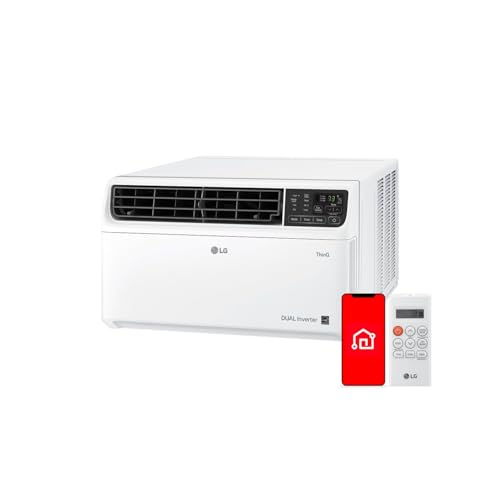
Key features: up to 14,000 BTU cooling coverage for large rooms (up to 800 sq. ft.), dual inverter compressor for energy savings (up to 35% better than ENERGY STAR requirement), low-noise operation as low as 44 dB, 72″ cord length, LG ThinQ app and voice assistant compatibility.
Best for occupants of large rooms or open-plan apartments who need powerful cooling with quieter performance. Choose this if you want high BTU output with inverter efficiency and smart controls that work with Alexa and Google Assistant.
Caution: Large 14,000 BTU units require a suitable window size and proper installation; confirm window and electrical requirements before purchase.
LG 10,000 BTU Dual Inverter Window AC

Key features: dual inverter technology for ultra-quiet operation down to 44 dB, up to 25% more energy efficient than Energy Star requirements, smart control via LG ThinQ and voice assistants, designed to cool areas up to 450 sq. ft.
Best for medium-sized bedrooms or living rooms where quiet overnight operation and remote app control matter. Better for buyers prioritizing efficient, low-noise cooling with remote control features.
Caution: The energy savings percent is stated relative to Energy Star requirements; actual savings depend on usage patterns and local electricity rates.
LG 6,000 BTU Dual Inverter Window AC

Don’t Overpay for HVAC Services – Call 888-894-0154 Now to Compare Local Quotes!
Key features: 6,000 BTU cooling up to 250 sq. ft., energy-saving inverter tech claimed to save up to 35% vs. ENERGY STAR requirement, Wi‑Fi with LG ThinQ, Alexa and Hey Google support, washable filter, eco-friendly R32 refrigerant.
Best for small bedrooms, home offices, and buyers seeking a compact, efficient window AC with smart control. Choose this if you need space-efficient cooling and voice/app control for a single room.
Caution: 6,000 BTU is suitable for small rooms only; avoid this model for larger living spaces or open-plan areas that need more cooling capacity.
Midea 12,000 BTU Inverter Window AC With Heat

Key features: 12,000 BTU cooling for up to 550 sq. ft., inverter technology for up to 35% energy savings, multi-mode operation (cool, heat pump, dehumidify), smart control via Midea SmartHome app and voice assistants, washable filter and ECO energy saver.
Best for buyers who want multi-season flexibility: cooling, dehumidifying, and supplemental heating in one unit. Better for large rooms and apartments that benefit from a heat pump function when outside temperatures permit.
Caution: The heat pump function will not operate below about 41°F outside; avoid relying on this unit as primary heating in very cold climates.
GE Profile ClearView 12,200 BTU Inverter Window AC
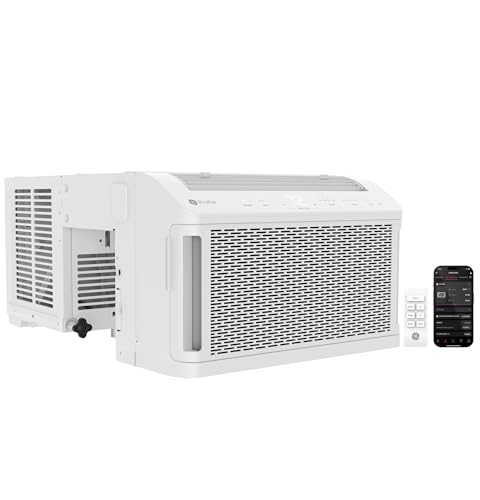
Key features: 12,200 BTU cooling for up to 550 sq. ft., inverter technology for adaptive efficiency (stated 34% more efficient), ultra-quiet operation down to 40 dB, full-window view design that preserves the window opening and natural light.
Best for buyers who want a quieter unit that maintains the window view and lets more light into the room. Choose this if you prioritize low noise and a less obstructive installation.
Caution: Full-window-fit designs have specific window width and height requirements; verify that your window dimensions meet the listed specs before buying.
Buying Guide
How much cooling capacity do I need?
Match BTU to room size: roughly 6,000 BTU for up to 250 sq. ft., 10,000–12,000 BTU for 350–550 sq. ft., and 14,000 BTU for larger spaces up to ~800 sq. ft. Adjust upward for high ceilings, strong sun exposure, or multiple occupants.
Is dual inverter technology worth it?
Dual inverter compressors vary speed to meet demand, reducing energy use and noise compared with single-speed compressors. Choose inverter or dual-inverter models when you want more consistent temperatures, lower power draw during steady-state operation, and reduced cycling noise.
Do I need smart controls and voice assistants?
Smart controls add convenience: remote scheduling, away modes, and voice commands. They are useful if you want to start cooling before you arrive or integrate the AC into a home automation setup. Avoid smart-only models if you prefer manual controls or have limited Wi‑Fi.
What about noise levels and sleep mode?
Look for advertised dB ratings for sleep or low modes (mid-40s or lower is noticeably quiet). Units with BLDC motors and inverter compressors tend to run quieter. If noise matters, compare published low-dB numbers and choose models with sleep mode or ultra-quiet claims.
How important is energy efficiency?
Energy savings depend on the unit’s inverter design and CEER/ENERGY STAR claims. Models that state percentage savings (e.g., up to 25–35%) indicate higher efficiency potential. Consider usage hours and local electricity rates to estimate operating cost differences.
What installation and window requirements should I check?
Verify window width, minimum height, and electrical requirements (voltage and dedicated circuit) before buying. Some high-BTU units need larger windows and may require professional installation. U-shape or full-window units may have unique mounting profiles to preserve the window view.
Should I choose units with heat pumps?
If you need occasional supplemental heating, select models that list a heat function, but confirm outside temperature limits for heat pump operation. Heat-capable window units are useful for mild winters or shoulder seasons, not as primary heating in very cold climates.
FAQ
Q: What is the difference between inverter and dual inverter?
A: Inverter technology varies compressor speed to match cooling demand. Dual inverter refers to a compressor design with wider speed range or dual-rotor configuration that can improve efficiency and reduce noise further than basic inverter systems.
Don’t Overpay for HVAC Services – Call 888-894-0154 Now to Compare Local Quotes!
Q: Are inverter window ACs quieter than standard units?
A: Yes. Inverter window ACs run at variable speeds and avoid frequent on/off cycles, producing lower average noise levels. Look for published low-dB figures for sleep or low modes to compare models.
Q: Can these units be controlled with a smartphone?
A: Many of the models listed include Wi‑Fi and app control (e.g., LG ThinQ, Midea SmartHome). App features typically include on/off, mode selection, scheduling, and sometimes energy monitoring, depending on the brand.
Q: Will a dual inverter unit save me money?
A: Dual inverter units are designed to reduce energy use during steady operation, which can lower electricity consumption compared to non-inverter models. Actual savings depend on run time, settings, insulation, and local energy costs.
Q: Can I install a high-BTU inverter unit by myself?
A: Many window ACs are designed for DIY installation, but high-BTU models may be heavier and require two people or additional support. Always check the manufacturer’s installation instructions and weight or window size requirements.
Q: Do inverter units use different refrigerants?
A: Some inverter models use eco-friendlier refrigerants such as R32, as listed for certain units. Verify the refrigerant type in product specifications if that is a concern for environmental or service reasons.

How to Get the Best HVAC Prices
- Firstly, keep in mind that installation quality is always the most important thing for residential HVAC project. So never sacrifice contractor quality for a lower price.
- Secondly, remember to look up the latest rebates as we talked above.
- Thirdly, ask for at least 3 bids before you make the decision. You can click here to get 3 free estimates from your local contractors, and this estimate already takes rebates and tax credit into consideration and filter unqualified contractors automatically.
Lastly, once you chose the right contractor, remember to use the tactics from this guide: Homeowners Tactics When Negotiating with HVAC Dealer to get the final best price.