If you need a portable air conditioner for a tent or small vehicle, choose a compact, low‑power unit with 3500–5200 BTU and around 400W consumption. Below are five tent AC units selected for fast cooling, portability, or specialized features like app control and dual‑loop water cooling. Best for: Outohome for max cooling power; BAYKUL models for quiet multi‑mode use; BougeRV for app control and small spaces; FO‑KOKO for dual‑loop water cooling efficiency.
| Product | BTU / Power | Best For |
|---|---|---|
| Outohome 5200BTU Portable Camping AC | 5200BTU / <400W | Maximum cooling power in a portable unit |
| BAYKUL 5000BTU Portable Tent AC (Model 1) | 5000BTU / 400W | Quiet multi‑mode camping and pet cooling |
| BAYKUL 5000BTU Portable Tent AC (Model 2) | 5000BTU / 400W | Compact, multi‑mode for trips and parking cooling |
| BougeRV PC35 3500BTU Portable AC | 3500BTU / Low power | App control and small‑space cooling (35 sq.ft noted) |
| FO‑KOKO 5200BTU Portable Camping AC | 5200BTU / 400W | Enhanced cooling with dual‑loop water condenser |
Outohome 5200BTU Portable Camping AC
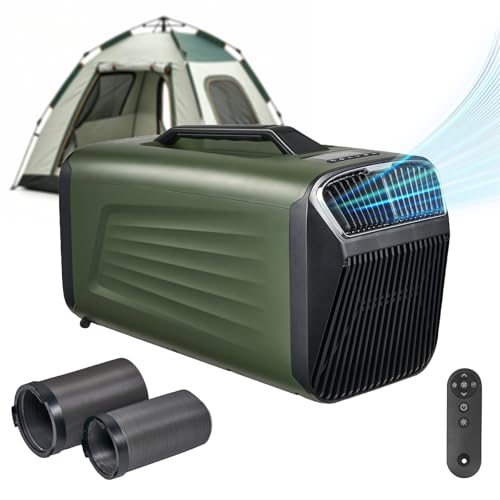
Key features taken from the product listing: 5200BTU cooling capacity with a GMCC compressor, can drop temperature by 18°F (10°C) in 5 minutes in cooling mode, temperature control range 60°F–88°F (16°C–30°C), consumes less than 400W per hour, compact size (22.4 × 11.2 × 13.8 inches), weight about 31 lbs and carry handle, marketed for tents, RVs, trucks, vans, and small rooms.
- Best for campers who need high cooling power in a portable form for tents, RVs, or small indoor rooms.
- Choose this if you prioritize fast temperature drop and a proven GMCC compressor brand noted in the listing.
- Avoid this if you cannot supply household power or a suitable power adapter for the location; the unit requires standard electrical power and is not battery powered.
BAYKUL 5000BTU Portable Tent AC (Model 1)

Key features from the listing: 5000BTU with GMCC compressor, can drop temperature by 18°F (10°C) in 5 minutes, temperature range 60°F–88°F (16°C–30°C), energy use 400W, dimensions 21.1 × 11.2 × 11.8 inches, weight about 31 lbs, four modes (Cool, Dry, Sleep, Fan), 24‑hour timer, sleep mode noise 46–50 dB, LED soft light strips.
- Best for buyers who want quieter operation and multiple modes for camping, pet cooling, or indoor small rooms.
- Choose this if you need a unit with a sleep mode and timer for overnight use and lower fan noise.
- Caution: sleep mode noise is listed as 46–50 dB, so it is not silent; it may still be audible in very quiet campsites.
BAYKUL 5000BTU Portable Tent AC (Model 2)

Key features from the listing: 5000BTU with GMCC compressor, 18°F drop in 5 minutes in cooling mode, 60°F–88°F control range, under 400W power consumption, compact dimensions (21.1 × 11.2 × 11.8 inches), 31 lb weight with handle, four modes (Cool, Dry, Sleep, Fan), 24‑hour timer, LED soft lighting.
- Better for buyers who want a compact, repeatable performance option from the same model family for camping or parking cooling.
- Choose this if you want the same multi‑mode feature set in a compact, highly portable package for overnight stays or pet comfort.
- Limitation: coverage area is not specified in the listing copy; expect effective cooling in small enclosed spaces rather than large open tents.
BougeRV PC35 3500BTU Portable Air Conditioner
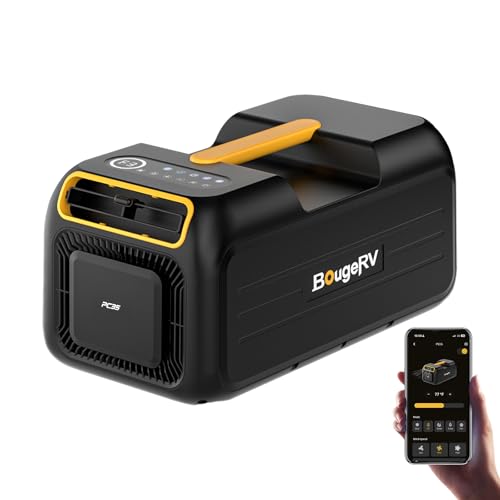
Key features listed: 3500BTU portable AC that can drop temperature by 18°F (10°C) in around 10 minutes in strong mode, adjustable range 61°F–90°F, noted rapid cooling for small spaces up to 35 sq.ft, smart app control within about 33 ft, long‑range airflow described, ergonomic handle for portability.
- Best for buyers who want smart control and targeted cooling for very small tents, vans, or office pods.
- Choose this if you need app control to adjust settings from a short distance and if your use case is under about 35 sq.ft as stated.
- Caution: 3500BTU output is lower than 5000–5200BTU units, so it is better for very small spaces rather than larger tents or RVs.
FO‑KOKO 5200BTU Portable Camping AC

Don’t Overpay for HVAC Services – Call 888-894-0154 Now to Compare Local Quotes!
Key features from the listing: dual‑loop water cooling that sprays water on the condenser for faster heat dissipation and 3.6°F colder airflow than standard units, 5200BTU efficient cooling for up to 130 sq.ft (listing states), 18°F drop in 5 minutes with 60°F–88°F control, 400W power consumption, compact size (12.8 × 10.6 × 22.8 inches) with carry handle and carry bag compatibility.
- Best for buyers who prefer enhanced condenser cooling for improved performance in hot environments and who may use the unit in a slightly larger small room (listing notes 130 sq.ft).
- Choose this if you want a portable AC that uses water‑assisted condenser cooling to maintain lower discharge temperatures.
- Limitation: the unit uses water spray for condenser cooling, so you must follow the manufacturer’s instructions for water use and maintenance to avoid issues.
Buying Guide
How much BTU do I need for a tent?
BTU measures cooling capacity. For small tents and vans, 3500–5200 BTU models are typical. Use lower BTU (3500) for very small enclosed spaces (BougeRV notes ~35 sq.ft). Use 5000–5200 BTU units for larger small tents or vehicle cabins where faster temperature drops are desired.
What power source and energy use matters?
Portable tent ACs listed here advertise around 400W power use or “low power.” Confirm your campsite or vehicle power availability (AC outlet, inverter capacity, or generator). Units that list <400W or 400W are more energy efficient than full‑size household ACs but still require stable AC power.
Is noise important for camping or sleeping?
Yes. Models with sleep mode or lower dB specifications are better for overnight stays. BAYKUL lists sleep mode noise at 46–50 dB. If you camp in very quiet areas, check sleep mode noise levels and choose units with quieter fan operation.
How portable and heavy are these units?
Look at stated weight and handles. Many units here are around 31 lbs with integrated handles and compact dimensions for single‑person transport. Consider carrying case compatibility and how you will move the unit from vehicle to tent.
What cooling method is best?
Standard portable ACs use a compressor and air condenser. FO‑KOKO lists dual‑loop water cooling for faster heat dissipation. Water‑assisted condensers can improve performance in very hot conditions but require water handling and maintenance. Choose based on campsite water availability and maintenance willingness.
Do I need smart features or timers?
App control (BougeRV) and 24‑hour timers (BAYKUL) add convenience. Smart control helps adjust settings remotely, which is useful in RVs and vans. Timers help conserve power by avoiding overnight continuous run time.
What about coverage area and tent setup?
Match BTU and listed coverage area to your tent or vehicle cabin size. Sealed or well‑insulated tents retain cooling better. For larger open shelters, consider higher BTU units or supplemental shading and ventilation to improve performance.
Safety and maintenance considerations?
Follow manufacturer instructions for drainage, filter cleaning, and condenser maintenance. Units with water spray condensers require periodic cleaning and correct water use. Ensure electrical connections are rated for the AC’s continuous load.
FAQ
Will these units run from a battery or portable power station?
Most listings specify standard AC power and list wattage (around 400W). Running from a battery or inverter requires a power source rated to handle continuous 400W draw plus startup surge. Confirm inverter continuous and surge capacity before use.
Can I use these inside a tent without vents?
Portable ACs need to exhaust heat and manage condensate. Many tent setups require a vent or ducting to expel hot air. Check the manufacturer’s instructions for venting requirements before using a unit in a tent.
How quickly will these units cool my tent?
Product listings state rapid drops: several models claim an 18°F (10°C) drop in 5–10 minutes in ideal conditions. Real cooling speed depends on tent size, insulation, ambient temperature, and placement.
Are these safe for pets?
These units provide cooling that can help pets stay comfortable. Use units with stable temperature control, and monitor the pet to avoid overcooling. Follow the manufacturer’s safety and placement recommendations.
Do any models require special water or maintenance?
FO‑KOKO lists dual‑loop water cooling that sprays water on the condenser. That design requires following water handling and maintenance instructions. Other models may have condensate management and filter care; consult the product manual.
Which unit is best for small vans or trucks?
Choose a unit with higher BTU (5000–5200) and compact form factor for quick cabin cooling. Confirm power source compatibility and venting options for vehicle use.

How to Get the Best HVAC Prices
- Firstly, keep in mind that installation quality is always the most important thing for residential HVAC project. So never sacrifice contractor quality for a lower price.
- Secondly, remember to look up the latest rebates as we talked above.
- Thirdly, ask for at least 3 bids before you make the decision. You can click here to get 3 free estimates from your local contractors, and this estimate already takes rebates and tax credit into consideration and filter unqualified contractors automatically.
Lastly, once you chose the right contractor, remember to use the tactics from this guide: Homeowners Tactics When Negotiating with HVAC Dealer to get the final best price.