A 9000 BTU air conditioner is best when you need reliable cooling for small to medium rooms without oversizing the unit. For smart portable use choose the ROVSUN 9000 BTU portable; for compact room portability pick the Midea 9,000 BTU portable; for ultra-quiet, energy-saving window style choose the Midea U-shaped inverter; for smart window integration pick the GE 8000 BTU Wi‑Fi model; for low-noise conventional window cooling choose the LG 8000 BTU. The table below summarizes these picks for quick comparison.
| Product | Type | Best For |
|---|---|---|
| ROVSUN WiFi Enabled Smart 9000 BTU Portable AC | Portable | Remote/APP control and flexible placement |
| Midea 9,000 BTU Portable Air Conditioner | Portable | Compact room cooling with smart control |
| Midea 10,000 BTU U Shaped Smart Inverter | Window (U‑shape inverter) | Ultra-quiet, energy-efficient window use |
| GE Window Air Conditioner 8,000 BTU (Wi‑Fi) | Window | Smart home integration for medium rooms |
| LG 8,000 Window Air Conditioner | Window | Low-noise operation and simple controls |
ROVSUN 9000 BTU Portable AC
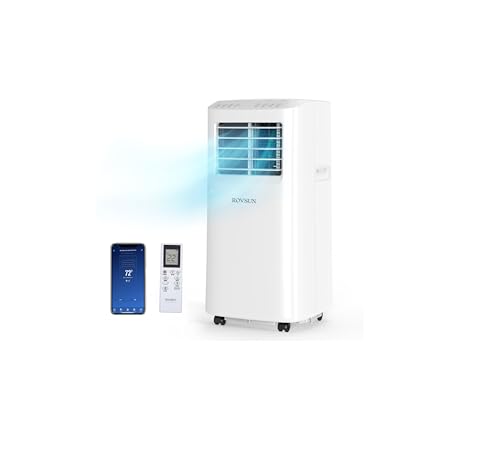
Features listed: 9,000 BTU ASHRAE (6,000 BTU SACC), high-performance compressor, 3-in-1 (cooler, dehumidifier, fan), temperature range 60°F–86°F, two speeds, sleep mode, 24-hour timer, Wi‑Fi app control, remote control, rolling wheels, installation kit.
- Why selected: Exact 9,000 BTU ASHRAE portable option with Wi‑Fi and app control suited to buyers who need mobility and remote scheduling.
- Best for: Renters, apartments, or rooms up to ~250–350 sq ft who want to move the unit between rooms and control it from a phone.
- Choose this if: You value wireless control and a 3‑in‑1 function (cooling, dehumidifying, fan).
- Avoid this if: You cannot accommodate the exhaust hose and window installation kit required for portable units.
Midea 9,000 BTU Portable AC

Features listed: 9,000 BTU ASHRAE (6,000 BTU SACC), smart control via app, cooling/dehumidifier/fan modes, remote control, LED display, 24‑hour timer, includes window installation kit, temperature range 62°F–90°F.
- Why selected: Clear smart control features and standard portable functions provide a familiar, app‑controllable option for buyers wanting portability with digital controls.
- Best for: Home offices or bedrooms where users want scheduling and voice/app control without a permanent window install.
- Choose this if: You need a portable unit that integrates with voice assistants and app scheduling.
- Avoid this if: You prefer a window unit for slightly higher efficiency and simpler exhaust handling.
Midea 10,000 BTU U Shaped Smart Inverter

Features listed: U‑shape design for open window noise reduction, DC inverter technology, ENERGY STAR certification, over 35% energy savings vs traditional units, ultra‑quiet operation down to low dBA levels, Wi‑Fi smart control, Alexa/Google compatibility.
- Why selected: The U‑shape inverter design targets buyers who prioritize low noise and improved energy use in a window‑mounted form factor.
- Best for: Bedrooms and living areas where noise reduction and energy savings matter most and where a slightly higher BTU than 9,000 is acceptable.
- Choose this if: You want the quietest possible window solution and a certified energy‑saving inverter system.
- Avoid this if: Your window type or opening cannot accommodate the U‑shape installation approach.
GE 8,000 BTU Smart Window AC
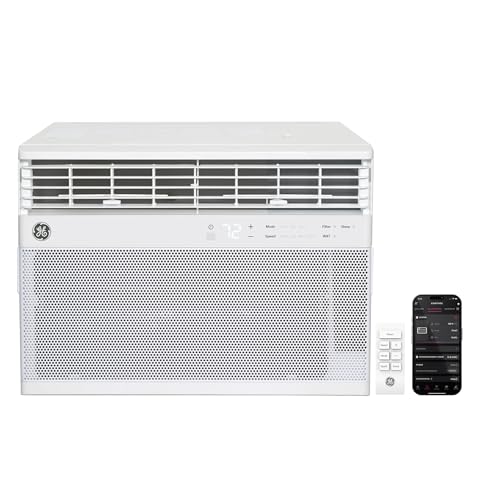
Features listed: 8000 BTU cooling for rooms up to 350 sq ft, easy install kit included, SmartHQ app control, compatibility with Alexa and Google Assistant, remote control.
- Why selected: GE’s smart window model fits buyers who prefer a fixed window installation with app and voice control for medium rooms.
- Best for: Homeowners or long-term renters with suitable window dimensions who want smart scheduling and voice control without a portable exhaust hose.
- Choose this if: You want a straightforward window install and integration with existing smart home systems.
- Avoid this if: You need portability or cannot modify the window opening to fit the unit.
LG 8,000 BTU Window Air Conditioner

Don’t Overpay for HVAC Services – Call 888-894-0154 Now to Compare Local Quotes!
Features listed: Low noise performance down to 53 dB (low mode), three cooling and fan speeds, Auto Cool mode, electronic controls with remote, auto restart.
- Why selected: LG emphasizes low noise and simple electronic controls, matching buyers who need quiet, user-friendly window cooling.
- Best for: Bedrooms, study rooms, or quieter living spaces where reduced operating noise is a priority.
- Choose this if: You value straightforward controls and a quieter operation over advanced smart features.
- Avoid this if: You require Wi‑Fi control or inverter energy‑saving features.
Buying Guide: How to Choose a 9000 BTU Air Conditioner
What room size should a 9000 BTU unit cool?
A 9000 BTU unit typically cools small to medium rooms. Manufacturers often rate cooling capacity differently (ASHRAE vs DOE/SACC); check the product’s stated square footage and use that as your primary sizing guide. Consider ceiling height, insulation, sun exposure, and occupancy to fine‑tune your choice.
Portable vs Window: which should I choose?
Choose portable if you need mobility between rooms, cannot modify windows, or rent. Choose window if you want slightly better efficiency, quieter operation, and no exhaust hose. Window units require an appropriate window opening and more permanent installation.
How important is energy efficiency?
Energy efficiency impacts operating cost. Look for inverter technology or ENERGY STAR certification for best savings. For non‑inverter units, check CEER or manufacturer efficiency claims. Higher efficiency matters most if you run the AC many hours daily.
Do I need Wi‑Fi or smart features?
Wi‑Fi and voice control add convenience: remote scheduling, temperature control, and integration with smart home systems. Choose smart models if you want automation and remote access. Avoid them if you prefer simple mechanical or electronic controls and fewer network dependencies.
What about noise and comfort features?
Noise ratings (dB) and features like sleep mode, multiple fan speeds, and dehumidification affect comfort. For bedrooms prioritize models with lower noise levels and sleep modes. For humid climates prefer units with a dehumidifier mode.
Installation and electrical requirements?
Confirm window dimensions for window units and ensure a nearby dedicated outlet for higher‑amp models. Portable units require a window kit for exhaust; check that the included kit fits your window type. Consult product installation guides for clearances and venting needs.
FAQ
- Is a 9000 BTU AC suitable for 250 sq ft? Yes. Many 9000 BTU models list coverage near 250–350 sq ft; use the manufacturer’s stated square footage and consider room conditions (sun, insulation).
- What is the difference between ASHRAE and SACC/DOE ratings? ASHRAE and DOE/SACC use different test procedures. ASHRAE BTU values are often higher than DOE/SACC values; compare the specific rating notation provided by the manufacturer for realistic performance.
- Are portable ACs less efficient than window units? Portable ACs typically have slightly lower efficiency due to exhaust and heat transfer factors. Window units often deliver better cooling per BTU when installed correctly.
- Will a smart (Wi‑Fi) AC save energy? Smart features can help reduce energy use through scheduling and remote control, but energy savings depend on user behavior, thermostat settings, and unit efficiency.
- How noisy are window vs U‑shape inverter models? Traditional window units can be louder than U‑shape inverter models, which are designed to reduce perceived noise. Check manufacturer noise specifications if quiet operation is critical.
- How often should I clean filters? Clean or check reusable filters every 1–3 months depending on use and dust levels. Regular maintenance supports efficient operation and airflow.

How to Get the Best HVAC Prices
- Firstly, keep in mind that installation quality is always the most important thing for residential HVAC project. So never sacrifice contractor quality for a lower price.
- Secondly, remember to look up the latest rebates as we talked above.
- Thirdly, ask for at least 3 bids before you make the decision. You can click here to get 3 free estimates from your local contractors, and this estimate already takes rebates and tax credit into consideration and filter unqualified contractors automatically.
Lastly, once you chose the right contractor, remember to use the tactics from this guide: Homeowners Tactics When Negotiating with HVAC Dealer to get the final best price.