If you need a 13,500 BTU rooftop RV air conditioner, this guide lists top options for different buyers: budget-minded installers, off-grid campers, owners who want inverter heating, fleet operators who need durable OEM-style units, and buyers who prefer lightweight high-flow designs. Below is a quick comparison to help you choose a suitable unit based on noise, power type, ducted compatibility, and installation style.
| Product | Best For | Key Feature |
|---|---|---|
| VEVOR 13500 BTU | DIY installers with non-ducted vents | Ductless, R32 refrigerant, fits 14.25″ vent |
| Dometic FreshJet 3 13.5K | Owners wanting lightweight, high airflow | Higher airflow, lighter than some competitors |
| RecPro 13.5K (Non-Ducted) | Low amp draw, quiet operation for boondocking | Low amp draw, ultra-quiet (59.7 dB) |
| TURBRO Inverter 13.5K | Year-round climate control with heat pump | Inverter compressor, heating and cooling |
| ASA ACM135 13.5K | Owners who prefer metal base pan and rugged gasket | Rigid metal base pan and watertight gasket |
VEVOR RV Air Conditioner 13,500 BTU

Features listed: 13,500 BTU compressor, 3956W output, R32 refrigerant, 3 modes (Auto, Cooling, 3-Speed Fan), timer, ductless design, fits standard 14.25 x 14.25 inch rooftop vents, includes air distribution box, operation panel, installation hardware. Note: not compatible with ducted RV systems.
Best for DIY installers or RV owners with standard 14.25″ vents who need a non-ducted rooftop unit that uses modern R32 refrigerant. Selected for clear vent-fit specification, included distribution box, and multiple fan/cooling modes that simplify installation and use.
Caution: avoid this if your RV uses a ducted HVAC system because the unit is explicitly not compatible with ducted installations.
Dometic FreshJet 3 Series 13.5K

Features listed: powerful cooling with higher cooling capacity compared to some competitors, maximum airflow higher than comparable rooftop units, and is 14% lighter than Dometic Brisk II models.
Best for buyers who want higher airflow and lighter weight for better roof load and ventilation performance. Chosen because higher airflow helps faster air exchange and lighter construction can reduce roof stress and improve fuel efficiency when towing.
Caution: documentation emphasizes airflow and weight benefits but provides fewer details on noise level or electrical draw; verify electrical compatibility before purchase.
RecPro 13.5K RV AC (Non-Ducted)

Don’t Overpay for HVAC Services – Call 888-894-0154 Now to Compare Local Quotes!
Features listed: energy-efficient low amp draw suitable for off-grid, solar, or generator setups; rugged UV-resistant plastic case with aerodynamic profile; ultra-quiet operation reported at 59.7 dB. Designed as an all-in-one rooftop unit and available in non-ducted configuration.
Best for boondockers and solar users who need low amp draw and quiet operation. Selected because its low electrical draw allows simultaneous use of other RV appliances and its quieter operation supports restful sleep in tight camper spaces.
Caution: choose this if you require non-ducted airflow; confirm whether you need the ducted model if your RV uses internal ductwork.
TURBRO Inverter 13.5K BTU Rooftop Unit
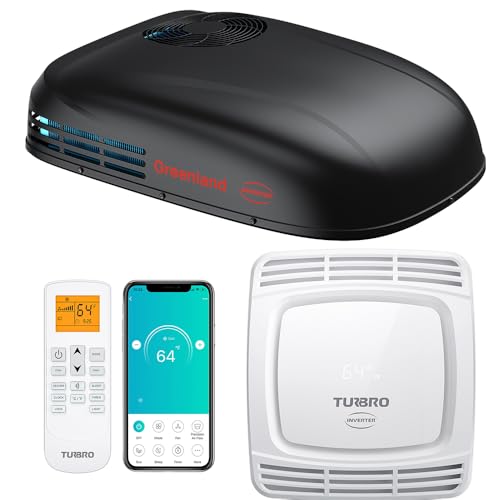
Features listed: inverter compressor with up to 30% greater efficiency vs non-inverter systems, automatic speed adjustment, integrated heat pump for heating and cooling, fan and dry modes, slim 10.0″ profile, WiFi & remote control, LED atmosphere light. Operates across a wide temperature range.
Best for owners who want year-round climate control and improved energy efficiency. Chosen because the inverter compressor adjusts power use and the heat pump provides heating capability without separate electric heaters.
Caution: inverter systems often require compatible electrical and control integration; confirm your RV’s electrical system supports inverter start/current characteristics before selecting.
ASA ACM135 Advent Air 13,500 BTU
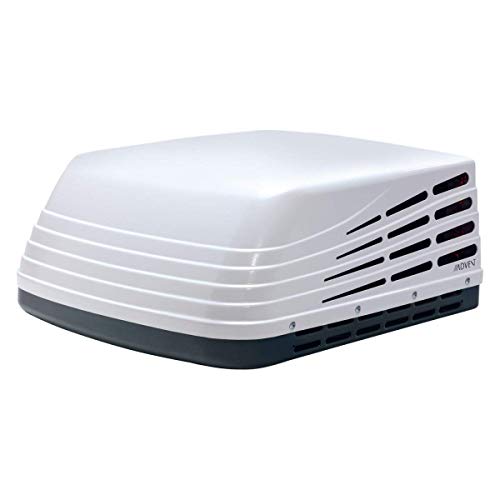
Features listed: 13,500 BTUs at 115 Volt AC, rigid metal-constructed base pan, premium thick watertight vent opening gasket with six dense foam support pads for mounting. Designed as a traditional rooftop AC option with durable components.
Best for RV owners who prioritize a durable metal base pan and robust vent gasket for leak prevention and structural support. Selected for its emphasis on rugged construction and sealing components during roof installation.
Caution: documentation highlights physical construction; check specific installation requirements and confirm fit for your rooftop vent opening before purchase.
Buying Guide: How To Choose A 13,500 BTU RV Air Conditioner
What RV size and layout is 13,500 BTU appropriate for?
13,500 BTU units typically cool medium-to-large RV interiors or open floor plans. Cooling effectiveness depends on insulation, sun exposure, ceiling height, and ventilation. Use BTU as a baseline and upsize if your RV has poor insulation or large glass areas.
Ducted vs Non-Ducted: Which should I choose?
- Ducted: choose if your RV has internal ductwork and you want centralized airflow through ceiling vents.
- Non-ducted: choose if you have a single rooftop distribution box or standard vent cutout; simpler install and better direct airflow.
Is an inverter unit worth it?
Inverter compressors modulate speed and typically use less energy during steady-state operation, improve temperature control, and often reduce start-up current. Choose inverter if you want better efficiency, quieter operation, and heat-pump heating capability.
How important is amp draw and electrical compatibility?
Confirm your RV’s shore power, generator, or inverter capacity and breaker sizes. Low amp draw units let you run more appliances simultaneously and are better for off-grid or solar setups. Always match the unit’s voltage and start-up characteristics to your electrical system.
What about refrigerant and efficiency?
Newer units list R32 or other modern refrigerants with better efficiency and lower environmental impact. Refrigerant alone does not guarantee total efficiency—compressor type, fan design, and insulation also matter.
Noise, airflow, and sleep comfort
Noise ratings help compare comfort during sleep. Higher airflow helps circulate cooled air more quickly but can increase noise. Choose quieter models if overnight comfort is a priority; choose higher airflow if you need fast cooling for large, hot interiors.
Installation and roof fit considerations
- Verify vent opening dimensions (common standard is 14 x 14 inches) and base pan compatibility.
- Review included hardware and whether a distribution box or duct adapter is supplied.
- Consider weight and roof load; lighter units reduce roof stress but confirm sealing materials and gasket quality for leak prevention.
FAQ
What electrical supply do 13,500 BTU RV AC units usually require? Most list 115/120V AC at shore power or generator; check each unit’s amp draw and starting current to ensure compatibility with breakers and generators.
Can I replace a ducted unit with a non-ducted model? Only if your RV interior and roof cutout can accept the non-ducted distribution box and you accept different airflow patterns. Some non-ducted units are not compatible with ducted systems.
Do inverter ACs provide heating? Some inverter rooftop units include a heat pump function that can heat efficiently within a specified outdoor temperature range. Confirm the product’s listed heating capability and operational temperature limits.
How do I verify fit for my rooftop vent? Measure your vent opening dimensions and compare with the unit’s listed vent-fit size (examples include 14.25 x 14.25 inches). Also check roof gasket specification and base pan mounting design.
Don’t Overpay for HVAC Services – Call 888-894-0154 Now to Compare Local Quotes!
Are quieter units always better? Quieter units improve sleep and comfort, but may have trade-offs like lower peak airflow. Choose based on whether overnight noise or rapid cooling is more important for your use case.
What maintenance should I expect? Routine maintenance generally includes cleaning or replacing filters, checking seals and gaskets for leaks, and inspecting condenser coils and fan blades. Follow the manufacturer’s maintenance checklist for safe operation.

How to Get the Best HVAC Prices
- Firstly, keep in mind that installation quality is always the most important thing for residential HVAC project. So never sacrifice contractor quality for a lower price.
- Secondly, remember to look up the latest rebates as we talked above.
- Thirdly, ask for at least 3 bids before you make the decision. You can click here to get 3 free estimates from your local contractors, and this estimate already takes rebates and tax credit into consideration and filter unqualified contractors automatically.
Lastly, once you chose the right contractor, remember to use the tactics from this guide: Homeowners Tactics When Negotiating with HVAC Dealer to get the final best price.