
Best 12-volt air conditioners deliver off-grid cooling and some include heating for year-round comfort in vans, trucks, RVs, and work cabs. For lightweight vans and sleepers choose compact split units like JAYGOVAN or VEVOR. For rooftop replacements or multi-season use choose high-BTU rooftop units such as the Jrswin 15000 BTU. For low-noise, energy-efficient battery operation choose the Gidrox 10000 BTU. The EurHomePlus unit suits users seeking very high stated cooling output. Summary table below highlights type and ideal buyer for each pick.
| Product | BTU / Output | Best For |
|---|---|---|
| JAYGOVAN 12V Air Conditioner | 11000 BTU | Compact split for vans, trucks, tractor cabs |
| Gidrox 10000 BTU 12V DC RV AC | 10000 BTU | Battery-powered, quiet camper or truck sleepers |
| VEVOR Truck Air Conditioner 12V 10000 BTU | 10000 BTU | Mini split for semi cabs and construction vehicles |
| Jrswin DC 12V 15000 BTU Rooftop A/C | 15000 BTU | Rooftop replacement for larger RVs and motorhomes |
| EurHomePlus 12V Electric Car Air Conditioner | 22525 BTU/h (stated) | High-output portable option for large cabs |
JAYGOVAN 12V Air Conditioner Split Type 11000BTU

Features: high-quality plastic internal unit, hard iron external shell, aluminum condenser, 2200–2400W cooling capacity, airflow 8828–15891.6 ft³/h, 400–600W pure copper motor, low voltage protection at 11V, continuous run after full battery charge (stated).
Best for: choose this if you want a compact split-type 12V system designed for vans, trucks, and tractor trailers where durable materials and quick cooling are priorities.
Why selected: the unit lists a split configuration and corrosion-resistant materials suitable for vehicle installations and repeated use in commercial or recreational vehicles.
Caution: the product description states voltage protection and run time after charge but does not provide verified battery capacity or runtime under varying ambient conditions.
Gidrox 10000 BTU 12V DC RV Air Conditioner

Features: 10000 BTU rooftop unit with heater using PTC technology, 12V DC direct battery power (no inverter stated), tested power consumption around 350W in a 30°C ambient, turbo/ECO/Sleep modes, ultra-quiet operation as low as 40dB in Sleep mode, APP remote control.
Best for: better for off-grid campers and truck drivers who need low power draw and quiet overnight operation while relying on DC battery power.
Why selected: the unit emphasizes low power consumption, integrated heating, and very quiet Sleep mode, which suits users prioritizing battery efficiency and noise reduction.
Don’t Overpay for HVAC Services – Call 888-894-0154 Now to Compare Local Quotes!
Caution: product claims about average power consumption and suggested battery pairing are descriptive; actual runtime depends on battery capacity, ambient temperature, and load.
VEVOR Truck Air Conditioner 12V 10000 BTU Mini Split
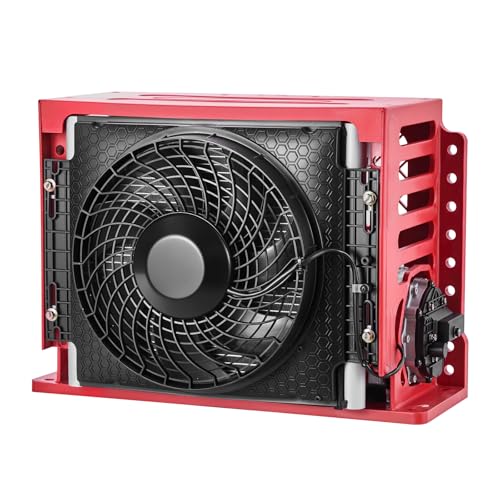
Features: 10,000 BTU cooling, 400 m³/h airflow, automotive-grade inverter technology, variable-frequency scroll compressor, can run for 6–8 hours on a 12V battery (stated), quiet performance down to 65 dB.
Best for: best for drivers of semi trucks, construction vehicles, and tractors who need a mini split system designed for cab comfort and extended battery operation during parking.
Why selected: this model highlights inverter efficiency and a compressor that adjusts speed to reduce power consumption, making it suitable for energy-conscious operators.
Caution: the listed runtime and noise level are product claims; actual performance can vary with cab insulation, ambient heat load, and battery condition.
Jrswin DC 12V RV Air Conditioner 15000 BTU Rooftop
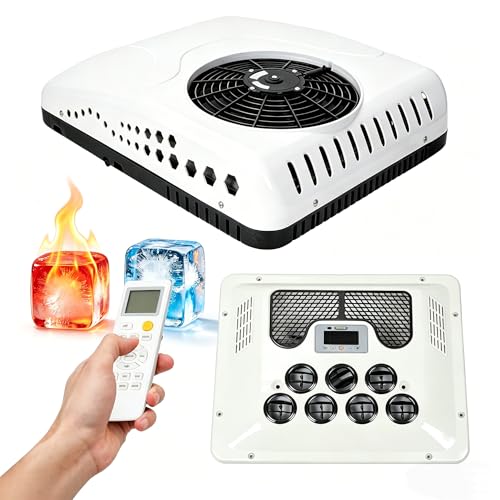
Features: 15,000 BTU cooling and heating, 3-speed fan, digital control panel, high-efficiency 12V DC operation, stated long run times for off-grid use.
Best for: choose this if you need higher BTU capacity for larger motorhomes, trailers, or campers where rooftop replacement-level cooling and multi-season heating are required.
Why selected: higher stated BTU and rooftop form factor fit larger interior volumes and users who want an all-season DC rooftop unit rather than a small split.
Caution: rooftop installation may require specific roof opening dimensions and professional installation; confirm physical fit and mounting needs before purchase.
EurHomePlus 12V Electric Portable Air Conditioner

Features: stated 22,525 BTU/h cooling capacity, 24 refrigeration copper pipes, 80W power listed in features, 3800 rpm pure copper motor, built-in inlet filter for dust, claims high air circulation (16174 ft³/h).
Best for: better for buyers seeking a very high stated cooling output in a portable or compact installation where high airflow and filtration are priorities.
Why selected: the product lists a large stated BTU figure and emphasizes copper piping and filtration, which appeals to buyers focused on peak cooling capacity claims and air cleanliness.
Caution: the combination of extremely high BTU figure and low stated power (80W) is unconventional; verify technical specifications and installation requirements with the seller before purchase.
Buying Guide
How many BTUs do I need for my vehicle?
BTU needs depend on interior volume, insulation, and climate. Small vans and compact cabs often need 8,000–12,000 BTU. Larger RVs and motorhomes typically need 12,000–15,000 BTU or more. Choose higher BTU for poor insulation, high ambient temperatures, or full-time living.
Do I need a split system or rooftop unit?
Split systems offer flexible placement and often quieter cabin air delivery, making them better for cab installations and limited roof space. Rooftop units replace existing roof openings and usually provide higher BTU capacity for whole-RV cooling and integrated heating.
What about power and battery capacity?
Check stated power draw (watts) and modes like ECO or Sleep. For battery-only operation, calculate runtime: Battery Amp-hours × Voltage ÷ Watts ≈ hours (account for inverter losses if used). Choose units with lower power draw for overnight battery use.
How important is noise level?
Noise specifications (dB) matter for sleeping and driving comfort. Sleep or ECO modes reduce fan speed and noise. Mini splits and units with insulated compressors tend to run quieter in the cabin than basic rooftop blowers.
Don’t Overpay for HVAC Services – Call 888-894-0154 Now to Compare Local Quotes!
What installation factors should I verify?
- Roof cutout size or cab mounting space for split/compact units.
- Battery and wiring capacity and whether an inverter is required.
- Weight and mounting points for rooftop units.
- Drainage routing for condensate and compressor vibration isolation.
How to evaluate energy efficiency and runtime?
Compare stated power consumption, inverter technology, and compressor type (variable-frequency or scroll compressors often improve efficiency). Look for modes that reduce power draw and whether heating uses PTC elements or heat pumps depending on needs.
What maintenance and filter considerations apply?
Check for washable or replaceable filters, ease of access to condenser coils, and recommended cleaning intervals. Regular filter and coil cleaning improves airflow and cooling performance over time.
FAQ
Can a 12V air conditioner run directly from a vehicle battery? Many 12V units are designed to run from a vehicle battery, but runtime depends on battery capacity and unit power draw. Confirm battery amp-hour rating and expected watts to estimate runtime.
Is a 12V rooftop unit quieter than a split system? Noise varies by model. Split systems often move noisy components outside the cabin and can be quieter inside, while rooftop units place the compressor and fan closer to the cabin airflow path.
Do 12V units provide heating? Some 12V models include electric heating elements or PTC heaters for low-temperature operation. Check product features for integrated heating if year-round use is required.
How do I check electrical compatibility before buying? Confirm system voltage (12V DC), maximum continuous current draw, wiring gauge requirements, and whether an inverter is needed. Also verify your vehicle’s alternator output or battery bank capacity for off-grid use.
Are stated BTU ratings comparable across brands? BTU ratings are a general measure of cooling capacity but can be influenced by measurement conditions, unit efficiency, and airflow. Compare BTU alongside power consumption, airflow, and real-world performance claims.
What should I verify with the seller before ordering? Confirm physical dimensions, mounting requirements, detailed electrical specs (amps/watts), included controls or remotes, and availability of installation instructions or support.

How to Get the Best HVAC Prices
- Firstly, keep in mind that installation quality is always the most important thing for residential HVAC project. So never sacrifice contractor quality for a lower price.
- Secondly, remember to look up the latest rebates as we talked above.
- Thirdly, ask for at least 3 bids before you make the decision. You can click here to get 3 free estimates from your local contractors, and this estimate already takes rebates and tax credit into consideration and filter unqualified contractors automatically.
Lastly, once you chose the right contractor, remember to use the tactics from this guide: Homeowners Tactics When Negotiating with HVAC Dealer to get the final best price.

