For most RV owners seeking reliable rooftop cooling, a non-ducted 13,500–16,000 BTU unit balances power and installation ease. For battery-dependent vanlifers, a 12V DC unit gives off-grid capability. Below are five top roof air conditioners selected for different buyer needs: ductless replacements, battery-powered vans, established OEM-style units, high-capacity models with heat, and premium fast-cooling units.
| Product | BTU / Type | Best For |
|---|---|---|
| VEVOR RV Air Conditioner (13,500 BTU) | 13,500 BTU / Non-ducted | Standard RVs needing easy rooftop replacement |
| Gidrox 10000 BTU 12V DC | 10,000 BTU / 12V DC battery-powered | Vanlifers and boondockers on battery power |
| ASA Electronics ACM135 Advent Air | 13,500 BTU / 115V rooftop | Owners of classic OEM-style rooftop units |
| TURBRO RV Air Conditioner 15,000 BTU | 15,000 BTU / Non-ducted with heater | RVers wanting year-round comfort with heat |
| FOGATTI RV Air Conditioner 16K BTU | 16,000 BTU / Heat pump & WiFi | Larger RVs needing faster cooling and heat |
VEVOR 13,500 BTU Non-Ducted RV AC

Features from the listing include a 13,500 BTU compressor, 3956W power output, use of R32 refrigerant, and a claimed cooling area up to 107.6 sq. ft. The unit is ductless and ships with an air distribution box, operation panel, and installation hardware. It offers Auto, Cooling, and 3-Speed Fan modes plus a timer.
- Best for: RV owners who need a straight rooftop swap for standard 14.25 x 14.25 inch vents.
- Why selected: Combines common BTU size with included distribution box and mounting hardware for simpler installs.
- Choose this if: You want a non-ducted rooftop unit that lists compatible vent size and bundled parts.
- Avoid this if: Your RV uses a ducted HVAC system—listing notes incompatibility with ducted systems.
Gidrox 10000 BTU 12V DC RV Air Conditioner

The listing highlights a 12V DC power design, ultra-quiet operation down to 40 dB in Sleep mode, and PTC heating for fast heat. Claimed average night power consumption is about 350W in a 30°C ambient with modes like Turbo, ECO, and Sleep. The product includes app remote control.
- Best for: Vanlifers and off-grid travelers who rely primarily on battery power and want low-draw cooling and heating.
- Why selected: Its 12V DC design removes the need for an inverter and targets energy-sensitive users with stated low power consumption.
- Choose this if: You plan to run cooling from an RV battery bank or want rapid heat via PTC tech in cold starts.
- Avoid this if: You lack sufficient battery capacity—listing indicates support for extended use when paired with a large battery (example: 400Ah).
ASA Electronics ACM135 Advent Air 13,500 BTU
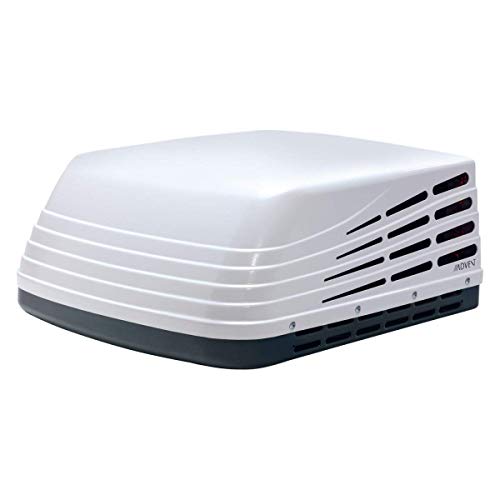
Key listed features are 13,500 BTU capacity, 115V AC power, a rigid metal base pan, and a premium watertight vent gasket with dense foam support pads. The unit reflects a traditional rooftop component design used in many OEM replacements.
- Best for: Owners seeking a proven-style rooftop replacement compatible with standard 115V RV electrical systems.
- Why selected: The metal base pan and watertight gasket indicate a focus on durability and reliable roof sealing in classic rooftop designs.
- Choose this if: You prefer a conventional 115V roof AC that aligns with many factory installs and service parts.
- Avoid this if: You require 12V DC operation or off-grid battery-first operation.
TURBRO 15,000 BTU RV Air Conditioner With Heater

Listing features include up to 15,000 BTU cooling, 1,500W electric heating, fan and dry modes, a 9.6 EER rating, and noise levels as low as 52 dB. The unit offers remote and WiFi control plus ceiling assembly with an atmosphere lamp and recessed lift handles.
- Best for: RV owners who want combined cooling and electric heat in one roof unit for year-round use.
- Why selected: Higher BTU plus integrated electric heat makes it a candidate for RVers needing supplemental heating without a separate furnace.
- Choose this if: You want one rooftop unit to provide both cooling and electric heat with smart control options.
- Avoid this if: Your RV electrical system cannot support the listed 115V heater load without appropriate circuit protection and supply.
FOGATTI 16,000 BTU RV Air Conditioner With Heat Pump

Don’t Overpay for HVAC Services – Call 888-894-0154 Now to Compare Local Quotes!
The product listing states 16,000 BTU cooling, 12,500 BTU heating, a dual-motor triple-fan system delivering 418 CFM airflow, fast temperature change, EER 11.8 efficiency, and low noise at about 43 dB. The listing requires a 15 or 20-amp time-delay fuse or circuit breaker.
- Best for: Larger RVs up to longer coach lengths that need higher-capacity cooling and integrated heat pump heating.
- Why selected: Higher BTU and an explicit airflow figure make it suitable where faster air exchange and stronger cooling/heating are priorities.
- Choose this if: You need more capacity than typical 13,500 BTU units and have appropriate electrical protection per the listing.
- Avoid this if: Your RV electrical panel cannot accommodate the listed fuse or circuit breaker requirements.
Buying Guide
What BTU size do I need for my RV?
Select BTU based on interior volume and sun exposure. Typical rooftop replacements are 13,500 BTU for many travel trailers and midsize motorhomes. Choose 15,000–16,000 BTU for larger coaches or very sunny climates. Higher BTU increases cooling potential but may require greater electrical and structural allowances.
Should I choose 12V DC or 115V AC?
12V DC units let vanlifers run cooling directly from battery banks without an inverter. They suit off-grid use where shore power is limited. 115V AC units match shore power or inverter-based RV electrical systems and often include higher BTU or integrated electric heating.
Non-ducted vs ducted rooftop units?
Non-ducted units use an air distribution box and are simpler to install in many RVs. Ducted units feed multiple vents and can provide more even distribution in larger floor plans. Verify compatibility: some non-ducted listings note incompatibility with ducted systems.
How important is noise level and efficiency?
Noise specs (dB) indicate comfort during sleep and quiet operation. Efficiency ratings like EER or listed wattage affect shore or battery draw and running costs. For battery use, prioritize low-watt or variable-speed compressors. For shore power, EER and noise figures are primary comfort metrics.
What electrical preparations are required?
Check listed voltage, fuse, and circuit breaker requirements. Some high-capacity or heat-enabled units require specific time-delay fuses or dedicated breakers. For battery-powered setups, confirm battery capacity and alternator or charging strategy before selecting a 12V unit.
Installation and compatibility checklist
- Measure rooftop vent opening (common standard: 14.25 x 14.25 inches) and base pan dimensions.
- Confirm ducted vs non-ducted fit for your RV’s ceiling layout.
- Review listed included parts—ADB, operation panel, mounting hardware can simplify install.
- Match electrical requirements (12V vs 115V) with your RV wiring and power availability.
FAQ
Can I replace any rooftop AC with a different brand? Check the base pan dimensions, vent opening size, and whether your RV uses a ducted or non-ducted distribution system. Matching these physical and airflow requirements is essential.
Do 12V DC rooftop units cool as well as 115V units? 12V units can provide effective cooling for smaller spaces and off-grid use but may have lower peak BTU capacity compared to some 115V rooftop units. Consider battery capacity and claimed power consumption when comparing.
Will a rooftop AC provide heating? Some units list electric heating or heat pump capabilities. Refer to the product’s heating BTU or wattage and confirm your RV electrical system can support the listed heating load.
How noisy are roof air conditioners? Noise varies by model and mode. Listings often provide dB levels for Sleep or standard operation. Compare noise figures if quiet overnight operation is a priority.
Is installation difficult? Installation complexity depends on compatibility with your vent opening, included hardware, and whether you need ducting or electrical upgrades. Units that include an air distribution box or detailed installation parts typically simplify the process.
What maintenance is required? Regular cleaning of filters, checking roof gasket seals, and inspecting electrical connections are typical maintenance tasks. Follow the manufacturer’s maintenance guidance listed with the product.

How to Get the Best HVAC Prices
- Firstly, keep in mind that installation quality is always the most important thing for residential HVAC project. So never sacrifice contractor quality for a lower price.
- Secondly, remember to look up the latest rebates as we talked above.
- Thirdly, ask for at least 3 bids before you make the decision. You can click here to get 3 free estimates from your local contractors, and this estimate already takes rebates and tax credit into consideration and filter unqualified contractors automatically.
Lastly, once you chose the right contractor, remember to use the tactics from this guide: Homeowners Tactics When Negotiating with HVAC Dealer to get the final best price.