If you want a high-efficiency air conditioner, prioritize inverter or Energy Star models that reduce energy use while keeping rooms comfortable. Best choices below: Midea U for ultra-quiet, smart control and energy savings; Midea Inverter with Heat for year-round inverter efficiency and heating; GE Profile for Energy Star efficiency with a full-window view; Midea 5,000 BTU for efficient small rooms with simple controls; ZAFRO 6,000 BTU for combined dehumidifier and eco modes. Each pick notes who should buy it and one limitation.
| Product | Best For |
|---|---|
| Midea U Shaped Smart Inverter (12,000 BTU) | Quiet smart control, energy savings |
| Midea Inverter Window AC with Heat (12,000 BTU) | Large rooms needing cooling plus supplemental heat |
| GE Profile ClearView Inverter (12,200 BTU) | Energy Star efficiency with full window view |
| Midea 5,000 BTU EasyCool | Small bedrooms and simple mechanical control |
| ZAFRO 6,000 BTU 3-in-1 | Rooms needing dehumidification plus efficient cooling |
Midea 12,000 BTU U Shaped Smart Inverter Window AC

Features referenced: U-shape design that blocks outside and compressor noise, inverter DC technology with more than 35% energy savings, Wi‑Fi smart control compatible with Alexa and Google Assistant, Clean Filter Indicator Light, operation down to about 32 dBA per listing.
Best for quiet spaces and smart-home users. Choose this if you value ultra-quiet operation and remote control from an app or voice assistant. The inverter design is selected because it reduces energy use compared to traditional fixed-speed units.
Caution: Smart features require Wi‑Fi and setup in the app; avoid this if you need a purely mechanical unit without network setup.
Midea Inverter Window Air Conditioner With Heat – 12,000 BTU

Features referenced: 12,000 BTU cooling for up to 550 sq. ft., inverter technology with Energy Star rated efficiency and up to 35% energy savings, multi-season heat pump function (note: will not operate below 41°F), smart control via Midea SmartHome app and voice assistants, washable front filter, ECO energy saver and 24-hour timer.
Best for homeowners who want an efficient primary AC and supplemental heat in one unit. Choose this if you need large-room cooling plus a heat pump for milder cold periods and want app or voice control to manage settings remotely.
Caution: The heat pump function has an outside-temperature limitation; avoid relying on it as primary heating in climates that routinely dip below 41°F.
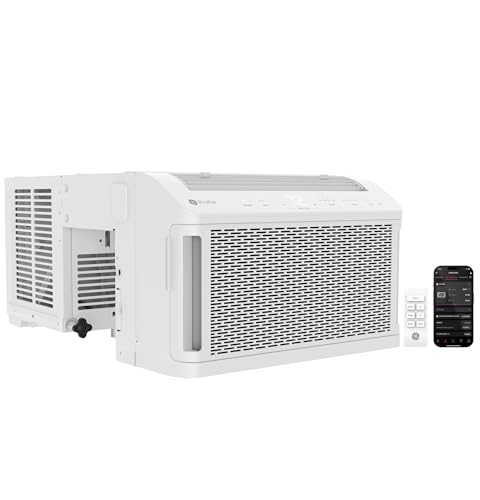
GE Profile ClearView Inverter Window Air Conditioner, 12,200 BTU
Don’t Overpay for HVAC Services – Call 888-894-0154 Now to Compare Local Quotes!
Features referenced: Energy Star certified with inverter technology for adaptive, variable operation and up to 34% better efficiency, ultra-quiet operation as low as 40 dB, full window view design to maintain natural light and window operation, smart home capable and includes remote.
Best for buyers who want Energy Star efficiency and a full-window aesthetic. Choose this if you need a high-efficiency inverter unit that preserves window view and fits specified window sizes while keeping noise low.
Caution: Fits window width and opening height requirements; avoid this model if your window dimensions fall outside the listed fit range.
Midea 5,000 BTU EasyCool Small Window Air Conditioner
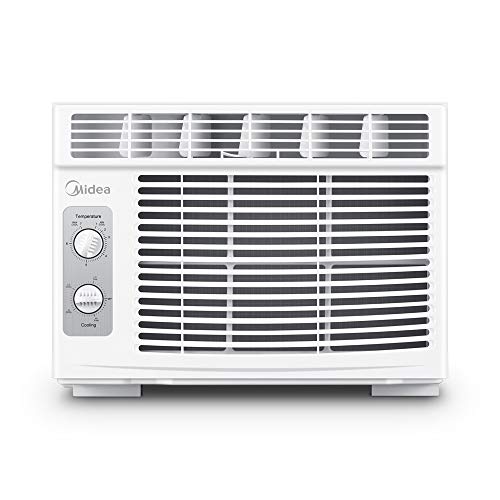
Features referenced: 5,000 BTU for up to 150 sq. ft., 7 temperature settings, 2 cooling and 2 fan-only speeds, 2-way air direction, reusable washable filter, CEER of 11.0 for energy efficiency relative to basic models, quiet operation and mechanical or electronic controls.
Best for small bedrooms or home offices that need an efficient, simple-to-use window AC. Choose this if you want lower running costs for a compact space and prefer mechanical controls with a reusable filter for easy maintenance.
Caution: This is a non-inverter small-unit design; avoid this if you need variable-speed inverter efficiency for larger spaces.
ZAFRO 6,000 BTU Window Air Conditioner 3-in-1

Features referenced: 6,000 BTU for rooms up to 250 sq. ft., 3-in-1 operation (cooling, fan, dehumidifier), dehumidification up to 40 pints per day in Dry Mode, 4-way directional louvers, ECO Mode that pauses the compressor at set temperature, Auto Mode for intelligent adjustments, remote and 24-hour timer included.
Best for humid climates where moisture control matters. Choose this if you need efficient cooling plus a high-capacity dehumidifier in one unit and want ECO mode to reduce compressor run time.
Caution: The listed dehumidification and ECO features help manage humidity and energy, but this is not identified as an inverter or Energy Star inverter model; avoid this if inverter-level energy savings are your primary requirement.
Buying Guide: How To Choose a High-Efficiency Air Conditioner
What does “high-efficiency” mean for window air conditioners?
High-efficiency units typically use inverter technology or meet Energy Star criteria. Inverter compressors vary speed to match cooling demand, which reduces energy use. Energy Star certification indicates the unit meets EPA-defined efficiency standards for a given category.
How do I size the AC for my room?
Match BTU capacity to room square footage. Higher BTUs cool larger spaces faster. Choose a unit sized for the room to avoid short-cycling or inefficient operation. Product listings specify recommended square-foot coverage.
Is inverter technology worth it?
Inverter models adjust compressor speed for steady temperatures and lower energy use. Choose inverter units if you run the AC for long periods or want lower electricity draw. Non-inverter units can still be efficient for small or occasional use.
Do smart controls improve efficiency?
Smart controls enable remote scheduling, temperature setbacks, and voice control. These features help reduce runtime when paired with programmable schedules, making smart-capable units a practical choice for energy-conscious buyers.
How important is noise level?
Noise ratings (dBA) indicate how disruptive a unit will be. Inverter and U-shaped designs often reduce compressor noise. Choose ultra-quiet models for bedrooms, home offices, or media rooms.
What about dehumidification and multi-function models?
Units with dehumidifier modes remove moisture and can improve comfort without overcooling. Choose 3-in-1 models when humidity is a primary concern, but verify whether the unit uses inverter technology for best energy performance.
Installation and window fit considerations
Check product window width and opening height requirements before buying. Full-view designs may preserve natural light but still require compatible dimensions. Installation kit inclusion is helpful for window seals and stability.
Maintenance and filter care
Most units include washable filters and filter indicator lights. Regular filter cleaning maintains airflow and efficiency. Choose units with easy-access filters if you prefer low-maintenance operation.
FAQ
What is the advantage of an Energy Star rated window AC? An Energy Star rating indicates the unit meets efficiency benchmarks that typically lower energy consumption compared to non-certified models.
Don’t Overpay for HVAC Services – Call 888-894-0154 Now to Compare Local Quotes!
How does inverter technology save energy? Inverter compressors vary speed to maintain set temperature, reducing start-stop cycles and lowering overall power draw compared to fixed-speed compressors.
Can a window AC with heat replace a furnace? A window heat pump provides supplemental heat for milder conditions but may not be suitable as a primary heat source in areas with prolonged freezing temperatures; check operating-temperature limitations.
Are smart features necessary for efficiency? Smart features are not required but can improve efficiency by enabling schedules, remote control, and integration with home automation for optimized runtimes.
How do I choose between a 5,000 BTU and 12,000 BTU unit? Choose based on room size: 5,000 BTU for small rooms (around 150 sq. ft.), and 12,000 BTU for larger rooms up to the manufacturer’s recommended coverage. Oversizing can cause short-cycling; undersizing reduces cooling effectiveness.
How often should I clean the filter? Clean washable filters regularly, typically every few weeks during heavy use, to maintain airflow and efficiency. Follow the manufacturer’s guidance for the specific model.

How to Get the Best HVAC Prices
- Firstly, keep in mind that installation quality is always the most important thing for residential HVAC project. So never sacrifice contractor quality for a lower price.
- Secondly, remember to look up the latest rebates as we talked above.
- Thirdly, ask for at least 3 bids before you make the decision. You can click here to get 3 free estimates from your local contractors, and this estimate already takes rebates and tax credit into consideration and filter unqualified contractors automatically.
Lastly, once you chose the right contractor, remember to use the tactics from this guide: Homeowners Tactics When Negotiating with HVAC Dealer to get the final best price.