For buyers needing reliable heating and cooling in cold weather, choose a mini split explicitly rated for low-ambient operation or hyper-heat performance. Top picks below suit different needs: Daikin for extreme cold and features, DELLA for high efficiency hyper-heat, Pioneer Diamante for proven low-ambient lineup, Feelfunn for smart controls and all-season range, and Senville LETO for flexible household use. Each selection lists who it’s best for and one limitation to consider.
| Product | Best For | Key Low-Ambient Feature |
|---|---|---|
| Daikin Aurora 24,000 BTU | Homes in very cold climates | Operates down to -13°F heating; 100% capacity at 5°F |
| DELLA Hyper Heat 12,000 BTU | Energy-conscious buyers needing hyper-heat | Hyper-heat functionality down to -13°F; high SEER2 |
| Pioneer Diamante Pro 12,000 BTU (230V) | Residential or light commercial low-ambient needs | Diamante series designed for low-ambient use |
| Feelfunn 9000BTU | Smaller rooms with smart control needs | Outdoor operation from -13°F to 125.6°F |
| Senville LETO 12,000 BTU (110/120V) | Standard home rooms that need voice control | Heat pump function operational down to ~5°F |
Daikin 24,000 BTU Aurora Low Ambient
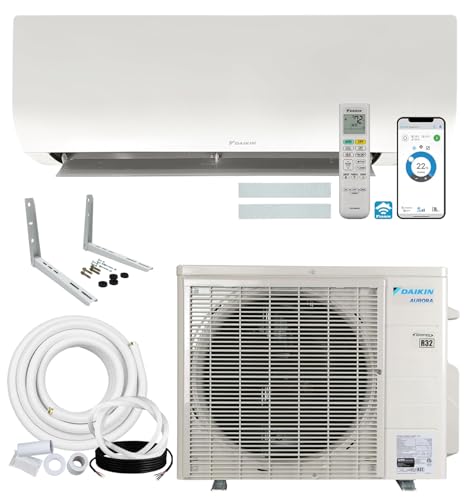
Features referenced: enhanced low ambient capacity; cooling operation 50°F–114.8°F; heating operation down to -13°F with up to 100% heating capacity at 5°F; built-in Wi‑Fi control; Titanium Apatite air purifying filter; hot-start and comfort modes.
- Best for: large rooms or whole-home zones in very cold climates where continuous heating at low outdoor temps is required.
- Why selected: explicitly engineered for cold climates with stated continuous operation to -13°F and full heating capacity at near-freezing ambient temps.
- Caution: 24,000 BTU capacity is sized for larger spaces; choose based on accurate load calculations to avoid oversizing.
DELLA Hyper Heat 12,000 BTU WiFi Mini Split

Features referenced: hyper-heat operation to -13°F; 12,000 BTU capacity suitable for up to ~550 sq. ft.; 24 SEER2 energy efficiency claim; Wi‑Fi and Alexa compatibility; full installation kit with pre-charged heat pump and line set included.
- Best for: buyers who want a high-efficiency, compact hyper-heat unit for medium rooms and easy integration with smart home voice assistants.
- Why selected: advertises hyper-heat performance to very low temperatures and high SEER2, which helps sustain heating in cold conditions while prioritizing efficiency.
- Caution: system requires professional installation and correct line-set handling; do not treat as a DIY install if instructions indicate professional service.
Pioneer Diamante Pro 12,000 BTU 230V
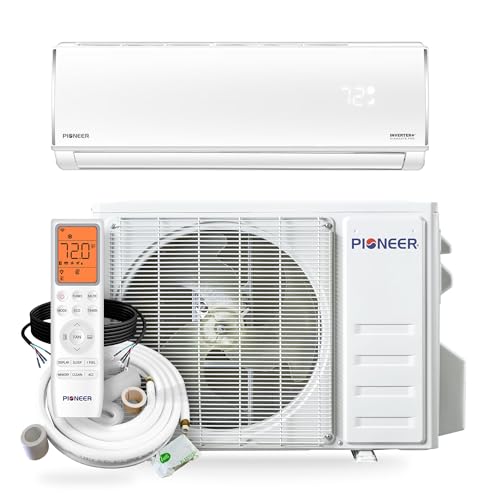
Features referenced: Diamante ductless mini split inverter heat pump; 12,000 BTU with 20 SEER and 9.5 HSPF efficiency; Diamante series includes a full line of low-ambient wall-mounted mini splits for residential and light commercial applications.
- Best for: homeowners or light commercial buyers who need a mid-range capacity unit from a series designed for low-ambient environments.
- Why selected: the Diamante series is specifically noted for low-ambient capability across multiple capacities, making it flexible for matching to room size and electrical service (230V model here).
- Caution: verify voltage and breaker requirements for the 230V model before purchase to match site electrical supply.
Feelfunn 9000BTU Mini Split With Smart Controls
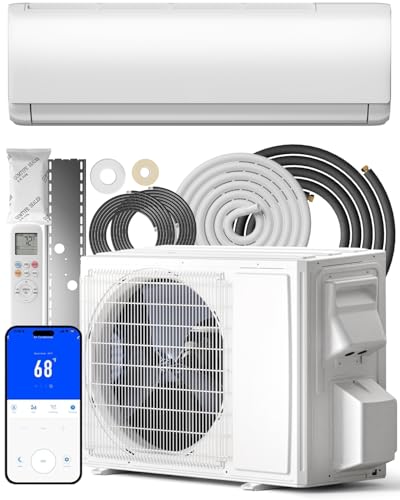
Features referenced: 9,100 BTU cooling and 9,500 BTU heating for rooms up to 550 sq. ft.; outdoor unit operates from -13°F to 125.6°F; smart control via Alexa and Google Assistant and mobile app; self-cleaning and washable filter; remote included.
- Best for: smaller rooms where smart-home integration, low-noise operation, and wide outdoor operating temperature range matter.
- Why selected: explicit outdoor temperature range down to -13°F supports low-ambient needs for many regions, and smart features aid convenient remote preconditioning.
- Caution: 9,000 BTU class is targeted at smaller areas; avoid this unit if you need heating for larger open-plan spaces.
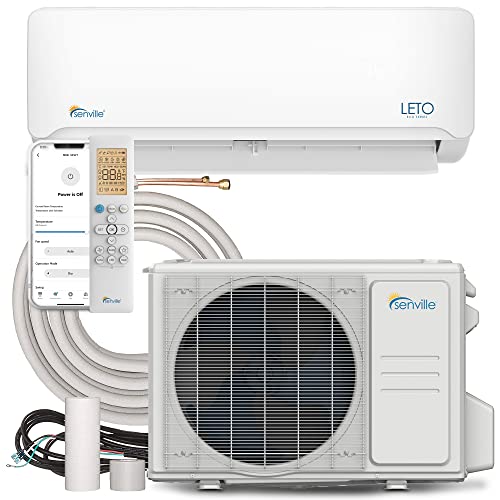
Senville LETO 12,000 BTU 110/120V
Don’t Overpay for HVAC Services – Call 888-894-0154 Now to Compare Local Quotes!
Features referenced: Alexa-enabled control and app integration; 4-in-1 functions (cooling, heat pump, dehumidifier, fan); DC inverter technology; heat pump functional down to about 5°F (-15°C); SEER2 ~20.8 for this model.
- Best for: buyers needing a versatile household unit with voice control and reliable seasonal performance in moderate cold climates.
- Why selected: the LETO line is marketed as an all-season solution with inverter efficiency and smart control, suitable for bedrooms and living areas where moderate low-ambient heating is required.
- Caution: stated heat-pump function to 5°F is less cold-rated than hyper-heat or -13°F units; avoid this if you expect sustained sub-zero conditions.
Buying Guide
What Does “Low-Ambient” Mean For Mini Splits?
Low-ambient mini splits are designed to operate efficiently when outdoor temperatures are very low. Manufacturers specify the minimum outdoor temperature at which the unit can provide rated heating capacity. Choose units with lower minimum operation temps for colder climates.
Should I Choose Hyper-Heat Or Standard Low-Ambient?
Choose hyper-heat if you need reliable heating at extreme subfreezing temperatures (e.g., -13°F). Standard low-ambient units that maintain capacity to around 5°F are suitable for milder cold climates.
How Important Are SEER2 And HSPF Numbers?
SEER2 indicates cooling efficiency; HSPF or similar metrics indicate heating efficiency. Higher numbers generally reduce operating costs in their respective modes. For year-round use in cold climates, balance both cooling and heating efficiency when comparing models.
What Capacity Do I Need?
Match BTU capacity to the room or zone size and insulation level. Undersized units struggle to heat in cold weather; oversized units short-cycle and waste energy. For accurate sizing, use a heat-load calculation or consult an HVAC professional.
Voltage And Installation Kit Considerations
Verify whether the unit is 115/120V or 208/230V to match your electrical service. Confirm included installation kit length and whether the unit is pre-charged; long line-set runs may require refrigerant adjustments and professional installation.
Are Smart Controls And Voice Assistants Useful?
Smart controls let you preheat spaces remotely, which is useful in cold climates to avoid long recovery times. Voice assistants add convenience but do not affect low-ambient performance; prioritize rated low-temperature operation first.
What To Expect From Filters And Maintenance?
Low-ambient operation does not eliminate maintenance needs. Look for washable filters and self-cleaning functions to reduce indoor air-quality tasks. Regular professional checks keep outdoor coil and refrigerant systems operating properly in cold weather.
FAQ
Can mini splits heat below freezing? Yes—many low-ambient and hyper-heat mini splits are specified to operate at temperatures well below freezing. Check the manufacturer’s minimum operating temperature before buying.
Do I need a special model for very cold climates? Yes—choose units marketed for low-ambient or hyper-heat operation with stated minimum temperatures that match your local winter lows.
Is professional installation required for low-ambient units? Professional installation is recommended, especially if the line-set length needs adjustment or vacuuming and refrigerant charging are necessary for long runs.
Will smart controls improve cold-weather performance? Smart controls allow remote preheating and scheduling, which improves occupant comfort but do not change the unit’s rated low-temperature capability.
How do I compare units for energy use in winter? Compare heating efficiency metrics (HSPF or manufacturer heating performance) and SEER2 for cooling. Also consider claimed low-temperature heating capacity and inverter technology for steady output.
What are common limitations to watch for? Common limitations include inadequate capacity for the space, mismatched voltage, shorter-than-needed installation kits, and units that aren’t rated for your region’s lowest temperatures.

How to Get the Best HVAC Prices
- Firstly, keep in mind that installation quality is always the most important thing for residential HVAC project. So never sacrifice contractor quality for a lower price.
- Secondly, remember to look up the latest rebates as we talked above.
- Thirdly, ask for at least 3 bids before you make the decision. You can click here to get 3 free estimates from your local contractors, and this estimate already takes rebates and tax credit into consideration and filter unqualified contractors automatically.
Lastly, once you chose the right contractor, remember to use the tactics from this guide: Homeowners Tactics When Negotiating with HVAC Dealer to get the final best price.