The US homeowners are spoilt with options regarding heating and cooling. Choosing the appropriate HVAC brand may imply more energy savings, less repair, and comfort throughout the year. This post is a review of the top residential HVAC brands in America, their energy efficiency, reliability, smart features, and user satisfaction.
The brands discussed are all popular in the American market and are highly rated by both the professionals and consumers.
A table of comparison of the best brands is given below, and each brand is discussed in detail.
Top HVAC Brands Comparison
| Brand | Energy Efficiency | Reliability | Smart Features | User Ratings |
|---|---|---|---|---|
| Carrier (Bryant) | Very Good (Up to 24 SEER2) | Excellent | Advanced | Excellent |
| Trane (Amer. Standard) | Very Good (Up to ~22 SEER) | Excellent | Advanced | Excellent |
| Lennox | Excellent (Up to 28 SEER) | Very Good | Advanced | Very Good |
| Goodman (Amana) | Good (Up to ~20 SEER2) | Good | Basic | Good |
| Rheem (Ruud) | Good (Up to ~20 SEER) | Very Good | Moderate | Very Good |
| York | Good (High efficiency options) | Good | Basic | Good |
| Mitsubishi Electric | Excellent (Ductless systems) | Excellent | Advanced | Very Good |
Carrier (and Bryant)
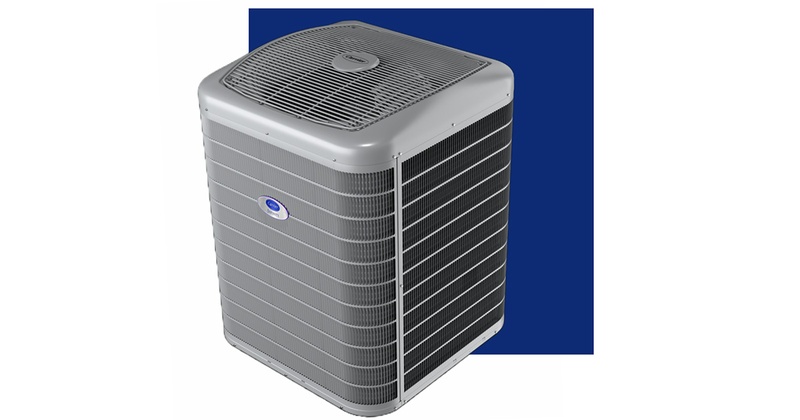
Carrier is among the oldest and most reputable HVAC manufacturers, which was established in 1915 by Willis Carrier (the inventor of modern air conditioning). The products of Carrier are characterized by innovative design and long-term performance. Its subsidiary Bryant is made with the same technology and even on the same assembly lines so Bryant systems are the same quality with a different name.
Energy Efficiency: Carrier has a broad selection of high efficiency models including its Infinity series that goes up to ~24 SEER2 (one of the highest available). This dedication to efficiency translates to a large number of Carrier units being Energy Star qualified and homeowners can realize large energy savings compared to older systems.
Reliability: Carrier (and Bryant) systems are known to be very reliable, and can last 15-20 years with little maintenance and few problems. According to the reviews of Forbes Home, Carrier has a high rating of reliability and customer satisfaction ratings compared to other brands. These units are designed to operate trouble-free over decades and that is why many installers report that Carrier/Bryant receives the least number of repair calls.
Smart Features: Carrier was one of the first to use smart HVAC technology. Its premium Infinity System provides sophisticated humidity control, zoning and ultra-quiet operation to provide custom comfort. The majority of Carrier models are compatible with Wi-Fi thermostats and the smart controls of the company, which enables homeowners to control temperatures and check their system through smartphone applications or voice assistants.
User Satisfaction: Carrier has gained a good reputation among homeowners, and it is always in the top in consumer trust surveys. Forbes Home has listed it as one of the best HVAC companies of 2023.
Owners often commend Carrier because of its silent operation and peace of mind and Bryant enjoys the same good reputation because of the same engineering.
Trane (and American Standard)
Trane (established 1913) is the name of durable, built to last HVAC systems. Trane, now a part of Trane Technologies and based in North Carolina, has a reputation of being well tested and well built. It has a sister brand American Standard which has the same engineering as Trane, the two are basically the same equipment with different logos, and they are equally as good in quality and reliability.
Don’t Overpay for HVAC Services – Call 888-894-0154 Now to Compare Local Quotes!
Energy Efficiency: Trane manufactures numerous high efficiency furnaces, heat pumps and air conditioners. It has a high-end TruComfortTM variable-speed AC that has a maximum of ~22 SEER (roughly 20 SEER2), one of the highest in the market. Every product line of Trane has Energy Star qualified models.
The brand concentrates on functional efficiency that translates to reduced utility bills and its units are also known to be efficient even during extremely hot or cold weather.
Reliability: Trane is considered as one of the most reliable HVAC brands. Contractors who have serviced thousands of systems report that Trane (and Am. Standard) units last 20 or more years when correctly installed. This durability and low rate of breakdowns have enabled Trane to be named as the most trusted HVAC brand in America in the last 10 years.
The durability of Trane in the field is due to the heavy-duty parts (such as the unique all-aluminum spine-fin coils)
Smart Features: Trane uses smart home features in its systems. The brand has Wi-Fi enabled thermostats and Trane Home app to monitor and control remotely. Home owners are able to change temperatures, create schedules and get system health alerts anywhere.
Trane also has popular smart thermostat and voice control integrations, maintaining its products at the forefront of home automation.
User Satisfaction: Trane customer satisfaction is one of the best of any HVAC brand. Once homeowners invest in a Trane system they tend to be very loyal, a fact that is evidenced by the fact that Trane has been rated the #1 most trusted HVAC brand by consumers in a decade long survey.
Trane is quiet and has low maintenance requirements, which are cited by many reviews. Trane is one of the best options when it comes to getting peace of mind as it is rated 5 stars in all surveys in terms of overall performance and support.
Lennox
Lennox (established 1895) is commonly considered the luxury HVAC brand, with high-end features and systems of ultra-high efficiency. Lennox is based in Texas and has led many energy-saving technologies, and it positions itself as an innovator and green efficiency leader. Lennox systems are more expensive, but they are also the best in terms of performance and comfort features.
Energy Efficiency: Lennox is the leader in energy efficiency. Its top of the line air conditioner, the Lennox SL28XCV, has a SEER rating of up to 28, the highest of all major brands. Indeed, Lennox was awarded the title of the Most Efficient AC brand of 2024 by Forbes Home.
Such high efficiency can be converted to significantly reduced electricity bills. Even the mid-range models of Lennox tend to be above average SEER, which indicates the brand is concerned with reducing energy expenses.
Reliability: Lennox equipment is well constructed and reliable, but with its state-of-the-art designs, it has more parts and is more complex. The trade-off to all those bells and whistles is that there are more parts that may break down with time. A Lennox should be maintained regularly to ensure that it is running well.
In most cases, Lennox systems are reliable to the owners, although repairs (in case they are necessary) are slightly more complicated because of the proprietary components and high-tech. To most people, this trade-off is worth the performance and efficiency payoffs.
Smart Features: Lennox is a technology leader, and it installs smart features in its systems. The Lennox iComfort S30 thermostat and the app that comes with it enable the user to control, schedule, and monitor energy. Their variable-speed compressors and fans are able to work with smart controls to change comfort settings in real-time.
Lennox systems are also compatible with smart home assistants and employ such functions as climate IQ and humidity control to maximize comfort on their own. In brief, Lennox provides some of the most advanced and networked home comfort products.
User Satisfaction: Lennox users are typically very satisfied with the comfort level and energy savings that they experience as homeowners. Lennox was ranked as the Best Overall HVAC company by Forbes Home in 2024, which is an indicator of high consumer confidence in the brand.
A lot of Lennox users are very pleased with the low utility bills, quiet and constant temperatures. The primary warning is the initial price which is higher, Lennox is an investment, but one that will pay off in the long run performance. The general customer satisfaction is quite high, particularly among the customers who are more concerned with state-of-the-art features and efficiency.
Goodman (and Amana)
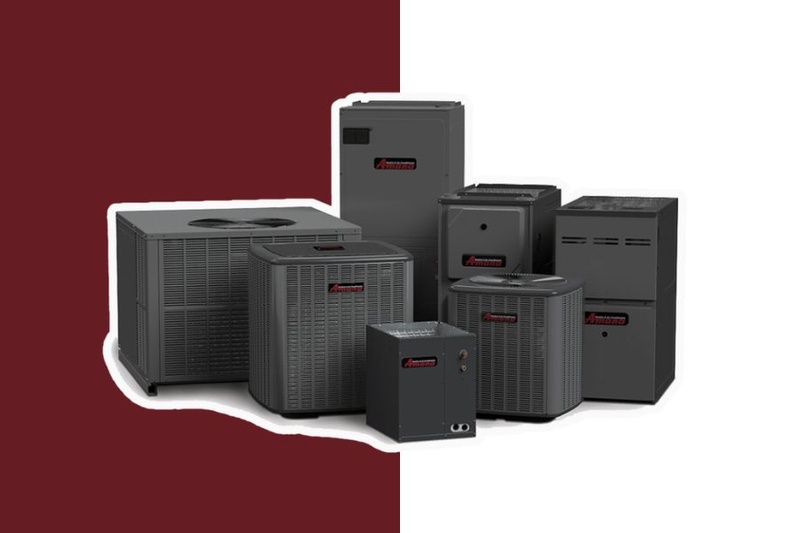
Goodman is an American manufacturer (located in Texas) that is famous due to its low-priced and simple HVAC systems. Goodman was established in 1975 and acquired by Daikin group in 2012. The company focuses on value—delivering good, plain performance at a reduced price.
Amana is the high-end sister brand of Goodman, with the same manufacturing (and also under Daikin) but with longer warranties and more high-end products. The two brands are American-made and have a large installer network.
Energy Efficiency: Goodman offers good efficiency on most of its products, but it is not normally the most efficient. Its best central ACs (sold under the Amana brand to high-end consumers) are about 24.5 SEER (approximately 20 SEER2) in cooling efficiency. This is a very good efficiency rating in most households, although it is a bit lower than the ultra-premium Lennox or Carrier ones.
Don’t Overpay for HVAC Services – Call 888-894-0154 Now to Compare Local Quotes!
Goodman concentrates on reasonable efficiency and practical price, all its units are up to date with modern federal standards, and many of them are Energy Star qualified, which makes them a wise decision when it comes to efficiency on a budget.
Reliability: Goodman is an affordable brand, so it makes its units durable and serviceable. Actually, Goodman systems are commonly applied in rental houses and multi-family houses since they can bear intensive usage without expensive maintenance.
A Goodman air conditioner or furnace can be easily expected to last 12-15 years with proper installation and maintenance. The company also provides one of the most liberal warranties in the industry (usually 10-year parts and even lifetime unit replacement on the best Amana models), which increases the confidence of homeowners.
Goodman might not be the longest-lived of Trane or Carrier, but it provides good reliability in its category.
Smart Features: Goodman does not want to make things complicated when it comes to technology. There will be fewer proprietary smart devices and applications and consequently the systems will have fewer complex components.
With that said, Goodman has added the essential smart features that count: most of their models feature ComfortBridge technology, which enables the controls of the HVAC system to interact with each other and automatically optimize themselves to be efficient.
Goodman/Amana units can be used with popular smart thermostats (such as Nest or Ecobee) to provide remote control and scheduling to the homeowner. In short, the brand addresses the basics of smart HVAC control, yet it does not focus on high-end IoT integration as a selling point.
User Satisfaction: Goodman is among the most installed brands in America and it has a good following among the cost-conscious buyers. It is often listed among the best options when it comes to budget-conscious people.
Most homeowners are surprised at the performance they receive at the price, or in other words, a good deal that heats and cools reliably.
Goodman customer satisfaction is also high when the system is installed by a well-known contractor (proper installation is a key to any brand, but especially to value brands). Positive feedback is also fuelled by the fact that Amana has better warranties, which cover the consumers longer.
Although the owners of premium brands may give their systems a little higher score, Goodman does not lag behind with its good reputation and millions of happy customers who value its value offer.
Rheem (and Ruud)
Rheem is a famous American brand which manufactures HVAC equipment and water heaters. Rheem was established in the 1920s, and it has gained a reputation of reliable performance and mid-range price.
Its sister brand Ruud is almost the same in terms of product lineup (Rheem purchased Ruud decades ago), and a Ruud system will be the same in terms of features and reliability as a Rheem. The two brands are widely applied in the residential central air conditioners, heat pumps, and gas furnaces in the U.S.
Energy Efficiency: Rheem has a wide range of systems that have competitive efficiency ratings. The highest rated Rheem Prestige series air conditioners and heat pumps have SEER ratings of the low 20s and furnaces have up to 96+% AFUE that is comparable to other major brands.
Although Rheem may not promote the ultra-extreme SEER ratings such as 28, it emphasizes on the real world efficiency improvements that count on a daily basis. A lot of Rheem units bear the Energy Star label.
Don’t Overpay for HVAC Services – Call 888-894-0154 Now to Compare Local Quotes!
All in all, Rheem can be expected to offer efficient operation that will save energy bills, although the absolute max efficiency is a little lower than the most expensive brands.
Reliability: Rheem is very admired in terms of reliability. As a matter of fact, HVAC professionals believe that Rheem air conditioners are among the most dependable in the market. These units are constructed to serve many years and they hardly need major repairing.
Rheem/Ruud systems are designed in a more simple and proven way, and hence do not break down unexpectedly. Customers who perform routine maintenance usually have their Rheem products operating trouble free long after their warranty expires.
This reliability is what makes Rheem a favorite to many who want a low-stress experience.
Smart Features: Rheem has been adding more technology to its systems in the recent past. They provide the Rheem EcoNet platform, which enables some of its HVAC (and water heating) products to be connected to a Wi-Fi enabled hub to be remotely monitored and controlled.
As an example, you may control your Rheem thermostat with a smartphone application or receive notifications in case the system requires maintenance.
Rheem is realistic in its attitude to smart features: the functions such as temperature/humidity scheduling and easy diagnostics are provided, but the interface is not complicated. It might not be as sophisticated as Carrier or Lennox smart ecosystem, but Rheem offers all the important smart features that most homeowners require to remain comfortable and aware.
User Satisfaction: Rheem has received very positive feedback by homeowners. Rheem is always in the top level in terms of customer satisfaction and trust in national surveys.
Customers also tend to purchase Rheem once more when they are replacing an older model, and this is a testament to their trust in the brand.
Some of the common accolades are the affordability of the product to performance ratio and the peace of mind that is associated with the reliability of Rheem.
The only small criticism that arises is that Rheem units are somewhat louder than some of the high-end competitors, a trade-off of their solid construction. Nevertheless, the sound levels are rather acceptable to most of the users and worth the trustful comfort Rheem systems offer.
York
York is a heritage brand of HVAC (founded in 1874) which is currently owned by Johnson Controls. York has provided HVAC systems in numerous well-known installations (and historic landmarks) and applies that experience on a large scale to its residential products.
In the domestic market, York has concentrated on providing reliable performance at a more affordable cost, which has made it a favorite among people who want to get value without compromising quality.
Energy Efficiency: York furnaces and air conditioners have good efficiency choices. Their high-end York Affinity™ series air conditioners have SEER ratings of about 20–21 and this makes them in the Energy Star elite category.
Even their cheaper models offer mid-high teens SEER efficiency, which is appropriate to satisfy regional efficiency requirements.
York does not yet outperform such brands as Lennox in absolute SEER ratings, but it offers a decent balance, as homeowners can obtain high efficiency without paying the high price.
Basically, York is bringing energy saving technology within the reach of more budgets.
Reliability: York has decent reliability that has been on the rise in the recent years. According to HVAC technicians, the latest generation of units produced by York is rather durable and does not wear out easily, and there are not many common problems to mention.
As with any brand, routine maintenance is important, but York has easier designs, which make maintenance simple.
It should be mentioned that York employs most of the same internal parts as other large brands (due to the manufacturing volume of Johnson Controls), so the reliability is no worse than the industry average. York systems usually provide long service life to their owners; often ten years or more, and the company provides strong warranties (generally 10 years on compressors and parts) to support their products.
Smart Features: York has also come up with smart-friendly features in its product line to meet the current requirements. The York Affinity premium series has the Hx™3 Communicating Thermostat, a Wi-Fi enabled touchscreen control that can be used with a mobile app to access remotely.
This enables the user to change temperatures and monitor system status remotely. Also, York systems are compatible with other well-known third-party smart thermostats, allowing homeowners to choose their own method of adding connectivity.
Although the proprietary app and ecosystem of York are not as comprehensive as those of some of its rivals, they include such basics as scheduling and remote monitoring.
This presents York customers with the advantage of intelligent HVAC control with little complexity.
User Satisfaction: The value proposition of York appeals to many homeowners who decide to use it, and most of them are rather satisfied with this choice.
York is frequently found in the lists of the best HVAC brands that can be considered as affordable yet providing good quality.
People are likely to like the fact that higher-end models of York run quietly and provide good cooling/heating at the price. The satisfaction ratings of customers of York are usually in the middle-to-upper range.
It has less frills, and less complaints. And since York is supported by a big company (Johnson Controls), customers have expressed good support in case of warranty service or parts.
Overall, York is a good ownership experience, particularly to those who value affordability.
Mitsubishi Electric (Ductless Systems)
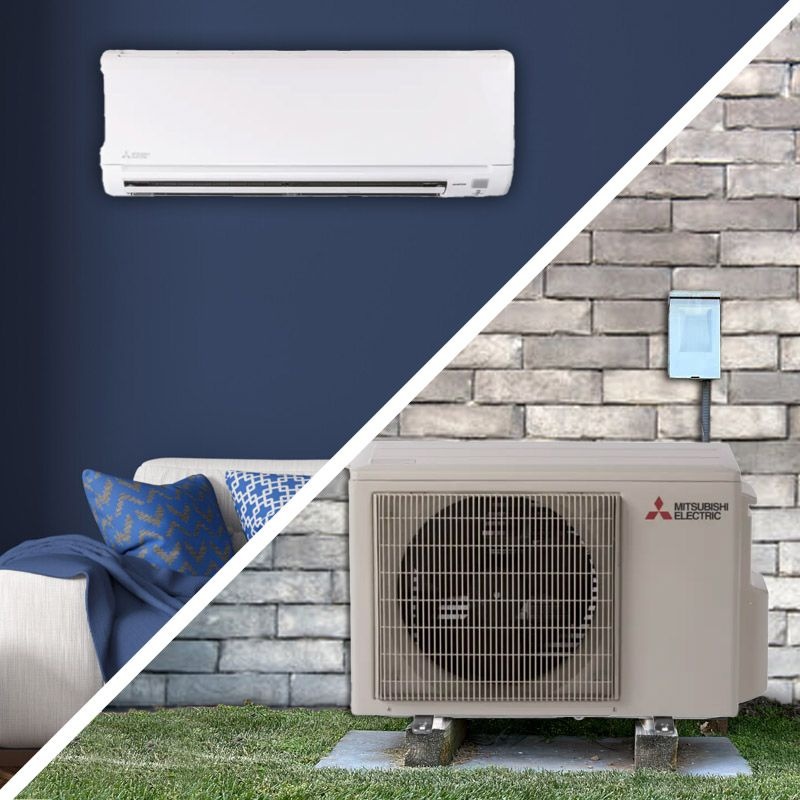
Mitsubishi Electric is a worldwide manufacturer of ductless mini-split HVAC systems.
Mitsubishi is unlike the rest of the brands on this list (which provide traditional central AC and furnaces) because it specializes in ductless heating and cooling of homes. In the U.S., mini-split heat pumps and air conditioners made by Mitsubishi have gained great popularity as additions, or in older homes that lack ducts, or even as whole-house conditioning in areas where their efficiency is outstanding.
Mitsubishi is a Japanese based company whose products are well distributed and supported in America.
Energy Efficiency: The ductless systems of Mitsubishi are one of the most energy-efficient HVAC systems. With the help of the advanced inverter technology, some models of Mitsubishi mini-split have SEER ratings that go well into the high 20s or even 30s with smaller capacities, which is more than most central AC units.
These systems adjust the output to prevent energy wastage and provide high efficiency and reduce electric bills.
Moreover, most of the Mitsubishi heat pump systems are eligible to be used in cold climates and can be used to heat and cool effectively, which saves energy throughout the year.
Reliability: Mitsubishi mini-splits have been proven to be very reliable and long-lasting. The most common comments made by users and HVAC pros are that these systems just run year after year with little problems.
The parts (such as compressors and fans) are designed to run continuously and are usually over-engineered to be durable.
It is not unusual that a Mitsubishi ductless unit can serve 15–20 years. In the case where problems occur, they are usually minor (like a sensor or remote control problem). This consistency and build quality has made Mitsubishi very reputable in the ductless market because homeowners can be assured that their system will provide the comfort they need without having to repair it regularly.
Smart Features: Mitsubishi Electric has a powerful set of smart capabilities in their ductless systems. The Mitsubishi Kumo Cloud app allows homeowners to manage every indoor unit using a smartphone or tablet to control the temperature and fan speed in each room.
A lot of Mitsubishi systems can also be connected to smart home assistants (such as Amazon Alexa or Google Home) via optional adapters, allowing you to control your mini-split using your voice.
The zoned system of ductless (every room or area has its own unit) automatically provides you with smart zoning ability, you can heat or cool only the rooms you want.
In general, Mitsubishi introduces the high-tech convenience to ductless HVAC, and it is simple to maximize comfort and efficiency with the help of modern controls.
User Satisfaction: The satisfaction of the customers with the ductless systems of Mitsubishi is mostly high. The homeowners frequently report that the comfort level increased dramatically after the installation of a Mitsubishi mini-split, the rooms that used to be too hot or cold are now perfectly comfortable.
Another major advantage that the users like is the silent functioning (indoors and outdoors). Mitsubishi often tops or near the top in consumer surveys that concentrate on ductless units with regard to performance and reliability.
The cost of initial investment is more than some of its substitutes, but the majority of owners believe that the price is worth the efficiency of the system and the comfort which is provided by the system and is personal.
To put it simply, Mitsubishi has gained a cult following in the U.S. when it comes to its ductless HVAC systems, scoring high in terms of efficiency, user-friendliness, and quality in general.

How to Get the Best HVAC Prices
- Firstly, keep in mind that installation quality is always the most important thing for residential HVAC project. So never sacrifice contractor quality for a lower price.
- Secondly, remember to look up the latest rebates as we talked above.
- Thirdly, ask for at least 3 bids before you make the decision. You can click here to get 3 free estimates from your local contractors, and this estimate already takes rebates and tax credit into consideration and filter unqualified contractors automatically.
Lastly, once you chose the right contractor, remember to use the tactics from this guide: Homeowners Tactics When Negotiating with HVAC Dealer to get the final best price.