The Ecobee thermostat is a popular smart device known for improving comfort and energy efficiency. When it fails to power up, it can be frustrating and inconvenient. This article explores the possible reasons behind the Ecobee thermostat not turning on and suggests reliable troubleshooting steps. From common wiring issues to firmware glitches, there are multiple factors at play. Understanding each factor can help in resolving the problem swiftly.
Below is a brief overview of potential culprits and quick checks one might consider:
| Possible Reason | Quick Check |
|---|---|
| Power Supply Issues | Inspect HVAC switch, breaker, or fuse |
| Blown Fuse In Furnace | Check and replace with recommended rating |
| Incorrect Wiring | Verify wire labels and proper terminals |
| Software Glitch | Perform firmware updates or resets |
Understanding The Ecobee Thermostat’s Core Functionality
The Ecobee thermostat operates by managing the heating and cooling system based on user-set preferences and intelligent sensors. Its core purpose is to monitor indoor climate and optimize energy usage. According to the U.S. Energy Information Administration, a well-programmed smart thermostat can help homeowners save a notable percentage on utility bills annually.
When an Ecobee thermostat fails to turn on, it typically indicates a problem with power flow or internal software processes. Since these thermostats require a continuous 24V AC power supply through the C-wire, any interruption in the current can cause a shutdown.
One of the key highlights of Ecobee is its ability to gather occupancy data and adjust temperature automatically. However, if it doesn’t receive proper voltage or is hindered by system faults, these advanced features remain inaccessible. Many times, a simple power cycle can resolve the issue if no significant hardware fault exists.
By understanding its design, users can isolate whether the outage stems from wiring complications, HVAC system malfunctions, or firmware errors. With knowledge of the thermostat’s fundamental functioning, diagnosing becomes more precise and less time-consuming.
Common Causes For An Ecobee Thermostat Not Turning On
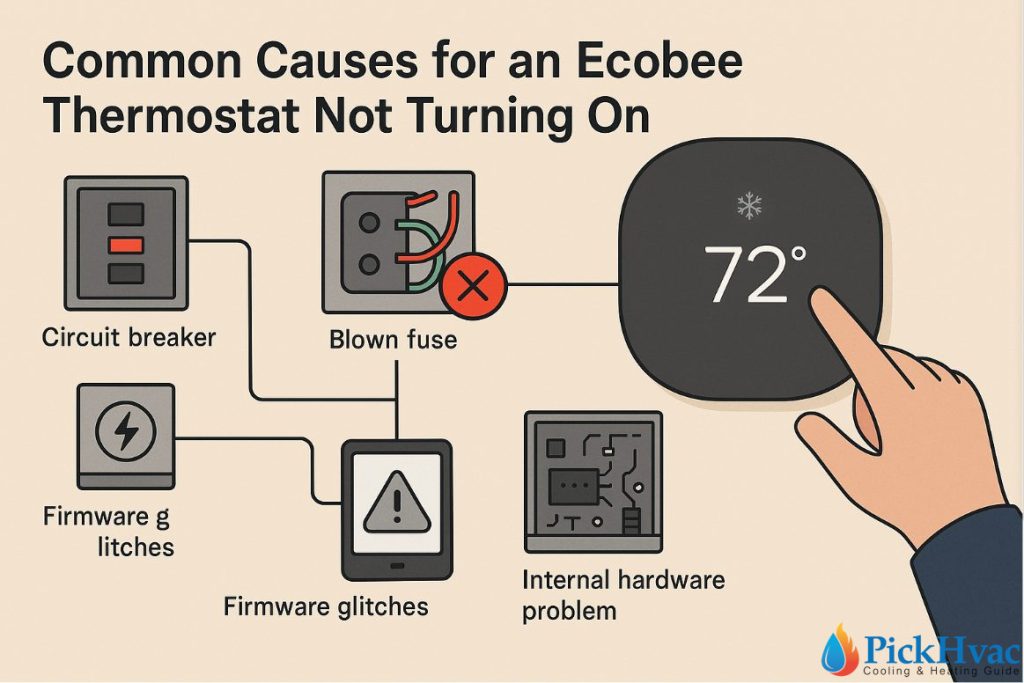
Several issues can prevent an Ecobee thermostat from powering up. A lack of proper voltage supply is often the first suspect. If the circuit breaker has tripped, there will be no electricity reaching the HVAC system or thermostat. Additionally, a blown furnace fuse can interrupt the needed voltage.
A second common reason involves improper wiring. In many homes, older thermostats relied on batteries and thus lacked a C-wire. The Ecobee requires that continuous 24V AC supply. If a wire is improperly labeled or connected to the wrong terminal, the device will remain off or quickly lose power.
Firmware glitches also rank high among the common causes. Over time, software bugs may surface, preventing the thermostat from powering up properly. Performing a reset or installing a firmware update can often rectify these software-related issues.
In certain cases, the issue is with the Ecobee’s internal hardware or a short circuit in the HVAC control board. Such instances may require professional assessment to determine if the thermostat itself is defective or if there is a deeper issue in the HVAC system.
Don’t Overpay for HVAC Services – Call 888-894-0154 Now to Compare Local Quotes!
Steps To Diagnose The Power Issue
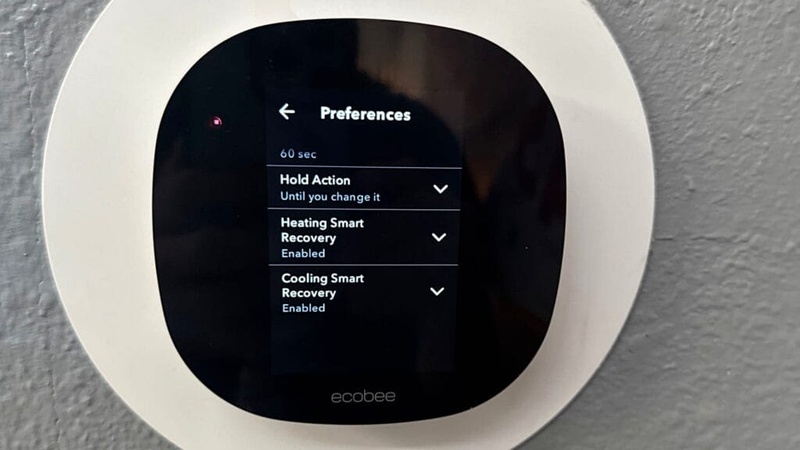
Diagnosing a power issue with an Ecobee thermostat involves both basic and advanced checks. Start by confirming that the circuit breaker linked to your heating or cooling system is switched on. If the breaker is in the OFF position, flip it to ON and see if the thermostat lights up.
Next, verify the HVAC switch near the furnace or air handler. Some systems include a simple toggle switch on or around the unit. This switch may be turned off accidentally. Switching it back on might restore power and allow the thermostat to start functioning again.
Inspect the furnace compartment if accessible. Many furnaces have a fuse on the control board that protects electronics from power surges. A blown fuse prevents the thermostat from receiving power. If it’s blown, replace it with the recommended fuse rating indicated by the manufacturer.
Finally, check the voltage at the thermostat’s terminals if you have the necessary tools and expertise. The R and C wires should supply around 24V AC. If no voltage is detected, the problem likely resides in the HVAC system’s power circuit or wiring, rather than the thermostat itself.
Electrical And Wiring Considerations
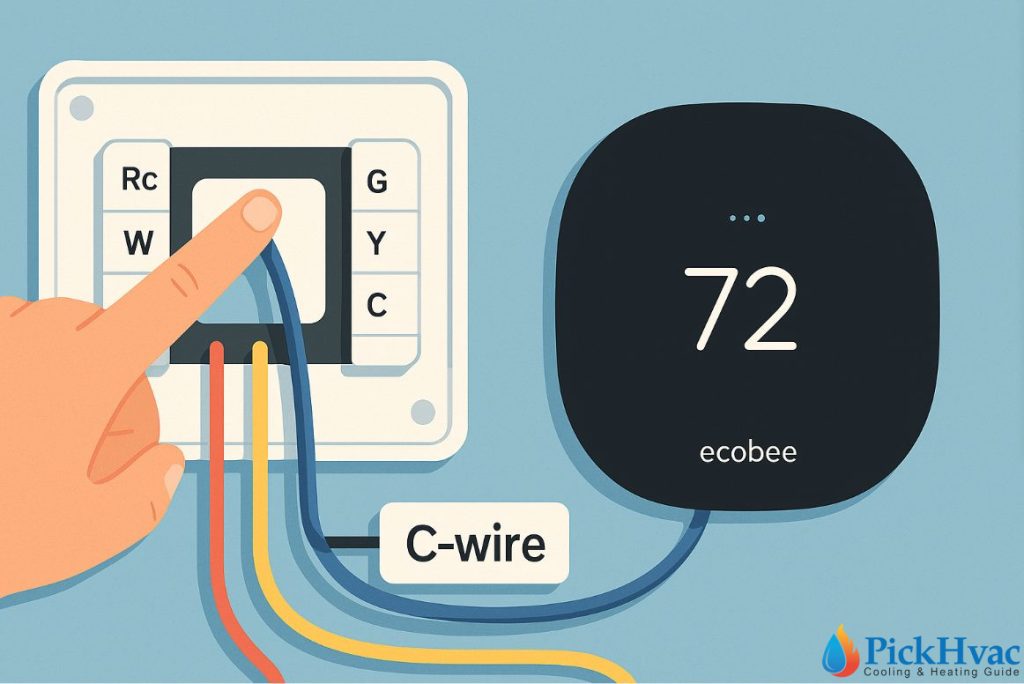
Ensuring correct wiring is crucial for an Ecobee thermostat. These models rely heavily on a functioning C-wire to complete the circuit. If the thermostat was previously installed with a different brand requiring less power, the existing wires might not align with Ecobee’s needs.
In some installations, an external power extender kit is used to provide a consistent C-wire if one is missing. Users can follow the kit’s instructions carefully to connect the wires to the control board. Incorrectly connecting these wires can lead to intermittent or no power at all.
It is also worth inspecting wire connectors for damage, corrosion, or loose contact. Even a slight disconnection can disrupt the flow of power to the thermostat. Verify that wire insulation is stripped just enough to make solid contact with the terminal block.
Should uncertainty remain about the wiring, it is advisable to consult a professional or reference the Ecobee installation guide. Proper wire labeling and following recommended wiring diagrams ensure that no short circuits or power interruptions occur.
HVAC System Compatibility Checks
Most Ecobee thermostats are designed to be compatible with standard HVAC systems, yet some older or specialized setups may present challenges. Compatibility affects whether the thermostat can draw the necessary 24V power to function. If the HVAC system uses millivolt controls or lacks a common wire, power delivery to the thermostat can be insufficient.
One way to confirm compatibility is by checking the home’s existing wiring. If there are only two wires available (often used in basic heat-only systems), an additional wire or a power extender kit might be necessary. Ecobee provides clear diagrams to accommodate such setups.
Another aspect to consider is whether the system includes multi-stage heating or cooling, heat pumps, or dual-fuel arrangements. Although Ecobee supports many of these configurations, improper setup during installation can prevent the thermostat from turning on or controlling all stages effectively.
For those who are uncertain, cross-referencing Ecobee’s official compatibility checker tool can provide clarity. Ensuring that the system type is recognized and that the recommended wiring approach is followed reduces the chance of boot-up failures and ongoing operational problems.
Resolving Firmware And Software Glitches
Smart devices like the Ecobee thermostat occasionally experience firmware bugs or corrupt software updates. In such cases, the thermostat may fail to power on or get stuck in a boot loop. Performing a hard reset can sometimes restore normal functionality.
The reset process involves cutting power to the thermostat at the breaker, waiting a few minutes, then switching it back on. This clears minor software hiccups and allows the thermostat to attempt a fresh startup. If a firmware update is available, installing it can resolve known software errors.
Ecobee also periodically releases patches that address power management and system stability. If the thermostat is online but exhibiting intermittent power-offs, checking for updates through the Ecobee app might help. Make sure there is a stable Wi-Fi connection during the update process.
If a reset or update fails, the software issue might be more complex. In these scenarios, contacting Ecobee support or a qualified technician can pinpoint deeper firmware anomalies. Although rare, a factory replacement may be necessary if the thermostat’s internal components are compromised.
Additional Troubleshooting Tips And Best Practices
Beyond checking power sources and wiring, there are several best practices for preventing or addressing power issues. First, ensure the HVAC equipment is in good working condition. A failing blower motor or damaged control board can impact thermostat performance.
Regular maintenance of the furnace or air handler is also essential. Cleaning or replacing filters prevents system strain, reducing the likelihood of electrical overloads that can blow fuses. Keeping vents clear of obstructions supports efficient airflow and temperature control.
Some Ecobee models have built-in diagnostics that display alerts if the thermostat detects wiring or power irregularities. Checking these alerts through the device or mobile app can provide clues about the root cause of the issue. Users can then take targeted action.
When handling the thermostat or HVAC components, always shut off power at the breaker. Following proper safety procedures helps avoid damage to sensitive parts and reduces the risk of personal injury. If in doubt, a licensed HVAC professional can ensure a safe and correct resolution.
Don’t Overpay for HVAC Services – Call 888-894-0154 Now to Compare Local Quotes!
Professional Assistance And Ecobee Support
There are times when DIY methods may not suffice. Persistent power failures, mysterious error codes, or repeated fuse blowouts often require professional diagnosis. An HVAC technician can inspect both the thermostat and the wider system to identify any hidden electrical or mechanical issues.
Ecobee’s customer support also offers resources for owners experiencing power and startup problems. By contacting Ecobee directly, users can access official troubleshooting guides, online chats, or phone consultations. The support team may walk homeowners through advanced checks or recommend warranty-based replacements if the product is defective.
Before making the call, documenting error messages, any observed symptoms, and steps already taken helps streamline the support interaction. Accurate information allows Ecobee or service technicians to quickly pinpoint the underlying issue.
In more complicated cases, a technician might use specialized instruments to test continuity, voltage, or system pressure. Resolving complex wiring issues or damaged control boards often goes beyond the scope of home-based troubleshooting, making professional input invaluable.
How to Avoid Being Ripped Off and Get a Fair Repair Price
Finding the right thermostat repair expert can be tricky—some companies offer rock-bottom prices because they’re inexperienced or have poor reputations, while others charge far too much for the same work. That’s why the smartest way to get quality repairs at a fair price is to compare estimates from top-rated local pros. Meet with each, learn about their history and the experience of the technicians that will do the work. Choose an experienced thermostat repair contractor with reasonable rates. You can expedite this process by using our Free Local Estimates service.
When you fill out a quick form and submit it, you’ll soon be contacted by three of the top thermostat repair and installation companies near you. They are prescreened for experience, and all are licensed and insured for your protection. Click below to get started and protect your home and wallet today.

How to Get the Best HVAC Prices
- Firstly, keep in mind that installation quality is always the most important thing for residential HVAC project. So never sacrifice contractor quality for a lower price.
- Secondly, remember to look up the latest rebates as we talked above.
- Thirdly, ask for at least 3 bids before you make the decision. You can click here to get 3 free estimates from your local contractors, and this estimate already takes rebates and tax credit into consideration and filter unqualified contractors automatically.
Lastly, once you chose the right contractor, remember to use the tactics from this guide: Homeowners Tactics When Negotiating with HVAC Dealer to get the final best price.