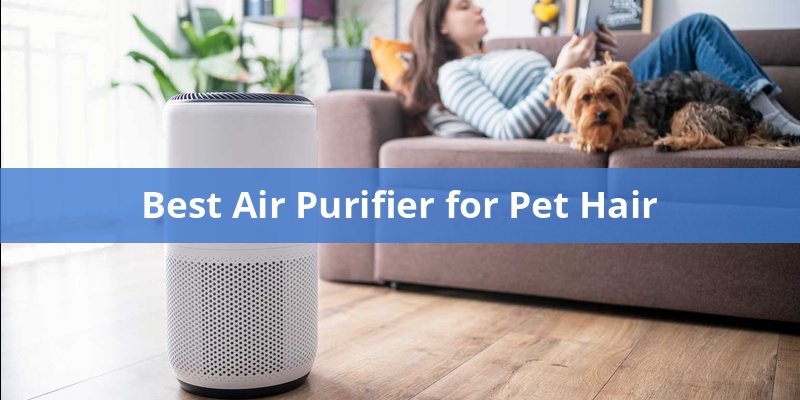
Pets bring joy to our homes, but they also shed hair, dander, and odors that can affect indoor air quality. The right air purifier can capture pet hair and allergens to keep your home smelling fresh and your air clean. Below we review five top-rated air purifiers for pet owners, each equipped to tackle fur, pet dander, and litter box smells. We also include a comparison table and a detailed buying guide to help you choose the best option for your needs.
Top 5 Air Purifiers for Pet Hair – Comparison Table
| Air Purifier | Filtration System | Coverage Area | Notable Features |
|---|---|---|---|
| Winix 5500-2 | 4-stage (Washable pre-filter + True HEPA + Activated Carbon + PlasmaWave ionizer) | Up to 360 sq. ft. | Auto mode with air quality sensor, remote control, washable filters, quiet sleep mode |
| Levoit Core P350 | 3-stage (Fine pre-filter + H13 True HEPA + High-efficiency carbon filter) | Up to 219 sq. ft. | Pet Lock control panel, enhanced carbon for pet odors, very quiet operation, ozone-free |
| Coway Airmega AP-1512HH | 4-stage (Pre-filter + True HEPA + Deodorization carbon + Ionizer) | Up to 361 sq. ft. | Auto mode with air quality indicator, Eco energy-saving mode, optional ionizer, Energy Star certified |
| Blueair Blue Pure 211+ | 3-stage (Washable fabric pre-filter + Particle filter + Activated carbon) | Up to 540 sq. ft. | High CADR for fast cleaning, customizable washable pre-filter colors, one-button control, quiet fan |
| Shark HP302 Air Purifier Max | Multi-stage (Dual pre-filters + True HEPA + Carbon Odor Neutralizer) | Up to 1,400 sq. ft. | 5-year NeverChange HEPA filter, Clean Sense IQ auto-adjust, real-time air quality display, remote control |
#1 Winix 5500-2 Air Purifier
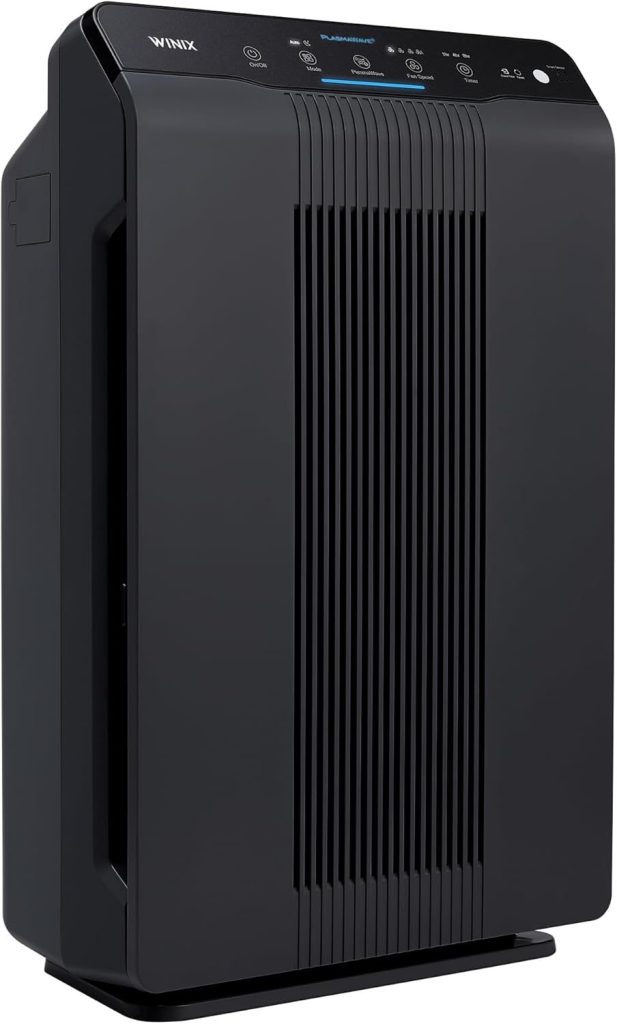
The Winix 5500-2 offers a well-rounded solution for pet owners, combining strong filtration with convenient features. Its multi-stage system effectively captures pet hair, dander, and odors, while smart sensors adjust settings for optimal air quality.
- Filtration: 4-stage setup with a washable pre-filter to catch pet fur, a True HEPA filter for 99.97% of fine dander, an activated carbon filter for odors, and Winix’s PlasmaWave technology (optional ionizer) to neutralize pollutants.
- Coverage: Designed for medium rooms up to ~360 sq. ft., making it ideal for living rooms or large bedrooms where pets roam.
- Noise: Operates quietly on low (near whisper-quiet for overnight use) and reaches about 50–57 dB on Turbo at max power. It also features a sleep mode for near-silent night operation.
- Key Features: Auto mode with an air quality sensor that adjusts fan speed based on detected dust/dander levels. Comes with a remote control for convenience. Filter replacement indicator and washable carbon filter help reduce maintenance costs. The unit is CARB certified ozone-safe (PlasmaWave can be turned off if desired).
Overall, the Winix 5500-2 is praised as a best value choice for pet households thanks to its comprehensive filtration and user-friendly controls. Pet owners notice less fur settling and reduced pet odors when running this purifier continuously.
#2 Levoit Core P350 Air Purifier
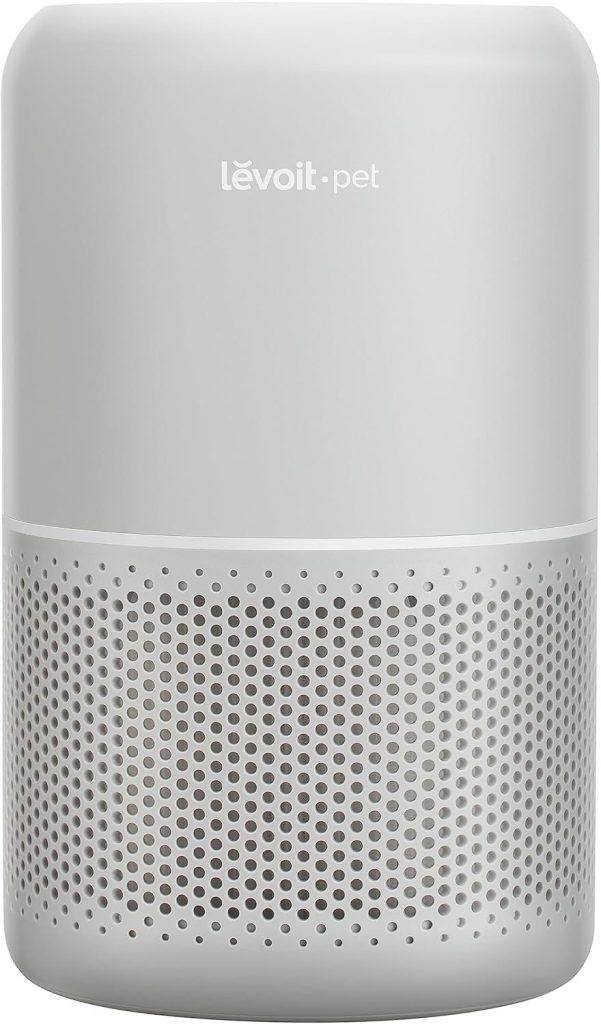
The Levoit Core P350 is a budget-friendly air purifier tailored for pet families. It’s a compact unit that specifically targets pet-related pollutants, using an upgraded filter to tackle pet odors and allergens in smaller spaces.
- Filtration: 3-stage filtration with a fine pre-filter to trap larger particles like pet hair, a H13 True HEPA filter for tiny allergens (pet dander, dust, pollen), and an activated carbon filter with high odor absorption (Levoit’s ARC formula) to neutralize litter box smells and pet odors.
- Coverage: Effective in small to medium rooms up to ~219 sq. ft. (ideal for bedrooms, offices, or pet areas). Despite its small size, it circulates air quickly in a typical bedroom or den.
- Noise: Very quiet operation – only about 24 dB on the lowest setting (virtually silent). Even at maximum speed it remains under ~50 dB, so it won’t disturb sleep or scared pets. It’s perfect for running overnight in a bedroom.
- Key Features: A unique Pet Lock function disables the controls to prevent your cat or dog from accidentally changing settings with a paw. It has 3 fan speeds and a timer, and it’s 100% ozone-free (no ionizer). The unit is also Energy Star certified for efficiency.
In summary, the Levoit Core P350 provides targeted pet odor elimination and allergen removal in a quiet, compact package. It’s an excellent choice for pet owners on a budget who need an air purifier for a bedroom or small living space with one or two pets.
#3 Coway Airmega AP-1512HH (Mighty) Air Purifier
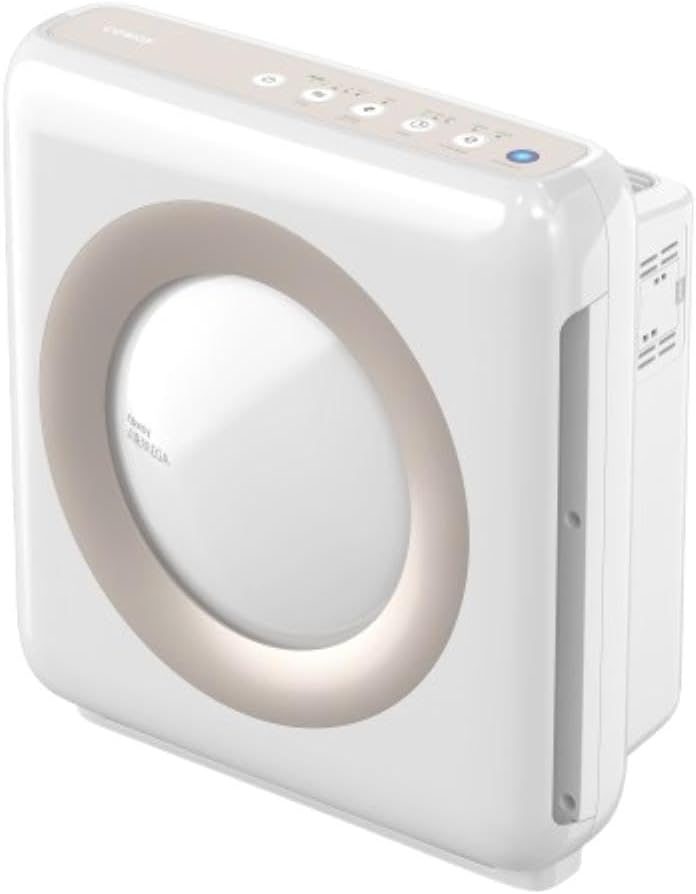
The Coway Airmega AP-1512HH, also known as the “Mighty”, is a highly rated purifier renowned for its reliability and performance. While not designed exclusively for pets, its powerful 4-stage filtration and smart controls make it superb at handling pet dander and dust in the air.
- Filtration: 4-stage system consisting of a washable pre-filter to capture large debris like pet hair, a deodorization activated carbon filter to reduce pet odors, a True HEPA filter (trapping 99.97% of allergens down to 0.3 μm, including pet dander), and an optional ionizer (Vital Ion) to enhance filtration. Together these remove both particulate and gaseous pollutants effectively.
- Coverage: Serves areas up to ~361 sq. ft. with ease – perfect for most bedrooms, playrooms, or small living rooms. Its high Clean Air Delivery Rate (CADR) means it can clean the air in an average room in just around 15 minutes.
- Noise: Extremely quiet on its lowest fan speed (~24 dB) and moderate on highest (~53 dB). In Eco mode, the Coway will even shut the fan off when air is clean, resulting in total silence until pollutants are detected (great for saving energy and reducing noise).
- Key Features: Auto mode uses a built-in particle sensor to adjust fan speed automatically depending on air quality, indicated by a colored light (blue to red). It has a timer function and filter change indicators for both HEPA and carbon filters. The Eco Mode feature is a standout, conserving energy by turning off when no pollution is sensed. This model is Energy Star rated and CARB certified, ensuring efficiency and safety.
The Coway Mighty’s proven performance over the years has made it a top pick for allergy sufferers and pet owners alike. Its ability to maintain clean air with minimal intervention (thanks to auto and eco features) means less fur and dander floating around, giving you a noticeably fresher home environment.
#4 Blueair Blue Pure 211+ Air Purifier
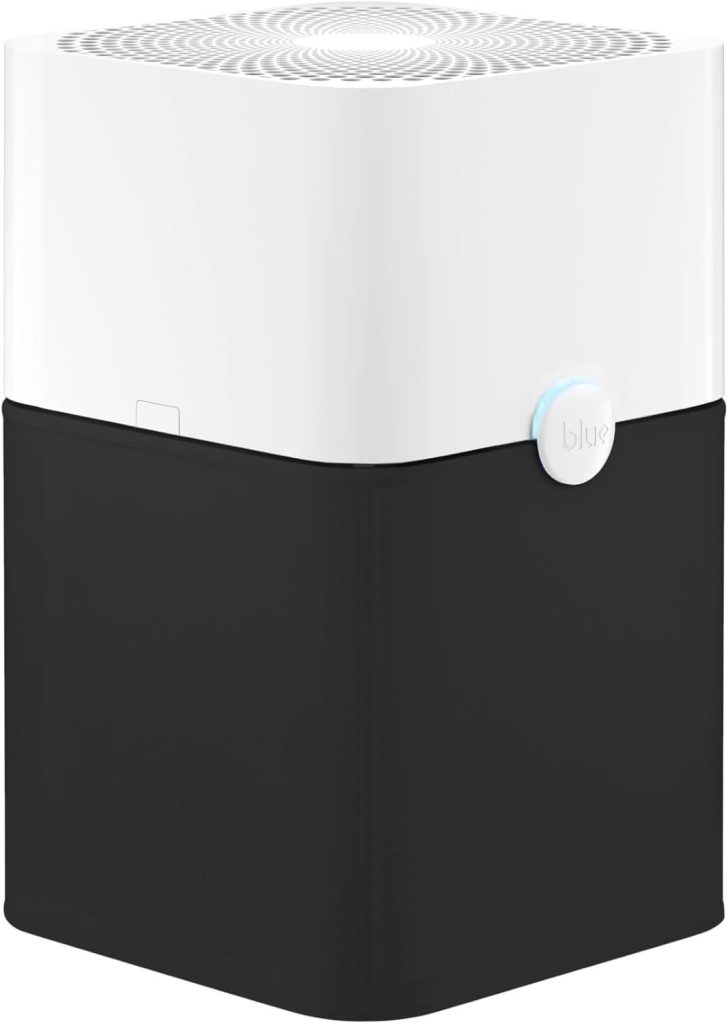
The Blueair Blue Pure 211+ is an excellent choice for pet owners who need to clean air in large spaces quietly and stylishly. Blueair’s HEPASilent™ technology and unique design allow this purifier to quickly remove pet allergens and odors while blending into your decor.
- Filtration: 3-stage filtration using a fabric pre-filter wrap (which acts as a first line of defense catching pet hair and dust and is washable/reusable), a particle filter that captures pet dander, pollen, and other fine particles (99.97% of particles down to 0.3 microns, similar to True HEPA performance), and an integrated activated carbon layer to absorb pet-related odors and smoke.
- Coverage: Very large area coverage – up to about 540 sq. ft. with five air changes per hour (suitable for open-concept living rooms, large basements, or apartments). Its high clean air delivery makes it effective even in homes with multiple pets or open floor plans.
- Noise: Known for whisper-quiet operation on low (mid-20 dB range). Even at higher speeds, it remains quieter than many competitors due to Blueair’s efficient fan and filtration design (max noise roughly mid-50s dB). This means you can run it in social areas or at night without much disturbance.
- Key Features: Simple one-button control (on, off, and fan speeds) – very easy to use. The colored fabric pre-filters (often comes with a dark grey and blue cover) not only trap fur and dust but also allow customization of the unit’s look. While this model lacks smart sensors by default, there is a “Blue Pure 211+ Auto” variant with auto mode. The standard 211+ is valued for its low maintenance: just vacuum or rinse the pre-filter and replace the main filter every 6 months. It’s also Energy Star certified for low power consumption given its high output.
In pet households, the Blue Pure 211+ excels at rapidly reducing fur, dander, and smell even in large rooms. Owners often notice far less visible dust and hair accumulating on surfaces, thanks to the high-volume airflow and pre-filter catching clumps of pet hair before they scatter. It’s a great blend of performance, quiet operation, and modern design.
#5 Shark HP302 Air Purifier Max (NeverChange)
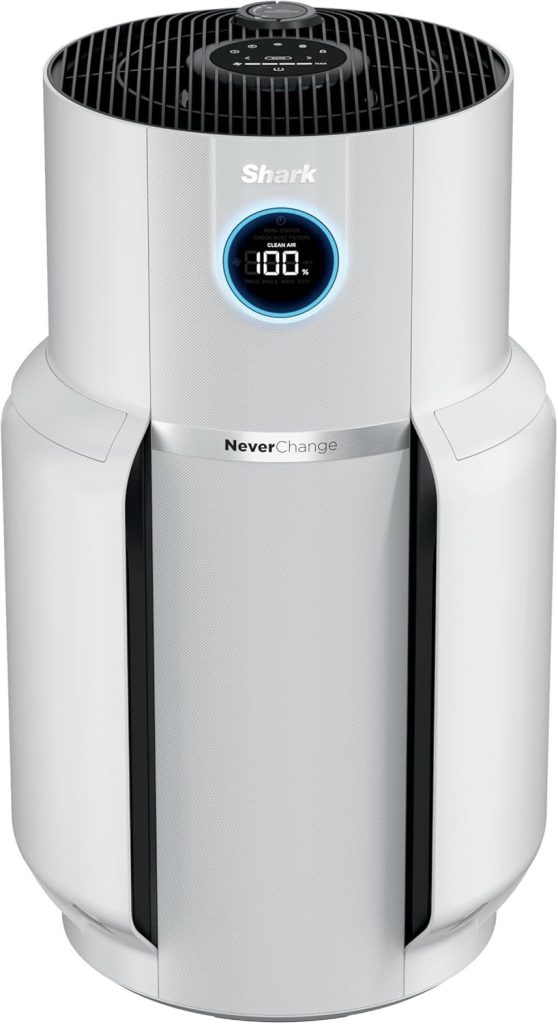
The Shark HP302 Air Purifier Max is a powerful, new-generation purifier built for large homes and multi-pet households. It boasts an extra-long-life filter system—branded NeverChange—making it stand out for those who want low maintenance without sacrificing air cleaning performance.
- Filtration: Advanced multi-stage filtration featuring dual pre-filters (two washable foam filters on either side) to capture heavy dust and pet hair, and a cylindrical True HEPA filter that traps 99.98% of particles as small as 0.1–0.3 microns (including fine pet dander). Additionally, it includes specialized carbon-infused Odor Neutralizer cartridges to tackle persistent pet odors and keep air smelling fresh. The HEPA filter is designed to last up to 5 years before needing replacement, thanks to the protective pre-filters and large surface area.
- Coverage: Extremely high coverage — rated for up to 1,400 sq. ft. This makes it suitable for open-concept living spaces, whole apartments, or multiple connected rooms. In a 300 sq. ft. area it will clean the air very rapidly (several air changes per hour), and even at maximum coverage it will still significantly improve air quality across the space.
- Noise: Despite its size and power, the Shark HP302 runs fairly quietly on lower settings (comparable to a fan on low). On higher speeds it will be audible (similar to a fan on medium-high, which is expected given the airflow), but it features a gentle white noise sound profile. It also has a built-in night mode to dim lights and keep noise to a minimum while you sleep.
- Key Features: Clean Sense IQ technology monitors your air quality with a particulate sensor and automatically adjusts the fan speed to maintain clean air. A digital display on the unit provides real-time feedback (with color-coded ring and numeric PM2.5 readings) so you can see when pet dander or smoke spikes and know the purifier is responding. The included remote control lets you change settings from across the room. Notably, the NeverChange filtration means far fewer filter changes—Shark estimates saving hundreds of dollars in filter costs over 5 years, which is a major plus for busy pet owners. The unit also releases a light scent when the Odor Neutralizer is engaged, helping neutralize pet smells rather than just masking them.
For pet parents with larger homes or multiple shedding pets, the Shark Air Purifier Max provides hassle-free, whole-home air cleaning. Its ability to run for years on one HEPA filter and automatically handle fluctuating air quality (like when the dogs come in from outside or when you’re cleaning the cat litter) makes it a premium, convenient choice to keep your indoor environment hair-free and allergen-free.
Buying Guide: How to Choose an Air Purifier for Pet Hair
Selecting an air purifier for pet hair and dander involves understanding certain key features. Here’s what pet owners should consider before making a purchase:
Filtration System (HEPA, Carbon, and Pre-Filters)
Filter type is the most important factor when dealing with pet contaminants. Look for air purifiers equipped with a True HEPA filter, which is the gold standard for trapping fine particles. True HEPA filters capture 99.97% of airborne particles as small as 0.3 microns – this includes pet dander, which is a common allergen . By removing microscopic dander and dust, a HEPA purifier can significantly reduce allergy symptoms and improve air quality for those with pet allergies . In addition to the HEPA, a pre-filter is very valuable for pet owners. This is a first-stage filter (often a foam or mesh or fabric) that catches larger debris like pet hair, fur, and dust bunnies before they reach the HEPA filter. A good pre-filter (especially if it’s washable or vacuumable) will prolong the life of the main HEPA filter and keep the purifier running efficiently. Essentially, it acts as a “hair trap,” preventing big clumps of fur from clogging the finer filter. When comparing models, check if the unit has a washable pre-filter or one that you can clean regularly – this can save on filter replacements and is ideal for homes with heavy shedders. To tackle pet odors, choose a purifier that includes an Activated Carbon filter or charcoal layer. Carbon filters adsorb gases and smells – crucial for dealing with litter box odor, wet dog smell, and other pet-related odors. Without carbon, a purifier may remove hair and dust but still leave some odor behind. Many pet-focused purifiers include activated carbon specifically formulated for pet odors (sometimes marketed as an “odor absorber” or with an additive to neutralize ammonia from urine). Keep in mind that carbon filters typically need replacement every 6-12 months as they get saturated with odors. Some advanced models also use additional filtration like UV-C light or ionizers. UV-C is more aimed at killing germs and isn’t specifically for pet hair, while ionizers (which emit charged ions) can help settle dust but can produce trace ozone. If you use an ionizer feature, ensure the device is certified ozone-safe (CARB compliant) or allow the option to turn it off. In general, a multi-stage filtration system that combines a pre-filter, True HEPA, and activated carbon is best for pet homes, removing both the particles and the smells associated with cats, dogs, or other furry friends .
Room Size and Coverage Area
Match the air purifier’s coverage area to the space where you’ll use it. Every purifier is rated for a certain room size (usually given in square feet). This rating is often based on achieving around 5 air changes per hour in that sized room. For example, a purifier rated for 300 sq. ft. will clean the air in a 300 sq. ft. room approximately five times an hour. If used in a larger room than recommended, it will still work but clean the air more slowly (fewer air changes per hour). Consider where your pets spend the most time. If you have a dog that sheds heavily in the living room, get a unit that can handle that large living room. If your cat sleeps in a small bedroom with you, a smaller purifier might suffice there. It’s often helpful to slightly oversize the purifier for the room – this means it can run on lower, quieter speeds while still effectively cleaning the air. Pay attention to the Clean Air Delivery Rate (CADR) if provided. CADR is a standardized measure of how quickly an air purifier can remove pollutants from the air (with separate scores for smoke, pollen, and dust). A higher CADR means faster cleaning. As a rule of thumb, choose a CADR at least 2/3 of the room’s area (in sq. ft.) for decent performance. For instance, a 150 CADR would be suitable for roughly a 225 sq. ft. space. For pet hair and dander, focus on the dust or pollen CADR ratings, as these particles are similar in size to pet allergens. Large, open spaces or homes with multiple pets may require a purifier with a very high CADR or multiple purifiers placed in different areas to ensure coverage. Also, think about the purifier’s placement in the room. To capture pet hair effectively, it helps to place the unit where air (and fur) naturally circulates – near the center of the room or an area where your pet frequents, but not right against a wall or behind furniture (which can block airflow). Most purifiers pull air in from the sides or bottom and exhaust clean air out the top or side. Keep a clearance of a few inches around the device so it can draw in hair and dust from the room efficiently. And if your pet has a favorite bed or litter box area, positioning the purifier relatively nearby can more directly catch the odors and hair from that source.
Noise Level and Operation
Since air purifiers often need to run continuously for best results, the noise level is an important consideration – especially for pet owners who don’t want to stress their animals with loud devices or for people who plan to use the purifier while sleeping. Check the decibel (dB) ratings if the manufacturer provides them. Many good purifiers have a low setting in the 20–30 dB range (as quiet as a whisper or rustling leaves), which is virtually unnoticeable. High fan speeds might reach 50–60 dB (equivalent to a normal conversation or a fan on medium-high). If you are sensitive to noise or will use the purifier in a bedroom, look for models that are specifically noted as quiet or have a “sleep mode.” Sleep modes usually dim any lights and run the unit on an ultra-low fan speed. For example, some Levoit and Winix models go completely silent with lights off in sleep mode, which is great for night use. Also, pet owners find that most cats and dogs are not bothered by the low white-noise hum of a purifier; in fact, the consistent sound can be calming for some pets (it can even mask outside noises like traffic or other animals that might cause barking). However, avoid extremely noisy units if your pet is skittish. If a purifier makes a loud rattling or high-pitched noise, a nervous pet might avoid the room. The best models have a smooth white noise sound on higher speeds rather than irritating mechanical noise. Variable fan speeds are useful – you can turn it up to high when the pets are out in the yard and you want a quick air clean, then drop it to low when you’re back in the room to keep things peaceful. It’s also worth noting that auto mode (if available) can help manage noise. In auto mode, the purifier will only rev up the fan to higher (noisier) levels when it detects a lot of pollutants (say, if you’re cleaning and kicking up dust or if the dog just shook his fur). At other times, it will stay in low speed. This means the unit is quiet most of the time and only louder when needed. Auto mode is a convenient feature so you don’t have to manually adjust the fan – especially useful if you’re not home and want the purifier to respond to any dust or odor events.
Smart Features and Convenience
Modern air purifiers often come with smart features that can make them more convenient to use, though these aren’t strictly necessary for the core function of cleaning air. One handy feature is a filter replacement indicator, which virtually all quality purifiers have – this will alert you (via a light or app notification) when it’s time to replace the HEPA or carbon filter. For pet owners, staying on top of filter changes is important because a filter loaded with pet hair and dander will reduce performance. Auto mode and air quality sensors have been mentioned – they use lasers or infrared sensors to detect particulate matter in the air. If you have a busy home with pets and people coming and going, auto mode is great: for instance, it might kick into high gear when the dog comes inside stirring up dust, or when you’re vacuuming the pet fur from the carpet (vacuuming often throws some particles into the air). The purifier then slows down once the air is clean. Look for models that indicate air quality (through colored LEDs or a numeric PM2.5 reading) so you have an idea of how much pet dander or dust is present and how effectively it’s working. Wi-Fi connectivity and apps: Some air purifiers (like certain Levoit, Coway, or Dyson models) let you connect to a smartphone app or smart home system. This can allow remote control, scheduling, and monitoring of air quality. For example, you could set a schedule to run the purifier on high while you’re at work and have it switch to low before you get home. Or ask Alexa/Google to turn on the purifier. While not a must-have, these features can be a nice bonus if you enjoy smart home tech. Keep in mind a purifier without Wi-Fi will still work just fine manually – so prioritize the filtration performance first, with smart features as a secondary convenience. Size and design: Since pet owners might need multiple purifiers (one per important room), the size and design could matter. Compact units are easier to place and move. Also, consider units with a locking control panel (like the Pet Lock on Levoit P350) if you have curious pets or even children – this prevents settings from being changed accidentally. Another thoughtful feature for pet homes is a carry handle or wheels if you plan to relocate the unit between rooms (some larger units come with casters or easy-grip handles). This way you can, for instance, move the purifier to the living room during the day when the pets are active there, and to the bedroom at night.
Energy Efficiency and Maintenance
Because it’s recommended to run air purifiers for many hours a day (if not 24/7), energy use and maintenance costs will add up over time. It’s worth checking if a model is Energy Star certified, which means it meets efficiency guidelines. Energy-efficient purifiers can run continuously without a huge impact on your electricity bill. Many HEPA purifiers for home use consume about 30-70 watts on medium settings (for comparison, a light bulb might be 60W). Running at lower speeds greatly reduces power consumption, so a unit that effectively cleans on a low setting can be more economical long-term. Filter replacement cost is a key maintenance factor. HEPA filters and carbon filters need replacing on a schedule (anywhere from every 6 months to 12 months on average, depending on usage and how much pet hair/dust they collect). Before purchasing, find out the cost of replacement filters and their recommended interval. Some brands have more expensive filters than others. For example, high-end brands or very large units might have filters that cost $50–$100 each, whereas a smaller purifier’s filter might be $20–$30. If you have multiple pets and run the unit constantly, you might need to replace filters a bit more frequently than the maximum interval to maintain performance. One way to extend filter life is by regular maintenance: vacuuming the pre-filter and even the HEPA if the manufacturer allows. Many purifiers let you gently vacuum the HEPA filter to remove surface dust and hair, which can help it last longer (always check the manual – if they explicitly say not to, then avoid doing so). Washable pre-filters should be cleaned every few weeks in a pet-heavy household. Set a reminder to rinse or vacuum the pre-filter — for example, every time you groom your pet or clean the house, tend to the purifier as well. The new Shark “NeverChange” model mentioned above takes a different approach by using a HEPA filter designed to last 5 years. It’s a larger up-front cost but could save on replacements. Other purifiers like some by Austin Air or IQAir have very long-life filters (3-5 years) but those are typically pricier units. For most standard purifiers, expect to budget for filter replacements annually. Also, remember to replace carbon filters on time; an old saturated carbon filter not only fails to remove odors, it might start releasing that bad smell back into the room.
Additional Tips for Pet Owners
An air purifier is a great tool to reduce airborne pet hair, dander, and odors, but it works best in combination with good home hygiene. To maximize the benefits in your pet-friendly home, here are a few extra tips: – Regular Cleaning: Continue to vacuum and dust your home frequently. Use a vacuum with a HEPA filter (or a specialized pet hair vacuum) to pick up hair from floors and furniture – this prevents excess hair from continuously becoming airborne. The purifier will capture what you miss, but removing source hair is half the battle. – Pet Grooming: Grooming your pets routinely (brushing cats and dogs to remove loose fur, bathing when appropriate) will significantly cut down on how much they shed around the house. Less shedding means the air purifier has less work to do and your filters will last longer. Consider brushing your pet in a designated area and perhaps running the purifier on high in that room during and after grooming to capture any stirred-up dander. – Manage Litter and Bedding Areas: Position an air purifier near litter boxes or cages (but not where it will suck in large debris like litter). This helps directly absorb odors and dust kicked up by pets. Also, clean litter boxes often to reduce smells, and wash pet bedding regularly since it can harbor dander. – Multiple Units for Best Coverage: If you have a larger home or multiple floors, two or more purifiers might be more effective than one unit working alone. For example, you could place one in the living room and one in the hallway outside bedrooms. This creates a network of cleaner air throughout the home, ensuring pets and people always breathe easier in whatever room they’re in. – Airflow in the Home: Keep doors open between rooms where possible to allow the purifier to pull air from adjacent areas. If a room is closed off, the purifier in the hallway won’t benefit that room much. Alternatively, put a dedicated small purifier in any room where a pet spends a lot of time with the door closed (like an office with a cat litter box). By considering all the factors above – from filter types and room size to noise and maintenance – you can confidently choose an air purifier that will keep your home’s air clean and fresh for you and your furry companions. With the right purifier in place, pet hair and dander will be much less of a nuisance, and you’ll likely notice easier breathing and a reduction in that “pet smell,” making your home comfortable for everyone year-round. Remember, the best air purifier for pet hair is one that fits your specific space and lifestyle, so use this guide to find the perfect match and enjoy the benefits of cleaner air.