When you drive or reside in an RV, it is necessary to regulate indoor humidity. Too much moisture may cause such problems as wood delamination, musty smell, and even growth of molds on surfaces.
Actually, high humidity may lead to damage of the interior of an RV just like a roof leak. The answer is a trustworthy RV dehumidifier to dry up the moisture and make your motorhome dry and comfortable.
This guide will point out the best portable dehumidifiers to use in RVs, both small and large, 120V, electric, battery-powered, solar, and desiccant. We will also give you a convenient comparison table and a detailed buying guide to make the right choice of the model that will suit your camper.
Quick Comparison of Top 5 RV Dehumidifiers
| Dehumidifier | Type | Capacity* | Ideal For |
|---|---|---|---|
| hOmeLabs 1,500 Sq. Ft. 22-Pint Dehumidifier | Compressor (Electric) | Up to 22 pints/day | Large RVs, Full-Time Use |
| Pro Breeze Electric Mini Dehumidifier | Thermoelectric (Peltier) | Up to 9 oz/day | Small RVs, Vans, Bathrooms |
| Ivation 13-Pint Desiccant Dehumidifier | Desiccant (Electric) | Up to 13 pints/day | Cold Climates, All-Season Camping |
| Eva-Dry E-333 Wireless Mini Dehumidifier | Desiccant (Cordless) | 4–6 oz per cycle | Closets, Cabinets, Vehicles |
| Nakoair Solar Air Dehumidifier | Solar + Electric Fan | Ventilation-based | Off-Grid Use, RV Storage |
| *Capacity refers to moisture removal under optimal conditions (per day or per recharge cycle). | |||
Best RV Dehumidifier Reviews
#1 hOmeLabs 1,500 Sq. Ft. 22-Pint Dehumidifier (Energy Star)
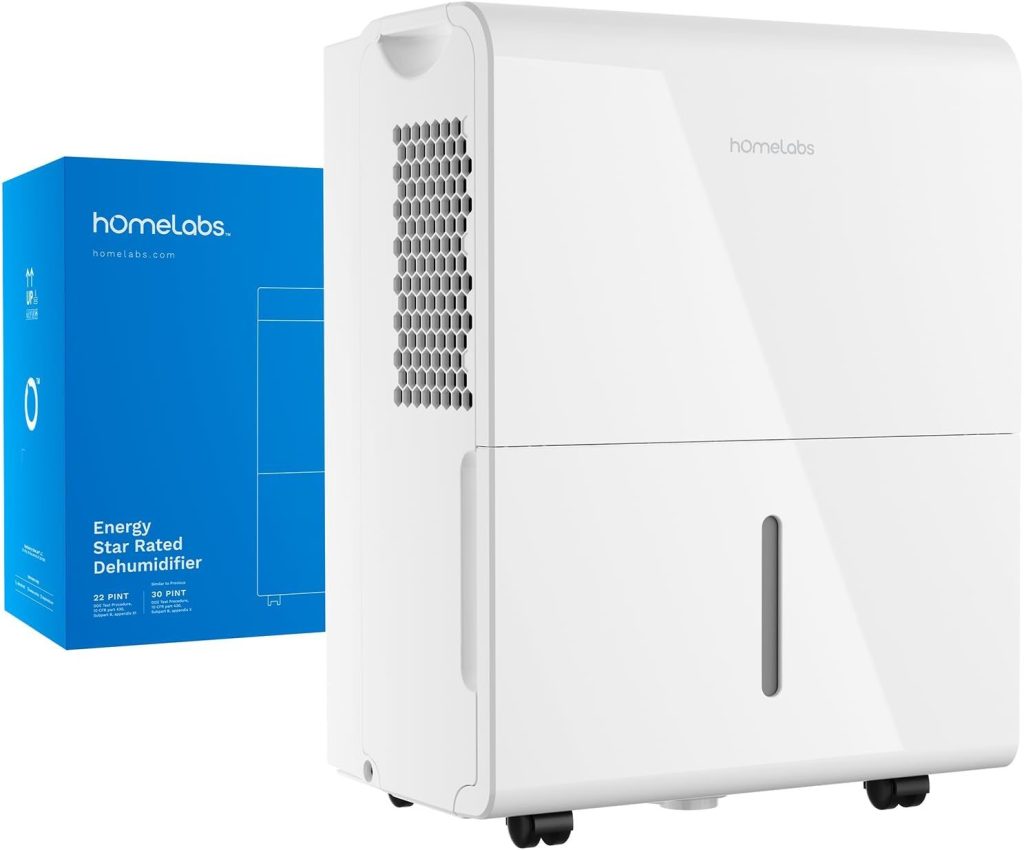
The hOmeLabs 1,500 Sq. Ft. Dehumidifier is a strong compressor-based dehumidifier that is suitable to medium and large RVs and campers. With a rating to extract 22 pints of moisture per day (old 30-pint rating) it is perfect on Class A motorhomes or travel trailers in humid environments.
This electric dehumidifier has an Energy Star rated compressor to be efficient and Turbo mode to increase the fan speed to remove the maximum amount of moisture. It is also said to be effective in keeping comfortable humidity even during muggy weather.
The hOmeLabs is convenient to use in an RV because of convenience features. It is self-shutting off when its large 0.8-gallon collection tank is full, so there are no spills.
You may also connect a regular garden hose to the built in drain outlet to drain continuously when parked. The 30.5 lb unit has rolling caster wheels and built-in handles so that you can maneuver it around the RV with ease. The digital control panel allows you to program a target humidity and 24-hour timer, and an auto-restart remembers your settings in case of power interruptions, a nice feature when you have power outages or use a generator. Compressor dehumidifiers are a bit noisy, but the fan of this model is not too loud and will not interfere with your everyday life in your rig. In general, the hOmeLabs 22-pint is a large-capacity RV dehumidifier that is ideal to be used in full-time RV living or in very humid environments, drying up to 1,500 sq. ft. and preventing mold growth.
#2 Pro Breeze Electric Mini Dehumidifier (2200 Cubic Feet)
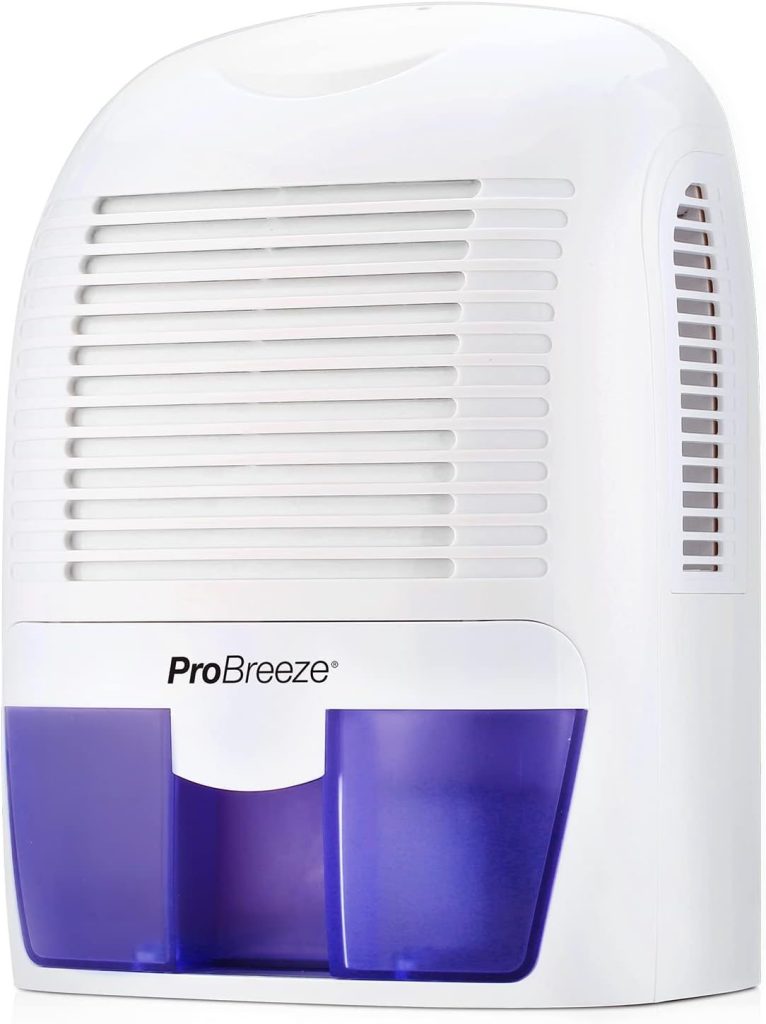
The Pro Breeze Electric Mini Dehumidifier is an ultra-portable option with van conversions, or single rooms, in mind. It is a small device that does not have a compressor but rather thermoelectric Peltier technology, so it is very quiet (approximately 3339 dB) and does not vibrate much.
It can dehumidify approximately 9 ounces of water a day in humid weather, sufficient to deal with humidity generated by breathing and small amounts of condensation in an area up to approximately 215250 sq. ft. (think a small travel trailer or RV bathroom).
The Pro Breeze weighs ~2.4 lbs, so it is not difficult to put it on a countertop or a shelf. It has a removable 16-ounce (~0.5 liter) water tank, which will auto-shutoff when the tank is full to avoid overflow.
There is an indicator light to tell you when to empty. The owners of RVs like the fact that this unit uses very little power (approximately 20-40W), which allows using it on solar power systems or small batteries. Its rate of moisture removal is not high, but it is very good at keeping the air comfortable in small, enclosed spaces and fog-free windows and mildew-free tight spaces. The Pro Breeze is an excellent low-cost dehumidifier that campers should consider when they want a quiet and energy-saving gadget to control light moisture when they are on the road.
#3 Ivation 13-Pint Desiccant Dehumidifier (Small-Area)
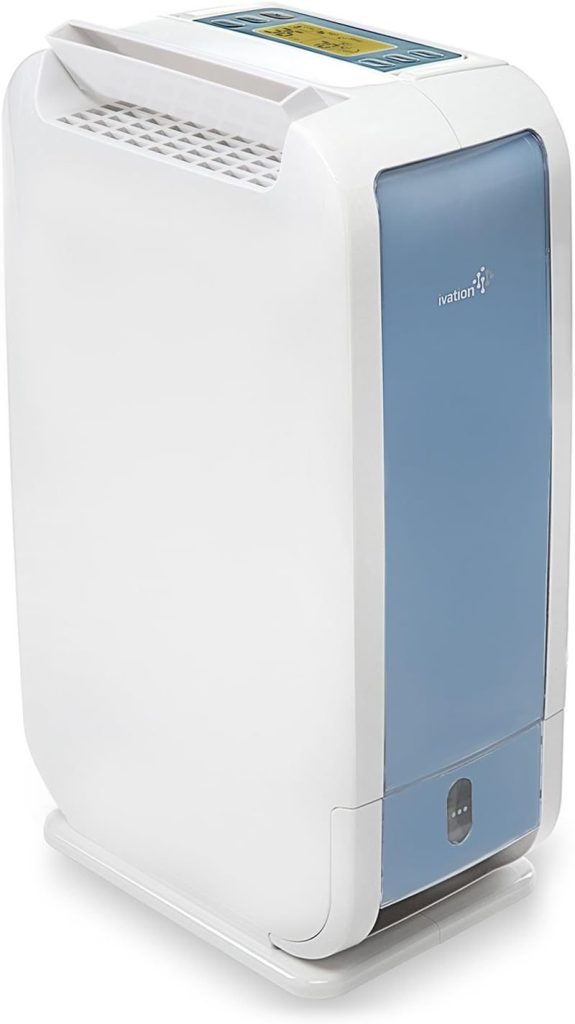
The Ivation 13-Pint Desiccant Dehumidifier is a special model that has a desiccant rotor as opposed to refrigerant. The desiccant dehumidifiers operate by drawing air across a wheel of moisture-absorbing material (such as silica gel) to remove humidity.
A major strength is that they operate efficiently even in cold weather, but compressor units become inefficient or freeze below ~41 o F. This is why the Ivation is perfect to use by RVers who camp in cold weather, in winter, or those who keep their rig in unheated storage. It is rated to extract as much as 13 pints of water a day and can cover up to ~270 sq. ft.
The Ivation desiccant unit is fairly small and lightweight (more than 11 lbs but less than 18 inches tall) and has a carry handle built in to it. It possesses a spill-proof internal reservoir of stored water and has a continuous drain facility through an attached hose, which is handy in case of fixed installation or long-term application.
Since the desiccant process produces a slight heat, this unit can literally be used to warm and dry a cold camper. It is also less noisy compared to most compressor models. People usually put it in their RV during rainy seasons or in the wet months of winter to avoid moisture damage. In case you require a dehumidifier that is efficient in cool weather and silent to use at night, Ivation 13-Pint is a leading option. Its all-season capability will make your RV interior dry and comfortable during summer to frost.
#4 Eva-Dry E-333 Wireless Mini Dehumidifier (Renewable Desiccant)
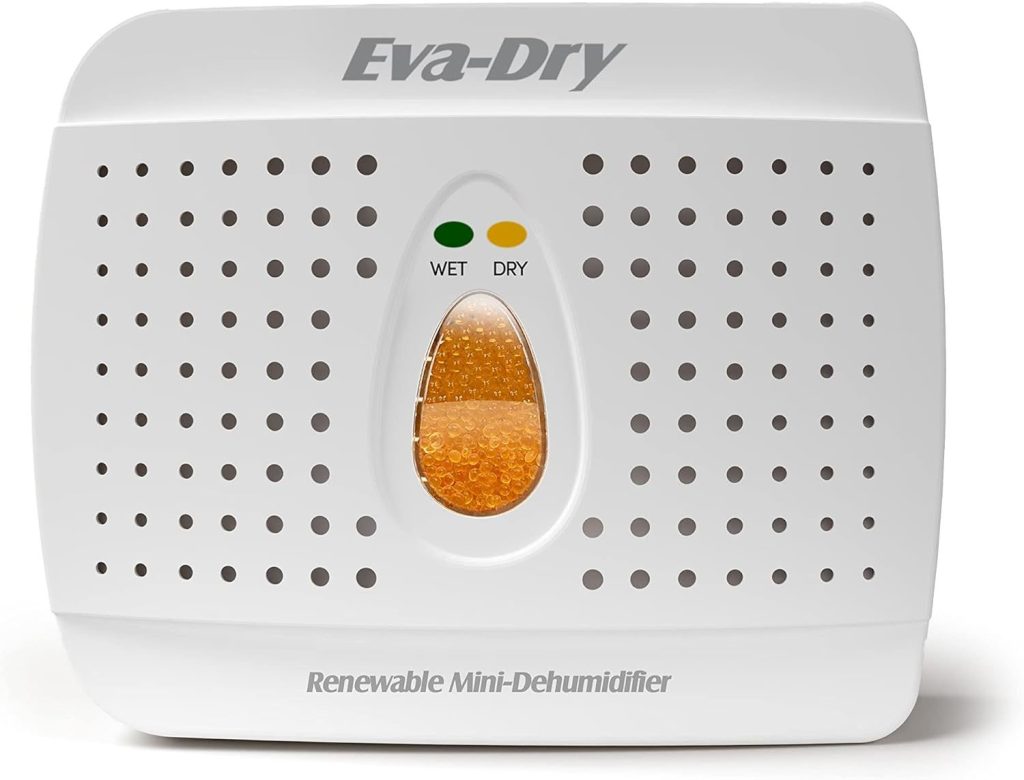
The Eva-Dry E-333 Wireless Mini Dehumidifier is a favorite when you have to manage moisture in enclosed areas and there is no power available. This handheld device is a 100% cordless dehumidifier, which absorbs excess humidity with the help of silica gel beads, no batteries or electricity are needed to operate this device.
It has the capacity to hold approximately 4 to 6 ounces of water before it requires a recharging. An indicator window built into the bead indicates the color of the bead (usually orange when dry and green when saturated) to indicate that it is time to replace the desiccant. You can recharge it by just plugging the unit into AC power (approximately 8-12 hours) and this heats the crystals and forces the moisture out, and the Eva-Dry is ready to go again.
The E-333 is spill-proof and quiet, so it is ideal in a small area such as RV closets, cabinets, pantries, gun safes or even the glove box of your tow vehicle. The ratings of each unit are on areas of up to 333 cubic feet (e.g. a small closet or enclosed compartment).
Most RV owners place a couple of these here and there on their rig (bedroom wardrobe, under sinks, etc.) to passively trap moisture in trouble areas. It also works well in RV storage, since it does not require constant power, just leave a couple in your stored camper to avoid mold and musty smell during the winter. The renewable desiccant material has a life span of 10 years and hence the Eva-Dry is a low-cost mini dehumidifier. It will not dry the full air volume of a large RV, but it is an outstanding addition to the moisture absorber and is essential to off-grid humidity control.
#5 Nakoair Solar Air Dehumidifier (Ventilation Unit)
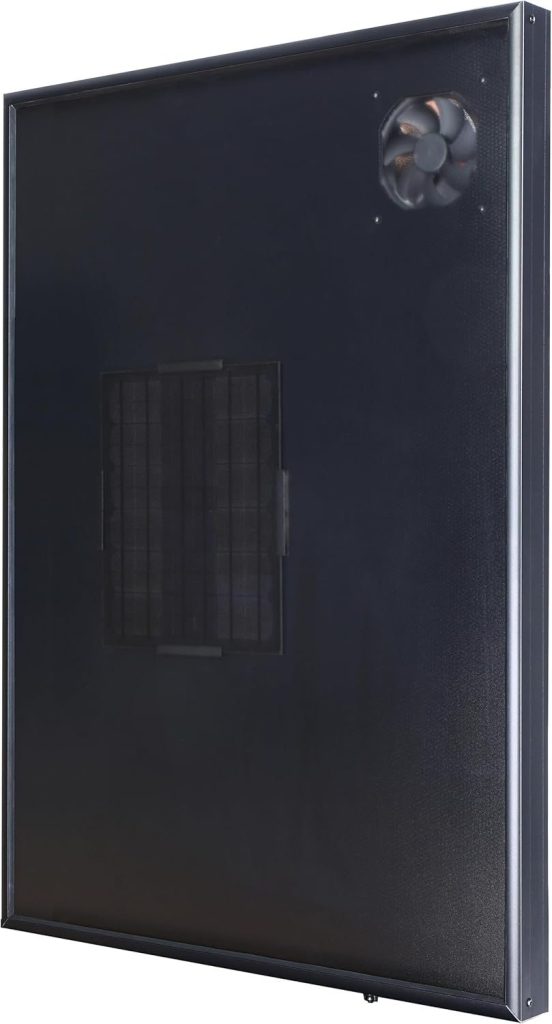
The Nakoair Solar Air Dehumidifier tries a new way of moisture control by using solar-powered ventilation and mild heating. This is basically a solar air heater panel that has an in-built fan that blows warmed and dry air into your RV or confined area.
It assists in evaporating and removing moisture by using the energy of the sun to heat and circulate air and avoid condensation. The unit has a digital thermostat that shows temperature and humidity and the system can automatically change between solar mode and electric mode as required to keep the air flowing. It operates on free solar power in the sun; when clouds come over or at night it can operate on a small amount of electrical power to continue ventilating.
The Nakoair unit is not a conventional dehumidifier having a water tank, rather it constantly changes air to maintain low humidity. This can be especially helpful to an RV in storage or parked off-grid where you may not be able to operate a plug-in dehumidifier.
The panel is mounted on an outside wall or roof, and actively expels humid air, which is useful in avoiding that musty, clammy sensation that RVs tend to acquire when shut up. It is a long-term, solar-powered solution which does not need any supervision after installation. Remember, it is more complex to install (install a panel and ducts), and it is suitable when a person needs an off-grid dehumidifier or additional ventilation system. Although it is not as portable as plug-in units, the Nakoair has the advantage of offering constant moisture control with the help of the sun, which is a rather innovative solution to the problem of humidity in your RV when you do not have much electricity available.
RV Dehumidifier Buying Guide
Why Moisture Control Matters in an RV
RVs are likely to accumulate moisture due to everyday tasks such as cooking and showering and external humidity. Campers unlike houses have smaller enclosed areas and they tend to experience condensation on the walls and windows.
The excess moisture may over time cause issues like wood rot, wall delamination, rusting of metal fittings and growth of mold or mildew. There may be a musty, wet smell or even black mold spots in case the humidity is not controlled. RV experts state that excessive moisture within an RV is just as damaging as a leak and therefore moisture prevention is essential.
One of the best methods of preserving the interior of your RV is by use of a dehumidifier. Through active removal of water in the air, a dehumidifier keeps the relative humidity at a healthy level (30-50 percent is usually ideal) that is unfavorable to mold and dust mites.
Not only does this keep the RV in good shape and with good finishes, it also makes the living conditions more comfortable, no more waking up with a clammy skin or the smell of mildew in your clothes. During storage, moisture damage can be avoided by keeping the RV closed up and using a dehumidifier (or moisture absorber). In general, humidity control will extend the life of your RV and make you more comfortable, whether you are camping in summer or overwintering in a humid climate.
Types of RV Dehumidifiers (How They Work)
Dehumidifiers come in several types, each with advantages for RV use:
- Compressor Dehumidifiers: They are the most popular electric dehumidifiers. A compressor unit has a pump and a refrigerant that cools coils and makes moisture in the air condense into a collection tank. They are highly effective in getting rid of huge quantities of water under warm environments and are economical to operate. They are however heavier, a little noisy and not very efficient in cold weather (coils may freeze up when it is too cold). The compressor models are most suitable in moderate to hot climates and full time RV living where you require maximum moisture removal.
- Desiccant Dehumidifiers (Electric): Desiccant units do not cool the air, but rather pull air through a rotor wheel that is covered with a water-absorbing substance (such as silica gel). The desiccant is used to absorb moisture and then an internal heater is used to dry the wheel in a cycle, releasing the water as vapor or into a tank. These units are better in cooler climates, they are effective even in near-freezing weather, and they are usually lighter and quieter than compressor units. The trade-off is that they usually have reduced total extraction capacity and can consume more electricity to power the heater. The desiccant dehumidifiers are an excellent option when you camp in cold weather or when you use your RV during winter, or when noise is your primary concern.
- Thermoelectric (Peltier) Dehumidifiers: Peltier dehumidifiers apply a small electric cooling device to condense moisture. They do not have any moving parts other than a small fan, thus they are very small and silent. These mini dehumidifiers typically process only a few ounces of water a day thus they are only applicable in small areas or moderate humidity. Peltier units are ideal in an RV in bedrooms, bathrooms or as an auxiliary dehumidifier. They consume low power (usually less than 50W) and even operate on a 12V DC outlet or inverter. But don t think that a Peltier dehumidifier will dry out a big living space in high humidity conditions, they are light duty.
- Cordless Desiccant Dehumidifiers: These are the small moisture absorbers which have crystallized desiccant (silica gel beads). Such products as Eva-Dry E-333 are entirely wireless and do not consume any power during the process of moisture absorption. When they are saturated you plug them into AC power to dry out the crystals to reuse them. Cordless desiccants are basically reusable DampRid; they are spill proof and do not need batteries. They are awesome in target areas (closets, under sinks, inside drawers) and RV storage. Nevertheless, they can only extract a couple of ounces of water in a few weeks, and therefore, they will not actively dehumidify a whole RV cabin. Consider them as a maintenance device to maintain dry small enclosed areas.
- Moisture Absorber Buckets/Packs: These are the disposable desiccant products (such as DampRid) that have calcium chloride crystals which absorb moisture and dissolve into liquid brine. During storage, RV owners tend to hang them in closets or put tubs around the RV. They are cheap and do not need power. The disadvantage is constant expenditure (refills) and limited capacity; you should not forget to check and dispose of the liquid. They also are only passive workers. Nevertheless, they make a good addition in very humid weather or when you cannot use an electric dehumidifier.
- Ventilation Fans and Solar Solutions: The other method of managing the humidity is to ventilate the RV to get rid of the humid air. Solar-powered vents (e.g. the Nakoair system or smaller roof vent fans) utilize sunlight to power the movement of air, replacing the inside air with drier outside air. Although it is not technically a dehumidifier, more ventilation can prevent the accumulation of humidity, particularly during mild weather or when an RV is in storage without the power of the AC. Most RVers open a roof vent or turn on the bathroom fan when they take a shower to get rid of humidity. This is automated by solar ventilators that use renewable energy and can be a great addition to a dehumidifier.
Choosing the Right Size and Capacity
Choosing a dehumidifier to use in your RV, you should consider the size of your RV and the average humidity you experience and match the capacity of the unit to it. Electric dehumidifiers are frequently rated by the number of pints of water that they can remove in a day at a certain condition (typically 80 o F and 60 or 80 percent RH).
As an example, a 30-pint (new standard 22-pint) unit such as the hOmeLabs can cope with a large RV or extreme humidity, but a 4-6 oz mini unit is only suitable in a small area. Bigger 2035 pint/day dehumidifier is also suggested in case you have a large Class A motorhome or fifth wheel and spend time in the humid Southeast. Conversely, a mini or mid-size unit (approximately 410 pint capacity) might be enough in case you have a small travel trailer or camper van.
Think of the climate: you will have to have more capacity in hot, wet climates (Florida summers, say) than in arid regions or high-altitude areas. When you will be in very humid conditions it is usually best to go a little higher capacity, as the unit will not have to run as often, as it can dry the air quicker.
It is also important to mention that the real performance decreases at lower temperatures and humidity, so a 30-pint compressor dehumidifier may not collect as much water in a day under RV conditions. When you camp in the cold, consider a desiccant unit that is low-temp rated. Generally, a large dehumidifier should be used to control moisture in the entire RV, and small units or desiccant packs should be used in the isolated locations where necessary.
Power Source and Energy Usage
Availability of power is a key consideration to RV appliances. The conventional dehumidifiers operate on 120V AC and will need either shore power or a generator or an inverter off your batteries. There are a couple of ways to deal with humidity, in case you do a lot of boondocking (dry camping without hookups):
- Install a low-wattage dehumidifier (such as Peltier types or smaller compressor units) which can be powered by your inverter without causing batteries to be depleted too fast. As an example, a small 20W dehumidifier can practically operate several hours on a decent battery bank or solar system, but a full-size 22-pint unit consuming about 200W may be impractical to operate off-grid over extended periods.
- Use solar energy solutions. The Nakoair solar dehumidifier or the simple solar vent fans can actively dry out the moisture with the help of the sun, no battery drain is needed. They are excellent during the daytime or storage conditions.
- Use cordless desiccant units (Eva-Dry, etc.) when off the grid. They will not have a wide coverage but can assist in keeping trouble areas. You can recharge them when you have generator or shore power once again.
- When operating a compressor dehumidifier off-grid, it may be worthwhile to operate it when the generator is running (maybe during some part of the day) to reduce humidity, and then switch to passive techniques at night. Other RVers also schedule the use of dehumidifier when their solar panels are generating surplus power in the afternoon.
Never forget to look at the power requirements of a dehumidifier, the watts or amps it draws will indicate how practical it will be with your electrical supply. A lot of smaller RV dehumidifiers consume less than 100W. Home-size units may consume 300-500W when operating, which may overload a small inverter or discharge a battery within a short time.
Also, it is important to mention that compressor models experience a short surge at the start of the compressor. In case it is run through an inverter, make sure that the inverter is capable of that surge. In general, to dehumidify RVs in an energy-efficient manner, select the smallest unit that can satisfy your requirements and make use of natural ventilation or passive solutions where possible.
Noise Level and Placement
Noise is an issue in the comfortable space of an RV, and operating any appliance at night may be a problem. Compressor dehumidifiers produce a hum (similar to an air conditioner) and the fan noise, which is usually 50 55 decibels on high speed.
When you are a light sleeper, then you should seek units that are rated as quiet, or those that have a low fan speed setting. Desiccant models are usually less noisy; most of them work below 40 dB that is a soft white noise. Even quieter are thermoelectric minis, which are almost silent on the other side of the room. Other RV users will give you a hint, say, a model that is whisper-quiet to one person may be annoying to the other when put on a hard tabletop that enhances vibration.
Performance and noise are also influenced by placement. To get the most out of it, place the dehumidifier in the middle of the room you wish to dry or close to the primary sources of humidity (such as the bathroom when taking a shower or the kitchen when cooking).
Keep interior doors open to allow one unit to circulate air in the RV. The majority of portable units have top or back air intake and exhaust on top or sides, make sure they are not against walls or other objects. It is usually a good idea to place the dehumidifier on a low counter or the floor where it can get the most humid air (because warm humid air rises and cool air falls). In case the bedroom is noisy at night, you may operate the dehumidifier in the living room and shut the bedroom door, or operate a small quiet Peltier unit in the bedroom.
Also, think of how to fix the dehumidifier in transport. Bigger models ought to be strapped or wedged in a manner that they do not fall over when you are driving. Make sure that the water tank is empty before driving off to prevent spills.
As an added precaution, some people put their dehumidifier in the sink or shower pan when they are on the move. Careful location will make your RV dehumidifier safe, quiet and efficient.
Key Features and Maintenance Tips
When comparing the models of dehumidifiers, watch out the features that make it convenient:
- Auto Shut-off & Tank Size: The electric dehumidifiers almost all have an automatic shut-off when the water reservoir is full. The bigger tank (0.5+ gallon) is beneficial in high humidity because it can last longer without the need to empty it. Unless you want to drain water manually frequently, you can also connect a drain hose to have constant draining into your RV shower drain or through a hole in the floor (gravity draining works as long as the hose outlet is lower than the unit). The more expensive models have an internal pump to force water up into a sink or out a window, although gravity drain is more typical of portable units.
- Adjustable Humidistat: It is useful to be able to set a desired humidity (%RH). To keep the air at that level, the dehumidifier will turn on and off, conserving energy and preventing the air being over-dried (over-drying is not normally a problem in humid areas, but in a desert winter it might be very dry). This is not the case with all mini units, most of them just run. Bigger ones such as hOmeLabs provide a humidistat and a digital display.
- Fan Speeds and Modes: Various fan options (normal/turbo, etc.) allow you to trade noise off against performance. There is also an auto mode or comfort mode in some dehumidifiers which automatically adjusts the fan speed in accordance to the prevailing humidity. A continuous mode is handy when you have a very damp situation, this will keep the unit running continuously until you stop it or the tank fills. When you want to use it when you are asleep, low speed or night mode is a good feature.
- Auto-Restart and Defrost: Auto-restart after a power failure is useful to RVers (particularly when you are frequently connected to campground power which can trip). It implies that the unit will be back in operation with the same settings following an outage. Auto-defrost is an option on compressor models which senses frost on the coils and briefly shuts down the compressor until the fan melts it. This is significant when operating a compressor dehumidifier at lower temperatures (< ~65 o F) – it avoids ice formation and maintains efficiency.
- Size and Portability: Look at the size to make sure that you can place it where you desire. A huge home dehumidifier might just be too cumbersome to store and use especially when you have a very small trailer. Most portable ones have a carrying handle or wheels – handy when you want to move it around or carry it in and out of the RV. Weight is also an issue to consider in case you are going to lift it frequently. Small and lightweight is usually preferable in RV life as long as performance is adequate.
- Durability: An RV dehumidifier can be exposed to more bumps and jostling than one that is in a house. Search models that have good customer feedback regarding build quality. Less is usually more (less to go wrong). In case you use it seasonally, remember to dry it and clean the tank and filter before storing it to avoid the growth of molds in the machine.
Care of your dehumidifier will make it continue to work. Key tips:
- Drain the water tank frequently and in time. Do not leave water in the tank over a few days because it may develop bacteria or algae. In case you have a drain hose installed, make sure it is not clogged or kinked.
- Replace or clean the air filter according to the instructions (normally after a few weeks or months). A dirty filter slows down the performance and may cause musty odors. The majority of portable machines possess a filter that is washable and can be reused.
- With desiccant rotor units, make sure the air intake/exhaust is clear and every now and then vacuum out any dust. They tend to possess a filter too.
- With cordless desiccant packs (Eva-Dry, etc.), recharge them immediately when they are saturated. Do not leave them too long green (wet) or they will not absorb well. On the other hand, do not overcharge more than the suggested time.
- When storing the dehumidifier, ensure that all the water is drained and the unit is dried up to avoid molding of the unit. It can be dried out by running it in a low-humidity room a couple of hours before storing.
- Pay attention to strange noises that may be a sign of a fan blockage or in the case of compressor-type models, a requirement to inspect the compressor mounts. It is normal that compressor units vibrate a little, but rattling should be fixed (in some cases, a screw may have to be tightened).
With the proper selection of the type of dehumidifier and its proper maintenance, you can have a dry comfortable RV interior all year round. No matter whether you require a powerful device to overcome the humidity of the Gulf Coast or a small quiet dehumidifier to use in a camper van, the above options will provide a solution to every case.
Moisture will also be kept away keeping your rolling home safe and your adventures even more enjoyable with fresh and dry air.