A range of reliable options helps keep workshops, garages, and job sites warm. Below is a quick comparison of the seven featured heaters so you can scan power types, mounting styles, and recommended coverage at a glance.
| Product | Brand | Type | Notable Capacity |
|---|---|---|---|
| Mr. Heater Portable Buddy MH9BX | Mr. Heater | Propane Radiant | 4,000–9,000 BTU (up to ~225 sq. ft.) |
| Remington 1500W Heavy-Duty Electric | Remington | Portable Electric | 1500W (up to ~165 sq. ft.) |
| CTSC 10000W Electric Garage Heater | CTSC | Hardwired Fan-Forced | 10,000W (3 settings) |
| Comfort Zone Ceiling Mount 7,500W | Comfort Zone | Hardwired Ceiling | 7,500W (up to ~1,250 sq. ft.) |
| Dreo 1500W PTC Portable Heater | Dreo | Portable Electric PTC | 1500W, precise thermostat |
| DR. INFRARED 3000W Infrared Heater | DR. INFRARED HEATER | Infrared Electric | 3,000W (greenhouse/garage use) |
| TEMPWARE 10,000W Ceiling Mount | TEMPWARE | Hardwired Fan-Forced | 10,000W (up to ~1,500 sq. ft.) |
Mr. Heater Portable Buddy MH9BX
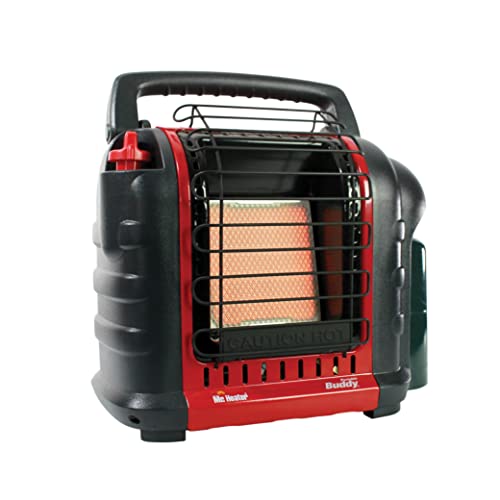
The Mr. Heater Portable Buddy MH9BX is a propane radiant heater engineered for portable warmth in spaces like workshops, garages, and job sites. It uses infrared technology to directly heat objects and people, minimizing wasted warm air.
Key features include an adjustable output from 4,000 to 9,000 BTU suitable for coverage up to approximately 225 square feet. The unit includes a durable Piezo igniter for match-free startup and improved safety via an enhanced tip-over safety switch that audibly engages if the heater is tipped or shaken. These features make it a practical choice where electrical supply is limited.
Remington 1500W Heavy-Duty Electric

The Remington REM-222A-120 is a portable electric heater designed for small workshops, garages, and jobsite tents. It delivers immediate heat and is built for quick start-up to reduce cold startup time in short-duration tasks.
Features include two heat settings and an adjustable thermostat that help control output for coverage up to about 165 square feet. The unit’s compact design helps position heat near work areas without occupying much floor space. Its emphasis on rapid heat makes it suitable for spot heating or supplementing larger systems.
CTSC 10000W Electric Garage Heater

The CTSC 10,000W garage heater is a 240V hardwired fan-forced unit intended for larger workshops and commercial spaces. It combines heavy-duty construction with multiple control options for full operational flexibility.
Notable features include a voltage display screen to aid troubleshooting during installation, ETL certification, and built-in overheat protection. The unit offers three heat settings (10,000W, 7,500W, and fan-only) and includes a digital thermostat and remote control. Its SPCC cold-rolled steel construction is designed for long-term durability in poorly insulated areas.
Comfort Zone Ceiling Mount 7,500W

This Comfort Zone unit is a hard-wired ceiling-mounted fan-forced heater designed to free up floor space while heating a broad area. Ceiling mounting is useful for workshops with limited floor real estate or to deliver even overhead distribution.
Highlights include heavy gauge steel construction, adjustable louvers and variable mounting angle for directed airflow, and an advertised coverage of up to 1,250 square feet depending on insulation and environment. The unit features a digital thermostat, overheat protection, and a 12-hour timer for scheduled operation, making it suitable for sustained ambient heating of medium to large spaces.
Dreo 1500W PTC Portable Heater

The Dreo space heater is a 1500W PTC ceramic electric heater that emphasizes fast warm-up, precision, and safety. It suits small to medium workshop corners, office areas inside larger shops, or nearby workbenches.
Key specifications include an advanced PTC system with a heat funnel design for extended reach, a digital display with 1°F increment thermostat control from 41–95°F, and multiple modes including a 12-hour timer. Safety features include tilt-detection, overheat protection, and flame-retardant materials with ETL certification for indoor use.
DR. INFRARED 3000W Infrared Heater

The DR. INFRARED DR218 delivers 3,000 watts of infrared heating aimed at greenhouses, garages, and workshops where direct object heating is preferred. Infrared units heat people and surfaces rather than air, which can be advantageous in drafty or open structures.
It offers two heat settings (high and low) and an IPX4-rated structure that provides protection against water splashing, useful in humid greenhouse environments or dusty workshop areas. The infrared method can maintain stable localized microclimates for plants or workstations without prolonged warm-up cycles.
TEMPWARE 10,000W Ceiling Mount Heater

The TEMPWARE 10,000W ceiling-mounted heater is a high-output 240V hardwired fan-forced unit engineered for large garages and workshops. It prioritizes adjustable airflow and energy-saving controls for widespread heating.
Important features include adjustable louvers, a digital thermostat with ECO mode, a 1–12 hour timer, and overheat protection. The unit lists coverage up to 1,500 square feet under optimal conditions and emphasizes automated ECO adjustments to cut runtime when the ambient temperature is met.
Buying Guide
Selecting a heater for a workshop involves matching power source, heat distribution method, safety features, and installation style to the workspace layout and usage patterns. The sections below break down the major considerations, trade-offs, and how different heater types compare for common workshop scenarios.
Heat Source: Electric vs. Propane vs. Infrared
Electric heaters (portable or hardwired) convert electrical energy to heat and are typically safer for enclosed spaces because they avoid combustion byproducts. They include fan-forced and PTC ceramic styles. Fan-forced units move warm air into the room and can heat larger volumes; PTC ceramic models heat quickly and provide more controlled, localized warmth.
Propane heaters like the Mr. Heater Portable Buddy produce radiant heat and do not require electrical power, making them useful in unpowered workshops. They emit combustion gases, so indoor use requires models labeled as indoor-safe and attention to ventilation and propane handling to mitigate CO buildup.
Infrared heaters heat objects and people directly rather than air, which is efficient for drafty or high-ceiling spaces and for spot heating. Infrared performs well in workshops where workstations or stored materials need direct warmth.
Mounting And Coverage Considerations
Ceiling-mounted hardwired heaters (e.g., TEMPWARE, Comfort Zone, CTSC) free up floor space and distribute heat over larger areas. They are best for permanent installations and larger workshops but require professional electrical installation and verification of correct voltage and circuit capacity.
Portable heaters (PTC or electric fan units, plus portable propane) are ideal for spot heating, temporary use, or small work areas. They require no permanent installation and are easier to reposition but have lower total heating capacity compared with hardwired units.
Power Levels And Room Size
Match heater output to workshop size and insulation. As a guideline:
- Portable 1500–3000W / ~5,000–10,000 BTU units suit small to medium spaces or spot heating.
- 7,500–10,000W hardwired units are designed for larger or poorly insulated spaces and can serve entire bays.
- Infrared BTU equivalents are best considered for targeted warmth rather than whole-room temperature rises.
Safety Features And Certification
Important safety features include tip-over switches, overheat protection, and certifications such as ETL or UL. For propane heaters used indoors, look for units explicitly rated for indoor use and featuring safety shutoffs. Hardwired installations should comply with local electrical codes, and voltage displays or diagnostic features (as in CTSC) can reduce installation errors.
Controls And Convenience
Digital thermostats, remote controls, timers, and ECO modes improve usability and energy efficiency for workshops that are heated intermittently. Remote and timer functions can preheat a space before use and reduce wasted runtime. Precision thermostats and smaller increment temperature control are useful when maintaining specific conditions for stored materials or plants.
Durability And Environment
Workshop environments often include dust, oil, and varying humidity. Steel construction
Installation And Electrical Requirements
Hardwired heaters require appropriate circuit capacity and professional installation. Confirm voltage compatibility (usually 240V for high-output units) and ensure wiring matches the unit’s demands. Portable electric heaters simply require adequate outlet capacity and a grounded plug, while propane heaters require proper cylinder handling and storage practices.
Cost, Efficiency, And Operational Trade-Offs
Higher-wattage hardwired heaters can be more expensive to operate but are more effective for whole-bay heating. Portable units are lower cost to purchase and operate for short-term tasks. Infrared systems may reduce running costs when used for targeted heating because they bypass heating large air volumes. Calculate runtime, insulation quality, and desired temperature rise to estimate operating costs.
Use Cases And Matching Products
- Small bench or quick warm-up needs: Portable PTC or 1500W fan units like Remington or Dreo offer rapid, localized warmth.
- Unpowered or temporary shops: Indoor-rated propane radiant units like the Mr. Heater Buddy provide off-grid heat with caution about ventilation.
- Large or multiple-bay workshops: Hardwired ceiling units such as TEMPWARE, CTSC, or Comfort Zone provide continuous, wide-coverage heating when permanently installed.
- Greenhouses or targeted area warming: Infrared units like the DR. INFRARED model are suitable where object-centered heat yields better results than heating large air volumes.
When selecting a heater, confirm the intended installation location, required electrical infrastructure, and local safety codes. Match the heating method to the workshop’s layout and working practices to prioritize efficiency, safety, and long-term reliability.