Choosing the right heater for an RV can mean selecting a compact space heater, a reliable tank or tankless water heater, or accessories that prevent freezing. The table below summarizes the seven recommended items covered in this guide.
| Product | Type | Key Feature |
|---|---|---|
| Mr. Heater MH9BXRV Buddy | Portable Radiant Space Heater | 4,000–9,000 BTU, indoor-safe |
| Caframo True North | Electric Space Heater | Low profile, adjustable thermostat |
| GIRARD Tankless RV Water Heater | Tankless Water Heater | 42,000 BTU, digital control |
| FOGATTI InstaShower 7 | Tankless Water Heater | 48,000 BTU, multiple door sizes |
| VEVOR RV Tankless Water Heater | Tankless Water Heater | 42,000 BTU, LED smart display |
| Suburban Advantage SW6DE | 6-Gallon Tank Water Heater | Porcelain-lined tank, DSI |
| Nottia 25FT Heated Water Hose | Freeze-Protection Hose | Freeze protection to -45°F, drinking-safe |
Mr. Heater MH9BXRV Buddy – Portable RV Radiant Heater
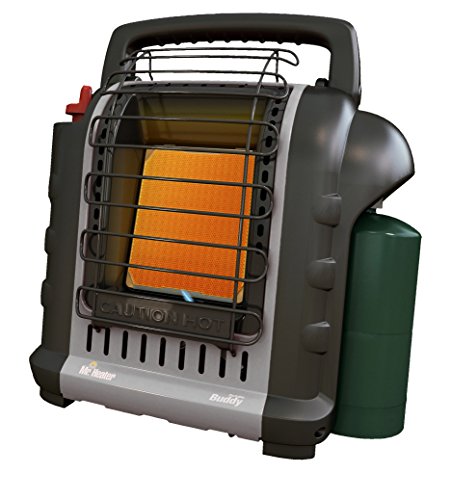
The Mr. Heater F232017 MH9BXRV Buddy is a compact radiant space heater rated from 4,000 to 9,000 BTU, sized to heat up to 225 square feet. It is certified for both indoor and outdoor use and designed for clean-burning operation with near 100-percent efficiency.
Safety features include automatic shut-off if tipped over, if the pilot light goes out, or if low oxygen is detected. The unit may shut off at elevations above 7,000 feet, which is an important operational note for high-altitude RV travel. As a radiant heater, it provides quick localized warmth and is often used as a primary or supplemental heat source.
Caframo True North Low Profile Electric Heater

The Caframo True North is a rugged electric heater with an adjustable thermostat and multiple settings for steady to high heat and circulation. It includes five settings: three heat and two fan speeds, providing total climate control in a compact enclosure.
This model has a low-profile steel housing suitable for mounting or free-standing use inside an RV. A built-in anti-freeze setting will automatically activate at about 38°F (3°C) to prevent freezing in stored RVs, making it useful for winter storage and occasional frost protection without full heating.
GIRARD 12V Tankless RV Water Heater – 42,000 BTU

The GIRARD tankless water heater delivers 42,000 BTU of continuous hot water and operates on 12V power for control electronics, with a brushless motor that draws less than three amps. An onboard microprocessor monitors inlet temperature, flow rate, and outlet temperature to keep water temperature consistent.
Designed for efficiency, it consumes about half the LP gas of a comparable six-gallon tank heater for equivalent hot water output. Features include quiet operation and digital controls for steady temperature management, which are beneficial during extended boondocking or family use.
FOGATTI InstaShower 7 Tankless RV Water Heater

The FOGATTI InstaShower 7 is a high-output tankless heater providing 48,000 BTU and up to 2.5 gallons per minute. It includes multiple door-size options (15″x15″, 15″x18″, 18″x18″) to accommodate retrofits and refits for various RV installations.
Designed with staged combustion and an anti-scald protection system, it aims to reduce cold spots and sudden hot bursts. The unit also features a high-altitude suitability mode rated up to about 9,800 feet, which can be relevant for mountain travel where burner performance varies with elevation.
VEVOR RV Tankless Water Heater with Remote Controller
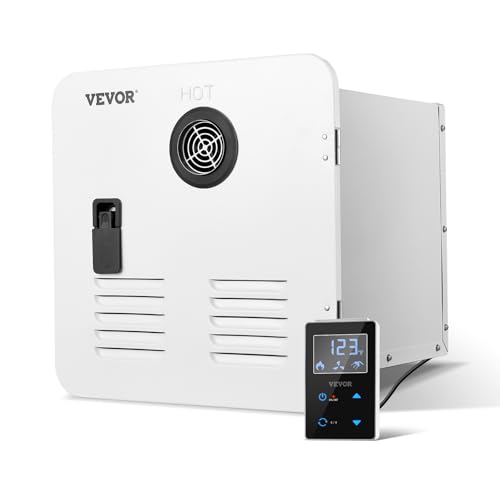
VEVOR’s tankless model delivers 42,000 BTU of heating power and is CSA certified with multiple safety protections. It uses segmented combustion technology to adjust output seasonally, helping maintain comfortable output while avoiding excessively high temperatures in warm months.
Operation is managed through an LED smart display and touch controls, offering straightforward temperature adjustment and monitoring. Rapid heating and a compact footprint make it suitable for RV owners seeking efficient, on-demand hot water for showers, dishwashing, and general use.
Suburban Advantage SW6DE 6-Gallon Tank Water Heater
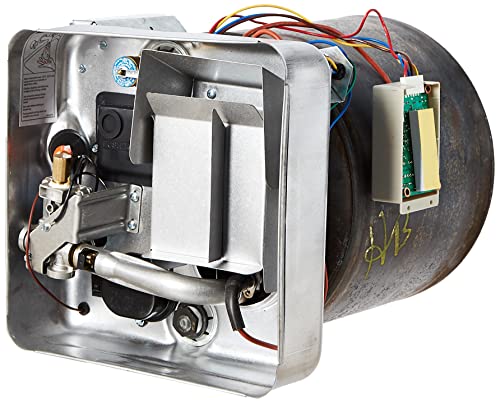
The Suburban Advantage SW6DE is a traditional 6-gallon tank water heater featuring a porcelain-lined steel tank and Direct Spark Ignition (DSI). It includes a replaceable anode rod for corrosion protection, which extends tank life and doubles as a drain for maintenance.
One notable feature is the optional electric element, allowing hot water production from campsite or generator power without propane. This flexible power option can be advantageous where hookups are available or when avoiding gas use is preferred during certain trips.
Nottia 25FT Heated Water Hose – Freeze Protection

The Nottia heated water hose provides freeze protection down to -45°F with a smart external thermostat that self-regulates heat output. It is rated as drinking-water safe, made from food-grade materials free of lead and BPA, making it suitable for potable water use in cold conditions.
This hose is intended for RVers who remain in freezing climates or transit through cold regions. The smart temperature control and overload protection minimize the risk of overheating while ensuring water lines stay thawed and usable, reducing reliance on interior heating to protect fresh water supply lines.
Buying Guide: How To Choose The Right RV Heater
Space Heaters vs. Water Heaters: Define the Need
Decide whether the primary need is space heating (keeping the cabin warm) or water heating (showers, dishes). Space heaters such as radiant propane units or electric fans are designed to raise air or surface temperature quickly. Water heaters, either tank or tankless, provide hot water for plumbing systems.
Propane Radiant Heaters: Considerations
Propane radiant heaters (like the Mr. Heater Buddy) offer high BTU output relative to size and do not rely on shore power. Key considerations include indoor safety certifications, oxygen depletion sensors, and altitude performance. Radiant units heat objects and people directly, which is efficient for spot heating but may leave cooler areas behind.
Electric Heaters: Power and Placement
Electric heaters (like the Caframo True North) require 120V power and are suitable when shore power or a generator is available. They provide silent operation and steady heat without combustion byproducts. Evaluate electrical load limits in small RVs and ensure wiring and outlets can support continuous operation.
Tankless vs. Tank Water Heaters
- Tankless (On-Demand): Provide continuous hot water and save space. Important specs are BTU rating, flow rate (GPM), and altitude compensation. Tankless units can be more efficient for intermittent use but may struggle with simultaneous multiple outlets if undersized.
- Tank: Simpler system with stored hot water. Advantages include predictable supply for short bursts and lower initial complexity. Tanks require more space and have standby heat loss but can run on propane, electric, or both.
BTUs, Flow Rates, And Sizing
For water heaters, compare BTU output and claimed GPM to expected usage. A 42,000–48,000 BTU tankless heater typically supports standard shower use for 1–2 people. For space heaters, estimate area and insulation: 50–100 square feet may need 4,000–9,000 BTU depending on ambient temperature and RV insulation.
Altitude And Climate Performance
High-altitude operation can affect combustion heaters. Check manufacturer guidance and units with altitude modes or staged combustion for mountain travel. For cold climates, consider heated hoses or anti-freeze settings to protect plumbing and maintain water supply without running the interior heating constantly.
Power Source And Energy Efficiency
Determine available power sources: propane, 12V controls, shore power, or generator. Tankless units that optimize burner output and monitor flow can reduce fuel consumption. Electric heaters and elements depend on shore power and are efficient electrically but may require generator support off-grid.
Safety Features And Certifications
Look for CO/OD sensors, automatic shut-off if tipped, CSA/UL/ETL certifications, and anti-scald protection on water heaters. For propane appliances, ensure proper ventilation, certified installation, and compliance with RV manufacturer recommendations to reduce carbon monoxide and fire hazards.
Installation, Maintenance, And Serviceability
Assess installation complexity: retrofits may require specific door sizes, venting, or electrical changes. Tankless units often need proper venting and electrical control wiring. Tanks need anode rod access for corrosion protection; replaceable anodes simplify maintenance. Consider available service locations and warranty coverage for long-term reliability.
Space, Weight, And Integration
RV installations are constrained by cabinet space and weight limits. Tankless systems reduce weight and storage footprint but require clearance and vent paths. Space heaters should be mounted or placed to avoid obstruction and ensure airflow; compact low-profile designs may be preferable for tight interiors.
Cost Of Ownership And Fuel Availability
Factor in ongoing fuel costs (propane vs. electricity vs. generator fuel) and seasonal usage. Tankless heaters can reduce fuel consumption for frequent hot water usage, while tanks may be economical for occasional use. Also consider replacement parts such as anode rods and filters which affect lifecycle costs.
Comparative Summary
For quick cabin warmth, a certified portable radiant propane heater provides high BTU per size and is effective for spot heating. For continuous hot water and space savings, tankless heaters with higher BTU ratings and digital control offer on-demand comfort. Traditional tank heaters remain a practical, lower-complexity option with dual-power capability for some RVers. Heated hoses and freeze-protection accessories supplement core systems in cold climates.