Choosing the right natural gas patio heater depends on output, mounting style, ignition type, safety features, and coverage. The table below summarizes seven relevant models to help match needs for residential and commercial outdoor spaces.
| Model | BTU | Type / Key Feature |
|---|---|---|
| Fire Sense 61445 | 45,000 BTU | Stainless steel, electric ignition, tip-over protection |
| Golden Flame XL-Series | 45,000 BTU | Wide reflector hood, rapid spark, anti-tilt sensor |
| Bromic Smart-Heat Platinum 500 | 39,800 BTU | Radiant infrared, brushed stainless, wind resistant |
| Mr. Heater MHVFRD20NGT | 20,000 BTU | Vent-free radiant wall heater, low-oxygen shutoff |
| Sunpak S25NGBLK | Infrared (spec sheet) | Designed for 7.5–9.5 ft mounts, ~10×10 ft coverage |
| Fadidio Pyramid Deck Tower | 42,000 BTU | Pyramid flame tube, anti-tilt, ETL listed |
| Mr. Heater F272800 MH40NG | 40,000 BTU | High-output infrared for tall spaces |
Fire Sense 45,000 BTU Heater
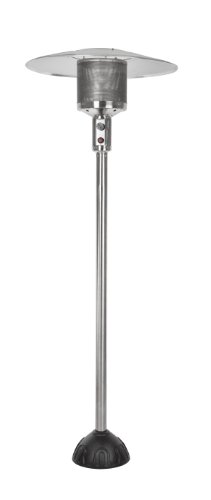
The Fire Sense 61445 is presented as a high-output natural gas patio heater delivering 45,000 BTU. The unit uses a stainless steel construction intended for durability in outdoor settings. Its listed features emphasize a heavy-duty burner and double mantle heating grid for broad warmth distribution.
Included functional elements are an electronic ignition system for quick start-up and a tip-over protection system to cut gas in the event of instability. The product comes with a connection line and a heavy-duty mounting plate for fixed or semi-permanent installation. These specifications align with residential patio applications requiring consistent, high-output heat.
Golden Flame XL-Series 45,000 BTU

The Golden Flame XL-Series unit lists 45,000 BTU output with a wide aluminum reflector hood and stainless steel burners designed to heat roughly a 15-foot diameter. The model highlights a rapid spark electronic ignition and a pilotless burner system for simplified operation.
Safety and stability features include an automatic tilt sensor that shuts off the burner if the heater tips. The base has a reservoir for sand and optional additional weight, allowing users to add mass for wind resistance. The manufacturer notes suitability for residential backyards and commercial patios when proper clearances are observed.
Bromic Smart-Heat Platinum 500

The Bromic BH0110003-1 Smart-Heat Platinum 500 is described as a radiant infrared natural gas patio heater with a brushed stainless housing and tinted ceramic glass. Listed BTU is 39,800, and the infrared burner design focuses on direct, fast heat to people and objects rather than heating the ambient air.
Manufacturer notes include wind resistance up to 12 mph for sustained operation in breezy conditions. The contemporary styling and radiant burner type make this model a commonly cited option for patio areas where direct occupant warming and aesthetics are priorities.
Mr. Heater Vent-Free 20,000 BTU

The Mr. Heater MHVFRD20NGT is a vent-free radiant wall heater rated at 20,000 BTU. Its design uses multiple burner tiles to deliver sun-like radiant warmth, intended to directly warm people and surfaces up to approximately 700 sq. ft., per manufacturer’s description.
Safety features include an automatic low-oxygen shut-off system (ODS), which detects oxygen drops and cuts gas supply. The vent-free configuration eliminates the need for flue venting, making it a candidate for covered patios, sunrooms, and enclosed outdoor structures when local codes permit vent-free appliances.
Sunpak Natural Gas Infrared Heater

The Sunpak S25NGBLK is promoted as a natural gas infrared patio heater engineered for specific mounting heights of 7.5 to 9.5 feet. Its listed heat coverage is approximately 10 ft x 10 ft
The product listing indicates sizing and mounting recommendations, suggesting attention to installation height is necessary for optimal coverage. Infrared heating technology focuses warmth downward and outward, which can be effective for targeted zones like dining tables and seating clusters.
Fadidio Pyramid Deck Tower Heater

The listed Fadidio Pyramid Deck Tower model features a flame glass tube and a pyramid tower design delivering 42,000 BTU. The heating approach is infrared-focused, projecting heat in 360 degrees from the glass tube and aluminum reflector dome.
Safety and stability claims include an anti-tilt design with automatic shutoff, safety wires, and ETL recognition noted in the listing. The product mentions natural gas compatibility alongside propane and lists a hammered bronze finish option for aesthetic integration on decks and patios.
Mr. Heater 40,000 BTU Garage Heater

The Mr. Heater F272800 MH40NG is listed as a 40,000 BTU natural gas infrared heater intended for larger enclosed spaces with 12 to 15 ft ceilings. The unit emphasizes efficient, cost-effective infrared heat for garages and industrial settings.
Clearance requirements in the listing include top, sides, back, and below distances to maintain safety and airflow. The model is positioned for use where high-mounted infrared heat is needed to warm people and equipment in taller or semi-enclosed outdoor structures.
Buying Guide: Choosing A Natural Gas Patio Heater
Heat Output And Coverage
BTU rating is the primary indicator of heating capacity. Higher BTU heaters (35,000–45,000 BTU) typically cover larger radii and are well-suited for open patios, while lower-output units (around 20,000 BTU) are better for smaller or partially enclosed spaces. Consider seating layout and wind exposure; infrared models focus heat directionally and often provide better occupant-level warmth with lower ambient energy waste.
Heating Technology: Infrared vs Radiant vs Convection
Infrared/radiant heaters warm people and objects directly and are effective in windy or semi-open areas because they don’t rely on heating the air. Vent-free radiant units produce efficient indoor-style heat but require compliance with local codes due to combustion byproducts. Convection-style
Mounting And Placement Options
Heaters come in freestanding, table-top, tower/pyramid, and wall/ceiling-mounted configurations. Freestanding and tower units are portable and good for flexible seating; wall- or ceiling-mounted units are better for permanent installations and conserve floor space. Ensure mounting height aligns with manufacturer recommendations for coverage and safety clearances.
Ignition And Controls
Ignition types include electronic/rapid spark, pilotless burners, and manual systems. Electronic ignition provides fast starts and often better reliability in repeated use. Look for variable heat controls for adjustable comfort and convenience in mixed-use patios.
Fuel Connection And Installation
Natural gas heaters require proper connection to a supply line and often professional installation, particularly for fixed-mount or high-output units. Confirm compatibility with your home gas supply pressure and the need for regulators, flexible hoses, or hard-piped runs. Portable units may still require a connection kit and proper venting or clearances.
Safety Features And Listings
Important safety items include automatic tilt/anti-tip shutoff, oxygen depletion sensors (ODS) on vent-free units, flame failure devices, and secure base weight or anchoring options. Look for third-party listings such as ETL or other certifications that indicate compliance with safety standards.
Durability And Materials
Stainless steel
Maintenance And Serviceability
Consider ease of cleaning reflectors, access to burners and ignition modules, and availability of replacement parts. Some models offer modular components that facilitate seasonal maintenance or professional servicing.
Noise, Emissions, And Comfort
Infrared heaters are typically quiet and efficient. Vent-free units emit combustion byproducts into the space and are subject to local codes and ventilation considerations. If occupants are sensitive to emissions, choose sealed or power-vented options or place heaters in open-air configurations.
Commercial Vs Residential Considerations
Commercial patio spaces often require higher output, rugged construction, and verified commercial listings. Residential patios can prioritize aesthetics, quieter operation, and simpler installation. Verify local building and fire codes for commercial heater installations, including required clearances and mounting methods.
Comparing Common Use Cases
- Open-air backyard patio: High-BTU freestanding or reflector-mounted infrared units (35k–45k BTU) for broader coverage.
- Covered porch or screened-in area: Wall/ceiling-mounted radiant infrared or vent-free units with ODS where allowed.
- Commercial restaurant patio: Durable, wind-resistant units with secure mounting and commercial listings; consider Bromic-style radiant units for efficiency and aesthetics.
- Small intimate seating: Lower-BTU heaters or tower units with directional infrared heating for focused warmth.
Installation Checklist
- Confirm heater BTU and gas line capacity with a qualified technician.
- Review manufacturer clearances and mounting height guidelines.
- Use certified gas connectors and regulators; follow local codes.
- Verify required safety features and third-party listings.
- Plan for anchoring or adding weight to freestanding bases in windy areas.