The right pool heat pump extends your swim season while cutting operating costs. This guide compares seven top-rated heat pump pool heaters by capacity, efficiency, and features so you can match a unit to pool size and climate.
| Model | BTU / Capacity | Recommended Pool Size |
|---|---|---|
| WOPOLTOP 100,000 BTU | 100,000 BTU (30 kW) | Up to 26,000 gallons |
| AQUASTRONG 75,000 BTU | 75,000 BTU | Up to 21,000 gallons |
| FibroPool FH270 | 70,000 BTU | Up to 15,000 gallons (inground) |
| TURBRO 50,000 BTU | 50,000 BTU | Up to 16,000 gallons |
| Patfebro 35,000 BTU | 35,000 BTU | Up to 7,000 gallons |
| MICOE 35,000 BTU | 35,000 BTU | Up to ~12,000 gallons |
| Varpoolfaye 16,000 BTU | 16,000 BTU | Up to 5,000 gallons |
WOPOLTOP 100,000 BTU Heat Pump

The WOPOLTOP 100,000 BTU model is a full DC inverter heat pump designed for large pools. It advertises compatibility with above-ground and inground pools and recommends use for pools up to 26,000 gallons. The unit uses frequency conversion for both compressor and fan to minimize power cycling and improve part longevity.
Key technical highlights include a claimed COP up to 6.8, an advanced inverter compressor, and a dual-function design for both heating and cooling. It supports WiFi smart control via app for remote temperature monitoring and adjustments. The full frequency design aims to provide smoother modulation of output and improved energy efficiency over fixed-speed units.
AQUASTRONG 75,000 BTU Inverter Heater

The AQUASTRONG inverter heat pump is built for extended seasons and rapid temperature recovery. It offers a heating range from 47–104°F and cooling to 47–83°F, suitable for year-round pool comfort in moderate climates.
Performance features include a claimed COP of 15.8 under ideal conditions, full DC variable frequency technology, and adaptive algorithms for efficient real-time power adjustment. The unit supports WiFi-capable timer and app control, remote scheduling, and energy use tracking. Recommended capacity centers around pools up to 21,000 gallons.
FibroPool FH270 70,000 BTU Heater

The FibroPool FH270 is positioned as an all-electric, high-efficiency pool heat pump. It targets both above-ground pools and inground pools, with compatibility notes for in-ground pools up to 15,000 gallons and large above-ground configurations.
Design highlights include a titanium heat exchanger and high-pressure differential compressors intended to maximize heat transfer and longevity. The FH270 emphasizes reduced environmental impact versus gas heaters and recommends humid climate operation down to approximately 50°F for optimal performance.
TURBRO 50,000 BTU Inverter Heater

The TURBRO Beluga series offers an inverter-driven heat pump designed to maintain consistent pool temperatures across shoulder seasons. It is intended for pools up to around 16,000 gallons and is not marketed as a hot tub heater.
Key specifications include inverter technology for adaptive output, a claimed high COP up to 16.2 under favorable conditions, and an IPX4 waterproof rating for outdoor durability. Built-in WiFi and timer features enable scheduling and remote control. The manufacturer notes energy savings versus gas and propane options.
Patfebro 35,000 BTU DC Inverter Heater

The Patfebro unit is an all-DC inverter pool heater marketed for both inground and above-ground pools up to roughly 7,000 gallons. It advertises wide operating temperature ranges and a high efficiency rating to reduce electricity use.
Featured components include a titanium heat exchanger resistant to corrosion, a variable-speed fan and inverter compressor, and a drain outlet for winterization. The product documentation references a COP up to 6.8 and an operational heating range down to near freezing, plus app control for scheduling and monitoring.
MICOE 35,000 BTU Pool Heater
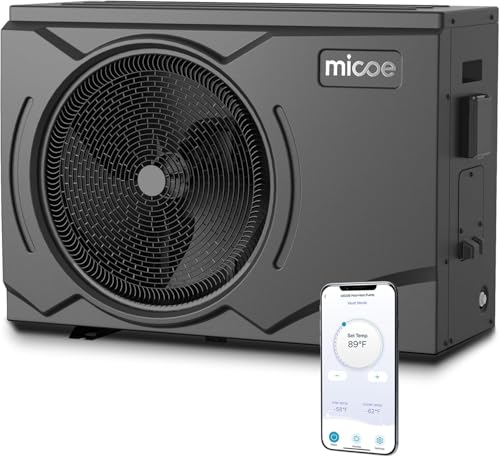
The MICOE 35,000 BTU heat pump targets small to mid-size pools, suitable for typical above-ground sizes up to 24ft or about 12,000 gallons in many setups. The unit is designed with a corrosion-resistant titanium heat exchanger and supports saltwater systems.
Operational features include app-scheduled heating/cooling, an auto-defrost function for cold environments, and a stated heating range up to 104°F. The manufacturer recommends starting the heater ahead of use for best temperature stability and cites compatibility across common pool sizes.
Varpoolfaye 16,000 BTU Electric Heater

The Varpoolfaye 16,000 BTU unit is aimed at smaller above-ground pools up to 5,000 gallons. It uses a high-power compressor with a titanium heat exchanger and supports both heating and cooling modes with WiFi control.
Efficiency metrics cited include a COP of about 4.3, and the product highlights minimal electrical input by transferring air energy to pool water. The 120V supply makes it compatible with common residential circuits where 240V units may not be feasible.
Buying Guide: How To Choose A Pool Heat Pump
Selecting the right heat pump involves matching capacity, efficiency, and features to your pool, climate, and budget. Below are the key considerations and practical comparisons to guide a purchase.
Sizing and BTU Capacity
Pool volume and desired temperature rise determine the required BTU output. Larger pools and lower starting water temperatures require higher BTU ratings. As a general approach, choose a unit rated for your pool’s gallon capacity with a margin for colder climates.
- Small pools (up to ~5,000 gallons): 10,000–20,000 BTU is common.
- Medium pools (5,000–15,000 gallons): 25,000–50,000 BTU typical.
- Large pools (15,000+ gallons): 70,000–100,000+ BTU units may be necessary.
Coefficient Of Performance (COP) And Efficiency
COP measures efficiency—the ratio of heat delivered to electricity used. Higher COP values indicate better efficiency. Inverter-driven units often produce higher average COPs due to variable-speed modulation, improving part-load efficiency compared with fixed-speed models.
Compare COP ratings under similar test conditions. Manufacturers may report peak COP under ideal conditions; real-world COP varies with ambient temperature and pool cover usage.
Inverter vs. Non-Inverter Technology
Inverter (variable-speed) systems can adjust compressor speed to match heating demand, providing steadier temperatures and higher efficiency. They typically have better part-load performance and reduced on/off cycling, which can extend component life.
Non-inverter systems can be less expensive upfront but may cost more to operate and cycle more frequently, affecting comfort and wear over time.
Heat Exchanger Material
Titanium heat exchangers offer superior corrosion resistance, especially with saltwater pools or chemical treatments. Stainless steel or other alloys may be less expensive but can corrode faster in harsher water conditions. Match heat exchanger material to your pool chemistry and maintenance plan.
Operating Temperature Range And Defrost
Heat pumps extract heat from ambient air, so performance drops as air temperature falls. Check the unit’s minimum operating temperature and whether it includes auto-defrost to prevent ice buildup in cold climates. Some models advertise operation down to near freezing; verify specifications for your regional climate.
Heating And Cooling Functions
Some units provide both heating and cooling. Cooling functions can be useful in hot climates to prevent overheating, but they add system complexity. If year-round temperature control is desired, dual-function units with app control may offer additional flexibility.
Noise, Installation, And Electrical Requirements
Heat pumps have fans and compressors that produce noise. Check decibel ratings where provided and consider placement away from bedrooms or neighbors. Verify electrical supply requirements (120V vs 220–240V) and ensure your home electrical panel can support the unit. Installation may require certified HVAC or pool professionals for electrical and plumbing connections.
Controls, Connectivity, And Scheduling
WiFi and app control allow remote scheduling, monitoring, and integration with smart home systems. Timers and programmable schedules can improve efficiency by running the pump during favorable ambient conditions. Verify the manufacturer’s app features and compatibility with your tech ecosystem.
Durability, Warranty, And Maintenance
Compare warranty coverage for compressors, parts, and labor. Look for corrosion-resistant components, especially if using chlorine or salt systems. Routine maintenance includes filter cleaning, checking refrigerant circuits, and winterization where necessary.
Comparing Multiple Perspectives
From an environmental and operating-cost perspective, electric heat pumps are generally more efficient and cleaner than gas heaters. Upfront cost, local climate, and desired heat-up speed influence the choice between larger high-BTU inverter units and smaller or non-inverter options.
In cold, dry climates, gas heaters may provide faster heat-up and better low-temperature performance; however, modern inverter heat pumps can outperform gas over a season in many regions due to improved efficiency and lower fuel costs.
Checklist Before Purchase
- Confirm pool volume in gallons and desired temperature rise.
- Match BTU capacity and verify COP values under realistic conditions.
- Check electrical compatibility (120V vs 240V) and installation needs.
- Choose heat exchanger material appropriate for pool chemistry.
- Evaluate noise levels and recommended placement.
- Review warranty, spare parts availability, and service network.
- Consider WiFi, scheduling, and integration features for convenience and efficiency.